In the realm of cryptography, accuracy and security are paramount. Cryptographic algorithms underpin a myriad of modern computing applications, from operating systems and cloud services to messaging protocols. The integrity of these systems is jeopardized by even minor coding errors, which can lead to significant vulnerabilities. Traditional methods such as testing and auditing are insufficient in isolation, particularly when dealing with complex and optimized cryptographic code. This need for enhanced security assurance has led to the adoption of formal verification methodologies, which utilize machine-checked proofs to ensure the correctness of cryptographic implementations. This blog post explores how Rust, Lean, Aeneas, and AI agents are revolutionizing formal verification in cryptography, thereby enhancing the reliability and security of cryptographic algorithms.
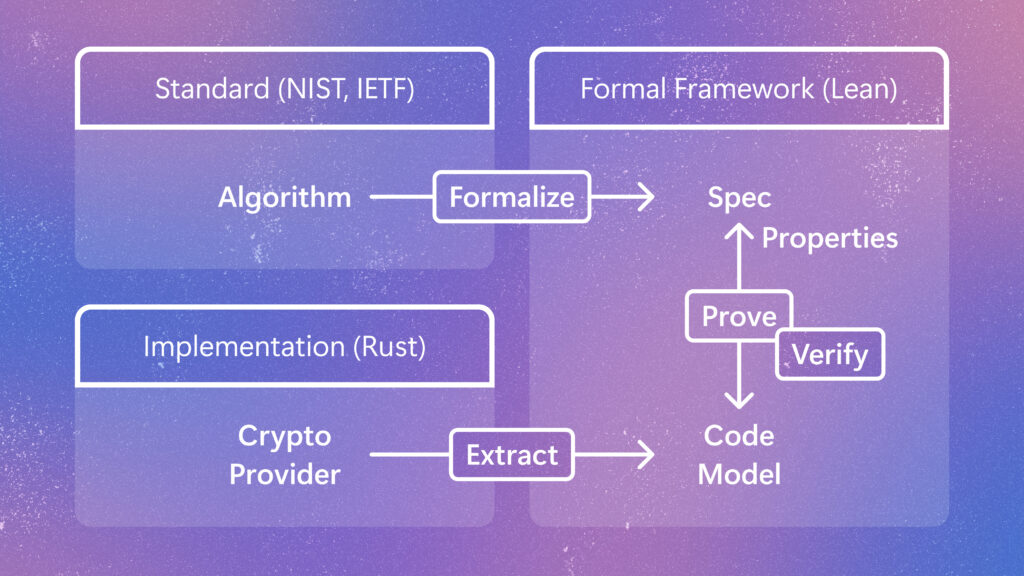
The primary objective outlined in the original content is the formal verification of cryptographic algorithms implemented in Rust, specifically within the SymCrypt library. This process aims to guarantee that the code accurately and securely implements standard algorithms, particularly those relevant to post-quantum cryptography. The introduction of Rust, alongside the Lean proof framework and the Aeneas toolchain, facilitates a scalable verification methodology that integrates seamlessly into the development process. By validating Rust code as it is written, developers can maintain performance-oriented implementation choices while ensuring the correctness of their algorithms.
Despite the significant advantages presented by formal verification, there are inherent limitations. The complexity of implementing formal proofs can lead to substantial initial investment in terms of time and resources. Additionally, the effectiveness of verification is contingent upon the correctness of the formal specifications and the algorithms they represent. Misalignment between specifications and implementations can result in discrepancies that may not be immediately evident.
The future of formal verification in cryptography is closely tied to the evolution of AI technologies. As AI agents become increasingly sophisticated, their ability to automate complex proof tasks will likely enhance the scalability and efficiency of verification processes. The integration of AI within formal verification frameworks could lead to real-time verification capabilities, enabling developers to receive immediate feedback on code correctness. This shift would not only streamline the development process but also foster a new paradigm in cryptography where security is built into the fabric of software development from the outset.
In conclusion, the adoption of formal verification methodologies, particularly through the use of Rust, Lean, Aeneas, and AI agents, represents a significant advancement in the field of cryptography. By ensuring that cryptographic code is both secure and maintainable, these technologies pave the way for a future where robust security practices are ingrained within the development lifecycle, ultimately leading to safer digital environments.
Disclaimer
The content on this site is generated using AI technology that analyzes publicly available blog posts to extract and present key takeaways. We do not own, endorse, or claim intellectual property rights to the original blog content. Full credit is given to original authors and sources where applicable. Our summaries are intended solely for informational and educational purposes, offering AI-generated insights in a condensed format. They are not meant to substitute or replicate the full context of the original material. If you are a content owner and wish to request changes or removal, please contact us directly.
Source link :