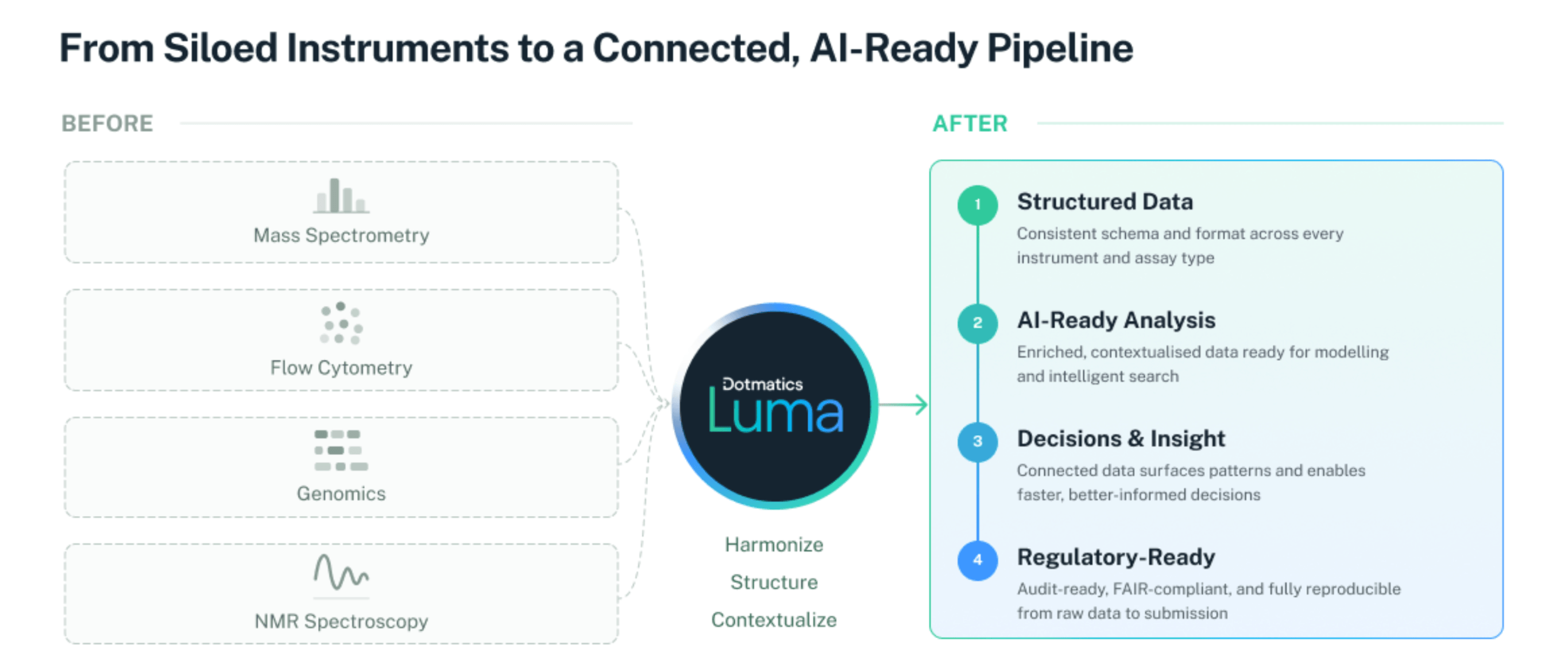
The contemporary landscape of scientific research is characterized by the generation of vast quantities of data, often exceeding the capacity of traditional data management techniques. In a typical research organization, numerous instruments in wet labs and associated partner networks produce extensive datasets, frequently residing in isolated silos. This separation not only complicates data accessibility but also hinders the decision-making processes that rely on these datasets. The primary challenge lies not in the sheer volume of data but in maintaining the contextual integrity of this information as it traverses various analytical stages. The loss of context can lead to inefficient workflows, prompting researchers to waste valuable time on data reconstruction or reruns rather than advancing their investigations. Moreover, when artificial intelligence (AI) models are trained on fragmented datasets, the reliability of their outputs becomes questionable.
The principal aim of integrating platforms like Dotmatics Luma and Databricks is to create a cohesive environment where scientific data can be harmonized and rendered AI-ready. This integration is achieved by employing a dual-faceted approach: implementing a dedicated platform tailored for scientific data and providing an enterprise-grade infrastructure that can support large-scale operations. The collaboration between Luma and Databricks exemplifies an effective strategy to close the gap between data generation and actionable insights.
The integration of AI in scientific workflows heralds significant transformations within the realm of Big Data Engineering. As organizations increasingly adopt AI-driven solutions, the demand for harmonized and contextualized datasets will escalate. This will necessitate the continuous evolution of data engineering practices to accommodate the complexities of AI applications. Moreover, the ability to utilize AI for real-time data analysis and decision-making will fundamentally alter the dynamics of research, enabling quicker hypothesis testing and accelerating the pace of scientific discovery. Consequently, the role of Data Engineers will likely expand to encompass not only data management but also the integration of AI capabilities into scientific workflows, thereby elevating their significance in the research ecosystem.
The collaboration between Dotmatics Luma and Databricks exemplifies a transformative approach to overcoming the challenges faced in modern scientific research. By creating a unified platform that harmonizes scientific data and provides robust infrastructure, organizations can achieve AI-ready insights while maintaining the integrity of their research processes. As AI technology continues to evolve, its integration into the scientific workflow will redefine the roles and responsibilities of Data Engineers, further emphasizing the importance of scalable and contextualized data management strategies.
Disclaimer
The content on this site is generated using AI technology that analyzes publicly available blog posts to extract and present key takeaways. We do not own, endorse, or claim intellectual property rights to the original blog content. Full credit is given to original authors and sources where applicable. Our summaries are intended solely for informational and educational purposes, offering AI-generated insights in a condensed format. They are not meant to substitute or replicate the full context of the original material. If you are a content owner and wish to request changes or removal, please contact us directly.
Source link :