
Introduction The intersection of technology and finance has given rise to innovative platforms such as prediction markets, which allow users to speculate on the outcomes of future events. In recent news, a significant investigation by the Commodity Futures Trading Commission (CFTC) has surfaced involving a teleprompter operator for former President Donald Trump, Gabriel Perez, who is alleged to have profited from insider trading on the prediction market platform, Kalshi. This incident raises profound questions about the ethical implications of insider knowledge in financial markets and highlights the evolving role of artificial intelligence (AI) in enhancing market integrity and regulatory compliance. Context of the Investigation The investigation centers around claims that Perez made considerable profits—over $90,000—through trades on Kalshi, specifically betting on the phrases that Trump would utter during public speeches. Following the emergence of these allegations, Kalshi’s surveillance systems flagged the trades as suspicious, leading to the freezing of Perez’s account and the involvement of federal regulators. White House Press Secretary Karoline Leavitt confirmed that Perez has been placed on unpaid leave and emphasized the administration’s strict ethical guidelines regarding such matters. Main Goal and Achieving Compliance The primary objective of this investigation is to uphold the integrity of prediction markets by preventing insider trading and ensuring that all participants operate under the same rules. Achieving this goal involves rigorous monitoring of trading activities, the implementation of strict ethical guidelines, and collaboration between trading platforms and regulatory bodies. Kalshi’s proactive measures, including the freezing of suspicious accounts and the referral of cases to the CFTC, exemplify how financial institutions can maintain compliance and protect market integrity. Advantages of Ethical Compliance in Financial Markets Market Integrity: Ensuring that trading is conducted fairly helps preserve the trust of participants and the public, which is essential for the longevity of any financial market. Enhanced Investor Confidence: When markets are perceived as fair and transparent, investor confidence increases, leading to greater participation and liquidity. Regulatory Alignment: Compliance with regulations reduces the risk of legal repercussions for both individuals and firms, fostering a more stable financial environment. Improved Surveillance Technology: The use of AI in market monitoring can streamline the detection of unusual trading patterns, making it easier to identify potential misconduct quickly. Future Implications of AI in Finance The ongoing developments in AI technology are poised to further revolutionize the finance and FinTech industries. As predictive analytics and machine learning algorithms continue to evolve, they will enhance the ability of regulatory bodies and trading platforms to identify and mitigate risks associated with insider trading. Furthermore, AI can facilitate real-time monitoring and analysis of market behavior, allowing for quicker interventions in cases of suspicious trading activity. This increased capability may ultimately lead to more robust ethical standards and a reduction in fraudulent activities within financial markets. Conclusion The case of Gabriel Perez underscores the critical importance of ethical compliance and the role of advanced technologies in safeguarding financial markets. As AI continues to integrate into finance, its potential to enhance market integrity and regulatory oversight will be invaluable. Financial professionals must remain vigilant and proactive in adhering to ethical guidelines, as the implications of their actions extend beyond individual trades to the overall health of the financial ecosystem. Disclaimer The content on this site is generated using AI technology that analyzes publicly available blog posts to extract and present key takeaways. We do not own, endorse, or claim intellectual property rights to the original blog content. Full credit is given to original authors and sources where applicable. Our summaries are intended solely for informational and educational purposes, offering AI-generated insights in a condensed format. They are not meant to substitute or replicate the full context of the original material. If you are a content owner and wish to request changes or removal, please contact us directly. Source link : Click Here

Context and Relevance of AI in Sports Analytics The landscape of professional sports is evolving rapidly, particularly with the integration of artificial intelligence (AI) and data analytics. The recent developments surrounding Canberra United, a prominent women’s soccer team in the A-League Women, illustrate the dynamic interplay between sports management, community engagement, and technological advancements. With Australian Sports Group (ASG) acquiring the team and planning to introduce an A-League Men side in the upcoming seasons, there is a growing emphasis on leveraging data analytics to enhance team performance and optimize community support. This shift is essential not only for the sustainability of clubs but also for creating a more engaging experience for fans and stakeholders. Main Goal and Achievement Strategies The primary objective articulated in the context of Canberra United’s future is the establishment of a robust, integrated professional football ecosystem in the Australian Capital Territory (ACT). Achieving this goal necessitates a multi-faceted approach that includes strategic investment in player development, enhancing community involvement, and effectively utilizing data analytics to inform decision-making processes. By employing AI-driven analytics, clubs can better understand player performance metrics, fan engagement levels, and market dynamics, thereby creating a more sustainable operational framework. Advantages of Integrating AI in Sports Management Enhanced Performance Analysis: AI algorithms can analyze vast amounts of player performance data, enabling coaches and management to make informed decisions about training regimens and game strategies. Improved Fan Engagement: By utilizing data analytics, clubs can tailor marketing efforts and community outreach initiatives to better resonate with their supporters, as evidenced by ASG’s commitment to acknowledging the Canberra community’s role in their success. Strategic Decision Making: AI can assist in financial forecasting and resource allocation, allowing clubs to optimize their investments in talent and infrastructure. Injury Prevention: Advanced analytics can predict injury risks by assessing players’ physical conditions and past injury records, thereby prolonging athlete careers and enhancing team performance. However, it is essential to recognize that the implementation of AI in sports analytics is not without its limitations. Data privacy concerns, the potential for over-reliance on analytics at the expense of human intuition, and the need for continuous technological adaptation represent significant challenges that must be navigated. Future Implications of AI Developments in Sports The future of AI in sports analytics appears promising, especially as technologies continue to evolve. With the anticipated introduction of an A-League Men’s team in Canberra, there will be an increased demand for comprehensive data strategies that support not only performance optimization but also fan engagement and commercial viability. As AI technology matures, its ability to provide real-time insights and predictive analytics will likely become a standard practice in sports management. Furthermore, the ongoing integration of AI could lead to innovative fan experiences, such as personalized content delivery and enhanced interaction through digital platforms. These advancements will foster deeper connections between clubs and their supporters, ultimately contributing to a more vibrant sports culture in Australia. Disclaimer The content on this site is generated using AI technology that analyzes publicly available blog posts to extract and present key takeaways. We do not own, endorse, or claim intellectual property rights to the original blog content. Full credit is given to original authors and sources where applicable. Our summaries are intended solely for informational and educational purposes, offering AI-generated insights in a condensed format. They are not meant to substitute or replicate the full context of the original material. If you are a content owner and wish to request changes or removal, please contact us directly. Source link : Click Here

Context: Understanding AI Audits Through Stratagems The field of Artificial Intelligence (AI) is complex and rapidly evolving, with applications spanning numerous sectors, including finance, healthcare, and autonomous systems. A critical aspect of ensuring the reliability and integrity of AI systems is conducting thorough audits of their underlying models and evaluation pipelines. The original post, “Stratagems #16: Mark Left a Hole in His AI Audit. Lena Counted Every Layer,” illustrates the nuanced dynamics of information management and strategic oversight during an AI audit scenario. By employing the ancient wisdom of the 36 Stratagems, particularly the principle of allowing opponents to feel secure before launching a calculated strike, the narrative encapsulates the importance of careful evaluation and systematic investigation in AI audits. Main Goal: Effective AI Model Evaluation The primary goal articulated in the original post revolves around the necessity for comprehensive evaluation of AI model performance, particularly regarding data integrity and exclusion criteria within evaluation datasets. This can be achieved through rigorous auditing processes that involve: In-depth analysis of training distributions and evaluation metrics. Identification of systematic biases or exclusions that may compromise the model’s accuracy. Implementation of recommended fixes that enhance the model’s predictive capabilities. Advantages of Thorough AI Audits Conducting meticulous AI audits offers several advantages that directly enhance the reliability of AI systems: Improved Data Integrity: The narrative underscores the significance of validating data distributions to ensure that low-score samples are not systematically excluded. This leads to a more robust evaluation of model performance. Enhanced Transparency: By documenting findings and recommendations in audit reports, stakeholders gain clearer insights into potential vulnerabilities within AI systems. This transparency is critical for fostering trust among users and clients. Proactive Issue Identification: The ability to identify recurrent patterns of exclusion across different projects allows for the anticipation of future challenges, facilitating timely interventions that can mitigate risks before they escalate. Strategic Decision-Making: Through careful layering of information, as demonstrated in the post, stakeholders can make informed decisions without exposing every detail at once, maintaining strategic advantage while ensuring necessary actions are taken. Limitations and Caveats While the benefits of thorough AI audits are significant, several limitations must be acknowledged: Dependence on Accurate Data: The effectiveness of an audit is contingent upon the quality and completeness of the data provided. Incomplete or inaccurate datasets can lead to flawed conclusions. Resource Intensive: Comprehensive auditing processes require significant time and expertise, which may not be feasible for all organizations, particularly smaller firms with limited resources. Resistance to Change: Stakeholders may resist implementing recommended changes, particularly if they have previously invested heavily in existing systems. This can hinder the adoption of necessary improvements. Future Implications for AI Developments As AI technologies continue to advance, the implications for auditing practices will be profound: Increased Complexity: Future AI systems will likely incorporate more intricate algorithms and larger datasets, necessitating even more sophisticated auditing techniques to ensure reliability. Integration of Automated Audits: The potential for automated auditing tools powered by AI could transform how audits are conducted, enabling real-time monitoring and issue detection. Regulatory Pressure: As AI becomes more pervasive, regulatory bodies may impose stricter requirements for auditing and transparency, driving organizations to adopt comprehensive audit practices proactively. In conclusion, the storyline encapsulated in the original post not only highlights the intricacies of AI audits but also emphasizes the critical need for vigilance in ensuring data integrity and model reliability. As the field of AI continues to evolve, these principles will remain essential for guiding future practices and fostering trust in AI technologies. Disclaimer The content on this site is generated using AI technology that analyzes publicly available blog posts to extract and present key takeaways. We do not own, endorse, or claim intellectual property rights to the original blog content. Full credit is given to original authors and sources where applicable. Our summaries are intended solely for informational and educational purposes, offering AI-generated insights in a condensed format. They are not meant to substitute or replicate the full context of the original material. If you are a content owner and wish to request changes or removal, please contact us directly. Source link : Click Here
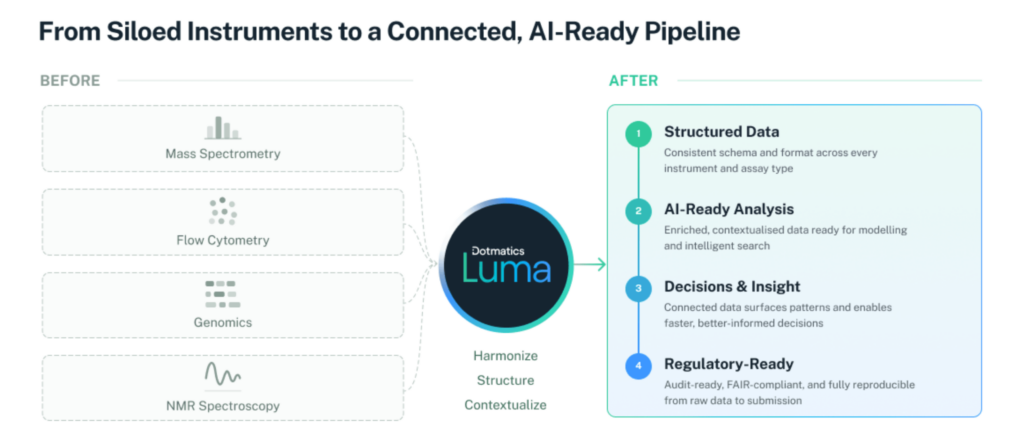
Context: Bridging the Divide Between Scientific Data and Insight The contemporary landscape of scientific research is characterized by the generation of vast quantities of data, often exceeding the capacity of traditional data management techniques. In a typical research organization, numerous instruments in wet labs and associated partner networks produce extensive datasets, frequently residing in isolated silos. This separation not only complicates data accessibility but also hinders the decision-making processes that rely on these datasets. The primary challenge lies not in the sheer volume of data but in maintaining the contextual integrity of this information as it traverses various analytical stages. The loss of context can lead to inefficient workflows, prompting researchers to waste valuable time on data reconstruction or reruns rather than advancing their investigations. Moreover, when artificial intelligence (AI) models are trained on fragmented datasets, the reliability of their outputs becomes questionable. Main Goal: Achieving AI-Ready Science Through Integrated Platforms The principal aim of integrating platforms like Dotmatics Luma and Databricks is to create a cohesive environment where scientific data can be harmonized and rendered AI-ready. This integration is achieved by employing a dual-faceted approach: implementing a dedicated platform tailored for scientific data and providing an enterprise-grade infrastructure that can support large-scale operations. The collaboration between Luma and Databricks exemplifies an effective strategy to close the gap between data generation and actionable insights. Advantages of the Luma and Databricks Integration Continuous Data Capture: Luma facilitates the automatic and uninterrupted capture of scientific data from instruments, ensuring that data is structured and available in real time. This minimizes disruptions to existing workflows and enhances research efficiency. Contextual Data Harmonization: By converting unstructured raw outputs into FAIR-compliant data, Luma ensures that datasets are findable, accessible, interoperable, and reusable. This harmonization fosters a robust foundation for subsequent analyses and AI applications. Scalable Infrastructure: Databricks provides the necessary infrastructure for managing vast amounts of scientific data across the enterprise, allowing for seamless integration with various business intelligence systems, thereby enhancing organizational decision-making. Enhanced Collaboration: The Delta Sharing feature enables secure and governed data sharing with third-party collaborators, including contract research organizations and academic institutions, without compromising data integrity. Faster Path to AI-Ready Science: The combination of Luma and Databricks offers a streamlined route to AI-ready science, ensuring that the rigor of scientific inquiry is upheld throughout the research lifecycle, from discovery to regulatory submission. Future Implications: The Impact of AI on Big Data Engineering The integration of AI in scientific workflows heralds significant transformations within the realm of Big Data Engineering. As organizations increasingly adopt AI-driven solutions, the demand for harmonized and contextualized datasets will escalate. This will necessitate the continuous evolution of data engineering practices to accommodate the complexities of AI applications. Moreover, the ability to utilize AI for real-time data analysis and decision-making will fundamentally alter the dynamics of research, enabling quicker hypothesis testing and accelerating the pace of scientific discovery. Consequently, the role of Data Engineers will likely expand to encompass not only data management but also the integration of AI capabilities into scientific workflows, thereby elevating their significance in the research ecosystem. Conclusion The collaboration between Dotmatics Luma and Databricks exemplifies a transformative approach to overcoming the challenges faced in modern scientific research. By creating a unified platform that harmonizes scientific data and provides robust infrastructure, organizations can achieve AI-ready insights while maintaining the integrity of their research processes. As AI technology continues to evolve, its integration into the scientific workflow will redefine the roles and responsibilities of Data Engineers, further emphasizing the importance of scalable and contextualized data management strategies. Disclaimer The content on this site is generated using AI technology that analyzes publicly available blog posts to extract and present key takeaways. We do not own, endorse, or claim intellectual property rights to the original blog content. Full credit is given to original authors and sources where applicable. Our summaries are intended solely for informational and educational purposes, offering AI-generated insights in a condensed format. They are not meant to substitute or replicate the full context of the original material. If you are a content owner and wish to request changes or removal, please contact us directly. Source link : Click Here
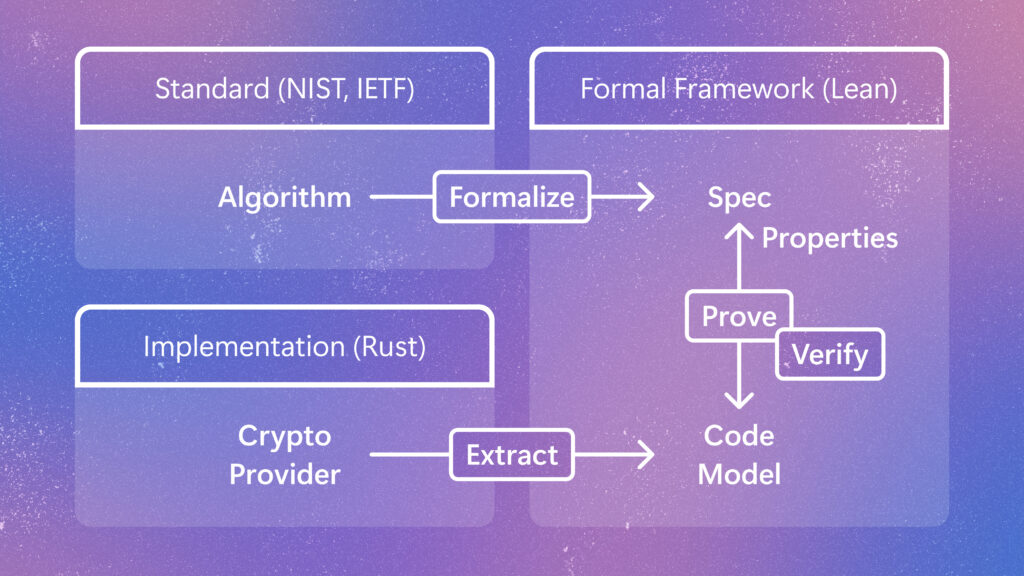
Context In the realm of cryptography, accuracy and security are paramount. Cryptographic algorithms underpin a myriad of modern computing applications, from operating systems and cloud services to messaging protocols. The integrity of these systems is jeopardized by even minor coding errors, which can lead to significant vulnerabilities. Traditional methods such as testing and auditing are insufficient in isolation, particularly when dealing with complex and optimized cryptographic code. This need for enhanced security assurance has led to the adoption of formal verification methodologies, which utilize machine-checked proofs to ensure the correctness of cryptographic implementations. This blog post explores how Rust, Lean, Aeneas, and AI agents are revolutionizing formal verification in cryptography, thereby enhancing the reliability and security of cryptographic algorithms. Main Goal and Achievements The primary objective outlined in the original content is the formal verification of cryptographic algorithms implemented in Rust, specifically within the SymCrypt library. This process aims to guarantee that the code accurately and securely implements standard algorithms, particularly those relevant to post-quantum cryptography. The introduction of Rust, alongside the Lean proof framework and the Aeneas toolchain, facilitates a scalable verification methodology that integrates seamlessly into the development process. By validating Rust code as it is written, developers can maintain performance-oriented implementation choices while ensuring the correctness of their algorithms. Advantages of Formal Verification in Cryptography Enhanced Security Assurance: Formal verification provides a mathematical guarantee of correctness, mitigating the risk of vulnerabilities that can arise from coding errors. Seamless Integration into Development Workflows: By allowing developers to verify code in the Rust programming language, the process aligns with existing development practices, avoiding the need for a complete overhaul of coding standards. Automation through Aeneas and AI Agents: The automation of proof generation via Aeneas and AI agents significantly reduces the workload on developers, allowing for efficient scaling of verification efforts across large codebases. Executable Specifications: The use of Lean allows for the creation of executable specifications that can be tested against official vectors, ensuring that formal models are correct and reflective of their intended standards. Visibility and Transparency: Automatically generated dashboards make verification results accessible and understandable to developers, promoting a culture of security awareness and continuous improvement. Limitations and Considerations Despite the significant advantages presented by formal verification, there are inherent limitations. The complexity of implementing formal proofs can lead to substantial initial investment in terms of time and resources. Additionally, the effectiveness of verification is contingent upon the correctness of the formal specifications and the algorithms they represent. Misalignment between specifications and implementations can result in discrepancies that may not be immediately evident. Future Implications The future of formal verification in cryptography is closely tied to the evolution of AI technologies. As AI agents become increasingly sophisticated, their ability to automate complex proof tasks will likely enhance the scalability and efficiency of verification processes. The integration of AI within formal verification frameworks could lead to real-time verification capabilities, enabling developers to receive immediate feedback on code correctness. This shift would not only streamline the development process but also foster a new paradigm in cryptography where security is built into the fabric of software development from the outset. Conclusion In conclusion, the adoption of formal verification methodologies, particularly through the use of Rust, Lean, Aeneas, and AI agents, represents a significant advancement in the field of cryptography. By ensuring that cryptographic code is both secure and maintainable, these technologies pave the way for a future where robust security practices are ingrained within the development lifecycle, ultimately leading to safer digital environments. Disclaimer The content on this site is generated using AI technology that analyzes publicly available blog posts to extract and present key takeaways. We do not own, endorse, or claim intellectual property rights to the original blog content. Full credit is given to original authors and sources where applicable. Our summaries are intended solely for informational and educational purposes, offering AI-generated insights in a condensed format. They are not meant to substitute or replicate the full context of the original material. If you are a content owner and wish to request changes or removal, please contact us directly. Source link : Click Here

Context of Automated Solutions in Solar Panel Installation The recent introduction of the X1 Panel Lift by Xpanner Global marks a significant advancement in the solar energy sector, particularly in the realm of automated solar panel installation. This innovative system aims to alleviate the skilled labor shortage that is increasingly impacting the solar industry. The X1 Panel Lift, initially designed for solar pile-driving operations, has been adapted to facilitate the lifting and replacement of solar panels using excavators. The ability to automate the labor-intensive aspects of solar panel installation allows installation teams to concentrate on higher-value tasks, such as precision alignment and quality assurance. The solar energy sector is characterized by its reliance on substantial manual labor for the placement of solar panels across expansive utility-scale projects. Xpanner’s solution seeks to redefine this paradigm, allowing for streamlined operations that enhance productivity while reducing the dependency on large crews. This shift is particularly pertinent given the current labor market constraints, making the deployment of automated systems not just advantageous but essential for the industry’s growth. Main Goal and Achievements of the X1 Panel Lift The primary objective of the X1 Panel Lift is to transform the solar installation process by integrating automation solutions that can operate effectively with minimal human intervention. The system is designed to be user-friendly, requiring only one operator to manage the entire operation through a simplified control interface. This operational efficiency is anticipated to significantly reduce the number of laborers needed on-site, enabling companies to allocate their workforce to more critical tasks that require skilled expertise. By implementing the X1 Panel Lift, Xpanner aims to achieve several key outcomes: – **Increased Efficiency**: Automating repetitive tasks allows crews to focus on quality assurance and installation precision. – **Reduced Labor Costs**: Transitioning from a traditional crew of ten to a three-person team can dramatically lower operational costs. – **Enhanced Safety**: The design ensures that operators can maintain safe distances during operation, mitigating risks associated with manual handling. Advantages of the X1 Panel Lift System The deployment of the X1 Panel Lift system offers multiple advantages, particularly for stakeholders in the solar energy sector. These benefits include: 1. **Labor Reduction**: The X1 Panel Lift permits a significant decrease in the size of the workforce required for installation, allowing for a more agile and efficient approach to solar projects. 2. **Enhanced Safety Protocols**: With operators controlling the system from a distance, the risk of on-site injuries is minimized, contributing to a safer work environment. 3. **Real-Time Data Integration**: The system’s capability to create a digital twin of the job site facilitates ongoing monitoring and data collection, which can enhance project management and efficiency. 4. **Cost-Effectiveness**: The shift towards automation can lead to lower overall project costs, especially in terms of labor expenses and reduced rework due to installation errors. 5. **Scalability**: The modular nature of the X1 Panel Lift, which can be retrofitted to existing excavators, allows companies to upgrade their capabilities without significant capital investment in new equipment. 6. **Simplicity of Operation**: The user-friendly interface requires minimal training, allowing operators to become proficient quickly, thus reducing downtime associated with onboarding new personnel. However, it is important to note that while the system addresses many challenges in the solar installation process, it still necessitates human oversight, particularly in tasks such as securing panels to frames. Therefore, a balanced approach that combines automation with skilled labor remains essential. Future Implications of AI in Solar Panel Installation As advancements in artificial intelligence continue to evolve, their integration into automated solutions like the X1 Panel Lift is poised to augment the capabilities of robotic systems in the solar energy sector. Future developments may include: – **Enhanced Predictive Analytics**: AI algorithms could analyze historical project data to forecast potential delays and optimize scheduling, further improving labor efficiency. – **Improved Autonomous Navigation**: Future iterations of the X1 Panel Lift may incorporate advanced machine learning techniques to enhance the system’s ability to adapt to dynamic environmental conditions on job sites. – **Integration with Supply Chain Management**: AI-driven logistics solutions could streamline the supply chain for solar materials, ensuring that components are available when needed, thus minimizing downtime. In conclusion, the integration of automated systems such as the X1 Panel Lift represents a transformative step for the solar industry, providing significant benefits in efficiency, cost reduction, and safety. As AI continues to shape the landscape of automation, the potential for even more sophisticated solutions will enable further advancements in solar energy deployment, ultimately supporting the industry’s growth and sustainability goals. Disclaimer The content on this site is generated using AI technology that analyzes publicly available blog posts to extract and present key takeaways. We do not own, endorse, or claim intellectual property rights to the original blog content. Full credit is given to original authors and sources where applicable. Our summaries are intended solely for informational and educational purposes, offering AI-generated insights in a condensed format. They are not meant to substitute or replicate the full context of the original material. If you are a content owner and wish to request changes or removal, please contact us directly. Source link : Click Here

Contextual Overview In recent developments within the biopharma sector, prediction markets are emerging as innovative tools for gauging outcomes of clinical trials and regulatory approvals. Kalshi, a prominent prediction market exchange, has announced its intent to facilitate betting on the outcomes of clinical trials, particularly focusing on Phase 3 trials associated with established pharmaceutical companies. This initiative, executed in collaboration with AppliedXL, a technology enterprise specializing in predictive analytics for clinical study outcomes, signifies a groundbreaking shift in how clinical trial outcomes are viewed and evaluated. Main Goal and Its Achievement The primary objective of Kalshi’s initiative is to create a transparent and quantifiable mechanism for assessing the probability of success in clinical trials. By leveraging prediction markets, stakeholders—including investors, healthcare professionals, and researchers—can gain insights into the likelihood of regulatory approvals and trial outcomes. This approach not only democratizes information access but also enhances decision-making processes within the biopharma industry. Achieving this goal necessitates a conservative start, wherein Kalshi focuses on well-established Phase 3 trials that have undergone rigorous scrutiny by the U.S. Food and Drug Administration (FDA). Advantages of Prediction Markets in Biopharma Informed Decision-Making: Prediction markets provide real-time data reflecting collective insights from various stakeholders, facilitating better-informed investment and development decisions in the biopharma sector. Enhanced Transparency: By allowing market participants to place bets on clinical outcomes, these platforms promote transparency in trial results and regulatory processes, potentially leading to increased public trust. Potential for Innovation: The integration of prediction markets could spur innovation in trial design and execution, as stakeholders may be incentivized to optimize outcomes to influence market perceptions. Market Dynamics Reflection: The ability to capture and reflect market sentiment can serve as a valuable predictive tool for pharmaceutical companies, enabling them to align their strategies with market expectations. Despite these advantages, it is crucial to acknowledge limitations, such as the potential for market manipulation and the ethical implications of monetizing health outcomes. Future Implications of AI in Clinical Trials As artificial intelligence continues to advance, its integration into prediction markets will likely revolutionize the biopharma landscape. AI technologies can enhance the predictive accuracy of outcomes by analyzing vast datasets, identifying patterns, and providing actionable insights. Furthermore, machine learning algorithms can continuously refine predictions based on emerging data, thereby improving the reliability of market forecasts. This evolution not only holds promise for increasing the efficiency of clinical trials but also for reducing the associated costs, ultimately leading to faster access to innovative therapies for patients. Disclaimer The content on this site is generated using AI technology that analyzes publicly available blog posts to extract and present key takeaways. We do not own, endorse, or claim intellectual property rights to the original blog content. Full credit is given to original authors and sources where applicable. Our summaries are intended solely for informational and educational purposes, offering AI-generated insights in a condensed format. They are not meant to substitute or replicate the full context of the original material. If you are a content owner and wish to request changes or removal, please contact us directly. Source link : Click Here


