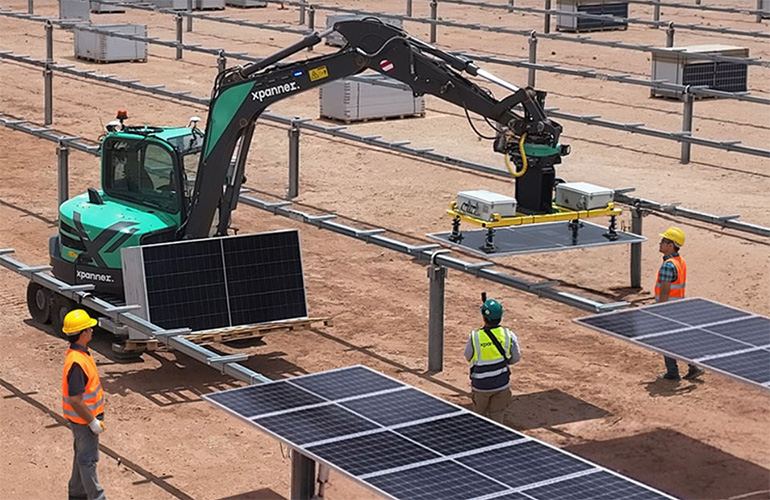
The recent introduction of the X1 Panel Lift by Xpanner Global marks a significant advancement in the solar energy sector, particularly in the realm of automated solar panel installation. This innovative system aims to alleviate the skilled labor shortage that is increasingly impacting the solar industry. The X1 Panel Lift, initially designed for solar pile-driving operations, has been adapted to facilitate the lifting and replacement of solar panels using excavators. The ability to automate the labor-intensive aspects of solar panel installation allows installation teams to concentrate on higher-value tasks, such as precision alignment and quality assurance.
The solar energy sector is characterized by its reliance on substantial manual labor for the placement of solar panels across expansive utility-scale projects. Xpanner’s solution seeks to redefine this paradigm, allowing for streamlined operations that enhance productivity while reducing the dependency on large crews. This shift is particularly pertinent given the current labor market constraints, making the deployment of automated systems not just advantageous but essential for the industry’s growth.
The primary objective of the X1 Panel Lift is to transform the solar installation process by integrating automation solutions that can operate effectively with minimal human intervention. The system is designed to be user-friendly, requiring only one operator to manage the entire operation through a simplified control interface. This operational efficiency is anticipated to significantly reduce the number of laborers needed on-site, enabling companies to allocate their workforce to more critical tasks that require skilled expertise.
By implementing the X1 Panel Lift, Xpanner aims to achieve several key outcomes:
– **Increased Efficiency**: Automating repetitive tasks allows crews to focus on quality assurance and installation precision.
– **Reduced Labor Costs**: Transitioning from a traditional crew of ten to a three-person team can dramatically lower operational costs.
– **Enhanced Safety**: The design ensures that operators can maintain safe distances during operation, mitigating risks associated with manual handling.
The deployment of the X1 Panel Lift system offers multiple advantages, particularly for stakeholders in the solar energy sector. These benefits include:
1. **Labor Reduction**: The X1 Panel Lift permits a significant decrease in the size of the workforce required for installation, allowing for a more agile and efficient approach to solar projects.
2. **Enhanced Safety Protocols**: With operators controlling the system from a distance, the risk of on-site injuries is minimized, contributing to a safer work environment.
3. **Real-Time Data Integration**: The system’s capability to create a digital twin of the job site facilitates ongoing monitoring and data collection, which can enhance project management and efficiency.
4. **Cost-Effectiveness**: The shift towards automation can lead to lower overall project costs, especially in terms of labor expenses and reduced rework due to installation errors.
5. **Scalability**: The modular nature of the X1 Panel Lift, which can be retrofitted to existing excavators, allows companies to upgrade their capabilities without significant capital investment in new equipment.
6. **Simplicity of Operation**: The user-friendly interface requires minimal training, allowing operators to become proficient quickly, thus reducing downtime associated with onboarding new personnel.
However, it is important to note that while the system addresses many challenges in the solar installation process, it still necessitates human oversight, particularly in tasks such as securing panels to frames. Therefore, a balanced approach that combines automation with skilled labor remains essential.
As advancements in artificial intelligence continue to evolve, their integration into automated solutions like the X1 Panel Lift is poised to augment the capabilities of robotic systems in the solar energy sector. Future developments may include:
– **Enhanced Predictive Analytics**: AI algorithms could analyze historical project data to forecast potential delays and optimize scheduling, further improving labor efficiency.
– **Improved Autonomous Navigation**: Future iterations of the X1 Panel Lift may incorporate advanced machine learning techniques to enhance the system’s ability to adapt to dynamic environmental conditions on job sites.
– **Integration with Supply Chain Management**: AI-driven logistics solutions could streamline the supply chain for solar materials, ensuring that components are available when needed, thus minimizing downtime.
In conclusion, the integration of automated systems such as the X1 Panel Lift represents a transformative step for the solar industry, providing significant benefits in efficiency, cost reduction, and safety. As AI continues to shape the landscape of automation, the potential for even more sophisticated solutions will enable further advancements in solar energy deployment, ultimately supporting the industry’s growth and sustainability goals.
Disclaimer
The content on this site is generated using AI technology that analyzes publicly available blog posts to extract and present key takeaways. We do not own, endorse, or claim intellectual property rights to the original blog content. Full credit is given to original authors and sources where applicable. Our summaries are intended solely for informational and educational purposes, offering AI-generated insights in a condensed format. They are not meant to substitute or replicate the full context of the original material. If you are a content owner and wish to request changes or removal, please contact us directly.
Source link :