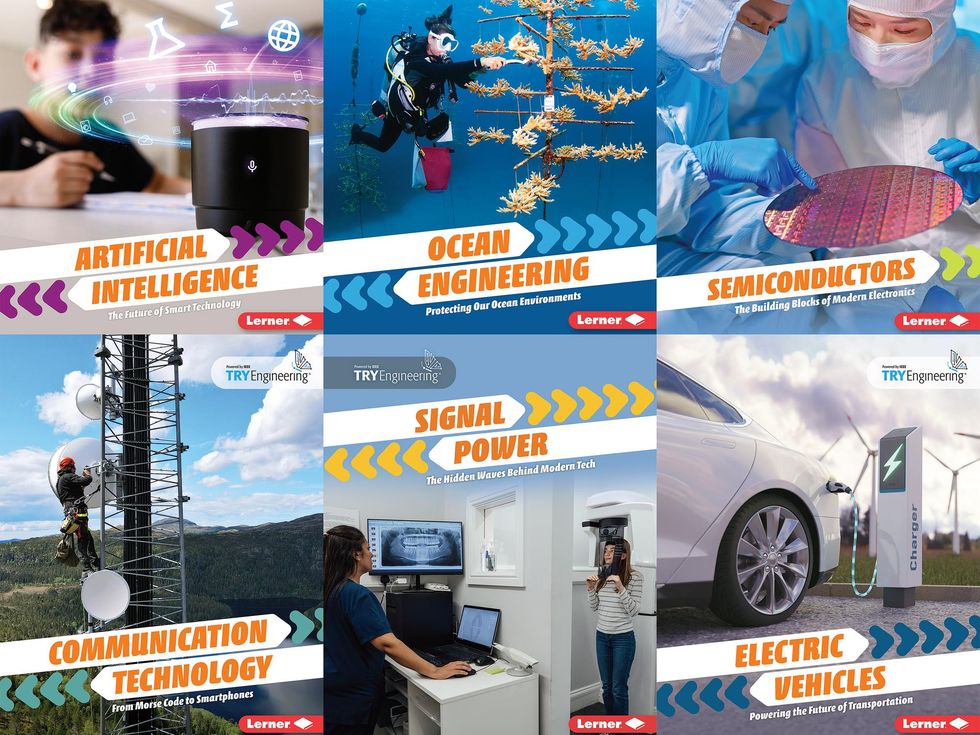
Contextual Overview The IEEE TryEngineering initiative plays a pivotal role in cultivating intellectual curiosity among young learners, particularly in the fields of science, technology, engineering, and mathematics (STEM). As we navigate an era characterized by rapid technological advancements—particularly in artificial intelligence, electric vehicles, and marine exploration—preparing the next generation of innovators becomes increasingly vital. The introduction of the STEM-focused book series, Tomorrow’s Technology With TryEngineering, Powered by IEEE, aims to demystify complex technological concepts for children aged 8 to 12. This series is designed to engage young minds through age-appropriate narratives, real-world applications, and interactive challenges, thus fostering critical thinking and creativity. Main Goal and Methodology The primary objective of the Tomorrow’s Technology book series is to equip children with a foundational understanding of contemporary technologies that influence their daily lives. Achieving this goal entails presenting intricate subjects in an accessible format, utilizing engaging storytelling, relatable examples, and hands-on design challenges to stimulate curiosity. By bridging the gap between theoretical concepts and practical applications, the series encourages students to view themselves as future problem-solvers and innovators. Advantages of the STEM Book Series Enhanced Engagement: The series employs engaging narratives and relatable examples that resonate with young readers, enhancing their interest in STEM fields. Real-World Relevance: By connecting theoretical concepts to everyday technologies—like smartphones and electric vehicles—the series makes learning applicable and meaningful. Critical Thinking Development: The inclusion of design challenges encourages students to think analytically and creatively, fostering essential problem-solving skills. Collaboration with Experts: The partnership with various IEEE societies ensures that the content is accurate, relevant, and aligned with current technological trends. Accessibility: Available through multiple platforms, including Amazon and Lerner Publishing Group, the series is easily accessible to educators, libraries, and families. While these advantages are significant, it is important to note that the effectiveness of the series largely depends on how it is integrated into educational settings. Educators must actively encourage exploration and discussion around the topics presented to maximize the learning experience. Future Implications in the Context of AI Developments Looking ahead, the implications of advancements in artificial intelligence and related technologies are profound. As AI continues to evolve, it is anticipated that educational tools like the Tomorrow’s Technology series will adapt to incorporate more interactive and immersive learning experiences, such as virtual reality and gamified learning. This evolution will not only enhance engagement but also provide learners with real-time exposure to the technologies shaping their world. Moreover, as AI systems become increasingly integrated into daily life, the importance of ethical considerations—such as bias and privacy—will necessitate a curriculum that prepares students to navigate these complex issues critically and thoughtfully. The ongoing partnership between educational initiatives and technological advancements will be crucial in shaping a generation of informed, responsible innovators. Disclaimer The content on this site is generated using AI technology that analyzes publicly available blog posts to extract and present key takeaways. We do not own, endorse, or claim intellectual property rights to the original blog content. Full credit is given to original authors and sources where applicable. Our summaries are intended solely for informational and educational purposes, offering AI-generated insights in a condensed format. They are not meant to substitute or replicate the full context of the original material. If you are a content owner and wish to request changes or removal, please contact us directly. Source link : Click Here

Contextual Overview The partnership between Plantik Biosciences and Hudson River Biotechnology signifies a pivotal advancement in agricultural biotechnology, particularly in the realm of heat tolerance for crops. This collaboration aims to develop a heat-tolerance trait that can be licensed by strawberry breeders, addressing an urgent need in agriculture due to the increasing frequency of extreme heat events globally. With strawberries being particularly vulnerable to high temperatures, which adversely affect flowering and fruit quality, this initiative promises significant improvements in crop resilience. Main Goal and Achievement Pathway The primary objective of this partnership is to create validated heat tolerance traits in crops, specifically strawberries, that can be easily adopted by breeders. This goal is set to be achieved by leveraging Plantik’s advanced genome editing capabilities, which focus on the regulatory elements of DNA that control gene expression, in conjunction with Hudson River’s innovative genome editing methodologies. By utilizing these technologies, the companies aim to expedite the development process, transforming trait discoveries into enhanced crop varieties within a remarkably short timeframe. Structured Advantages Rapid Development: Plantik’s ATLANTIS platform enables swift identification and editing of heat tolerance traits, allowing the development of new crop varieties in approximately 12 months, as opposed to the traditional breeding timeline of five to eight years. Increased Crop Resilience: By focusing on heat tolerance, the initiative directly addresses the threats posed by climate change, ensuring that crops such as strawberries can maintain yield and quality under adverse conditions. Cost-Effective Solutions: The BioMaas platform from Hudson River provides breeders with access to advanced genome editing without the need for extensive in-house R&D, significantly lowering the financial barriers typically associated with trait development. Collaboration and Knowledge Sharing: The partnership fosters a collaborative environment where trait developers like Plantik can share insights and innovations with Hudson River’s network of breeders, enhancing the overall effectiveness of the breeding process. De-risking the Breeding Process: By offering a technological solution that reduces the failure rate of trait development from 90% to 10%, the partnership empowers smaller breeders with the tools necessary to compete against larger seed companies. Future Implications of AI Developments The integration of artificial intelligence (AI) in agricultural biotechnology is poised to revolutionize crop breeding and trait development. As AI technologies advance, they will enhance the capabilities of platforms like Plantik’s ATLANTIS, enabling more precise editing of genomes and the identification of beneficial traits. Furthermore, AI-driven data analytics could streamline the validation process of crop traits, accelerating the time from research to market. This evolution in technology will not only bolster the efficiency of trait development but also democratize access to advanced breeding techniques, allowing a broader range of innovators within the AgriTech sector to contribute to sustainable agricultural practices. Disclaimer The content on this site is generated using AI technology that analyzes publicly available blog posts to extract and present key takeaways. We do not own, endorse, or claim intellectual property rights to the original blog content. Full credit is given to original authors and sources where applicable. Our summaries are intended solely for informational and educational purposes, offering AI-generated insights in a condensed format. They are not meant to substitute or replicate the full context of the original material. If you are a content owner and wish to request changes or removal, please contact us directly. Source link : Click Here
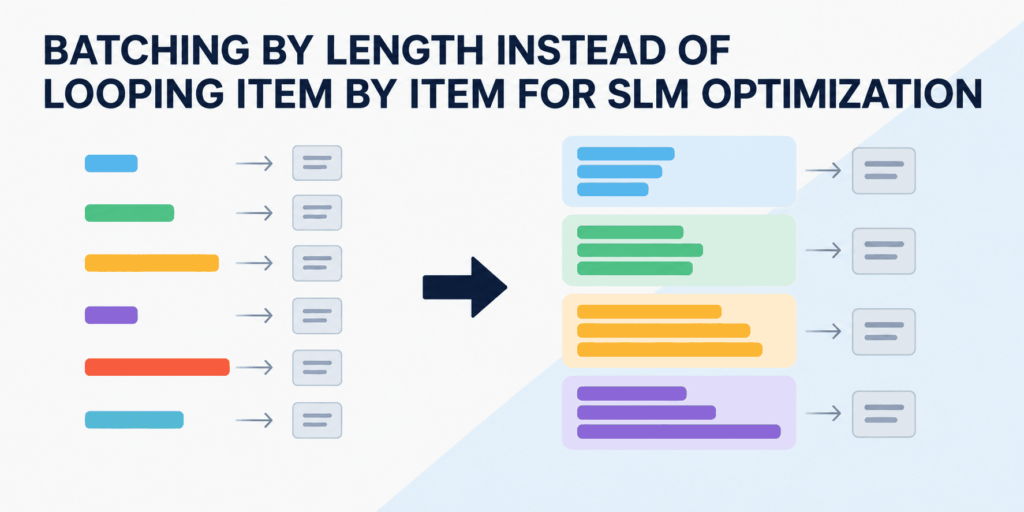
Context and Background In the realm of Applied Machine Learning, optimizing the performance of small language models (SLMs) is critical for enhancing automation processes. The article “Batching by Length Instead of Looping Item by Item for SLM Optimization” addresses a specific technique aimed at improving the efficiency of SLMs by batching input sequences based on their lengths rather than processing each item sequentially. This approach is particularly relevant for practitioners working with natural language processing tasks, such as classifying support tickets, where time and resource efficiency can significantly affect overall productivity. Main Goals and Implementation Strategies The primary goal of the discussed technique is to minimize computational waste by reducing the memory-bandwidth constraints that arise when processing sequences one at a time. This is achieved through the implementation of length-based batching, which involves sorting input sequences by their token lengths before grouping them into batches. This strategy allows each batch to pad to its own local maximum length, thus minimizing the number of padding tokens that need to be processed, which would otherwise inflate the computational workload. Advantages of Length-Based Batching Increased Throughput: By processing multiple sequences simultaneously, the length-based batching method significantly increases throughput. In practical tests, models demonstrated a marked improvement in processing speed when using this batching strategy compared to item-by-item processing. Reduced Padding Overhead: Traditional batching methods often require padding sequences to the maximum length of the batch. By sorting sequences, the length-based batching minimizes padding, thereby reducing the overall number of tokens processed unnecessarily. This was evidenced by the observed 7.6% padding overhead in tests, compared to much higher percentages in arbitrary batching. Resource Efficiency: Memory and compute resources are used more effectively with this method, as it avoids the scenario where the arithmetic units of the hardware sit idle while waiting for memory access. This is particularly important for models deployed in environments with limited computational resources. Consistency in Output: The method ensures that the output remains consistent with the predictions from the item-by-item approach. Any optimization that results in altered predictions would not be considered valid, as it may lead to decreased model reliability. Caveats and Limitations Dependency on Sequence Length Distribution: The effectiveness of length-based batching is contingent upon the distribution of sequence lengths. If the input data includes a wide variance in lengths, this method may require careful tuning to achieve optimal results. Complexity in Implementation: While the technique can yield significant performance improvements, it may introduce additional complexity in the implementation phase. Practitioners must be mindful of ensuring that the sorting and batching processes do not compromise the integrity of the data. Integration with Existing Caching Techniques: Combining this batching strategy with other optimizations, such as prefix caching, necessitates careful consideration to maintain the accuracy of predictions. Future Implications in AI Development The advancements in AI, particularly in the field of natural language processing, will likely continue to emphasize the importance of efficient model deployment. As models become increasingly complex, the need for optimization techniques that enhance throughput without sacrificing output quality will be paramount. The adoption of strategies like length-based batching will become more widespread as organizations seek to leverage AI technologies for operational efficiency. Furthermore, as computational resources evolve, integrating sophisticated batching methods with emerging hardware architectures will be critical. This synergy could pave the way for further innovations in AI applications, allowing for real-time processing and decision-making in various sectors, including customer service, healthcare, and finance. Conclusion In summary, the adoption of length-based batching in small language model optimization presents a promising avenue for enhancing computational efficiency in Applied Machine Learning. By minimizing padding overhead and maximizing throughput, practitioners can achieve significant performance benefits, ultimately leading to more efficient automation processes. As AI technologies continue to evolve, the importance of such optimization techniques will only grow, highlighting the need for ongoing research and development in this area. Disclaimer The content on this site is generated using AI technology that analyzes publicly available blog posts to extract and present key takeaways. We do not own, endorse, or claim intellectual property rights to the original blog content. Full credit is given to original authors and sources where applicable. Our summaries are intended solely for informational and educational purposes, offering AI-generated insights in a condensed format. They are not meant to substitute or replicate the full context of the original material. If you are a content owner and wish to request changes or removal, please contact us directly. Source link : Click Here
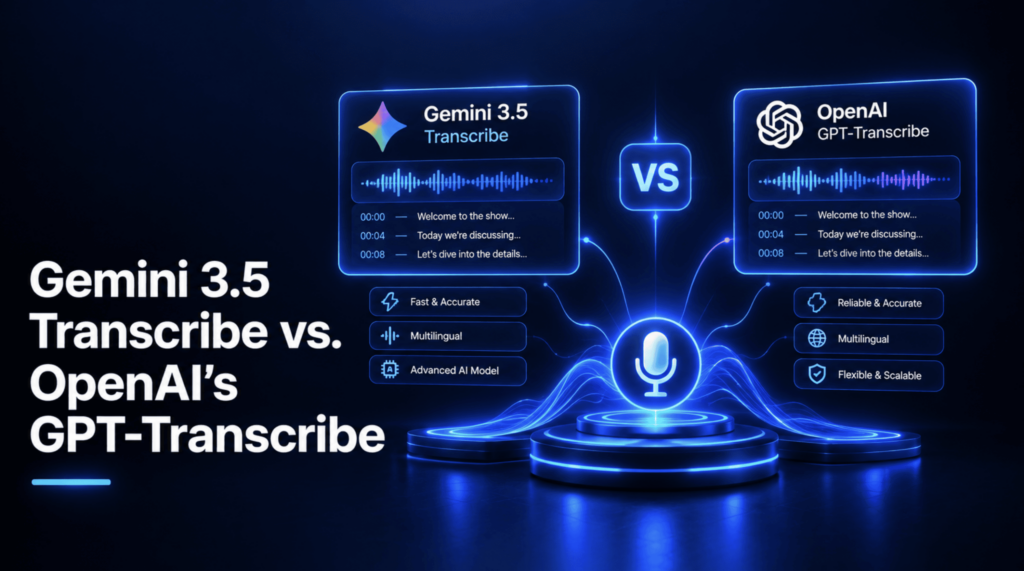
Context The recent releases of Google’s Gemini 3.5 Transcribe and OpenAI’s GPT-Transcribe provide an invaluable opportunity for comparison within the domain of transcription technologies. Launched respectively on August 26, 2026, and July 28, 2026, these models are positioned closely in timeline, allowing for a nuanced examination of their capabilities. Both transcription services are designed for distinct use cases—one for real-time streaming and the other for pre-recorded audio—enabling a direct and meaningful comparison. Main Goal The primary goal articulated in the original blog post is to discern the strengths and weaknesses of Gemini 3.5 Transcribe and GPT-Transcribe in order to assist users in selecting the most appropriate tool for their specific transcription needs. This can be achieved through an in-depth analysis of key performance metrics, including speed, accuracy, and feature set, contextualized within real-world applications. By evaluating these factors, end-users can make informed decisions based on their unique requirements for transcription services. Advantages of Gemini 3.5 Transcribe Speed Improvement: Gemini 3.5 Transcribe boasts a remarkable 70% enhancement in time-to-final-transcription compared to its predecessor, Chirp 3. This rapid turnaround is crucial for scenarios where timely access to transcribed content is paramount. Lower Word Error Rate (WER): The model exhibits a WER of 4.0% for streaming and 2.6% for non-streaming applications, as benchmarked by Artificial Analysis. This level of accuracy is critical for maintaining the integrity of transcribed material. Multi-Speaker Attribution: The built-in capability to reliably attribute dialogue to up to three speakers without additional models streamlines workflows, particularly in multi-speaker environments such as meetings. Support for Multiple Languages: With the ability to recognize over 85 languages, Gemini 3.5 Transcribe is well-suited for diverse applications across global contexts. Word-Level Timestamps: The inclusion of timestamps enhances the utility of the transcription for post-analysis and content repurposing, especially valuable in legal and academic settings. Advantages of OpenAI’s GPT-Transcribe Cost-Effectiveness: Priced at $0.0045 per minute for file transcription and $0.017 per minute for streaming, GPT-Transcribe presents a cost-efficient option for users focused on budget constraints. Keyword and Language Hints: This model’s capacity to accept keyword and language hints aids in handling domain-specific terminology and code-switching, thus enhancing transcription quality in specialized contexts. Limitations While both models present unique advantages, there are notable limitations. Gemini 3.5 Transcribe does not currently disclose its pricing for streaming services, which may hinder budgetary planning for potential users. Conversely, GPT-Transcribe lacks built-in speaker diarization and requires additional models for features like word-level timestamps, potentially complicating workflows for users needing these functionalities. Future Implications The ongoing advancements in AI transcription technologies signal significant future implications for various sectors, including education, business, and legal fields. As models continue to evolve, we can anticipate improvements in transcription accuracy, processing speed, and user accessibility. These enhancements will likely lead to increased adoption of AI-driven transcription tools in everyday applications, further integrating them into workflows and communication processes. Additionally, as AI develops, we may see the emergence of more sophisticated features, such as real-time language translation and enhanced contextual understanding, paving the way for more seamless global communication. Conclusion In summary, the comparison between Gemini 3.5 Transcribe and OpenAI’s GPT-Transcribe reveals critical insights for users seeking effective transcription solutions. Gemini excels in scenarios requiring multi-speaker attribution and rapid transcription, while GPT-Transcribe stands out for its cost-effectiveness and specialization in single-speaker contexts. As these technologies continue to advance, their impact on the field of Natural Language Understanding will become increasingly profound, shaping the future of communication and data management. Disclaimer The content on this site is generated using AI technology that analyzes publicly available blog posts to extract and present key takeaways. We do not own, endorse, or claim intellectual property rights to the original blog content. Full credit is given to original authors and sources where applicable. Our summaries are intended solely for informational and educational purposes, offering AI-generated insights in a condensed format. They are not meant to substitute or replicate the full context of the original material. If you are a content owner and wish to request changes or removal, please contact us directly. Source link : Click Here
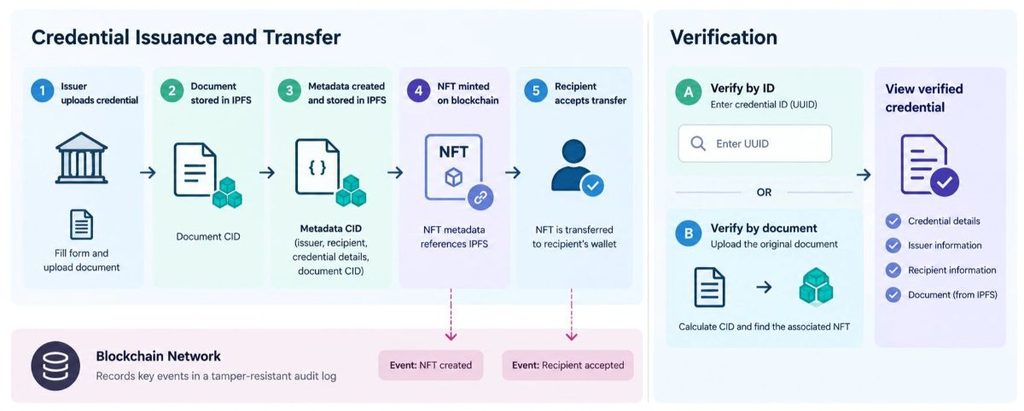
Context Content-addressed storage, immutable state, and explicit lifecycle events can significantly enhance the verification of digital credentials. Digital Credentials Have a Verification Problem Digital credentials, such as certificates and licenses, are increasingly prevalent in various sectors, including education and employment. However, once these documents leave their issuing systems, verifying their authenticity poses a considerable challenge. Verifiers often receive documents in formats like PDFs that do not provide a straightforward method for authenticity checks. The lack of means to ascertain whether the document is the original issued file, whether its metadata has been altered, or if the intended recipient has formally accepted it complicates the verification process. To mitigate these issues, a layered approach is proposed. This involves using content-addressed storage to uniquely identify the document, structured metadata to describe the credential, an immutable state layer to maintain a reliable reference, and explicit lifecycle events to log the issuance and acceptance of the credentials. A practical implementation of this approach is exhibited through the D-Certify project, which showcases how these components can function collectively. Main Goal and Achievement The primary objective of integrating content-addressed storage and blockchain technology in digital credential verification is to create a robust, secure, and transparent verification process. This goal can be achieved by establishing a system where each credential is divided into distinct layers that facilitate independent verification of document integrity, metadata, ownership, and lifecycle history. Advantages of the Proposed System Enhanced Integrity: Content addressing ensures that each document has a unique identifier (CID) derived from its content, making it impossible to alter without changing the CID. Structured Metadata: By storing metadata that includes issuer and recipient information alongside the CID, the system strengthens the linkage between the document and its verification history. Immutable References: The use of a ledger provides a durable reference that records the credential’s state, ensuring that ownership can be traced without confusion. Explicit Lifecycle Events: Clearly defining events such as issuance and acceptance creates a transparent audit trail, enhancing trust in the verification process. Reproducibility in Verification: Verification can reconstruct the credential either through its internal UUID or by calculating the CID from the document, thereby simplifying the verification process. Caveats and Limitations: Despite these advantages, the system does not inherently establish trust in the issuer of the credentials. While a CID verifies content integrity, it does not guarantee that the issuer is legitimate. Furthermore, privacy concerns arise as metadata stored in content-addressed systems may still be accessible depending on the configuration, requiring careful management of data access and minimization practices. Future Implications and AI Developments As artificial intelligence continues to evolve, its integration into the verification of digital credentials may significantly alter the landscape. AI can enhance the analysis of verification data, providing predictive insights and anomaly detection capabilities that can identify potential fraud or inconsistencies in credential issuance and acceptance. Furthermore, AI-driven systems can streamline the verification process, offering real-time assessments that bolster confidence in the integrity of digital credentials. Moreover, as organizations increasingly adopt decentralized verification systems, AI can facilitate the management of large datasets, ensuring that verification processes remain efficient and scalable. Future advancements in AI technology may also lead to the development of more sophisticated algorithms for identity verification, further enhancing the reliability of digital credentials. Disclaimer The content on this site is generated using AI technology that analyzes publicly available blog posts to extract and present key takeaways. We do not own, endorse, or claim intellectual property rights to the original blog content. Full credit is given to original authors and sources where applicable. Our summaries are intended solely for informational and educational purposes, offering AI-generated insights in a condensed format. They are not meant to substitute or replicate the full context of the original material. If you are a content owner and wish to request changes or removal, please contact us directly. Source link : Click Here
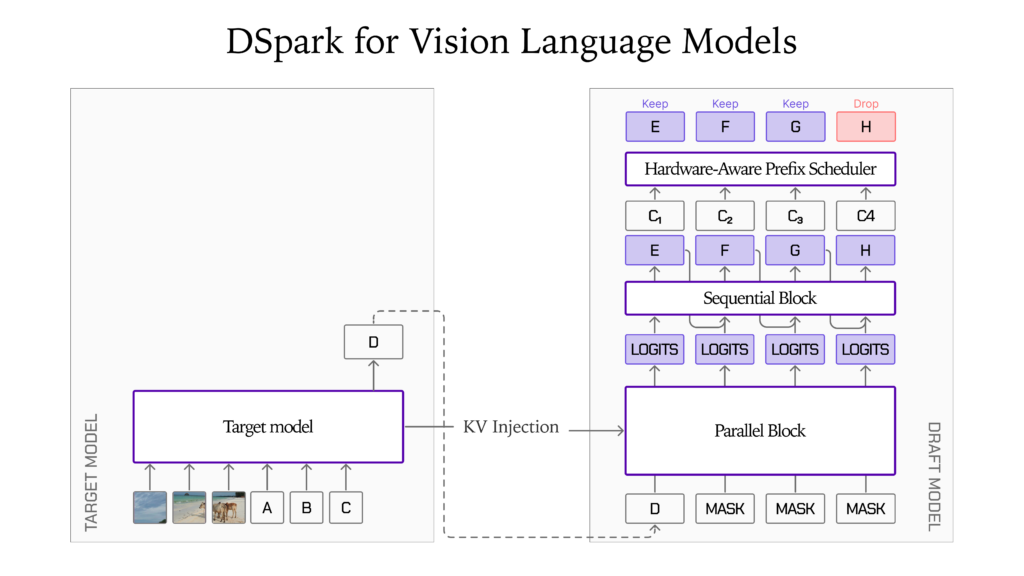
Context The recent introduction of the DSpark draft model for the vision-language model (VLM) LFM2.5-VL-3B marks a significant advancement in the field of generative AI. This model implements a speculative decoding path that enhances inference speeds while maintaining output quality, thereby addressing the increasing demand for efficient AI applications across various platforms. Specifically, the model showcases notable performance improvements with decode speedups of up to 3.13x on device and 2.66x on advanced hardware like the H100, all while adding a negligible memory footprint of 280M parameters, which equates to an 8.9% increase over the base model. Main Goal and Achievement The primary objective of the DSpark model is to accelerate the processing capabilities of vision-language models, thereby enhancing their applicability in real-time and resource-constrained environments. This goal is achieved through the implementation of a speculative decoding strategy, where the model predicts multiple candidate tokens simultaneously. This innovative approach allows for faster decision-making without compromising the integrity and accuracy of outputs. By leveraging the existing architecture of the LFM2.5-DSpark models, the new draft model successfully integrates this mechanism, offering a significant leap in performance for AI-driven applications. Advantages of the DSpark Model Increased Inference Speed: The model demonstrates substantial gains in decoding speed—up to 3.13x on-device and 2.66x on advanced GPUs. This enhancement is crucial for applications requiring real-time processing. Minimal Memory Overhead: By introducing just 280M additional parameters, the model maintains an efficient memory profile, making it suitable for deployment in resource-constrained environments. Compatibility and Support: Day-one integration with popular frameworks such as llama.cpp, MLX-VLM, and SGLang ensures that users can leverage the model’s capabilities immediately. Robust Performance Across Tasks: The model’s effectiveness spans various vision-based tasks, including visual question answering and image captioning, as verified through diverse benchmarking. However, it is essential to note the limitations associated with speculative decoding; while it significantly enhances decoding speed, it does not reduce the time taken for vision encoding or prefill processes. This limitation can restrict overall speed improvements, particularly in scenarios where prefill constitutes a larger portion of latency. Future Implications The advancements represented by the LFM2.5-VL-DSpark model have far-reaching implications for the generative AI landscape. As AI technologies continue to evolve, the integration of faster and more efficient models will likely spur innovation in various applications, from autonomous systems to interactive AI interfaces. The ability to process visual and textual information concurrently at an accelerated rate opens up new possibilities for developing more sophisticated AI solutions. Furthermore, as models like DSpark become more prevalent, we can expect enhancements in accessibility and usability for AI developers, thereby democratizing AI technology and widening its application spectrum. Disclaimer The content on this site is generated using AI technology that analyzes publicly available blog posts to extract and present key takeaways. We do not own, endorse, or claim intellectual property rights to the original blog content. Full credit is given to original authors and sources where applicable. Our summaries are intended solely for informational and educational purposes, offering AI-generated insights in a condensed format. They are not meant to substitute or replicate the full context of the original material. If you are a content owner and wish to request changes or removal, please contact us directly. Source link : Click Here

Introduction The recent announcements made by 8am at their second-annual Kaleidoscope customer conference in Las Vegas mark a significant advancement in the integration of artificial intelligence (AI) into legal practice management. 8am, the parent company of MyCase, CasePEER, and DocketWise, unveiled a series of innovative tools designed to streamline legal workflows and enhance financial management for law firms. These developments not only reflect the ongoing evolution of LegalTech but also underscore the potential of AI to transform legal operations fundamentally. Main Objectives and Achievements The primary goal of the 8am announcements is to enhance the functionality of MyCase through the introduction of new generative AI tools and a Claude MCP connector. The integration of these technologies aims to simplify administrative tasks, improve data accessibility, and facilitate more efficient legal processes. By enabling legal professionals to engage in natural language conversations with their case management systems, 8am seeks to reduce the time spent on administrative duties and empower users to focus on substantive legal work. Advantages of the New Developments Enhanced Efficiency: The MyCase MCP connector supports 73 distinct actions across various legal tasks, allowing users to retrieve information such as case summaries and outstanding invoices through conversational prompts. This reduces the time spent navigating complex software interfaces. Improved Data Utilization: The 8am IQ Firm Agent enables users to query their entire MyCase data set, facilitating access to crucial information across different cases and financial records. This holistic view can enhance decision-making processes for law firm leaders. Streamlined Document Creation: The 8am IQ Draft feature automates the generation of document templates and fills them with case-specific information, thus minimizing the time and effort required for document preparation. Financial Insight and Management: The introduction of Smart Spend Intelligence aids firms in categorizing expenses related to cases, thereby reducing unreimbursed expenses and providing clearer financial insights. Accessible Funding Options: The 8am Capital program allows law firms to secure financing based on their payment history, thus simplifying the funding process and enabling firms to invest in growth without traditional lending complexities. While these advancements present numerous advantages, it is essential to consider the limitations. For instance, the MCP connector’s effectiveness may vary based on the user’s subscription tier, potentially restricting access to certain data. Additionally, the new tools’ integration into existing workflows may require a learning curve for legal professionals accustomed to traditional practices. Future Implications The rapid pace of AI development in LegalTech indicates a transformative future for legal professionals. As firms increasingly adopt AI-driven tools, we can anticipate several implications: Increased Adoption of AI Tools: The legal industry is likely to see a wider adoption of AI solutions that enhance efficiency and reduce operational costs, leading to a more competitive landscape among firms. Shift in Legal Work Dynamics: As administrative tasks become more automated, legal professionals may shift their focus toward higher-value activities, such as strategic planning and client engagement. Continuous Improvement of AI Capabilities: Ongoing developments in AI technology will likely yield even more sophisticated tools, enhancing the capabilities of legal practice management software and enabling deeper data analysis. Ethical Considerations: The integration of AI in legal practices will necessitate discussions around ethical implications, including data privacy, bias in AI algorithms, and the potential impact on legal employment. Conclusion The announcements from 8am signify a pivotal moment in the LegalTech landscape, showcasing how AI can address the unique challenges faced by law firms today. By introducing innovative tools designed to enhance productivity and streamline financial management, 8am is not only setting a new standard for practice management software but also paving the way for the future of legal work. As the industry continues to evolve, legal professionals must remain adaptable to harness the full potential of these technological advancements. Disclaimer The content on this site is generated using AI technology that analyzes publicly available blog posts to extract and present key takeaways. We do not own, endorse, or claim intellectual property rights to the original blog content. Full credit is given to original authors and sources where applicable. Our summaries are intended solely for informational and educational purposes, offering AI-generated insights in a condensed format. They are not meant to substitute or replicate the full context of the original material. If you are a content owner and wish to request changes or removal, please contact us directly. Source link : Click Here

Contextual Background: The Evolution of Lie Detection Technology In recent years, the U.S. Department of Defense (DoD) has signaled a shift towards advanced technological solutions to enhance security measures within its ranks. This trend is underscored by a proposal from the Pentagon seeking $30 million to develop an AI-powered lie detection system, termed Polygraph+. This initiative, spearheaded by the Defense Counterintelligence and Security Agency (DCSA), emerges amidst heightened scrutiny over security leaks, particularly as the department grapples with ongoing tensions, such as those surrounding military engagements in Iran. Traditional polygraph tests, which have been utilized for decades, are increasingly viewed as inadequate in addressing contemporary challenges related to employee vetting and insider threat detection. Main Goal: Enhancing Security through AI Innovations The primary objective of the proposed AI-powered lie detector is to improve the accuracy and reliability of deception detection within the DoD. By integrating artificial intelligence with physiological data analysis, the Pentagon aims to create a more effective screening tool for prospective employees and current personnel. Achieving this goal entails harnessing cutting-edge technologies that can analyze a broader range of physiological indicators, moving beyond the limitations of traditional polygraphs, which primarily measure heart rate, blood pressure, and galvanic skin response. Advantages of AI-Powered Lie Detection Increased Accuracy: Current methodologies, relying on the polygraph, are challenged for their reliability. Reports indicate that the scientific basis for polygraph efficacy is weak, with the National Research Council categorizing its effectiveness as “weak at best.” AI systems could potentially enhance accuracy by incorporating multiple data points and machine learning algorithms to identify patterns associated with deceptive behavior. Objective Analysis: Unlike traditional polygraphs, which can suffer from subjective interpretations by examiners, AI technologies can offer a more standardized approach to data analysis. This could mitigate biases that often arise during human assessments, particularly regarding demographic factors. Scalability: AI systems can process vast amounts of data more efficiently than human examiners, which is crucial given the Department of Defense’s workforce of approximately 2.8 million individuals. This scalability could lead to a more comprehensive screening process while reducing the potential for false accusations stemming from inaccuracies. Innovation in Methodologies: The initiative reflects a broader trend within the DoD to explore novel technologies for security applications. By selecting companies like Presage Technologies and Altec Research, which are developing non-contact sensing technologies, the Pentagon is positioning itself at the forefront of technological innovation in security. Limitations and Caveats Despite the potential advantages of AI lie detection systems, several limitations warrant consideration. The reliability of AI models heavily depends on the quality of the data used for training. If the data lacks diversity or is biased, the outcomes may perpetuate existing disparities. Moreover, the ethical implications of AI surveillance and privacy concerns must be addressed to ensure that the deployment of such technologies does not infringe on individual rights. Future Implications: The Role of AI in Security and Deception Detection The integration of AI into lie detection technology represents a significant paradigm shift that could reshape the landscape of security protocols within the DoD and beyond. As AI continues to evolve, the potential for enhanced predictive analytics and real-time monitoring could lead to a more proactive approach in identifying insider threats. Furthermore, advancements in AI may drive innovations in related fields, such as criminal justice and corporate security, expanding the applicability of these technologies. However, ongoing research and dialogue are essential to navigate the ethical and practical considerations associated with these developments. Disclaimer The content on this site is generated using AI technology that analyzes publicly available blog posts to extract and present key takeaways. We do not own, endorse, or claim intellectual property rights to the original blog content. Full credit is given to original authors and sources where applicable. Our summaries are intended solely for informational and educational purposes, offering AI-generated insights in a condensed format. They are not meant to substitute or replicate the full context of the original material. If you are a content owner and wish to request changes or removal, please contact us directly. Source link : Click Here

Context The recent case involving U.S. Army soldier Cameron John Wagenius has highlighted significant vulnerabilities within the telecommunications industry, particularly regarding the security of customer metadata. Wagenius, who operated under the alias “Kiberphant0m,” was implicated in the breach of AT&T and Verizon, resulting in the unauthorized access to mobile call and text metadata of over 100 million users. This incident serves as a critical reminder of the ongoing challenges faced by cybersecurity professionals in safeguarding sensitive information against malicious actors. Main Goal and Its Achievement The primary objective of addressing cybersecurity threats, as illustrated by the case of Wagenius, is to enhance the protection of sensitive data from cybercriminals. This can be accomplished through the implementation of advanced security measures such as multi-factor authentication (MFA), continuous monitoring of systems for suspicious activities, and regular audits of data access protocols. The incident also underscores the necessity for organizations to adopt a culture of security awareness, ensuring that all employees are trained to recognize and respond to potential threats. Advantages of Enhanced Cybersecurity Measures Protection of Sensitive Data: Robust cybersecurity protocols safeguard sensitive customer information from unauthorized access. The breach of AT&T and Verizon demonstrates the potential harm to both individuals and organizations resulting from lax security measures. Regulatory Compliance: Adhering to cybersecurity best practices ensures compliance with regulatory frameworks such as GDPR or CCPA, which impose strict guidelines on data protection. Reputation Management: Organizations that prioritize cybersecurity are likely to maintain consumer trust and avoid reputational damage associated with data breaches. Reduction in Financial Loss: Effective cybersecurity strategies can mitigate financial losses caused by data theft and potential legal liabilities associated with breaches. Proactive Threat Identification: Continuous monitoring and vulnerability assessments enable organizations to identify and address potential threats before they can be exploited, as evidenced by the proactive measures taken by law enforcement in Wagenius’s case. Caveats and Limitations Despite the advantages, the implementation of comprehensive cybersecurity measures comes with challenges. The financial cost of advanced security technologies and the need for ongoing employee training can be significant. Additionally, the evolving nature of cyber threats necessitates a constant adaptation of strategies, which may strain organizational resources. Furthermore, as demonstrated by Wagenius’s case, even the most robust systems can be compromised if insider threats are not adequately managed. Future Implications of AI Developments in Cybersecurity The integration of artificial intelligence (AI) in cybersecurity is poised to revolutionize the field. AI can enhance threat detection and response capabilities, allowing for real-time analysis of vast amounts of data to identify anomalies indicative of cyberattacks. However, the dual-use nature of AI also presents risks; malicious actors may leverage AI to develop sophisticated attack methods. Moving forward, cybersecurity experts must stay ahead of emerging AI technologies, adapting their strategies to mitigate the risks posed by both cybercriminals and the technologies they exploit. The proactive use of AI in cybersecurity measures will be essential in fortifying defenses against the evolving landscape of cyber threats. Disclaimer The content on this site is generated using AI technology that analyzes publicly available blog posts to extract and present key takeaways. We do not own, endorse, or claim intellectual property rights to the original blog content. Full credit is given to original authors and sources where applicable. Our summaries are intended solely for informational and educational purposes, offering AI-generated insights in a condensed format. They are not meant to substitute or replicate the full context of the original material. If you are a content owner and wish to request changes or removal, please contact us directly. Source link : Click Here

Context The recent surge in Oracle Corp Japan’s stock price by over 7% following the announcement of record fiscal first-quarter sales and profits underscores the growing impact of cloud technology and artificial intelligence (AI) in the finance and fintech industries. The company reported a 13% increase in net sales to 74.86 billion yen ($472 million), with operating profits rising by 22.7% and net profits climbing by 23.2%. This robust performance was largely attributed to a 31.7% year-on-year increase in cloud revenue, which now constitutes 33.6% of total sales. Demand for cloud infrastructure is driving significant growth in data center utilization, particularly in Tokyo and Osaka, as organizations increasingly turn to cloud solutions to enhance their operational efficiencies. Main Goal The primary goal articulated in the original content is the expansion of Oracle Japan’s cloud and AI offerings, aimed at fostering sustained revenue growth and enhancing market competitiveness. This goal can be achieved through a strategic focus on cloud infrastructure development and the integration of AI solutions tailored to meet the evolving needs of financial professionals. By committing over $8 billion to cloud and AI infrastructure over the next decade, Oracle Japan aims to solidify its presence in the rapidly growing fintech landscape and provide innovative solutions to its clientele. Advantages of Cloud and AI Integration in Finance Enhanced Data Processing Capabilities: The integration of AI within cloud platforms allows for improved data analytics, enabling financial institutions to make more informed decisions based on real-time data analysis. Cost Efficiency: Transitioning to cloud-based solutions can significantly lower operational costs associated with maintaining on-premise infrastructure, allowing financial firms to allocate resources more effectively. Increased Scalability: Cloud services provide the flexibility needed to scale operations rapidly in response to market demand, thereby supporting growth initiatives without the burden of substantial upfront investments. Improved Customer Experience: AI-driven insights can enhance customer engagement through personalized services and automated customer support, leading to higher satisfaction and retention rates. Regulatory Compliance: Cloud solutions can facilitate better compliance with financial regulations through enhanced data security and easier tracking of transactions and activities. Caveats and Limitations Despite the numerous advantages, there are several caveats and limitations to consider. Financial professionals must be aware of the potential for data security breaches, as increased reliance on cloud services may expose sensitive financial information to cyber threats. Additionally, the integration of AI systems requires careful management to avoid biases in automated decision-making processes, which could lead to regulatory scrutiny and reputational damage. Finally, the transition to cloud-based solutions necessitates a cultural shift within organizations, which may face resistance from employees accustomed to traditional practices. Future Implications The trajectory of AI development within the finance sector suggests that we will witness a transformative shift in how financial services are delivered. Enhanced capabilities in AI will likely lead to more sophisticated risk assessment models, enabling financial professionals to identify and mitigate risks with greater accuracy. Furthermore, as AI technologies evolve, the potential for automation in routine tasks may free up financial professionals to focus on strategic initiatives, ultimately driving innovation and growth within the sector. The continued investment in cloud and AI infrastructure by companies like Oracle Japan is indicative of a broader trend toward digital transformation in finance, signaling a future where technology and finance are inextricably linked. Disclaimer The content on this site is generated using AI technology that analyzes publicly available blog posts to extract and present key takeaways. We do not own, endorse, or claim intellectual property rights to the original blog content. Full credit is given to original authors and sources where applicable. Our summaries are intended solely for informational and educational purposes, offering AI-generated insights in a condensed format. They are not meant to substitute or replicate the full context of the original material. If you are a content owner and wish to request changes or removal, please contact us directly. Source link : Click Here


