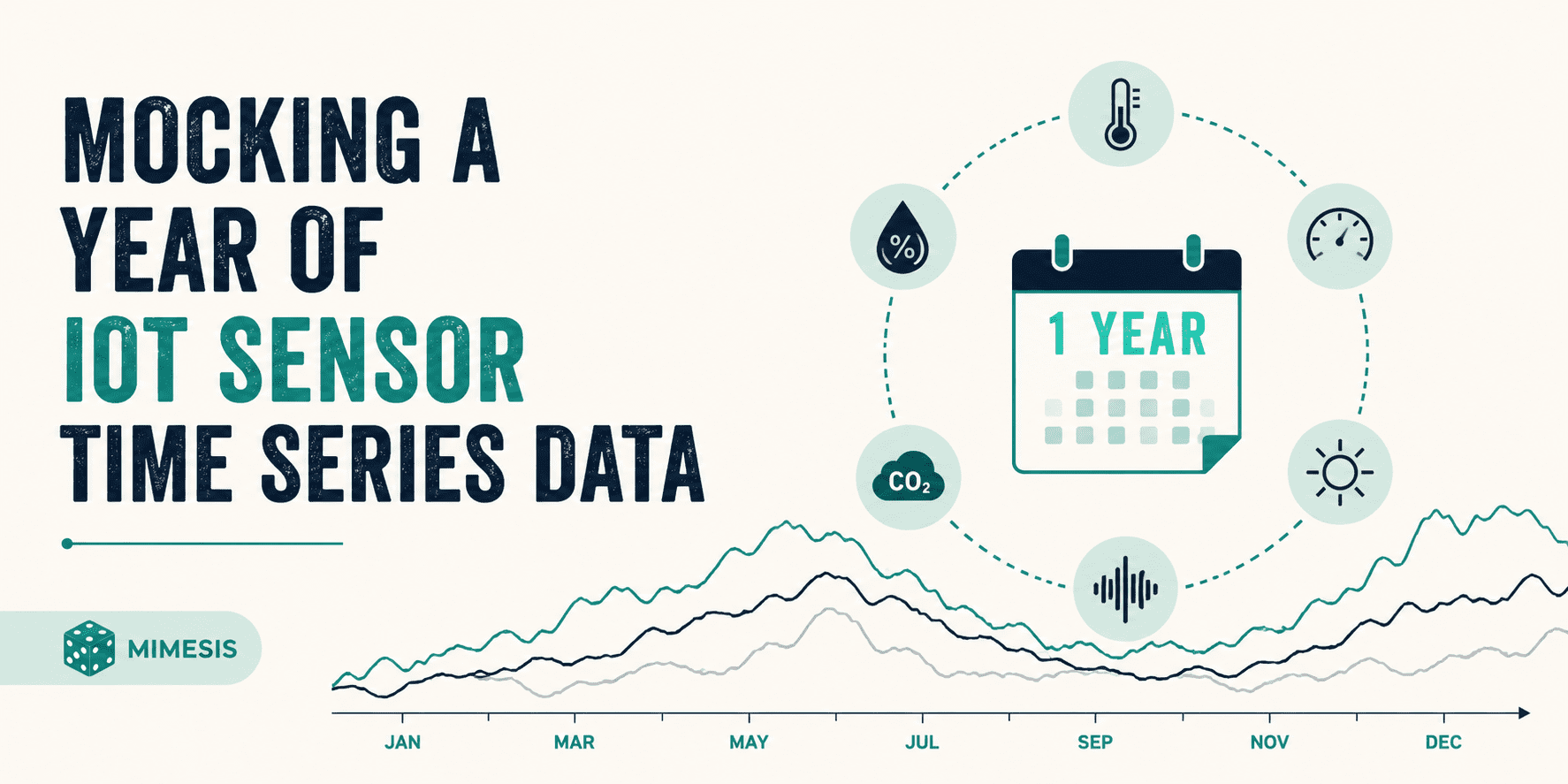
The mocking of Internet of Things (IoT) sensor data is an essential practice in research and development, particularly within the realms of data science and artificial intelligence (AI). This methodology allows for the simulation of datasets that would otherwise be challenging to obtain in real-world scenarios, facilitating various experimental analyses and projects. However, the generation of synthetic data transcends mere random number generation; it necessitates a coherent chronological timeline, comprehensive device metadata, and the incorporation of natural environmental fluctuations, such as seasonal variations. The open-source tool Mimesis offers a robust framework for the generation of such synthetic data, and this article delineates a structured approach to utilizing it for creating a year’s worth of daily temperature readings with realistic characteristics.
The primary objective of the original post is to demonstrate how to generate a year-long dataset of IoT sensor readings that accurately reflects seasonal temperature variations and includes device-specific metadata. Achieving this goal involves utilizing Python libraries such as Mimesis for data generation, pandas for structuring time series data, and NumPy for mathematical operations to simulate seasonal patterns. Through a systematic process, researchers can create datasets that mimic real-world conditions, thus enhancing the reliability and applicability of their analyses.
While mocking IoT sensor data presents numerous advantages, it is crucial to acknowledge certain limitations. The synthetic datasets may not fully capture the complexities and nuances of real-world data, particularly in cases where environmental interactions play a significant role. Additionally, the effectiveness of the mocked data relies heavily on the accuracy of the mathematical models used to simulate real-world conditions. Researchers must exercise caution in ensuring that their synthetic datasets remain representative of the phenomena they aim to study.
As advancements in AI and machine learning continue to evolve, the methodologies for generating and utilizing synthetic data will also progress. Future developments may include enhanced algorithms for simulating more complex environmental interactions and improved techniques for validating the realism of synthetic datasets. Moreover, the integration of AI-driven analytics could facilitate real-time data generation, allowing for dynamic adaptations to changing environmental conditions. This evolution will not only augment the capabilities of Natural Language Understanding (NLU) scientists but also expand the applications of synthetic data across various domains, from climate modeling to smart city planning.
In conclusion, the practice of mocking IoT sensor data represents a critical advancement in the fields of data science and AI, offering researchers the tools necessary to generate realistic datasets for experimental analysis. By leveraging open-source tools such as Mimesis in conjunction with established libraries like pandas and NumPy, researchers can create synthetic data that reflects real-world conditions, thus enhancing the reliability and applicability of their work. As AI continues to develop, the methodologies surrounding synthetic data generation will become increasingly sophisticated, paving the way for more accurate simulations and analyses in the future.
Disclaimer
The content on this site is generated using AI technology that analyzes publicly available blog posts to extract and present key takeaways. We do not own, endorse, or claim intellectual property rights to the original blog content. Full credit is given to original authors and sources where applicable. Our summaries are intended solely for informational and educational purposes, offering AI-generated insights in a condensed format. They are not meant to substitute or replicate the full context of the original material. If you are a content owner and wish to request changes or removal, please contact us directly.
Source link :