Executing Open-JEV Analyses in SQL on Databricks

Introduction

The emergence of advanced decision models, particularly those classified under the “System One” category, represents a significant evolution in the capabilities of machine learning and artificial intelligence within the realm of Big Data Engineering. Models such as Jev and their open-weight counterparts, including SemIf-OpenJev, Laya, and Kev, are designed to generate well-calibrated decisions from discrete data options. Their swift processing capabilities and cost-effectiveness allow for diverse applications ranging from customer support analysis to large-scale decision-making across extensive datasets. The integration of these models within platforms like Databricks facilitates the unlocking of their full potential by enabling direct interaction with governed data.

Main Goal and Achievement

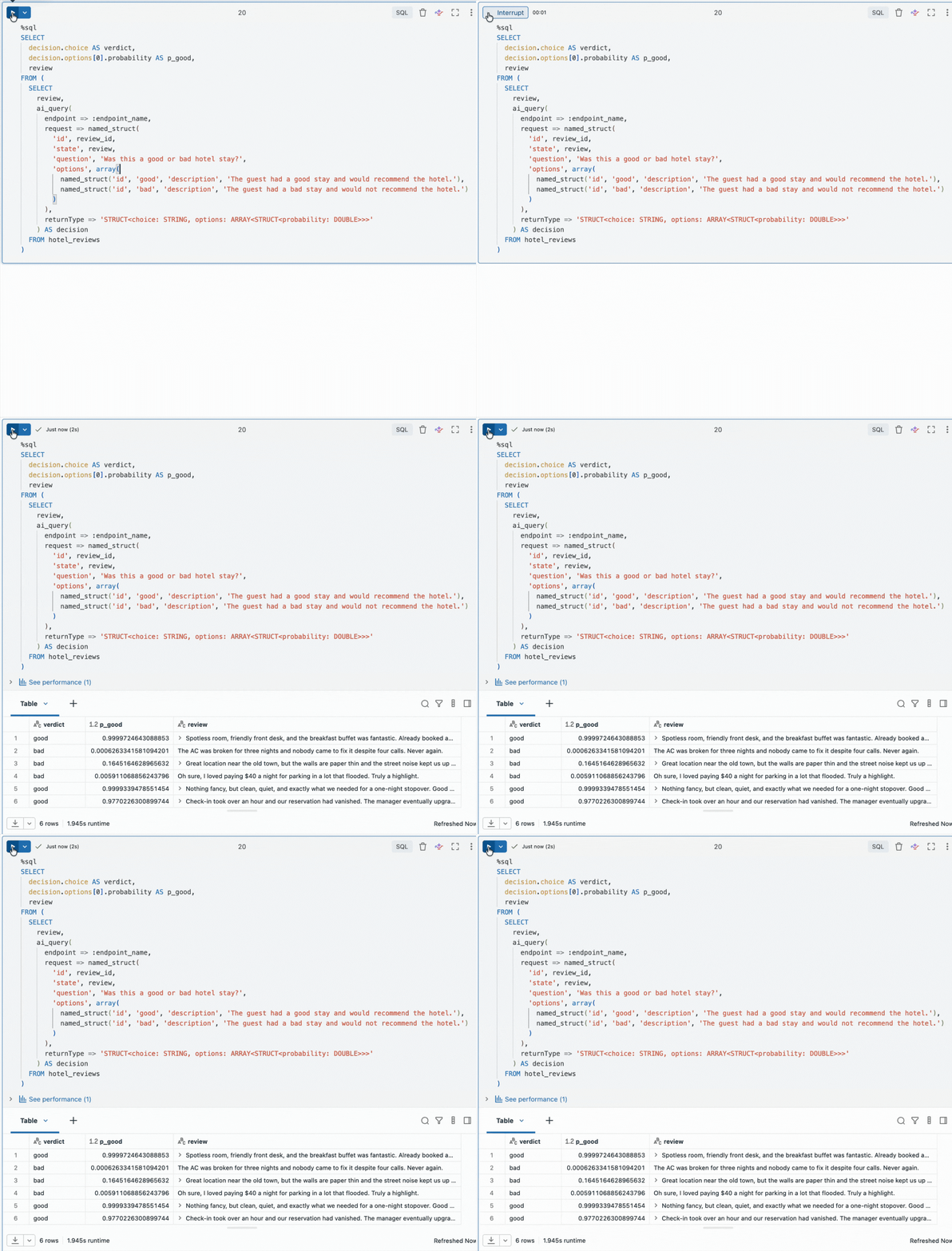
The primary objective of utilizing open-weight decision models in Databricks is to enhance data-driven decision-making processes through efficient model deployment and execution. By leveraging the capabilities inherent in Databricks, users can seamlessly deploy models such as SemIf-OpenJev to classify data—specifically, hotel reviews—into predefined categories with high accuracy. This is accomplished through a straightforward workflow that allows users to import a Databricks Notebook, select the appropriate model, and execute it using serverless GPU resources, thereby minimizing infrastructure management burdens.

Advantages of Using Open-Weight Decision Models

  • Cost-Effectiveness: The use of open-weight models eliminates the need for expensive proprietary solutions, thereby reducing overall costs associated with data processing.
  • Speed: These models are designed for rapid decision-making, which is crucial for applications needing timely insights, such as customer support transcript analysis.
  • Accessibility: Users can access these models directly from SQL consoles or production jobs, promoting ease of use and integration into existing workflows.
  • Customization: With tools like Databricks AI Runtime, users can customize and post-train models to fit specific enterprise contexts, enhancing their relevance and effectiveness.
  • Scalability: The ability to handle large datasets allows organizations to scale their analysis and decision-making processes without compromising performance.

However, it is important to consider the limitations of these models. Their effectiveness is contingent on the quality and quantity of the data they are trained on. Furthermore, while they offer customization options, the complexity of this process may pose challenges for users without a strong technical background.

Future Implications of AI Developments

The rapid advancement of AI technologies promises to further revolutionize the landscape of Big Data Engineering. Future iterations of decision models will likely incorporate more sophisticated algorithms, enabling even greater accuracy and efficiency in data analysis. As organizations increasingly adopt AI-driven solutions, the demand for skilled professionals who can implement and manage these technologies will grow. Moreover, as models become more accessible through platforms such as Databricks, non-technical users may find it easier to leverage AI tools, democratizing data science and analytics across various business functions.

Disclaimer

The content on this site is generated using AI technology that analyzes publicly available blog posts to extract and present key takeaways. We do not own, endorse, or claim intellectual property rights to the original blog content. Full credit is given to original authors and sources where applicable. Our summaries are intended solely for informational and educational purposes, offering AI-generated insights in a condensed format. They are not meant to substitute or replicate the full context of the original material. If you are a content owner and wish to request changes or removal, please contact us directly.

Source link :

Click Here

How We Help

Our comprehensive technical services deliver measurable business value through intelligent automation and data-driven decision support. By combining deep technical expertise with practical implementation experience, we transform theoretical capabilities into real-world advantages, driving efficiency improvements, cost reduction, and competitive differentiation across all industry sectors.

We'd Love To Hear From You

Transform your business with our AI.

Get In Touch