Introduction
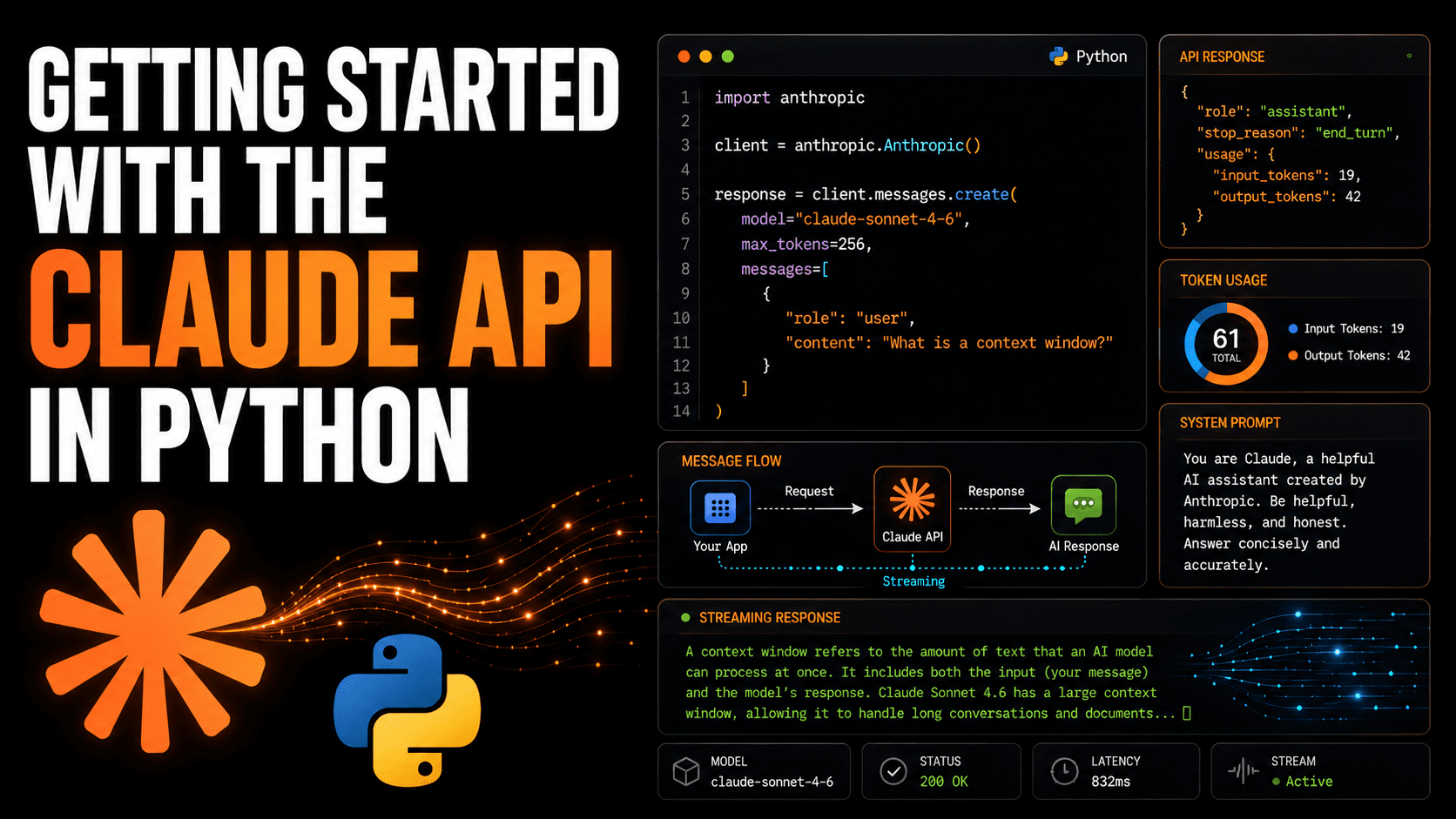
The advent of advanced artificial intelligence (AI) systems has revolutionized various domains, particularly in Natural Language Understanding (NLU) and Language Understanding. A key player in this transformation is the Claude API, which enables developers to integrate sophisticated language models into their applications. This blog post aims to elucidate the steps necessary for utilizing the Claude API within a Python environment, focusing on practical considerations such as response object interpretation, streaming outputs, and effective prompt structuring. These skills are essential for Natural Language Understanding scientists and developers seeking to enhance their applications with AI-driven capabilities.
Establishing a Foundation
To begin leveraging the Claude API, developers must first meet specific prerequisites, including the installation of Python 3.9 or higher, as well as the creation of a free Claude Console account that provides access to an API key. The significance of utilizing the Claude Python SDK cannot be overstated, as it streamlines API interactions by offering typed response objects, built-in retry mechanisms, and a user-friendly interface. This foundational setup is pivotal for ensuring seamless communication with the Claude API, thereby facilitating the effective integration of language understanding functionalities into applications.
Main Goals of Using the Claude API
The primary objective of this blog post is to guide users through the process of making their first API call and interpreting the subsequent outputs. Achieving this goal involves a series of methodical steps:
- Installation of the Claude SDK and proper API key management.
- Execution of an API call to retrieve meaningful responses from the language model.
- Understanding the structure of the response object to extract relevant information.
- Utilizing system prompts to dictate the behavior of the AI in conversations.
- Implementing streaming responses to enhance user experience during interactions.
Advantages of Utilizing the Claude API
The Claude API offers several advantages that can significantly benefit developers and NLU scientists:
- Ease of Integration: The SDK simplifies API interactions, allowing developers to focus on application logic instead of API intricacies.
- Structured Responses: The API returns structured response objects, making it easier to extract and utilize data effectively.
- System Prompts: Users can set persistent roles and constraints across conversations, enhancing the contextual relevance of interactions.
- Streaming Capabilities: Real-time output streaming improves user engagement by providing immediate feedback rather than waiting for complete responses.
However, it is essential to recognize limitations, such as the necessity for careful token management to avoid exceeding the model’s context limits and the potential for responses to be cut off if the max_tokens parameter is not adequately set.
Future Implications of AI Developments in NLU
The implications of ongoing advancements in AI and NLU are profound. As language models like Claude continue to evolve, we can anticipate enhancements in understanding context, sentiment, and even nuances in human communication. These improvements will empower developers to create more sophisticated applications capable of handling complex interactions. Moreover, as the technology matures, we may witness further integration of AI in various sectors, such as education, customer service, and healthcare, transforming how we interact with technology and each other. The future landscape of NLU promises to be dynamic and increasingly intertwined with everyday life, making it essential for professionals in this field to stay informed and adaptable.
Disclaimer
The content on this site is generated using AI technology that analyzes publicly available blog posts to extract and present key takeaways. We do not own, endorse, or claim intellectual property rights to the original blog content. Full credit is given to original authors and sources where applicable. Our summaries are intended solely for informational and educational purposes, offering AI-generated insights in a condensed format. They are not meant to substitute or replicate the full context of the original material. If you are a content owner and wish to request changes or removal, please contact us directly.
Source link :
Click Here