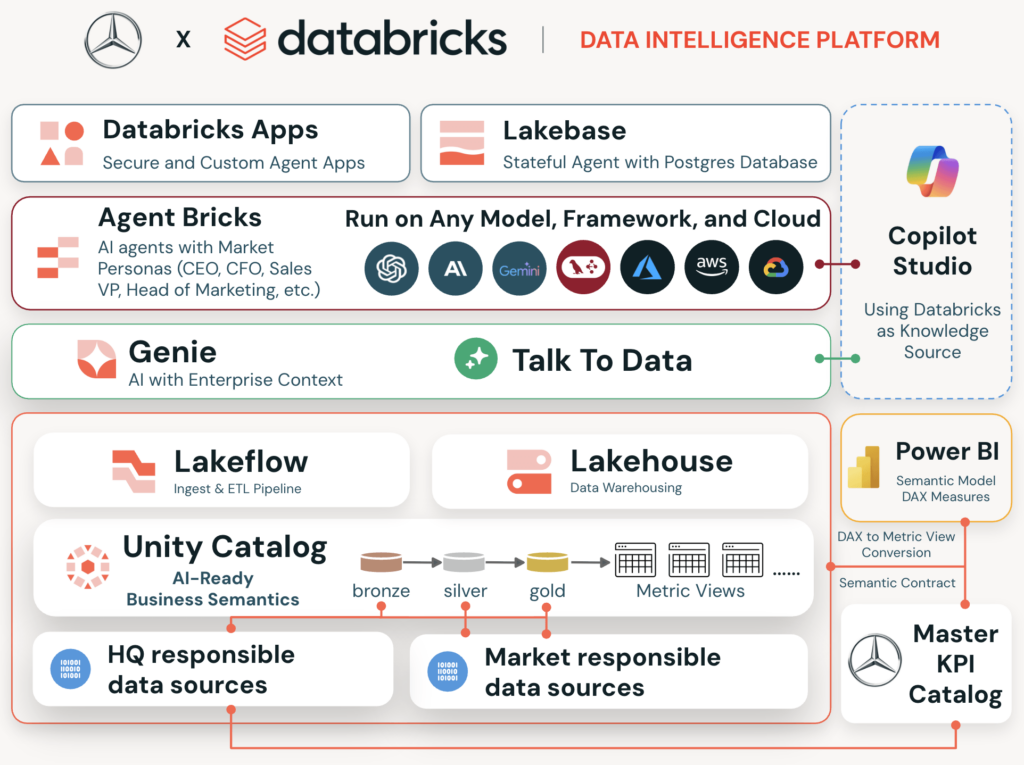
Context and Relevance in Big Data Engineering The demand for advanced data interaction capabilities, such as “Talk to Data,” is escalating across various industries. This trend underscores the necessity of a robust semantic foundation to facilitate reliable AI-driven responses. When AI systems leverage well-governed business logic rather than relying on convoluted schemas or disparate dashboards, the quality of answers improves significantly. Consistent key performance indicator (KPI) definitions, aligned business logic, and clearly defined joins and aggregations empower executives with the actionable insights they require. Mercedes-Benz Korea, in collaboration with Databricks, recognized this imperative and strategically expanded its analytics framework to incorporate a governed semantic layer suitable for enterprise AI applications. By facilitating access to KPI logic through platforms like Unity Catalog Business Semantics and Power BI, Mercedes-Benz Korea has pioneered a unified architecture that integrates data, semantics, and agentic AI. The insights gleaned from this initiative serve as a valuable blueprint for other markets within the Mercedes-Benz ecosystem. Main Objective and Its Achievement The primary goal of the “Talk to Data” initiative at Mercedes-Benz Korea was to establish an AI-ready, unified semantic foundation that could seamlessly support both business intelligence (BI) reporting and AI functionalities. This objective is achieved by ensuring that all data products are governed under consistent business definitions, thereby enhancing the reliability of AI outputs. This initiative was not merely about transitioning from Power BI but involved a comprehensive strategy to consolidate business logic across various platforms. By creating a single source of truth within the Unity Catalog, the organization aims to facilitate consistent AI responses across different scenarios, thereby streamlining the decision-making process. Advantages of a Unified Semantic Architecture Enhanced Consistency: By establishing a single source of truth, Mercedes-Benz Korea ensures that AI outputs align with established business definitions, thereby minimizing discrepancies in reporting across platforms. Improved Decision-Making: Executives benefit from explainable answers derived from a governed semantic foundation, enabling informed decision-making based on reliable data. Streamlined Data Access: The integration of KPI logic in Unity Catalog facilitates direct access for both BI tools and AI agents, leading to faster and more accurate responses to business queries. Efficiency in Development: The automated DAX-to-Metric-View transpiler significantly reduces the manual effort required for data migration, thereby expediting the onboarding of KPIs into the semantic layer. Future-Proofing Analytics: The architecture is designed to evolve towards agentic AI capabilities, allowing for the adaptation of governance structures as AI technologies progress. However, it is essential to recognize that the implementation of a unified semantic architecture requires meticulous planning and may pose challenges during the initial phases, particularly in terms of aligning existing data structures with new governance protocols. Future Implications of AI Developments The advancements in AI are set to transform the landscape of data engineering. As AI technologies become increasingly sophisticated, the need for well-defined semantic layers will intensify. Organizations will increasingly rely on AI to deliver contextual insights that are both accurate and timely, necessitating a robust infrastructure that can support these demands. Furthermore, as businesses adopt AI-driven analytics, the role of data engineers will evolve to encompass not only data management but also the curation of semantic frameworks that facilitate AI interactions. The implications of these developments will likely include enhanced collaboration between data scientists and engineers, driving innovation in AI applications across various sectors. Disclaimer The content on this site is generated using AI technology that analyzes publicly available blog posts to extract and present key takeaways. We do not own, endorse, or claim intellectual property rights to the original blog content. Full credit is given to original authors and sources where applicable. Our summaries are intended solely for informational and educational purposes, offering AI-generated insights in a condensed format. They are not meant to substitute or replicate the full context of the original material. If you are a content owner and wish to request changes or removal, please contact us directly. Source link : Click Here

Introduction The advent of cloud gaming technologies such as GeForce NOW represents a significant evolution in the gaming industry, especially for PC gamers who often face hardware limitations and lengthy download times. Recently, GeForce NOW initiated a summer sale, offering substantial discounts on membership plans. This development underscores the increasing accessibility of high-performance gaming through cloud solutions, which can be particularly advantageous for professionals and enthusiasts in the field of Generative AI models and applications. Understanding the Main Goal The primary objective of GeForce NOW’s summer sale is to encourage gamers to upgrade their memberships, thereby providing them with enhanced cloud gaming experiences. By removing barriers such as hardware requirements and lengthy downloads, GeForce NOW allows users to engage in gaming with greater ease and accessibility. This goal can be achieved through the promotion of cost-effective membership options, which enhance the overall gaming experience while delivering the latest technology and game releases. Advantages of Cloud Gaming Instant Access to Games: Cloud gaming enables immediate access to a wide array of games without the need for extensive installations. This is particularly beneficial for gamers who wish to maximize their playtime. High Performance without Hardware Upgrades: Users can leverage the power of high-performance NVIDIA GPUs hosted in the cloud, eliminating the need for costly hardware upgrades. This is especially relevant for professionals in the AI field who may require robust computing power for their projects. Cross-Device Compatibility: The ability to play games on laptops, tablets, and phones enhances flexibility, allowing users to game on devices they already own. This feature is critical for GenAI scientists who may want to test algorithms or models during breaks or while traveling. Continuous Updates and Improvements: Regular platform upgrades ensure that members benefit from the latest technological advancements, extending the lifespan of gaming devices and enhancing user experience. Considerations and Limitations While the advantages of cloud gaming are compelling, potential caveats include reliance on a stable internet connection and potential latency issues. In regions with limited bandwidth, the gaming experience may be compromised, necessitating consideration of individual user circumstances before migration to cloud services. Additionally, ongoing membership costs may accumulate over time, which could be a concern for budget-conscious gamers. Future Implications of AI Developments The integration of artificial intelligence within cloud gaming environments is likely to shape the future of both gaming and Generative AI applications. As AI continues to evolve, we can anticipate more sophisticated algorithms that enhance game performance, optimize server loads, and improve user experience through personalized gaming environments. Moreover, the growing intersection of AI and gaming will likely foster innovative applications in machine learning and data analysis, providing further opportunities for GenAI scientists to explore and implement their research within interactive platforms. Conclusion In summary, the summer sale of GeForce NOW not only highlights the evolution of cloud gaming but also emphasizes its relevance for users in the Generative AI domain. By offering cost-effective access to high-performance gaming, GeForce NOW facilitates a seamless gaming experience that aligns with the needs of modern users. As advancements in AI technology continue to permeate the gaming industry, the implications for cloud gaming and its integration with Generative AI will undoubtedly expand, presenting new opportunities for innovation and engagement. Disclaimer The content on this site is generated using AI technology that analyzes publicly available blog posts to extract and present key takeaways. We do not own, endorse, or claim intellectual property rights to the original blog content. Full credit is given to original authors and sources where applicable. Our summaries are intended solely for informational and educational purposes, offering AI-generated insights in a condensed format. They are not meant to substitute or replicate the full context of the original material. If you are a content owner and wish to request changes or removal, please contact us directly. Source link : Click Here
Context The phrase “You can’t have your cake and eat it too” succinctly encapsulates the trade-offs inherent in various domains, including data science and software engineering. This adage highlights the reality that achieving optimal performance often involves navigating a complex landscape of compromises. In applied machine learning, particularly in the domain of recommendation systems, practitioners face the continuous challenge of balancing accuracy, computational efficiency, and scalability. This post will explore how leveraging Large Language Models (LLMs) can enhance the precision of recommendation systems while acknowledging the inherent trade-offs involved in their design and implementation. Main Goal of the Original Post The primary objective of the original post is to present a methodology for improving the precision of recommendation systems by integrating LLMs into the decision-making pipeline. This is accomplished through a two-stage approach: the first stage utilizes a rule-based, high-recall filtering mechanism to generate a shortlist of candidates, while the second stage employs an LLM to refine these candidates based on user queries. By doing so, the model effectively balances the need for quick computations with the desire for high precision in recommendations. Advantages of the Two-Stage Recommendation System Increased Precision: The integration of LLMs allows for a more nuanced understanding of user queries, resulting in recommendations that better match user preferences. The original post illustrates this through the example of restaurant recommendations, where the LLM refines a list of candidates based on specific user requests. Cost Efficiency: By employing a two-stage approach, the system minimizes API call costs associated with LLMs. The first stage filters down a large dataset into a manageable subset before invoking the more computationally intensive LLM, thereby reducing unnecessary expenses. Scalability: The system’s design ensures that it can handle large datasets without compromising on speed or accuracy. The initial filtering mechanism operates efficiently over a vast number of candidates, making it viable for applications with extensive data. Flexibility: The two-stage model is adaptable to various domains beyond restaurant recommendations. It can be modified to suit different types of recommendation tasks, thereby broadening its applicability in the field of machine learning. Limitations and Caveats Despite its advantages, the two-stage recommendation system also has limitations. The reliance on a rule-based mechanism in the first stage may lead to oversights in capturing the complexities of user preferences, particularly in dynamic contexts. Additionally, the performance of the LLM is contingent upon the quality of input data and the effectiveness of the initial filtering, which may not always yield optimal results. Furthermore, while the model is designed to be cost-effective, the cumulative costs associated with frequent API calls for large-scale applications could accumulate significantly. Future Implications As AI technologies continue to evolve, the integration of LLMs into recommendation systems is poised to become increasingly sophisticated. Future developments may include enhanced algorithms that further optimize the balance between computational efficiency and precision. Moreover, advancements in model training and architecture could lead to more capable LLMs that can better understand context and nuance in user queries. This, in turn, will enable more personalized and relevant recommendations across diverse applications. As the landscape of applied machine learning transforms, the methodologies discussed in this post will likely play a crucial role in shaping the future of intelligent recommendation systems. Conclusion In conclusion, the integration of Large Language Models into recommendation systems represents a significant advancement in achieving high precision while maintaining computational efficiency. By employing a two-stage approach, machine learning practitioners can navigate the inherent trade-offs involved in system design, ultimately leading to more effective and scalable solutions. As the field continues to mature, the strategies outlined here will be essential for harnessing the full potential of AI-driven recommendations. Disclaimer The content on this site is generated using AI technology that analyzes publicly available blog posts to extract and present key takeaways. We do not own, endorse, or claim intellectual property rights to the original blog content. Full credit is given to original authors and sources where applicable. Our summaries are intended solely for informational and educational purposes, offering AI-generated insights in a condensed format. They are not meant to substitute or replicate the full context of the original material. If you are a content owner and wish to request changes or removal, please contact us directly. Source link : Click Here
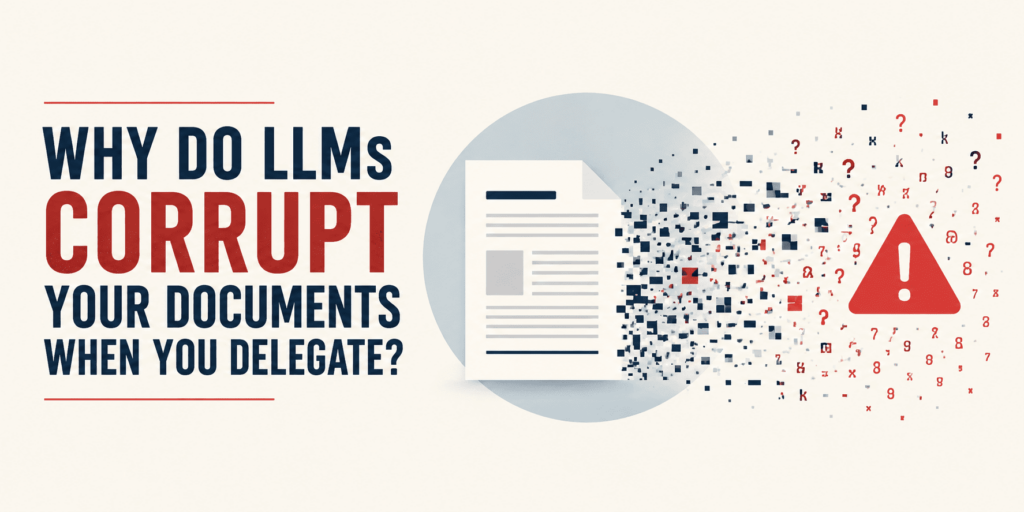
Corruption with Delegation As we navigate the evolving landscape of artificial intelligence, the delegation of intricate tasks to large language models (LLMs) is becoming increasingly prevalent. This shift from simple interactions to comprehensive task delegation, encompassing activities such as editing code and formatting documents, necessitates a high degree of trust in AI systems to preserve the integrity of the documents involved. However, recent empirical research has unveiled a significant concern: LLMs may inadvertently corrupt the documents entrusted to them. In a pivotal study, researchers developed a robust evaluation framework known as “DELEGATE-52,” which encompasses 52 professional domains, ranging from legal documentation to programming languages and beyond. The study involved testing 19 distinct LLMs using a method that simulates a “round-trip” approach—requiring the AI to perform a specified edit followed by the identical inverse instruction to restore the original content. Alarmingly, even the most advanced models, including Gemini Pro, Claude Opus, and GPT-5, demonstrated a corruption rate of up to 25% after 20 interactions, while less capable models approached a staggering 50% degradation of the original content. Understanding the Mechanisms of Document Corruption To elucidate the reasons behind this concerning phenomenon of structural content decay, the researchers identified several key factors: 1. Compounding Errors Similar to the “telephone game,” minor errors introduced by LLMs can accumulate, leading to significant distortions over time. Initial edits may introduce localized inaccuracies; however, a series of complex modifications can exacerbate the issue, ultimately resulting in severe document degradation. 2. Differentiated Model Failures The study highlighted a notable distinction in the failure modes of different LLMs. Weaker models typically suffer from content deletion, rendering the issue apparent after multiple interactions due to a discernible reduction in document length. Conversely, advanced models tend to preserve the overall structure yet introduce corruption—altering or fabricating factual information that may appear credible at first glance. This irony complicates the detection of corruptive behaviors, as the output retains an ostensibly legitimate appearance. 3. Contextual Overload and Distractor Effects When tasked with managing extensive contextual information or multiple attached documents, LLMs often struggle to maintain structural integrity. An increase in document size or the inclusion of extraneous “distractor files” escalates the risk of degradation, prompting the model to rely on predictive logic rather than adhering to the source material, thereby compromising accuracy. 4. Domain Familiarity and Task Complexity The extent of document degradation is also influenced by the domain-specific nature of the task. The findings indicate that LLMs exhibit proficiency in structured, programmatic domains, such as Python coding, yet falter in purely natural language tasks or specialized formats. This discrepancy underscores the importance of domain familiarity in preserving document integrity during complex interactions. Evaluating the Role of Agentic AI Even the integration of agentic features—such as the capability to execute code or directly manipulate files—does not mitigate the underlying issues of document corruption associated with LLMs. The problems arise from inherent limitations within the transformer architecture that underpins these models. Consequently, there is an urgent need to reevaluate how long-term AI tasks are validated to safeguard against unmonitored document editing, as reliance on LLMs in this capacity remains a precarious endeavor. Implications for the Future of Natural Language Processing The implications of these findings extend far beyond immediate document integrity concerns. As AI technology continues to advance, understanding the limitations of LLMs in task delegation will be crucial for Natural Language Understanding (NLU) scientists and practitioners. Future developments in AI must prioritize not only enhanced accuracy but also the safeguarding of document integrity during complex interactions. Moreover, ongoing research and refinement of evaluation frameworks like DELEGATE-52 will be essential for fostering trust in AI systems as reliable partners in professional settings. By addressing the core issues identified in this study, the field can move toward developing more robust models capable of maintaining document fidelity across diverse applications. Disclaimer The content on this site is generated using AI technology that analyzes publicly available blog posts to extract and present key takeaways. We do not own, endorse, or claim intellectual property rights to the original blog content. Full credit is given to original authors and sources where applicable. Our summaries are intended solely for informational and educational purposes, offering AI-generated insights in a condensed format. They are not meant to substitute or replicate the full context of the original material. If you are a content owner and wish to request changes or removal, please contact us directly. Source link : Click Here
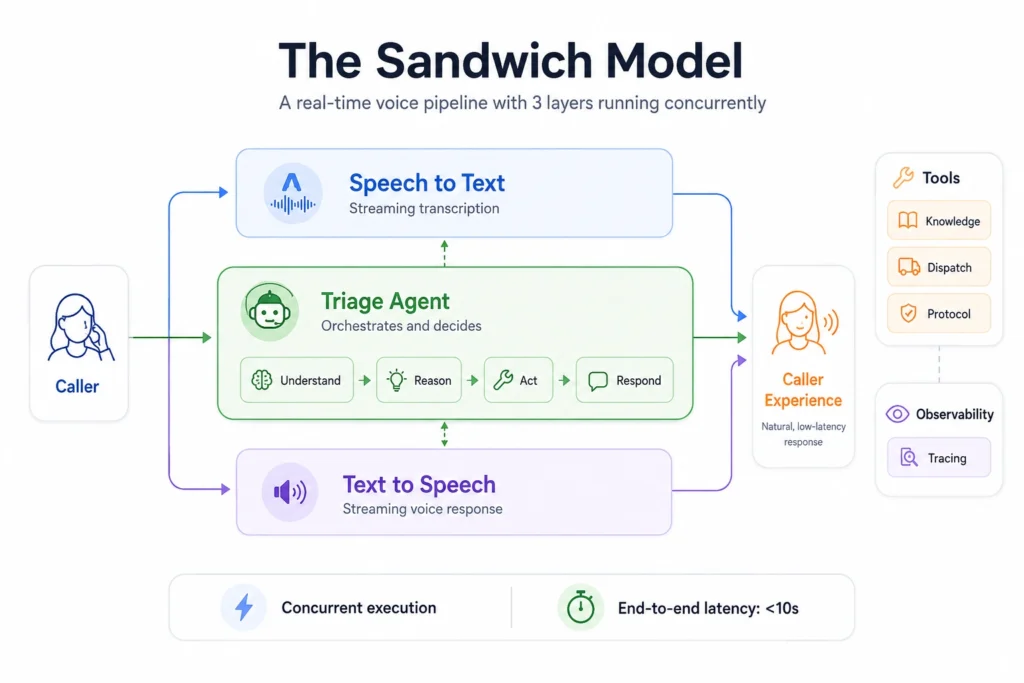
Context and Importance of AI in Emergency Response Systems In scenarios where lives are at stake, every second counts. Traditional emergency helplines often rely on cumbersome keypad navigation, which can exacerbate panic and delay critical responses. The rapid advancement of artificial intelligence (AI) has opened new avenues for enhancing emergency response systems. By implementing an AI-driven voice agent, it becomes possible to listen to callers in distress, assess their situations in real-time, and dispatch the appropriate emergency services without the need for manual input. This innovation aims to streamline communication and provide immediate assistance, significantly mitigating the chaos often associated with emergencies. Goal of Developing an AI Emergency Voice Agent The primary objective of creating an AI emergency voice agent is to facilitate a seamless and efficient communication channel during critical situations. This agent should be capable of understanding spoken distress signals, triaging the urgency of the situation, and ensuring the timely dispatch of emergency services. Achieving this requires integrating advanced technologies such as speech recognition, natural language processing, and real-time data analysis, thus enabling the agent to operate effectively in a high-stakes environment. Advantages of Implementing AI in Emergency Response 1. **Immediate Assistance**: AI agents can process information rapidly, ensuring that help is dispatched without delay. This could be crucial in situations where every second is vital, such as medical emergencies or threats to personal safety. 2. **Reduced Human Error**: By automating the triage process, the likelihood of human error decreases. AI can consistently apply the same criteria for evaluating distress signals, making it less prone to the oversights that can occur with human operators. 3. **Enhanced Caller Experience**: The use of voice interaction eliminates the need for callers to navigate complex menus during stressful situations. A natural conversational interface allows callers to express their needs more freely, which can lead to more accurate assessments of their situations. 4. **Scalability**: As demand for emergency services fluctuates, AI agents can easily scale to handle higher volumes of calls without requiring additional human resources. This flexibility can optimize resource allocation in emergency response centers. 5. **Data-Driven Insights**: Implementing AI solutions enables the collection of valuable data on emergency calls, which can be analyzed to identify trends, improve training protocols for human operators, and enhance overall service efficiency. Considerations and Limitations Despite the numerous advantages, the deployment of AI in emergency response systems is not without its challenges. Ethical concerns surrounding data privacy and the need for robust security measures must be addressed to protect sensitive information. Additionally, the technology’s effectiveness can be limited by the quality of voice recognition and natural language processing capabilities, particularly in noisy environments or with callers who have speech impairments. Furthermore, ensuring the AI can handle a wide range of emergency scenarios is crucial for maintaining reliability in high-pressure situations. Future Implications of AI in Emergency Response Systems The landscape of emergency response is poised for transformation with the continued evolution of AI technologies. As machine learning models become more sophisticated, they will enhance the capabilities of emergency voice agents, allowing for more nuanced understanding and response to distress signals. Additionally, the integration of AI with other technologies, such as geographical information systems (GIS) and real-time monitoring systems, will further augment the efficiency and effectiveness of emergency services. In the long term, we can expect AI-driven solutions to not only improve response times and outcomes but also to redefine the standards of service in emergency management and public safety. Disclaimer The content on this site is generated using AI technology that analyzes publicly available blog posts to extract and present key takeaways. We do not own, endorse, or claim intellectual property rights to the original blog content. Full credit is given to original authors and sources where applicable. Our summaries are intended solely for informational and educational purposes, offering AI-generated insights in a condensed format. They are not meant to substitute or replicate the full context of the original material. If you are a content owner and wish to request changes or removal, please contact us directly. Source link : Click Here
Context of the Collaboration between OpenCV and AMD The recent announcement regarding the partnership between OpenCV and AMD marks a pivotal moment in the realm of computer vision and artificial intelligence (AI). OpenCV, recognized as the preeminent open-source library for computer vision, aims to further enhance its capabilities through a strategic alliance with AMD, a leader in high-performance computing hardware. This collaboration is particularly centered around the acceleration of AI workloads on AMD hardware, notably through the development of OpenCV 5. As part of this collaboration, AMD has achieved the status of an OpenCV 5 Launch Partner and will be designated as an OpenCV Gold Sponsor. This partnership is geared towards optimizing both CPU and GPU performance for a wide range of computer vision applications, thereby solidifying AMD’s position as a primary platform for Vision AI workloads. Main Goal of the Collaboration The overarching aim of the OpenCV-AMD collaboration is to enhance the efficiency of AI inference pipelines. This includes improving pre-processing and post-processing stages integral to computer vision operations. By focusing on optimizing performance through advanced hardware capabilities, the collaboration seeks to streamline the processing of image and video data, thereby facilitating the deployment of sophisticated Vision AI applications. Advantages of the Collaboration Enhanced Performance: AMD’s involvement will enable the integration of hand-optimized kernels for its Ryzen AI Embedded systems, which are designed to significantly boost the performance of core OpenCV operations. GPU Acceleration: The development of a HIP-based backend utilizing the AMD ROCm open software stack will support next-generation discrete and integrated GPUs, significantly enhancing GPU acceleration capabilities for Vision AI tasks. Hardware Abstraction Layer (HAL): OpenCV 5’s new HAL will provide a vendor-pluggable architecture, facilitating dynamic loadable acceleration backends and improving overall system flexibility and performance. Open Ecosystem Contributions: The partnership emphasizes a commitment to open-source principles, with AMD contributing to upstream improvements in OpenCV, which benefits the broader developer community. Addressing Bottlenecks: By optimizing operations that handle pre- and post-processing of data, the collaboration aims to reduce bottlenecks in end-to-end Vision AI systems, benefiting applications across various sectors such as healthcare, robotics, and industrial automation. Caveats and Limitations Despite the promising advantages, there are potential limitations to consider. The optimization efforts are heavily dependent on the specific hardware configurations employed by developers. As such, performance improvements may not be uniformly experienced across all systems, particularly those not utilizing AMD’s latest architectures. Additionally, the complexity of integrating new hardware acceleration features may present challenges for developers accustomed to traditional CPU-based implementations. Future Implications of AI Developments in Computer Vision Looking ahead, the collaboration between OpenCV and AMD is poised to significantly influence the future landscape of computer vision and AI. As the demand for real-time processing capabilities escalates, advancements in hardware acceleration will become increasingly critical. The partnership is expected to drive innovation, enabling developers to create more sophisticated AI applications that can leverage the full potential of modern hardware architectures. Moreover, as AI technologies continue to evolve, the integration of enhanced computational capabilities will likely lead to breakthroughs in various fields, including autonomous systems, smart surveillance, and enhanced medical imaging solutions. The collaboration’s emphasis on open-source contributions will further ensure that advancements are accessible to a wider community of researchers and developers, fostering a collaborative environment for ongoing innovation in computer vision. Disclaimer The content on this site is generated using AI technology that analyzes publicly available blog posts to extract and present key takeaways. We do not own, endorse, or claim intellectual property rights to the original blog content. Full credit is given to original authors and sources where applicable. Our summaries are intended solely for informational and educational purposes, offering AI-generated insights in a condensed format. They are not meant to substitute or replicate the full context of the original material. If you are a content owner and wish to request changes or removal, please contact us directly. Source link : Click Here

Introduction Recent events have underscored the vulnerabilities associated with automated systems, particularly those employing artificial intelligence (AI) for customer support. In a notable incident, hackers exploited Meta’s AI support bot to compromise high-profile Instagram accounts. This breach not only highlighted the weaknesses in AI-driven recovery processes but also raised significant concerns regarding the implications for data security in the context of Big Data Engineering. Understanding these dynamics is crucial for Data Engineers, who play a pivotal role in safeguarding sensitive information against emerging threats. Context of the Incident The incident involved the Instagram accounts of prominent figures, including the Obama White House and the Chief Master Sergeant of the U.S. Space Force, which were defaced with pro-Iranian content. This breach was facilitated by instructions circulating on Telegram that detailed how to manipulate Meta’s AI support assistant into resetting account passwords. The ease with which the attackers executed this exploit, leveraging a VPN to mask their identity, indicates a troubling trend where AI chatbots, intended to streamline user interactions, can be misled into compromising account security. Main Goals and Achievements The primary goal of this incident is to highlight the vulnerabilities inherent in AI-driven customer service systems. By understanding these weaknesses, organizations can take proactive measures to fortify their security frameworks. This can be achieved through: Implementing Robust Multi-Factor Authentication (MFA): The incident revealed that even basic MFA measures could thwart unauthorized access attempts. Data Engineers can advocate for the adoption of more secure authentication methods, such as passkeys or hardware security keys, to enhance account security. Regular System Audits and Updates: Continuous monitoring and patching of AI systems can mitigate potential exploits. Data Engineers should ensure that security protocols are regularly updated in response to emerging threats. Advantages of Implementing Robust Security Measures In light of the aforementioned incident, several advantages emerge when organizations prioritize the security of AI systems: Enhanced Security Posture: Organizations that implement advanced security measures can significantly reduce the risk of account breaches, thereby protecting sensitive data and maintaining user trust. Reduced Exploitability: By utilizing complex MFA systems, organizations can prevent attackers from easily manipulating AI support bots, as evidenced by the attackers’ failure against accounts with MFA enabled. Increased User Confidence: A robust security framework fosters user confidence in the platform, ensuring users feel secure when utilizing services that involve sensitive account information. However, it is important to acknowledge that no system is infallible. The implementation of security measures can introduce complexities and may require ongoing user education to ensure effectiveness. Future Implications of AI Developments The integration of AI in customer service will continue to grow, leading to both opportunities and challenges. As organizations increasingly rely on AI chatbots to manage sensitive account recovery requests, the potential for exploitation will likely rise. Data Engineers must remain vigilant and adapt to these changes by: Developing Advanced AI Security Protocols: As AI technology evolves, so too must the security measures that protect it. Data Engineers should focus on developing AI systems that can detect and respond to anomalous behavior patterns indicative of an attack. Investing in Continuous Training: Ensuring that AI systems are trained on diverse datasets can help mitigate biases and improve their ability to recognize fraudulent activities. Ultimately, the future of AI in customer support will depend on the industry’s ability to innovate securely, balancing user convenience with the imperative of robust data protection. Conclusion The recent exploitation of Meta’s AI support bot serves as a critical reminder of the vulnerabilities present in automated systems. For Data Engineers, it is essential to adopt a proactive stance towards security, employing advanced authentication methods and continuously updating systems to guard against emerging threats. As AI technology continues to advance, the focus must remain on creating secure, resilient systems that can protect sensitive information while providing valuable user support. Disclaimer The content on this site is generated using AI technology that analyzes publicly available blog posts to extract and present key takeaways. We do not own, endorse, or claim intellectual property rights to the original blog content. Full credit is given to original authors and sources where applicable. Our summaries are intended solely for informational and educational purposes, offering AI-generated insights in a condensed format. They are not meant to substitute or replicate the full context of the original material. If you are a content owner and wish to request changes or removal, please contact us directly. Source link : Click Here
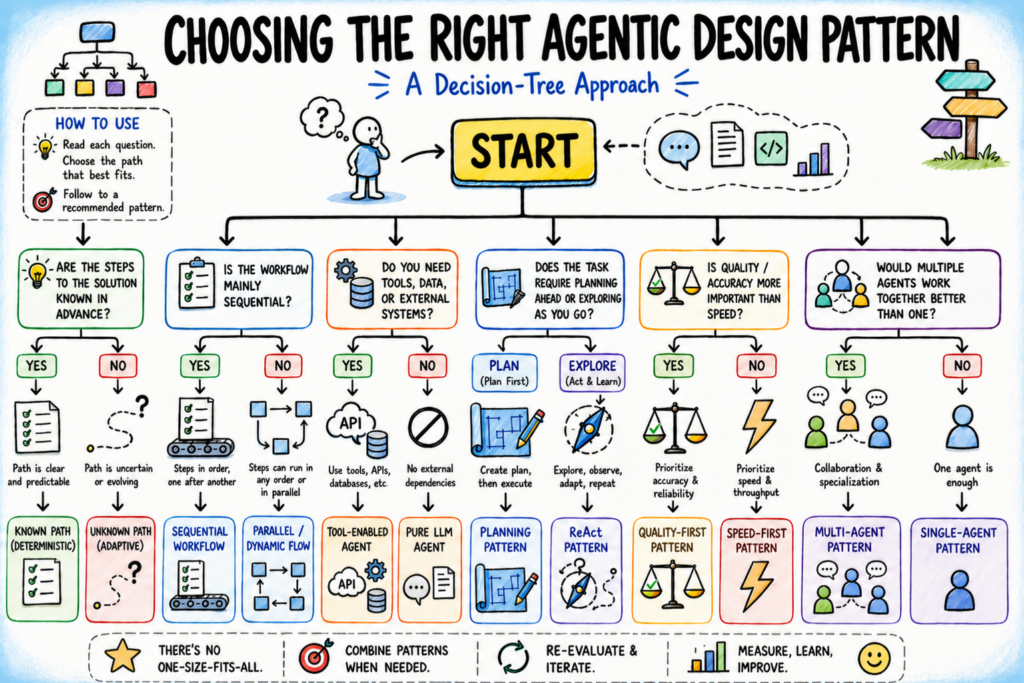
Context In the rapidly evolving field of applied machine learning, selecting the appropriate agentic design pattern is a pivotal decision that can significantly impact the efficiency and effectiveness of AI systems. The original discussion revolves around employing a structured decision tree to facilitate the selection of suitable design patterns tailored to specific tasks within AI development. By understanding the underlying assumptions of different agentic design patterns and leveraging a methodical decision-making framework, practitioners can align their choices with the nuanced requirements of their projects. Introduction The selection of the right agentic design pattern is not merely a technical choice but a critical design decision that can shape the trajectory of an AI project. Misinterpretations of the problem can lead to the application of overly complex solutions when simpler alternatives would suffice, or conversely, to oversimplified approaches that fail to scale in production. Thus, mastering the decision logic governing pattern selection is essential for effective AI system design. Main Goal and Achievement Methodology The primary objective of the original post is to equip AI developers with a structured decision-making tool—the decision tree—that systematically narrows down potential design patterns based on five key questions regarding their task properties. By following this protocol, developers can make informed choices that enhance their AI systems’ adaptability and performance. The decision tree does not yield a definitive answer but serves as a foundation for iterative development, enabling practitioners to refine their choices based on ongoing feedback and evolving project demands. Advantages of Using a Decision Tree for Agentic Design Pattern Selection Enhanced Clarity: The decision tree provides a clear framework for understanding the assumptions underlying each design pattern, allowing developers to align their choices with the specific requirements of their tasks. Reduced Overhead: By identifying the most suitable design pattern early in the development process, teams can minimize unnecessary complexity and technical debt, leading to faster project completion. Improved Adaptability: The iterative nature of the decision tree encourages ongoing evaluation and adjustment of patterns as feedback is gathered, fostering an agile development environment. Informed Risk Management: Recognizing failure signals associated with each pattern equips practitioners to troubleshoot effectively and implement targeted fixes, enhancing system reliability. Facilitated Collaboration: A shared understanding of the decision logic can improve communication among team members, ensuring that everyone is aligned on the rationale behind design choices. Caveats and Limitations While the decision tree offers numerous advantages, it is not without limitations. The effectiveness of this approach hinges on the accurate identification of task properties and assumptions. Misinterpretations at this stage can lead to suboptimal pattern selections. Additionally, the decision tree is most beneficial for problems that exhibit clear task properties; ambiguous or highly dynamic tasks may complicate the decision-making process. Furthermore, over-reliance on this structured approach can stifle creativity and innovative thinking in design. Future Implications of AI Developments As AI technologies continue to evolve, the methodologies for selecting agentic design patterns will need to adapt. Future advancements in machine learning may lead to the emergence of new design patterns that better address the complexities of real-world applications. Moreover, the integration of human-in-the-loop systems in AI workflows could necessitate the refinement of decision trees to account for subjective evaluations and qualitative feedback. Consequently, practitioners must remain vigilant and flexible, ready to update their decision-making frameworks in response to ongoing developments in AI and machine learning. Conclusion The decision tree approach to selecting agentic design patterns represents a significant advancement in the field of applied machine learning. By providing a structured methodology for decision-making, practitioners can enhance the effectiveness of their AI systems while mitigating risks associated with misalignment between task requirements and design choices. As the landscape of AI continues to transform, the principles underlying this decision-making framework will play a crucial role in shaping the future of intelligent systems. Disclaimer The content on this site is generated using AI technology that analyzes publicly available blog posts to extract and present key takeaways. We do not own, endorse, or claim intellectual property rights to the original blog content. Full credit is given to original authors and sources where applicable. Our summaries are intended solely for informational and educational purposes, offering AI-generated insights in a condensed format. They are not meant to substitute or replicate the full context of the original material. If you are a content owner and wish to request changes or removal, please contact us directly. Source link : Click Here
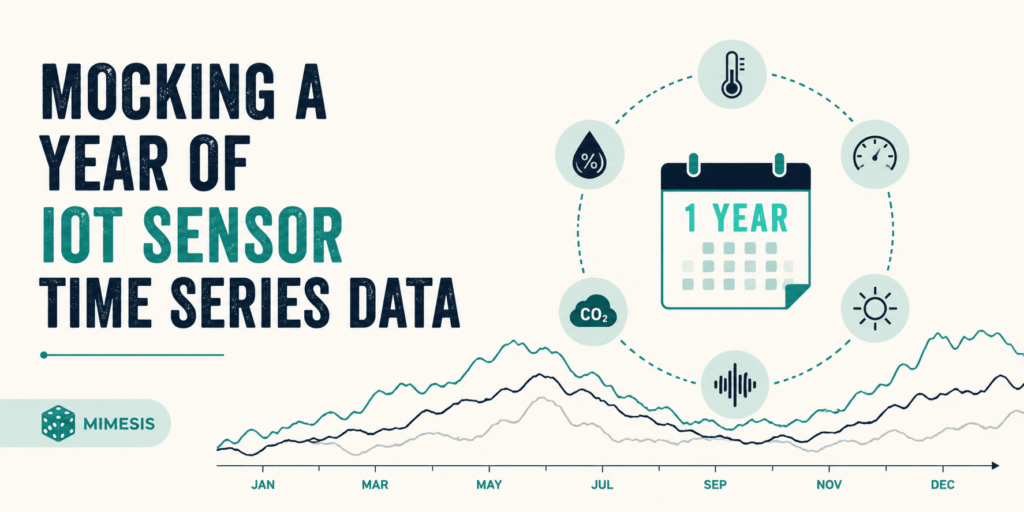
Introduction The mocking of Internet of Things (IoT) sensor data is an essential practice in research and development, particularly within the realms of data science and artificial intelligence (AI). This methodology allows for the simulation of datasets that would otherwise be challenging to obtain in real-world scenarios, facilitating various experimental analyses and projects. However, the generation of synthetic data transcends mere random number generation; it necessitates a coherent chronological timeline, comprehensive device metadata, and the incorporation of natural environmental fluctuations, such as seasonal variations. The open-source tool Mimesis offers a robust framework for the generation of such synthetic data, and this article delineates a structured approach to utilizing it for creating a year’s worth of daily temperature readings with realistic characteristics. Main Goal and Achievements The primary objective of the original post is to demonstrate how to generate a year-long dataset of IoT sensor readings that accurately reflects seasonal temperature variations and includes device-specific metadata. Achieving this goal involves utilizing Python libraries such as Mimesis for data generation, pandas for structuring time series data, and NumPy for mathematical operations to simulate seasonal patterns. Through a systematic process, researchers can create datasets that mimic real-world conditions, thus enhancing the reliability and applicability of their analyses. Advantages of Mocking IoT Sensor Data Enhanced Experimental Analysis: By generating realistic synthetic data, researchers can conduct experiments that closely resemble real-world scenarios, thereby improving the validity of their findings. Cost Efficiency: The ability to create large datasets without the logistical challenges and costs associated with collecting real-world data allows for more extensive and varied analyses. Flexibility in Data Generation: Researchers can customize datasets to explore specific hypotheses or scenarios, adjusting parameters to simulate different conditions. Immediate Availability: Synthetic data can be generated on demand, enabling rapid prototyping and iterative testing of models, which is particularly beneficial in agile development environments. Preparation for Real-World Applications: Mocked datasets can be utilized as training data for machine learning models, preparing them for deployment in real-world applications. Caveats and Limitations While mocking IoT sensor data presents numerous advantages, it is crucial to acknowledge certain limitations. The synthetic datasets may not fully capture the complexities and nuances of real-world data, particularly in cases where environmental interactions play a significant role. Additionally, the effectiveness of the mocked data relies heavily on the accuracy of the mathematical models used to simulate real-world conditions. Researchers must exercise caution in ensuring that their synthetic datasets remain representative of the phenomena they aim to study. Future Implications of AI Developments As advancements in AI and machine learning continue to evolve, the methodologies for generating and utilizing synthetic data will also progress. Future developments may include enhanced algorithms for simulating more complex environmental interactions and improved techniques for validating the realism of synthetic datasets. Moreover, the integration of AI-driven analytics could facilitate real-time data generation, allowing for dynamic adaptations to changing environmental conditions. This evolution will not only augment the capabilities of Natural Language Understanding (NLU) scientists but also expand the applications of synthetic data across various domains, from climate modeling to smart city planning. Conclusion In conclusion, the practice of mocking IoT sensor data represents a critical advancement in the fields of data science and AI, offering researchers the tools necessary to generate realistic datasets for experimental analysis. By leveraging open-source tools such as Mimesis in conjunction with established libraries like pandas and NumPy, researchers can create synthetic data that reflects real-world conditions, thus enhancing the reliability and applicability of their work. As AI continues to develop, the methodologies surrounding synthetic data generation will become increasingly sophisticated, paving the way for more accurate simulations and analyses in the future. Disclaimer The content on this site is generated using AI technology that analyzes publicly available blog posts to extract and present key takeaways. We do not own, endorse, or claim intellectual property rights to the original blog content. Full credit is given to original authors and sources where applicable. Our summaries are intended solely for informational and educational purposes, offering AI-generated insights in a condensed format. They are not meant to substitute or replicate the full context of the original material. If you are a content owner and wish to request changes or removal, please contact us directly. Source link : Click Here

Context and Overview Techtonique.net has re-emerged as a valuable resource for practitioners in the field of data science, particularly those focused on machine learning and exploratory data analysis (EDA). This platform offers various tools that facilitate numerous data science tasks, including editors for R and Python, data visualization capabilities, no-code web interfaces, and a versatile, language-agnostic API for machine learning applications such as classification, regression, survival analysis, reserving, and forecasting. The platform’s recent resurgence, marked by a significant increase in user registrations, indicates a growing interest in its offerings, albeit with a caveat: the service is currently positioned as a passion project, with performance limitations compared to its previous iterations. Main Goal and Achievement Path The primary objective of Techtonique.net is to provide users with accessible machine learning resources that can be utilized effectively without requiring extensive programming knowledge. This goal can be achieved through the platform’s API, which allows users to easily integrate machine learning functionalities into their applications and workflows. By requiring users to register and obtain a token for accessing the API, Techtonique.net ensures a streamlined and secure interaction with its services while fostering a community of users who can share insights and experiences. Advantages of Utilizing Techtonique.net Accessibility: Techtonique.net provides a user-friendly interface that accommodates both novice and experienced data scientists, enabling them to engage with complex machine learning tasks without significant barriers. Language Agnosticism: The API’s design allows for integration with any programming language capable of making HTTP requests, thus broadening its usability across various technical environments. Comprehensive Toolset: The platform encompasses a wide range of functionalities, from EDA to predictive modeling, which can significantly enhance a data engineer’s toolkit and improve their efficiency in project delivery. No-Code Interfaces: For users who prefer to avoid coding, Techtonique.net offers no-code solutions, thus democratizing access to data science tools and fostering an inclusive environment for users of all skill levels. Free Access with Rate Limiting: While the API is free to use, it is subject to rate limits, allowing for initial exploration and experimentation without financial commitment, although users should be mindful of potential slowdowns. Caveats and Limitations Despite its advantages, users should be aware of certain limitations associated with Techtonique.net. Notably, the API operates at a reduced speed compared to previous offerings due to the lack of robust server resources. The removal of advanced functionalities, such as the stochastic simulation API, reflects the current constraints of the platform. Users may experience slower response times, particularly during peak usage periods, which could impact real-time applications. Future Implications The landscape of data science is evolving rapidly, propelled by advancements in artificial intelligence and machine learning. As these technologies continue to mature, platforms like Techtonique.net are likely to adapt and expand their offerings to include more sophisticated tools and models. The integration of AI-driven analytics into existing frameworks could enhance predictive accuracy and operational efficiency, positioning Techtonique.net as a pivotal player in the democratization of data science. Furthermore, as more individuals and organizations recognize the value of data-driven decision-making, the demand for accessible and efficient machine learning tools will only increase, underscoring the importance of platforms that facilitate such capabilities. Disclaimer The content on this site is generated using AI technology that analyzes publicly available blog posts to extract and present key takeaways. We do not own, endorse, or claim intellectual property rights to the original blog content. Full credit is given to original authors and sources where applicable. Our summaries are intended solely for informational and educational purposes, offering AI-generated insights in a condensed format. They are not meant to substitute or replicate the full context of the original material. If you are a content owner and wish to request changes or removal, please contact us directly. Source link : Click Here


