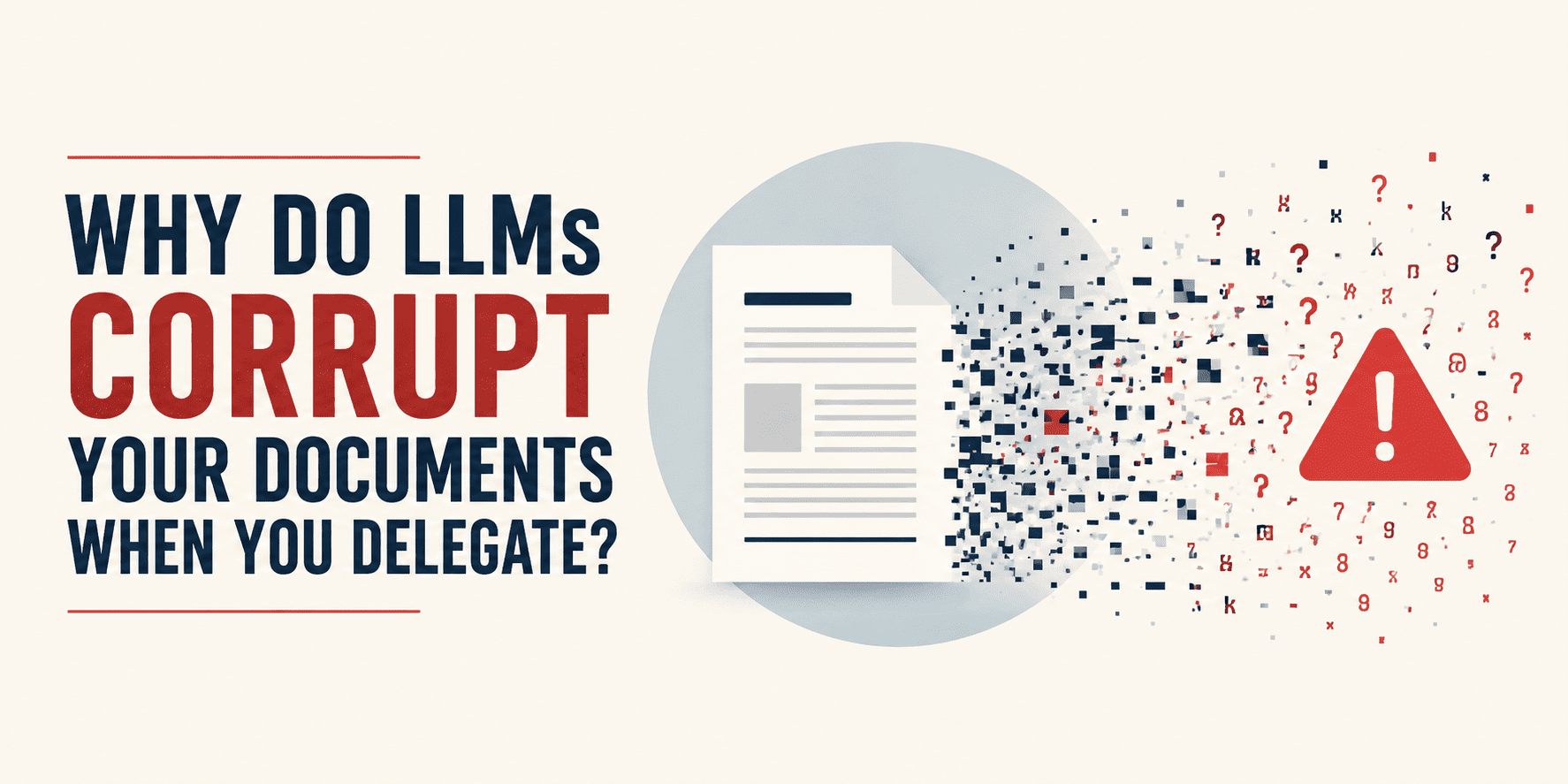
As we navigate the evolving landscape of artificial intelligence, the delegation of intricate tasks to large language models (LLMs) is becoming increasingly prevalent. This shift from simple interactions to comprehensive task delegation, encompassing activities such as editing code and formatting documents, necessitates a high degree of trust in AI systems to preserve the integrity of the documents involved. However, recent empirical research has unveiled a significant concern: LLMs may inadvertently corrupt the documents entrusted to them.
In a pivotal study, researchers developed a robust evaluation framework known as “DELEGATE-52,” which encompasses 52 professional domains, ranging from legal documentation to programming languages and beyond. The study involved testing 19 distinct LLMs using a method that simulates a “round-trip” approach—requiring the AI to perform a specified edit followed by the identical inverse instruction to restore the original content. Alarmingly, even the most advanced models, including Gemini Pro, Claude Opus, and GPT-5, demonstrated a corruption rate of up to 25% after 20 interactions, while less capable models approached a staggering 50% degradation of the original content.
To elucidate the reasons behind this concerning phenomenon of structural content decay, the researchers identified several key factors:
Similar to the “telephone game,” minor errors introduced by LLMs can accumulate, leading to significant distortions over time. Initial edits may introduce localized inaccuracies; however, a series of complex modifications can exacerbate the issue, ultimately resulting in severe document degradation.
The study highlighted a notable distinction in the failure modes of different LLMs. Weaker models typically suffer from content deletion, rendering the issue apparent after multiple interactions due to a discernible reduction in document length. Conversely, advanced models tend to preserve the overall structure yet introduce corruption—altering or fabricating factual information that may appear credible at first glance. This irony complicates the detection of corruptive behaviors, as the output retains an ostensibly legitimate appearance.
When tasked with managing extensive contextual information or multiple attached documents, LLMs often struggle to maintain structural integrity. An increase in document size or the inclusion of extraneous “distractor files” escalates the risk of degradation, prompting the model to rely on predictive logic rather than adhering to the source material, thereby compromising accuracy.
The extent of document degradation is also influenced by the domain-specific nature of the task. The findings indicate that LLMs exhibit proficiency in structured, programmatic domains, such as Python coding, yet falter in purely natural language tasks or specialized formats. This discrepancy underscores the importance of domain familiarity in preserving document integrity during complex interactions.
Even the integration of agentic features—such as the capability to execute code or directly manipulate files—does not mitigate the underlying issues of document corruption associated with LLMs. The problems arise from inherent limitations within the transformer architecture that underpins these models. Consequently, there is an urgent need to reevaluate how long-term AI tasks are validated to safeguard against unmonitored document editing, as reliance on LLMs in this capacity remains a precarious endeavor.
The implications of these findings extend far beyond immediate document integrity concerns. As AI technology continues to advance, understanding the limitations of LLMs in task delegation will be crucial for Natural Language Understanding (NLU) scientists and practitioners. Future developments in AI must prioritize not only enhanced accuracy but also the safeguarding of document integrity during complex interactions.
Moreover, ongoing research and refinement of evaluation frameworks like DELEGATE-52 will be essential for fostering trust in AI systems as reliable partners in professional settings. By addressing the core issues identified in this study, the field can move toward developing more robust models capable of maintaining document fidelity across diverse applications.
Disclaimer
The content on this site is generated using AI technology that analyzes publicly available blog posts to extract and present key takeaways. We do not own, endorse, or claim intellectual property rights to the original blog content. Full credit is given to original authors and sources where applicable. Our summaries are intended solely for informational and educational purposes, offering AI-generated insights in a condensed format. They are not meant to substitute or replicate the full context of the original material. If you are a content owner and wish to request changes or removal, please contact us directly.
Source link :