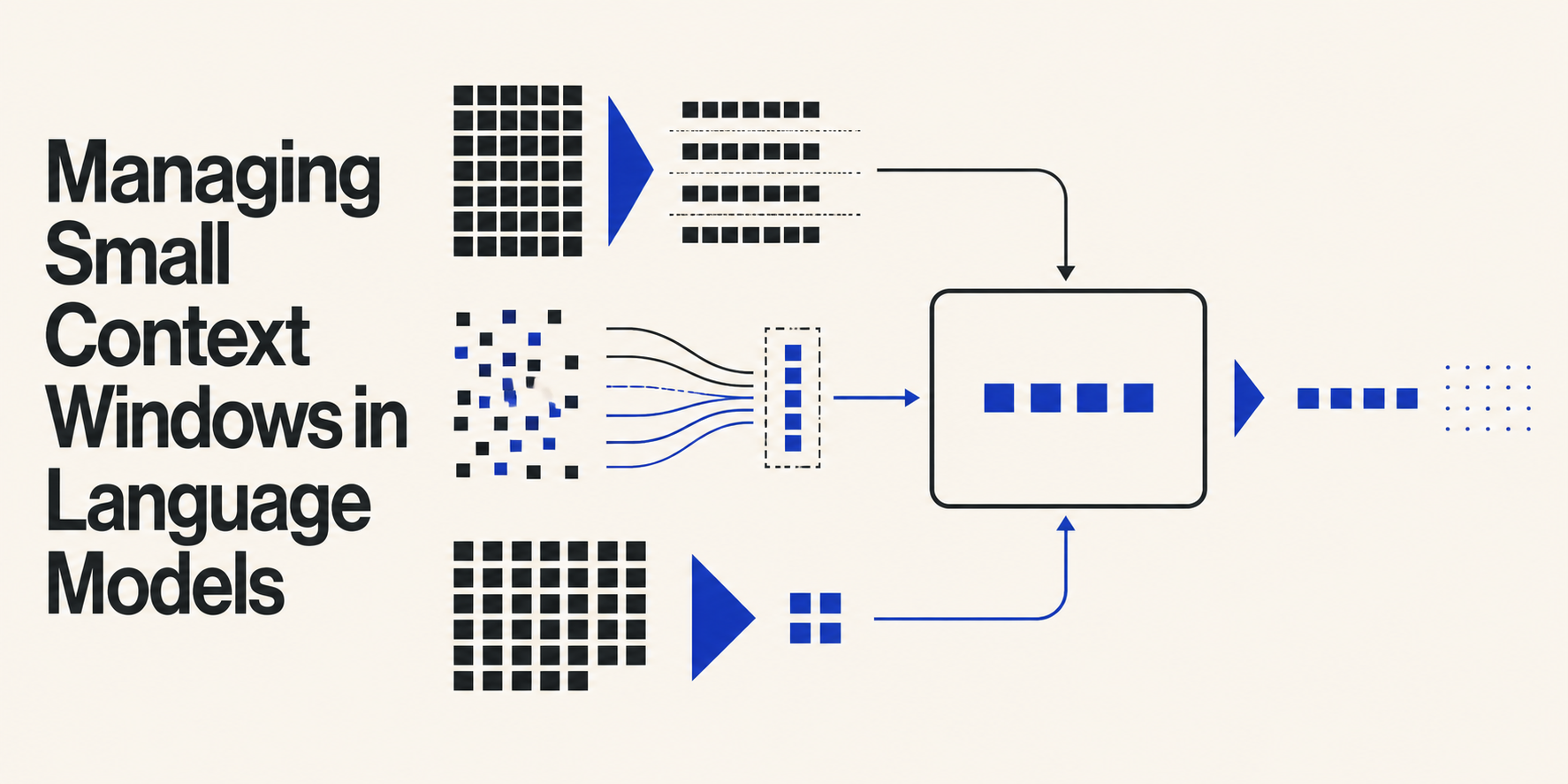
In the rapidly evolving landscape of artificial intelligence, especially within the domain of applied machine learning, the management of small context windows in language models has emerged as a critical area of focus. This article presents three pragmatic strategies designed to optimize the handling of small context windows, accompanied by Python examples that illustrate the application of two of these strategies.
The primary topics discussed include:
In the field of artificial intelligence, there is a prevailing fascination with language models that can process extensive context windows, enabling them to integrate vast amounts of information. However, these large context windows pose significant challenges, such as elevated API costs, increased latency, and the notorious “lost in the middle” problem, where critical information may be overlooked within a voluminous prompt. Consequently, effectively managing small context windows can lead to enhanced performance, reduced costs, and improved focus on relevant data, ultimately refining the model’s output.
This article elaborates on three widely adopted strategies for mastering small context windows in language models, supplemented by practical examples to facilitate understanding and implementation.
The central aim of managing small context windows is to enhance the efficiency and effectiveness of language models in processing and generating responses. This can be accomplished through the implementation of practical strategies that prioritize the most relevant information while minimizing unnecessary data. By applying techniques such as sliding window truncation and token budgeting, practitioners can ensure that the model operates within a manageable context size, yielding better performance and lower operational costs.
Several advantages arise from effectively managing small context windows in language models:
Despite these advantages, it is crucial to acknowledge potential limitations, such as the need for careful parameter tuning and the requirement for additional computational resources in certain strategies, which may introduce complexity in implementation.
The evolution of artificial intelligence, particularly in the context of language models, suggests a promising future for the management of small context windows. As advancements in AI algorithms continue to emerge, we can anticipate more sophisticated strategies that leverage machine learning techniques to further optimize context management. This could lead to more intuitive user interactions, greater efficiency in data processing, and enhanced capabilities in understanding and generating human-like responses. Furthermore, as industry standards shift toward more cost-effective and efficient AI solutions, the importance of mastering small context windows will likely grow, positioning practitioners to better meet the demands of an increasingly competitive landscape.
In summary, the effective management of small context windows should not be viewed merely as a limitation but rather as an opportunity to innovate and refine AI applications. By employing the strategies outlined in this article, practitioners can enhance the functionality of language models, paving the way for faster, more accurate, and cost-effective solutions in the field of applied machine learning.
Disclaimer
The content on this site is generated using AI technology that analyzes publicly available blog posts to extract and present key takeaways. We do not own, endorse, or claim intellectual property rights to the original blog content. Full credit is given to original authors and sources where applicable. Our summaries are intended solely for informational and educational purposes, offering AI-generated insights in a condensed format. They are not meant to substitute or replicate the full context of the original material. If you are a content owner and wish to request changes or removal, please contact us directly.
Source link :