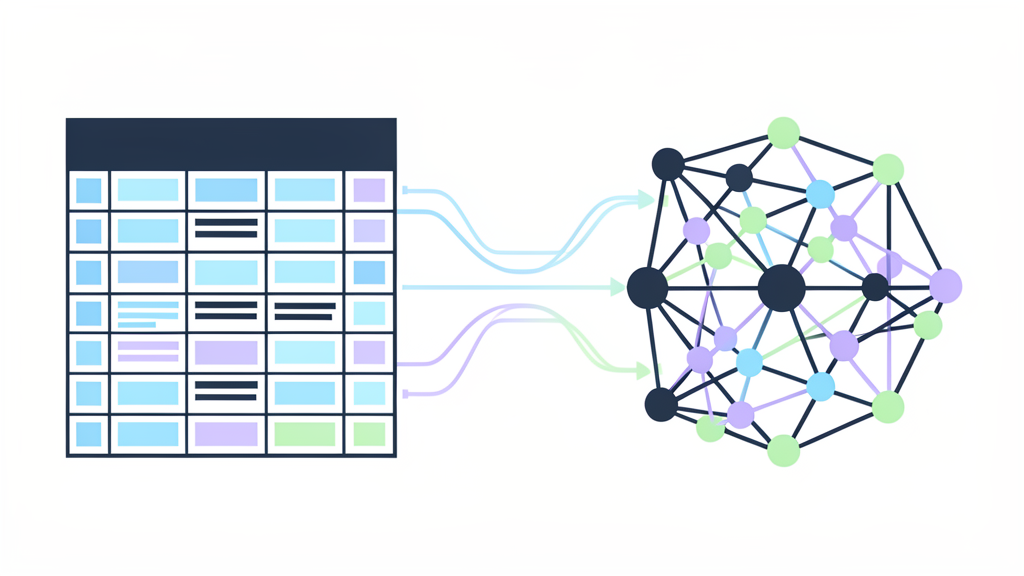
In the realm of machine learning, tabular foundation models have emerged as a novel category capable of performing zero-shot predictions on tabular datasets. These models are pretrained on a broad distribution of synthetic tables, enabling them to adapt to new datasets without the need for gradient updates. Among these models, TabICL stands out as a powerful open-source solution. This discussion elucidates the workings of TabICL and positions its performance against established models like XGBoost, particularly in the context of credit-risk datasets, all while employing R in conjunction with Python through the reticulate package.
A tabular foundation model is characterized by three fundamental components:
The first point highlights a significant divergence from text and vision models, as there is no existing corpus of labeled tables. Instead, models like TabICL harness synthetic data, engaging in a pretraining task that involves predicting targets from held-out rows based on given rows of synthetic tables.
TabICL operates in two distinct stages:
This architecture facilitates zero-shot transfer by aligning pretraining objectives with inference tasks, thus enabling efficient scaling to larger datasets compared to other models.
TabICL is primarily designed for Python, and its integration with R necessitates the reticulate package. The setup process involves installing necessary Python libraries, including TabICL, Torch, Pandas, and Scikit-learn, to establish a compatible environment for executing predictions.
Utilizing a credit dataset akin to LendingClub, the objective is to predict defaults (represented by a binary target). The dataset enables a comprehensive analysis of TabICL’s predictive capabilities without extensive preprocessing, provided categorical variables are appropriately formatted. The model’s efficiency is reflected in its rapid fitting process, which merely stores training data rather than performing extensive computations during this phase.
In evaluating TabICL against XGBoost, a standard tuning process for XGBoost involves a grid search and cross-validation, which can be time-consuming. In contrast, TabICL’s approach allows for immediate predictions post-fitting without necessitating extensive tuning, demonstrating its utility for quickly establishing performance baselines.
Experiments reveal that TabICL can achieve competitive performance metrics, such as ROC AUC scores, comparable to those of tuned XGBoost models, underscoring its potential as a robust alternative in specific scenarios.
TabICL is particularly advantageous in cases where:
Conversely, TabICL may not be the best choice when:
The advancement of artificial intelligence and machine learning technologies heralds a transformative period for data analytics and insights. As foundation models like TabICL continue to evolve, their integration into mainstream data engineering practices is likely to augment the efficiency and efficacy of predictive analytics. Future developments may include enhancements in interpretability, scalability for larger datasets, and improved handling of domain-specific requirements, ultimately leading to more robust decision-making frameworks in data-driven industries.
Tabular foundation models, exemplified by TabICL, represent a significant evolution in machine learning methodologies, offering zero-shot capabilities that simplify the modeling process. While they do not entirely replace established models like XGBoost, they provide a valuable alternative for specific use cases, particularly in smaller datasets and rapid scenario assessments. As the field progresses, the interplay between traditional machine learning techniques and emerging foundation models will continue to shape the landscape of data analytics and insights.
Disclaimer
The content on this site is generated using AI technology that analyzes publicly available blog posts to extract and present key takeaways. We do not own, endorse, or claim intellectual property rights to the original blog content. Full credit is given to original authors and sources where applicable. Our summaries are intended solely for informational and educational purposes, offering AI-generated insights in a condensed format. They are not meant to substitute or replicate the full context of the original material. If you are a content owner and wish to request changes or removal, please contact us directly.
Source link :