
Context Recent research highlights a significant trend in enterprise AI infrastructure spending, indicating an acceleration in investment that outpaces the ability to measure and control associated costs. A study involving 107 enterprises revealed that while many organizations rely on established hyperscalers and model-provider APIs for their AI operations, there is a growing inclination toward investing in specialized compute resources that are currently underutilized. Notably, enterprises are preparing to switch or add infrastructure providers, with a focus on integration and total cost of ownership rather than superficial pricing metrics. However, the lack of visibility into their economic landscape raises concerns about the sustainability of such investments. This phenomenon has been termed the “compute gap,” which reflects a disconnect between rapid spending and inadequate tracking of AI infrastructure efficiency. The findings underscore the critical need for enterprises to enhance their measurement capabilities as they navigate this evolving landscape. Main Goal and Achievement The primary goal of the findings presented is to illuminate the compute gap experienced by enterprises as they invest in AI infrastructure. This gap is characterized by a misalignment between aggressive spending on AI capabilities and the insufficient measurement of those investments’ economic impacts. To bridge this gap, organizations must prioritize the development of robust metrics and tracking systems to assess compute costs and utilization effectively. By doing so, they will not only enhance their decision-making processes but also optimize their infrastructure investments for better performance and cost efficiency. Advantages of Addressing the Compute Gap Enhanced Decision-Making: With improved measurement and tracking, organizations can make informed decisions based on accurate data regarding the cost and performance of their AI infrastructure. Increased Efficiency: By addressing the high levels of underutilization—83% of enterprises reported GPU utilization of 50% or less—companies can maximize the return on their existing investments, reducing waste and improving overall productivity. Cost Optimization: Understanding total cost of ownership (TCO) allows enterprises to compare different providers meaningfully, leading to more strategic purchasing decisions that prioritize integration and long-term value over immediate costs. Future-Proofing Investments: As enterprises prepare to transition to more specialized AI clouds, having a clear understanding of current costs and utilization can guide more effective transitions, ensuring that new investments are aligned with organizational goals. Limitations and Caveats It is important to note that the study’s sample size, while indicative, is limited to 107 respondents and skews toward mid-market enterprises. This may not fully represent larger organizations or those with more advanced AI capabilities. Additionally, the finding that many enterprises cannot rigorously track compute costs suggests that the data available may not be comprehensive or fully accurate. Future Implications The ongoing advancements in AI are likely to further complicate the landscape of compute infrastructure. As AI applications evolve, the transition from GPU-centric computing to a focus on memory bandwidth and related memory constraints will emerge as a critical issue for enterprises. Organizations that fail to adapt to these changing dynamics may find themselves at a disadvantage, unable to leverage the full potential of their investments. Consequently, the next wave of AI development will necessitate a more nuanced understanding of infrastructure economics, compelling enterprises to refine their measurement capabilities and strategic approaches in order to remain competitive in an increasingly complex marketplace. Disclaimer The content on this site is generated using AI technology that analyzes publicly available blog posts to extract and present key takeaways. We do not own, endorse, or claim intellectual property rights to the original blog content. Full credit is given to original authors and sources where applicable. Our summaries are intended solely for informational and educational purposes, offering AI-generated insights in a condensed format. They are not meant to substitute or replicate the full context of the original material. If you are a content owner and wish to request changes or removal, please contact us directly. Source link : Click Here

Contextualizing Integrated Pest Management in Africa In the realm of agricultural innovation, Integrated Pest Management (IPM) stands as a pivotal strategy for enhancing crop protection in Africa. As global demand for agricultural products intensifies, particularly from the European Union (EU), African growers face mounting pressure to comply with stricter regulatory frameworks and market demands. This shift necessitates that crop protection companies reassess their strategies to effectively support these growers. The evolution towards IPM is not merely a trend; it is an essential adaptation to ensure sustainability and competitiveness in both local and international markets. Main Goal and Achieving Compliance The primary objective of the original discussion on IPM strategies is to facilitate the transition of African growers towards sustainable pest management practices that adhere to evolving regulatory standards. To achieve this, crop protection companies must develop and offer products that align with the EU’s stringent Maximum Residue Levels (MRLs) and actively support growers in implementing comprehensive IPM programs. This involves a strategic shift away from reliance on synthetic chemicals towards a more integrated approach that combines biological solutions with traditional methods, thereby ensuring compliance and enhancing market access. Advantages of Integrated Pest Management Strategies Enhanced Market Access: By adopting IPM practices that comply with EU regulations, African growers can secure access to premium markets that demand quality and safety, particularly for high-value crops like citrus and grapes. Reduction of Chemical Dependency: The integration of biological products, such as biopesticides and biostimulants, helps in reducing the reliance on synthetic chemicals, thereby mitigating potential environmental impacts and improving soil health. Improved Crop Yields: Utilizing a combination of traditional and biological pest management strategies can enhance crop resilience and yield stability, particularly under stress conditions such as drought or heat. Compliance and Sustainability: A well-structured IPM program not only meets regulatory requirements but also promotes sustainable agricultural practices, aligning with global trends towards environmental stewardship. Operational Flexibility: The ability to pivot towards biological solutions allows growers to adapt to changing regulatory landscapes and consumer preferences more swiftly. Limitations and Caveats Despite the numerous advantages, several limitations must be acknowledged. The transition to IPM can be complex, requiring significant investment in education and training for growers. Moreover, the performance of biological products can vary, and there may be initial resistance from growers accustomed to conventional practices. Additionally, regulatory frameworks across different African nations are often fragmented and can impede the swift adoption of new products and practices. Future Implications and the Role of AI Looking ahead, the integration of Artificial Intelligence (AI) into pest management strategies is poised to revolutionize the agricultural landscape in Africa. AI technologies can enhance the precision of pest monitoring and management, allowing for real-time data analysis and improved decision-making. This could lead to more efficient resource allocation and targeted interventions, ultimately increasing productivity while minimizing environmental impact. As AI continues to evolve, it is expected to provide innovative solutions that further enhance the efficacy of IPM programs, supporting African growers in navigating the complexities of modern agricultural challenges. Disclaimer The content on this site is generated using AI technology that analyzes publicly available blog posts to extract and present key takeaways. We do not own, endorse, or claim intellectual property rights to the original blog content. Full credit is given to original authors and sources where applicable. Our summaries are intended solely for informational and educational purposes, offering AI-generated insights in a condensed format. They are not meant to substitute or replicate the full context of the original material. If you are a content owner and wish to request changes or removal, please contact us directly. Source link : Click Here
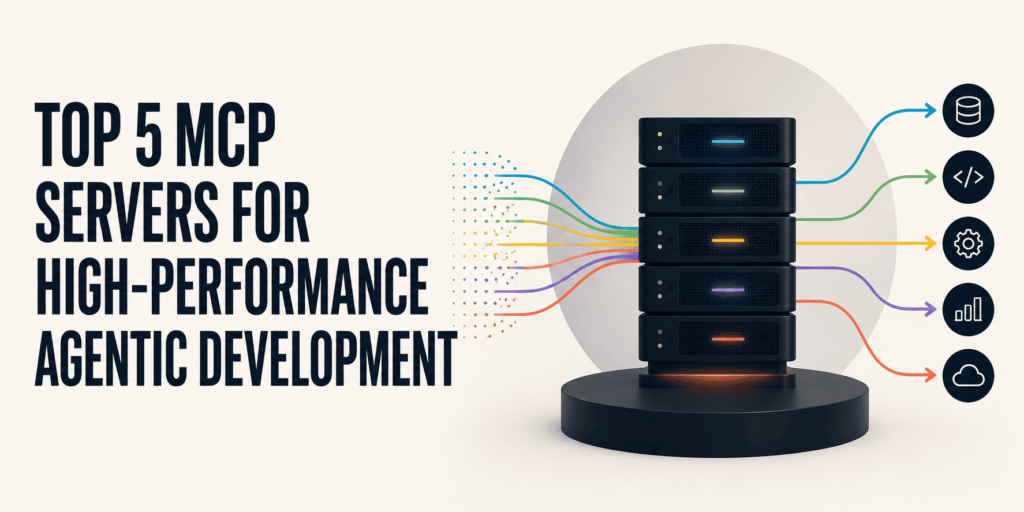
Introduction The advent of the Model Context Protocol (MCP) has transformed the landscape of AI agent development, particularly in the context of applied machine learning. Previously, integrating AI agents with external tools necessitated extensive custom coding for each individual connection. However, following the open-sourcing of MCP by Anthropic in late 2024, major tech companies such as OpenAI, Google, and Microsoft adopted this standard throughout 2025, culminating in its donation to a Linux Foundation body. This evolution has positioned MCP as a universal standard, akin to USB-C for agent tooling, allowing seamless interoperability among compliant tools and agents. Nonetheless, the rapid proliferation of MCP-compatible servers has led to a significant amount of noise in the ecosystem, making it imperative for practitioners to identify effective and reliable solutions. Main Goal and Achievement The primary goal of the original article is to highlight five essential MCP servers that enhance the capabilities of AI agents in high-performance development environments. By selecting servers that provide tangible improvements in agent functionality rather than merely relying on popularity metrics, practitioners can optimize their development setups. To achieve this, developers must integrate these servers thoughtfully into their workflows, ensuring that the chosen tools are actively maintained and relevant to their specific use cases. Advantages of Using MCP Servers Enhanced Development Workflow: The GitHub MCP Server serves as the foundational element for agents needing to interact with development workflows, allowing them to perform tasks such as opening pull requests and triaging issues efficiently. Improved Browser Interactions: Microsoft’s Playwright MCP server significantly improves browser automation by providing structured data access through the accessibility tree, thus facilitating faster and more reliable web interactions. Reduction of Coding Errors: Context7 injects up-to-date library documentation directly into the agent’s context, which mitigates the risk of coding errors typically introduced by outdated or nonexistent API references. Precision in Code Editing: Serena utilizes the Language Server Protocol (LSP) to provide semantic understanding, allowing agents to edit code with precision rather than relying on basic text pattern matching. Dependable Infrastructure: The collection of official reference servers provides essential functionalities that support structured reasoning for agents, ensuring robust local access and memory management. Despite these advantages, it is crucial to recognize certain limitations. Some servers may be maintained primarily as educational references rather than production-ready solutions. Additionally, several popular servers have been archived, necessitating due diligence to ensure that the selected tools are actively supported and functional. Future Implications The advancements in AI and the continuous evolution of protocols like MCP are expected to significantly reshape the future of agent-based development. As AI systems become more sophisticated, the demand for interoperability among diverse tools will grow, necessitating further refinements in agent capabilities. Additionally, as the ecosystem matures, we may anticipate an increase in standardized solutions that promote efficiency and reliability, empowering machine learning practitioners to leverage these advancements for enhanced productivity and innovation. The implications of these developments will likely extend beyond technical enhancements, influencing the broader landscape of software development and AI integration. Disclaimer The content on this site is generated using AI technology that analyzes publicly available blog posts to extract and present key takeaways. We do not own, endorse, or claim intellectual property rights to the original blog content. Full credit is given to original authors and sources where applicable. Our summaries are intended solely for informational and educational purposes, offering AI-generated insights in a condensed format. They are not meant to substitute or replicate the full context of the original material. If you are a content owner and wish to request changes or removal, please contact us directly. Source link : Click Here

Introduction The integration of advanced programming interfaces, such as Claude Code, has transformed the landscape of Natural Language Understanding (NLU). However, a significant number of users fail to capitalize on the full potential of these tools, often becoming stagnant after initial installation. This stagnation can lead to chronic inefficiencies, such as the inability to maintain contextual awareness and repeated prompts that hinder productivity. Understanding that these issues stem primarily from suboptimal setup configurations and not inherent limitations of the model itself is crucial for achieving high performance in agentic programming. Understanding High Performance in Claude Code The primary objective of optimizing Claude Code for high-performance agentic programming is to bridge the gap between sensible defaults and peak operational effectiveness. Achieving this requires a comprehensive understanding of critical configuration files, permissions, and command habits, which are often overlooked by novice users. This guide elucidates how to effectively configure these aspects to ensure sustained productivity and contextual integrity during complex programming tasks. Key Advantages of Optimizing Claude Code Enhanced Context Management: By properly configuring the .claude/ and CLAUDE.md files, users can streamline context management, thereby reducing the frequency of context degradation. This allows for more coherent and productive interactions over extended sessions. Reduced Permission Interruptions: The settings.json file enables users to set precise permission rules. This minimizes the disruptions caused by repetitive permission prompts, allowing users to focus on their tasks rather than administrative hurdles. Improved Customization: The ability to create custom commands and hooks not only augments the functionality of Claude Code but also allows for tailored interactions that better fit specific project needs, enhancing overall workflow efficiency. Scalability via Subagents: The incorporation of subagents facilitates parallel processing of tasks, which is invaluable for handling large codebases or complex projects. This feature allows for delegating specific tasks to subagents, freeing up the main session for other critical processes. Documentation and Memory Maintenance: By utilizing the CLAUDE.md file effectively, users can maintain a living document that captures essential project details, ensuring that key configurations and instructions are readily available and up to date. Caveats and Limitations While optimizing Claude Code presents numerous advantages, it is essential to acknowledge certain limitations. For instance, the initial setup may require a steep learning curve for users unfamiliar with command-line interfaces or configuration files. Additionally, the performance gains are contingent on the user’s commitment to maintaining the configuration and regularly updating it as project requirements evolve. Failure to do so may result in a reversion to less efficient default behaviors. Future Implications for AI and NLU The ongoing advancements in artificial intelligence will likely further influence the NLU landscape, enhancing the capabilities of tools like Claude Code. As AI continues to evolve, we can anticipate more sophisticated models that integrate seamlessly with user workflows, offering real-time contextual awareness and adaptive permissions. These developments could lead to even greater efficiencies in programming, enabling NLU scientists to focus more on innovation rather than overcoming operational limitations. The future of agentic programming appears promising, with the potential for more intuitive and powerful tools that continue to push the boundaries of what is achievable in natural language understanding. Disclaimer The content on this site is generated using AI technology that analyzes publicly available blog posts to extract and present key takeaways. We do not own, endorse, or claim intellectual property rights to the original blog content. Full credit is given to original authors and sources where applicable. Our summaries are intended solely for informational and educational purposes, offering AI-generated insights in a condensed format. They are not meant to substitute or replicate the full context of the original material. If you are a content owner and wish to request changes or removal, please contact us directly. Source link : Click Here
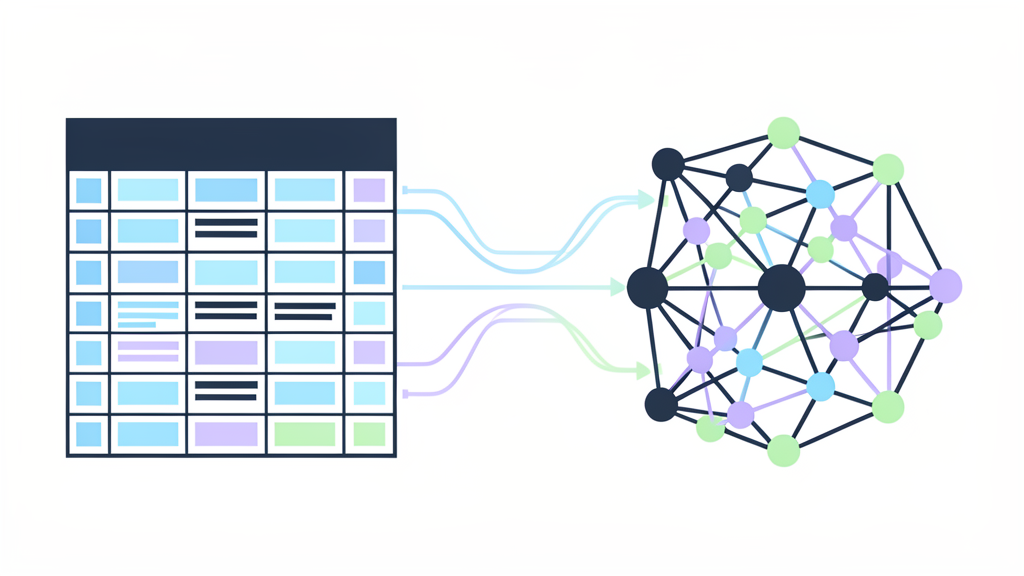
Context In the realm of machine learning, tabular foundation models have emerged as a novel category capable of performing zero-shot predictions on tabular datasets. These models are pretrained on a broad distribution of synthetic tables, enabling them to adapt to new datasets without the need for gradient updates. Among these models, TabICL stands out as a powerful open-source solution. This discussion elucidates the workings of TabICL and positions its performance against established models like XGBoost, particularly in the context of credit-risk datasets, all while employing R in conjunction with Python through the reticulate package. Understanding Tabular Foundation Models A tabular foundation model is characterized by three fundamental components: Pretraining on diverse datasets: Unlike traditional models that learn from a single dataset, tabular foundation models leverage a distribution of tables for pretraining. In-context transferability: These models can transfer knowledge to new datasets, utilizing existing training data to make predictions on test data within a single forward pass. Transformer architecture: Operating on rows of tables rather than tokens, these models utilize a sequence transformer architecture similar to that of large language models (LLMs). The first point highlights a significant divergence from text and vision models, as there is no existing corpus of labeled tables. Instead, models like TabICL harness synthetic data, engaging in a pretraining task that involves predicting targets from held-out rows based on given rows of synthetic tables. Mechanism of TabICL TabICL operates in two distinct stages: Column-then-row attention: Initially, each column is independently processed to create fixed-dimensional embeddings, followed by a row-wise attention mechanism that generates a unified row embedding, independent of the schema. Transformer ICL over rows: The model utilizes row embeddings for both training and testing, allowing self-attention mechanisms to function without gradient updates during inference. This architecture facilitates zero-shot transfer by aligning pretraining objectives with inference tasks, thus enabling efficient scaling to larger datasets compared to other models. Setting Up the Environment with Reticulate TabICL is primarily designed for Python, and its integration with R necessitates the reticulate package. The setup process involves installing necessary Python libraries, including TabICL, Torch, Pandas, and Scikit-learn, to establish a compatible environment for executing predictions. Applying TabICL: Predicting Credit Defaults Utilizing a credit dataset akin to LendingClub, the objective is to predict defaults (represented by a binary target). The dataset enables a comprehensive analysis of TabICL’s predictive capabilities without extensive preprocessing, provided categorical variables are appropriately formatted. The model’s efficiency is reflected in its rapid fitting process, which merely stores training data rather than performing extensive computations during this phase. Comparative Evaluation of TabICL and XGBoost In evaluating TabICL against XGBoost, a standard tuning process for XGBoost involves a grid search and cross-validation, which can be time-consuming. In contrast, TabICL’s approach allows for immediate predictions post-fitting without necessitating extensive tuning, demonstrating its utility for quickly establishing performance baselines. Experiments reveal that TabICL can achieve competitive performance metrics, such as ROC AUC scores, comparable to those of tuned XGBoost models, underscoring its potential as a robust alternative in specific scenarios. Observations from the Application Competing Performance: TabICL’s zero-shot ROC AUC performance is noteworthy, rivaling that of a well-tuned XGBoost model. No Tuning Loop Advantage: The absence of a tuning loop in TabICL simplifies the modeling process, making it suitable for rapid assessments and cold starts. Resource Considerations: While TabICL offers significant advantages, its initial setup requires downloading a pretrained checkpoint, and its resource demands increase with the complexity of the dataset. Appropriate Use Cases for TabICL TabICL is particularly advantageous in cases where: A rapid baseline is required without extensive tuning. The dataset size is manageable, ideally in the range of hundreds to tens of thousands of rows, where in-context learning is most effective. A zero-shot approach is desired for quick analyses across multiple datasets. The task at hand involves classification, though newer versions of TabICL extend support to regression and time-series forecasting. Conversely, TabICL may not be the best choice when: Interpretability or monotonicity is crucial, particularly in regulated environments. Handling very large datasets is necessary, where traditional models may maintain accuracy more effectively. Domain-specific preprocessing for missing values is required. Future Implications The advancement of artificial intelligence and machine learning technologies heralds a transformative period for data analytics and insights. As foundation models like TabICL continue to evolve, their integration into mainstream data engineering practices is likely to augment the efficiency and efficacy of predictive analytics. Future developments may include enhancements in interpretability, scalability for larger datasets, and improved handling of domain-specific requirements, ultimately leading to more robust decision-making frameworks in data-driven industries. Conclusion Tabular foundation models, exemplified by TabICL, represent a significant evolution in machine learning methodologies, offering zero-shot capabilities that simplify the modeling process. While they do not entirely replace established models like XGBoost, they provide a valuable alternative for specific use cases, particularly in smaller datasets and rapid scenario assessments. As the field progresses, the interplay between traditional machine learning techniques and emerging foundation models will continue to shape the landscape of data analytics and insights. Disclaimer The content on this site is generated using AI technology that analyzes publicly available blog posts to extract and present key takeaways. We do not own, endorse, or claim intellectual property rights to the original blog content. Full credit is given to original authors and sources where applicable. Our summaries are intended solely for informational and educational purposes, offering AI-generated insights in a condensed format. They are not meant to substitute or replicate the full context of the original material. If you are a content owner and wish to request changes or removal, please contact us directly. Source link : Click Here


