Introduction
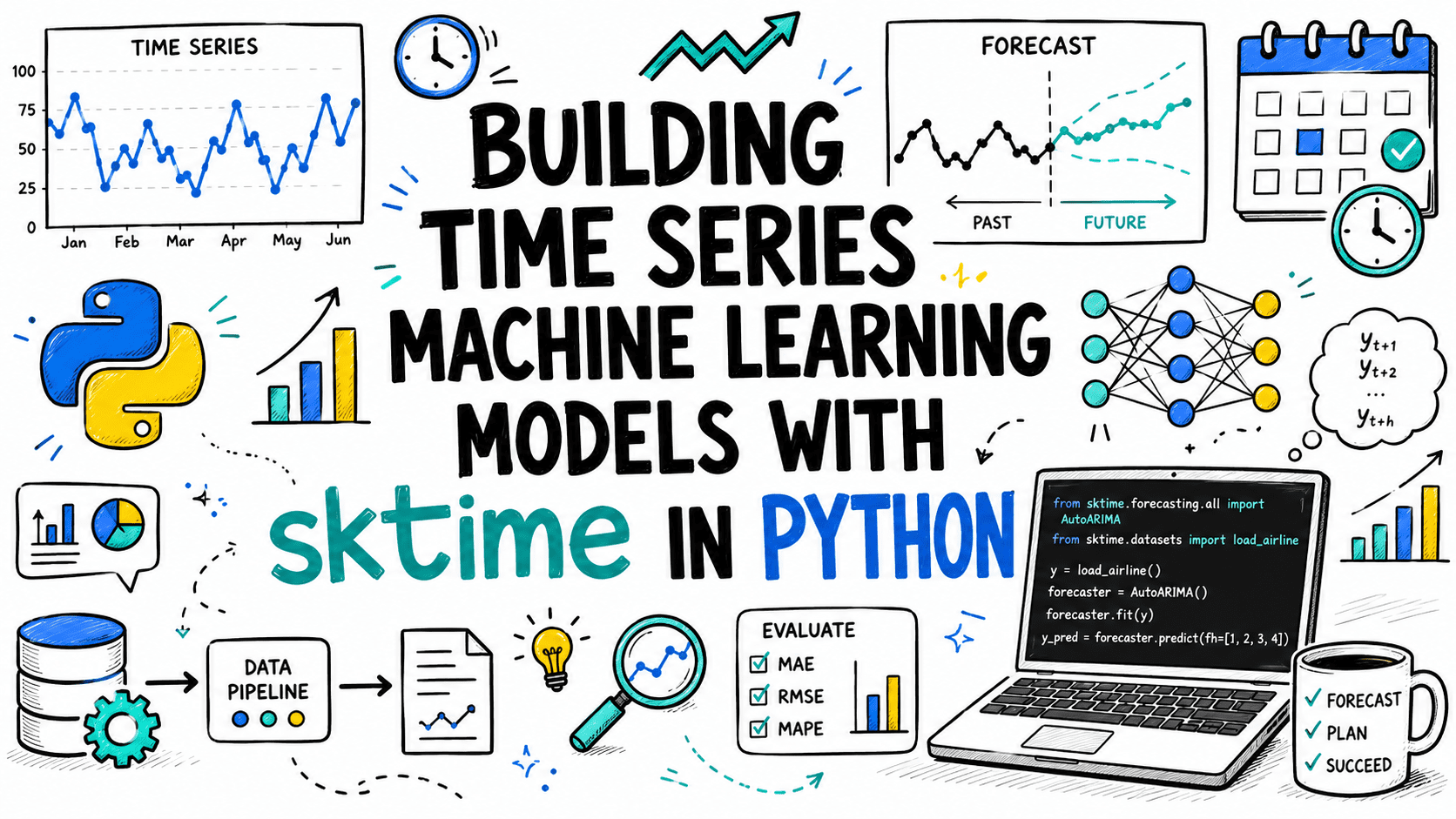
In the realm of data science, the processing and analysis of time-series data is of paramount importance, particularly in applications involving sensor readings and various metrics that evolve over time. Traditional machine learning frameworks, such as scikit-learn, are often ill-suited for these types of datasets due to their inherent structural complexities—namely seasonality, trends, temporal ordering, and the dependency of future values on historical data. This is where sktime, a Python library specifically designed for time-series analysis, comes into play, offering a scikit-learn-style API tailored for the unique requirements of time-series data.
Main Goals of Time-Series Modeling
The primary objective of utilizing sktime is to effectively build and evaluate machine learning models that can accurately forecast future values based on past data. Specifically, this article elucidates the methodology for forecasting temperature readings from an industrial HVAC sensor, demonstrating how sktime can streamline the tasks of data preprocessing, model fitting, and evaluation. By leveraging the capabilities of sktime, users can enhance predictive accuracy, improve model interpretability, and efficiently handle the complexities of time-series data.
Advantages of Using sktime for Time-Series Analysis
- Specialized Data Structures: sktime provides tailored data containers such as Series, Panel, and Hierarchical formats that are specifically designed to accommodate the sequential and temporal nature of time-series data.
- Chronological Data Handling: The library emphasizes the importance of maintaining chronological integrity when splitting datasets for training and testing, thus preventing data leakage and enhancing model validity.
- Flexible Forecasting Horizons: Users can define absolute or relative forecasting horizons, enabling adaptable modeling strategies that cater to specific forecasting needs.
- Streamlined Pipelines: sktime facilitates the construction of preprocessing and forecasting pipelines that allow for systematic handling of missing values, trends, and seasonality, thereby ensuring robust model performance.
- Model Evaluation Metrics: The integration of standard evaluation metrics, such as Mean Absolute Error (MAE) and Mean Absolute Percentage Error (MAPE), empowers users to quantitatively assess model performance and make informed adjustments.
Caveats and Limitations
While sktime offers a robust framework for time-series analysis, several limitations warrant consideration. The library’s efficacy is contingent upon the quality and granularity of the input data; poor-quality data can lead to inaccurate forecasts. Additionally, sktime’s reliance on the temporal structure of data may impose constraints when applied to datasets lacking consistent time intervals. Users should also be cognizant of the computational resources required for processing large datasets, as the complexity of models can lead to increased processing times.
Future Implications of AI Developments in Time-Series Analysis
The rapid advancements in artificial intelligence (AI) and machine learning technologies are poised to significantly impact the field of time-series analysis. Enhanced algorithms, particularly those incorporating deep learning techniques, may yield even greater predictive capabilities. Moreover, as AI continues to evolve, the integration of natural language processing (NLP) within time-series frameworks could lead to richer contextual insights, enabling analysts to derive more nuanced interpretations from their data. As the demand for accurate forecasting grows across various industries, ongoing developments in this field will likely result in increasingly sophisticated tools and methodologies, ultimately driving better decision-making processes.
Disclaimer
The content on this site is generated using AI technology that analyzes publicly available blog posts to extract and present key takeaways. We do not own, endorse, or claim intellectual property rights to the original blog content. Full credit is given to original authors and sources where applicable. Our summaries are intended solely for informational and educational purposes, offering AI-generated insights in a condensed format. They are not meant to substitute or replicate the full context of the original material. If you are a content owner and wish to request changes or removal, please contact us directly.
Source link :