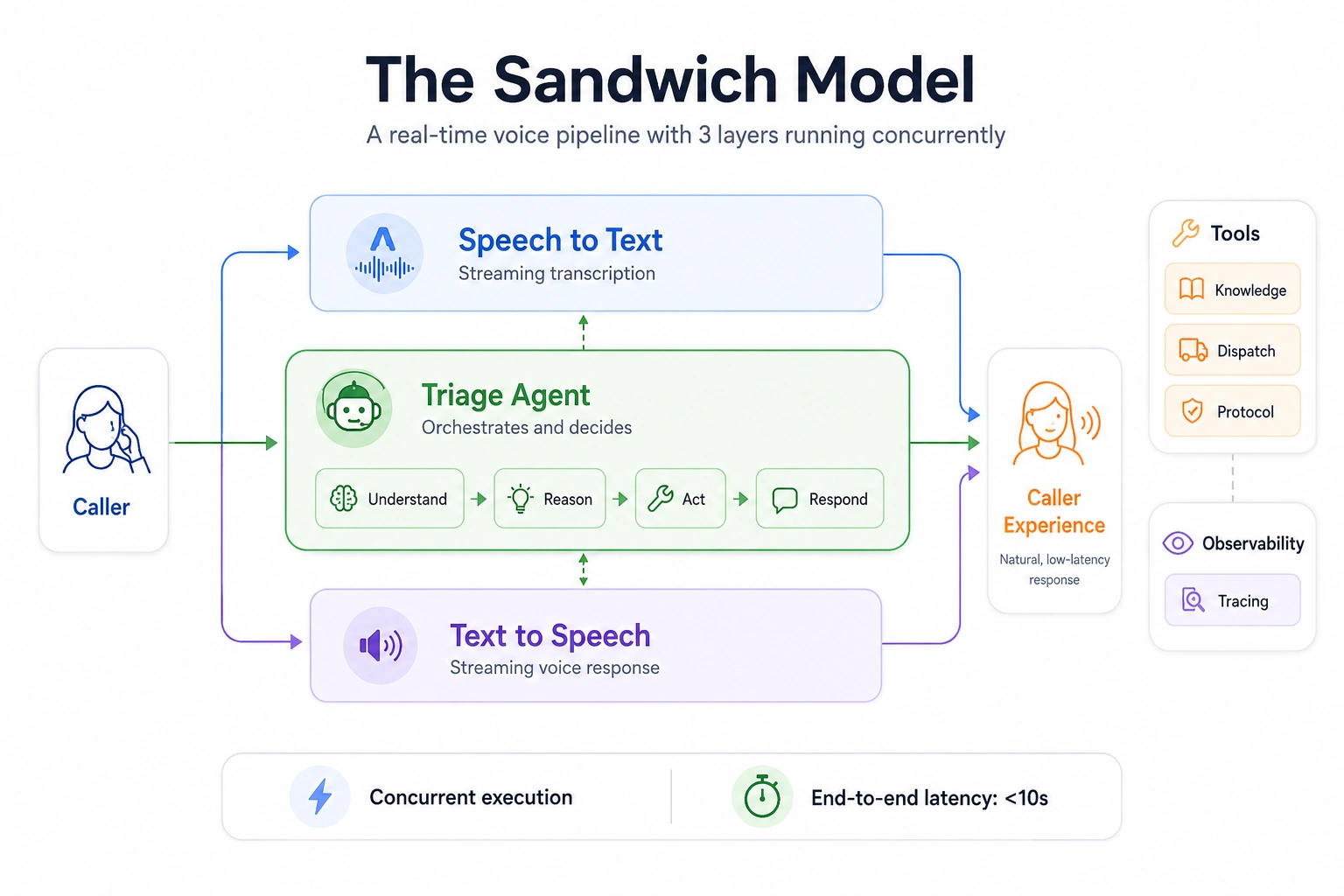
In scenarios where lives are at stake, every second counts. Traditional emergency helplines often rely on cumbersome keypad navigation, which can exacerbate panic and delay critical responses. The rapid advancement of artificial intelligence (AI) has opened new avenues for enhancing emergency response systems. By implementing an AI-driven voice agent, it becomes possible to listen to callers in distress, assess their situations in real-time, and dispatch the appropriate emergency services without the need for manual input. This innovation aims to streamline communication and provide immediate assistance, significantly mitigating the chaos often associated with emergencies.
The primary objective of creating an AI emergency voice agent is to facilitate a seamless and efficient communication channel during critical situations. This agent should be capable of understanding spoken distress signals, triaging the urgency of the situation, and ensuring the timely dispatch of emergency services. Achieving this requires integrating advanced technologies such as speech recognition, natural language processing, and real-time data analysis, thus enabling the agent to operate effectively in a high-stakes environment.
1. **Immediate Assistance**: AI agents can process information rapidly, ensuring that help is dispatched without delay. This could be crucial in situations where every second is vital, such as medical emergencies or threats to personal safety.
2. **Reduced Human Error**: By automating the triage process, the likelihood of human error decreases. AI can consistently apply the same criteria for evaluating distress signals, making it less prone to the oversights that can occur with human operators.
3. **Enhanced Caller Experience**: The use of voice interaction eliminates the need for callers to navigate complex menus during stressful situations. A natural conversational interface allows callers to express their needs more freely, which can lead to more accurate assessments of their situations.
4. **Scalability**: As demand for emergency services fluctuates, AI agents can easily scale to handle higher volumes of calls without requiring additional human resources. This flexibility can optimize resource allocation in emergency response centers.
5. **Data-Driven Insights**: Implementing AI solutions enables the collection of valuable data on emergency calls, which can be analyzed to identify trends, improve training protocols for human operators, and enhance overall service efficiency.
Despite the numerous advantages, the deployment of AI in emergency response systems is not without its challenges. Ethical concerns surrounding data privacy and the need for robust security measures must be addressed to protect sensitive information. Additionally, the technology’s effectiveness can be limited by the quality of voice recognition and natural language processing capabilities, particularly in noisy environments or with callers who have speech impairments. Furthermore, ensuring the AI can handle a wide range of emergency scenarios is crucial for maintaining reliability in high-pressure situations.
The landscape of emergency response is poised for transformation with the continued evolution of AI technologies. As machine learning models become more sophisticated, they will enhance the capabilities of emergency voice agents, allowing for more nuanced understanding and response to distress signals. Additionally, the integration of AI with other technologies, such as geographical information systems (GIS) and real-time monitoring systems, will further augment the efficiency and effectiveness of emergency services. In the long term, we can expect AI-driven solutions to not only improve response times and outcomes but also to redefine the standards of service in emergency management and public safety.
Disclaimer
The content on this site is generated using AI technology that analyzes publicly available blog posts to extract and present key takeaways. We do not own, endorse, or claim intellectual property rights to the original blog content. Full credit is given to original authors and sources where applicable. Our summaries are intended solely for informational and educational purposes, offering AI-generated insights in a condensed format. They are not meant to substitute or replicate the full context of the original material. If you are a content owner and wish to request changes or removal, please contact us directly.
Source link :