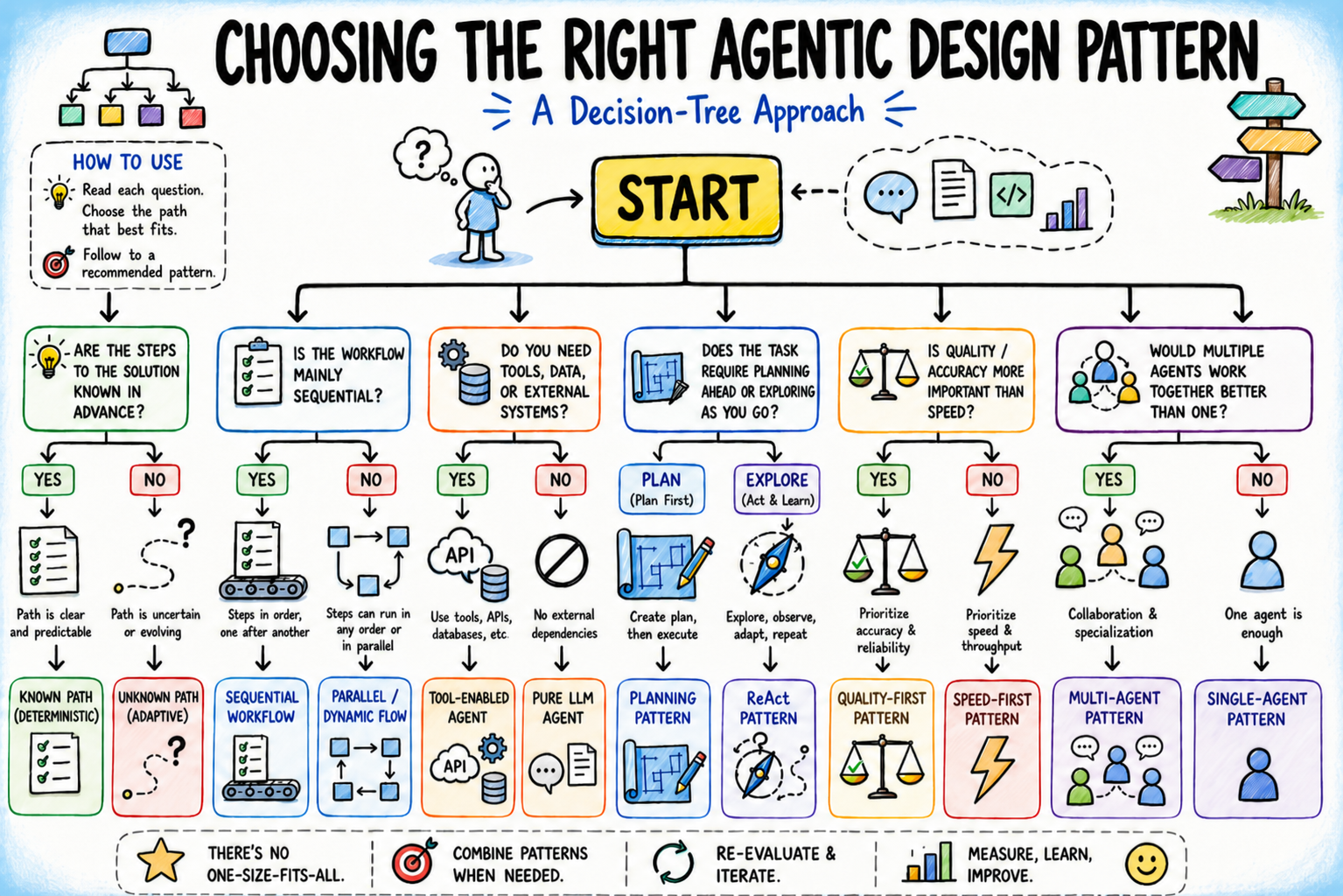
In the rapidly evolving field of applied machine learning, selecting the appropriate agentic design pattern is a pivotal decision that can significantly impact the efficiency and effectiveness of AI systems. The original discussion revolves around employing a structured decision tree to facilitate the selection of suitable design patterns tailored to specific tasks within AI development. By understanding the underlying assumptions of different agentic design patterns and leveraging a methodical decision-making framework, practitioners can align their choices with the nuanced requirements of their projects.
The selection of the right agentic design pattern is not merely a technical choice but a critical design decision that can shape the trajectory of an AI project. Misinterpretations of the problem can lead to the application of overly complex solutions when simpler alternatives would suffice, or conversely, to oversimplified approaches that fail to scale in production. Thus, mastering the decision logic governing pattern selection is essential for effective AI system design.
The primary objective of the original post is to equip AI developers with a structured decision-making tool—the decision tree—that systematically narrows down potential design patterns based on five key questions regarding their task properties. By following this protocol, developers can make informed choices that enhance their AI systems’ adaptability and performance. The decision tree does not yield a definitive answer but serves as a foundation for iterative development, enabling practitioners to refine their choices based on ongoing feedback and evolving project demands.
While the decision tree offers numerous advantages, it is not without limitations. The effectiveness of this approach hinges on the accurate identification of task properties and assumptions. Misinterpretations at this stage can lead to suboptimal pattern selections. Additionally, the decision tree is most beneficial for problems that exhibit clear task properties; ambiguous or highly dynamic tasks may complicate the decision-making process. Furthermore, over-reliance on this structured approach can stifle creativity and innovative thinking in design.
As AI technologies continue to evolve, the methodologies for selecting agentic design patterns will need to adapt. Future advancements in machine learning may lead to the emergence of new design patterns that better address the complexities of real-world applications. Moreover, the integration of human-in-the-loop systems in AI workflows could necessitate the refinement of decision trees to account for subjective evaluations and qualitative feedback. Consequently, practitioners must remain vigilant and flexible, ready to update their decision-making frameworks in response to ongoing developments in AI and machine learning.
The decision tree approach to selecting agentic design patterns represents a significant advancement in the field of applied machine learning. By providing a structured methodology for decision-making, practitioners can enhance the effectiveness of their AI systems while mitigating risks associated with misalignment between task requirements and design choices. As the landscape of AI continues to transform, the principles underlying this decision-making framework will play a crucial role in shaping the future of intelligent systems.
Disclaimer
The content on this site is generated using AI technology that analyzes publicly available blog posts to extract and present key takeaways. We do not own, endorse, or claim intellectual property rights to the original blog content. Full credit is given to original authors and sources where applicable. Our summaries are intended solely for informational and educational purposes, offering AI-generated insights in a condensed format. They are not meant to substitute or replicate the full context of the original material. If you are a content owner and wish to request changes or removal, please contact us directly.
Source link :