
Context: Leadership Changes in AI and Health Considerations The recent announcement regarding Fidji Simo’s departure from her leadership role at OpenAI underscores the intersection of professional responsibilities and personal health challenges in the rapidly evolving field of artificial intelligence (AI). As the product and business chief of OpenAI, Simo’s decision to step down due to a chronic illness, specifically Postural Orthostatic Tachycardia Syndrome (POTS), highlights significant issues surrounding workplace health, employee well-being, and the pressures faced by executives in high-stakes environments such as AI and finance. Simo’s journey illustrates the often-overlooked realities of managing chronic health conditions while navigating the complexities of leadership in tech-driven industries. Her transition to a part-time advisory role at OpenAI raises questions about the sustainability of high-pressure positions in the face of personal health crises and the implications for organizational management in the finance and FinTech sectors. Main Goal: Prioritizing Health in Executive Roles The principal aim of Simo’s announcement is to advocate for the prioritization of personal health over professional obligations, a sentiment echoed by many leaders in the tech industry. This goal can be achieved by fostering a corporate culture that values employee well-being, encouraging open discussions about health issues, and implementing supportive policies that allow for flexible work arrangements. Simo’s candid reflections on her health challenges serve as a powerful reminder for organizations to reassess their expectations and support systems for employees, particularly in high-pressure roles. Advantages of Health Conscious Leadership Enhanced Employee Well-Being: By prioritizing health, organizations can create a supportive environment that reduces burnout and improves overall employee satisfaction. Simo’s experience illustrates the need for companies to recognize the importance of mental and physical health. Increased Productivity: Employees who feel supported in managing their health are likely to be more productive and engaged in their work. Research indicates that organizations with health-conscious policies see improved performance metrics. Attraction and Retention of Talent: Companies that prioritize employee health can attract top talent, as potential employees increasingly seek workplaces that support work-life balance and well-being. Positive Organizational Reputation: Organizations that publicly support health initiatives enhance their reputation, contributing to a positive brand image that can be advantageous in competitive markets such as finance and FinTech. Future Implications: The Role of AI in Employee Health Management The ongoing advancements in AI technology present numerous opportunities for enhancing employee health management within the finance and FinTech sectors. AI-driven tools can facilitate personalized health monitoring, predictive analytics for workforce management, and more efficient communication regarding health resources. As organizations increasingly adopt these technologies, the potential for integrating health considerations into workplace practices will grow, ultimately shaping a healthier, more responsive work environment. Furthermore, as demonstrated by Simo’s experience, the dialogue surrounding health and leadership will likely continue to evolve, necessitating a cultural shift within organizations. The future landscape of work in AI and finance will be increasingly defined by the balance between high-performance expectations and the imperative to maintain employee well-being. Disclaimer The content on this site is generated using AI technology that analyzes publicly available blog posts to extract and present key takeaways. We do not own, endorse, or claim intellectual property rights to the original blog content. Full credit is given to original authors and sources where applicable. Our summaries are intended solely for informational and educational purposes, offering AI-generated insights in a condensed format. They are not meant to substitute or replicate the full context of the original material. If you are a content owner and wish to request changes or removal, please contact us directly. Source link : Click Here

Context: The Current Landscape of the 2026 FIFA World Cup The ongoing Round of 16 at the 2026 FIFA World Cup has set the stage for the upcoming Quarterfinals, which are beginning to take shape. As the tournament progresses, anticipation builds not only for the immediate matches but also for potential Semifinal fixtures. This dynamic reflects both the excitement of the event and the analytical opportunities it presents, particularly in the realm of sports analytics. Main Goal: Analyzing Quarterfinals to Predict Semifinal Outcomes The primary goal of this analysis is to examine the Quarterfinal matchups, which will be updated as results are confirmed, and to speculate on the possible Semifinal pairings. This approach utilizes historical data and current performance metrics to forecast outcomes, thereby facilitating strategic insights for sports analysts and enthusiasts alike. By leveraging AI-driven analytics, these predictions can be refined, enhancing the accuracy of forecasts based on real-time data. Advantages of AI in Sports Analytics Enhanced Predictive Modeling: AI algorithms can analyze vast datasets to identify trends and patterns that may not be readily apparent. For instance, past performance metrics of teams and players can inform predictions about their future performance in critical matches. Real-Time Data Processing: The integration of AI allows for the processing of live game data, providing immediate insights into player performance and team strategies. This capability is particularly vital during high-stakes matches like the World Cup. Comprehensive Historical Analysis: AI tools can explore historical matchups between teams, offering context for current performances. For example, analyzing previous encounters between France and Morocco can help elucidate potential strategies and outcomes. Fan Engagement: By providing fans and analysts with data-driven insights, AI enhances engagement with the sport. The excitement surrounding matchups can be amplified through interactive dashboards and analytical tools. Future Implications: The Evolving Role of AI in Sports Analytics As AI technology continues to evolve, its applications in sports analytics are expected to expand significantly. Future developments may include more sophisticated machine learning models that can simulate match outcomes with greater accuracy, incorporating variables such as player fatigue, weather conditions, and real-time tactical changes. Furthermore, as the volume of data generated by sports events grows, AI’s role in managing and interpreting this information will become increasingly critical. With the rise of AI, there is also potential for enhanced collaboration between teams and analytics firms, fostering a culture of data-driven decision-making within sports organizations. This collaboration can lead to more informed strategies not only during tournaments like the World Cup but also across various levels of competition. Disclaimer The content on this site is generated using AI technology that analyzes publicly available blog posts to extract and present key takeaways. We do not own, endorse, or claim intellectual property rights to the original blog content. Full credit is given to original authors and sources where applicable. Our summaries are intended solely for informational and educational purposes, offering AI-generated insights in a condensed format. They are not meant to substitute or replicate the full context of the original material. If you are a content owner and wish to request changes or removal, please contact us directly. Source link : Click Here
Context and Significance of Mixed Reality in Human-AI Collaboration In recent years, the field of Computer Vision and Image Processing has experienced significant advancements, particularly with respect to the integration of Artificial Intelligence (AI) and Mixed Reality (MR) technologies. The emergence of in-situ intelligent mixed reality assistants represents a paradigm shift in how humans collaborate with AI systems in real-time environments. These systems leverage improvements in camera capabilities, lens resolution, and computational power to create immersive experiences that enhance human decision-making processes. Such advancements are not merely technological upgrades; they are catalysts for enhancing productivity and innovation across various sectors, including healthcare, manufacturing, and education. Main Goal of Mixed Reality Assistants The primary objective of the implementation of in-situ intelligent mixed reality assistants is to facilitate adaptive human-AI collaboration. This goal can be achieved by utilizing MR overlays to provide context-sensitive information to users, thereby augmenting their cognitive capabilities. By merging digital content with the physical environment, these systems aim to bridge the gap between human intuition and machine intelligence, allowing for seamless interactions that improve situational awareness and operational efficiency. Advantages of In-Situ Intelligent Mixed Reality Assistants Enhanced Decision-Making: Mixed reality environments enable users to visualize complex data in real-time, facilitating faster and more informed decision-making. Evidence from recent applications demonstrates that professionals who utilize MR tools exhibit improved accuracy and speed in their tasks. Increased Engagement: By creating immersive experiences, MR assistants significantly enhance user engagement. This increased interaction can lead to more effective training and educational outcomes, as users retain information better when they can visualize and manipulate data within a mixed reality context. Collaboration Across Distances: MR technologies facilitate remote collaboration, allowing teams to work together regardless of their physical locations. This capability is particularly beneficial in global organizations where team members may be distributed across various geographies. Real-Time Feedback: The integration of AI with MR allows for real-time data analysis and feedback, empowering users to make immediate corrections and optimizations to their processes. This dynamic interaction reduces the latency typically associated with traditional data processing methods. Caveats and Limitations Despite the numerous advantages, several limitations must be acknowledged. The effectiveness of mixed reality systems is highly contingent on the quality of underlying hardware and software, which can be prohibitively expensive. Additionally, there are challenges related to user adaptation; not all individuals may find the transition to MR environments intuitive. Furthermore, privacy concerns regarding data collection and usage in MR systems must be carefully managed to ensure user trust and compliance with regulations. Future Implications of AI Developments in Mixed Reality Looking ahead, the convergence of AI and mixed reality technologies holds substantial promise for the future of human-AI collaboration. As AI algorithms continue to evolve, the capabilities of mixed reality systems are expected to expand, enabling them to learn from user interactions and adapt more intelligently over time. This evolution could lead to the development of highly personalized MR experiences that cater to individual user needs and preferences, thereby enhancing productivity and creativity in various fields. The growing integration of AI in MR systems will likely also drive innovation in related technologies, further transforming industries and improving outcomes. Disclaimer The content on this site is generated using AI technology that analyzes publicly available blog posts to extract and present key takeaways. We do not own, endorse, or claim intellectual property rights to the original blog content. Full credit is given to original authors and sources where applicable. Our summaries are intended solely for informational and educational purposes, offering AI-generated insights in a condensed format. They are not meant to substitute or replicate the full context of the original material. If you are a content owner and wish to request changes or removal, please contact us directly. Source link : Click Here

Contextual Overview The landscape of cybersecurity is continuously evolving, marked by the emergence of startups that offer innovative yet controversial solutions. One such entity is IRIS C2, a cybersecurity startup that claims to facilitate the acquisition of zero-day vulnerabilities in widely used software. The company’s operations are managed by individuals with contentious backgrounds, including prior convictions and allegations of fraudulent practices. This context raises questions regarding the credibility and ethical considerations of such startups within the cybersecurity domain, particularly in relation to their impact on data engineering and the broader implications for the industry. Main Goals and Achievements The primary objective of a startup like IRIS C2 is to attract talented vulnerability researchers and exploit developers while capitalizing on the lucrative market for zero-day exploits. By offering significant financial incentives for discovering security vulnerabilities, IRIS C2 aims to establish itself as a leading player in the offensive cybersecurity space. Achieving this goal hinges on the ability to build a reputation that attracts skilled professionals, despite the questionable ethics associated with its founders and their previous ventures. Furthermore, the startup’s success is contingent upon its ability to navigate the regulatory landscape and establish trust among potential clients, particularly within government sectors. Advantages of Engaging with Offensive Cybersecurity Startups Financial Incentives: Startups like IRIS C2 offer substantial rewards for vulnerability findings, with payouts ranging from $10,000 to $7 million. This financial model can motivate talented researchers to contribute their expertise, potentially leading to enhanced cybersecurity measures. Accessibility to Diverse Talent: The recruitment strategy employed by IRIS C2 emphasizes raw talent over formal qualifications, which may help to uncover innovative solutions from a wider pool of individuals, thereby enhancing the overall quality of cybersecurity defenses. Increased Awareness of Vulnerabilities: By actively engaging in the market for zero-day exploits, such startups can bring attention to existing vulnerabilities in popular software, prompting necessary updates and patches from software vendors. Potential for Collaboration: The operational model of engaging with independent researchers fosters a collaborative environment where innovative ideas can flourish, leading to advancements in offensive cybersecurity practices. Limitations and Caveats Despite the potential advantages, there are significant caveats associated with engaging in the offensive cybersecurity market. The ethical implications of working with startups founded by individuals with questionable histories raise concerns about the integrity of the information provided. Moreover, the lack of oversight in the acquisition and dissemination of zero-day vulnerabilities could potentially expose government and private sector clients to greater risks if such vulnerabilities are not responsibly managed. Additionally, the financial model may incentivize researchers to prioritize profit over ethical considerations, leading to a potential undermining of cybersecurity practices. Future Implications and the Role of AI As artificial intelligence (AI) technology advances, its integration into offensive cybersecurity practices is likely to become more prevalent. AI can enhance the ability to identify vulnerabilities and automate exploit development processes, potentially increasing the efficiency of startups like IRIS C2. However, this also raises the stakes regarding the ethical use of such technologies. With AI-driven cyberattacks becoming more sophisticated, the need for robust regulatory frameworks and ethical guidelines will be paramount to ensure that advancements in cybersecurity do not inadvertently contribute to malicious activities. Moreover, the intersection of AI and cybersecurity will necessitate a reevaluation of current practices in the field of data engineering, emphasizing the need for professionals to adapt to emerging technologies while maintaining a commitment to ethical standards. Disclaimer The content on this site is generated using AI technology that analyzes publicly available blog posts to extract and present key takeaways. We do not own, endorse, or claim intellectual property rights to the original blog content. Full credit is given to original authors and sources where applicable. Our summaries are intended solely for informational and educational purposes, offering AI-generated insights in a condensed format. They are not meant to substitute or replicate the full context of the original material. If you are a content owner and wish to request changes or removal, please contact us directly. Source link : Click Here

Contextual Overview The ongoing narrative surrounding Criteo, a prominent player within the advertising technology sector, has recently intensified with the announcement of a takeover bid from private equity firms Vista Equity Partners and Quinti Capital. This development not only reignites speculation regarding the future of the France-based firm, which has strategically repositioned its commercial headquarters to Luxembourg, but it also underscores the persistent interest that private equity (PE) firms maintain in the ad tech landscape. The joint bid values Criteo at over $50 per share, translating to a market capitalization exceeding $1 billion, despite a significant year-over-year decline of 23% prior to this speculation. With an equity valuation approximating $3.7 billion, the offer represents a substantial premium of over 50% relative to Criteo’s recent share price. This acquisition proposal has drawn attention as PE firms recognize the potential of Criteo’s advanced artificial intelligence (AI) capabilities, which are perceived as vital to enhancing the operational efficiency of retailers and advertisers utilizing its platform. Main Goal and Achievement Strategy The primary objective of the Criteo takeover bid is to unlock latent value within the company through strategic enhancements and operational efficiencies brought about by private equity investment. This can be achieved by leveraging Criteo’s AI-driven technologies to optimize advertising performance across various digital channels, thereby facilitating greater access and usability for marketers. The bid signifies a broader trend where PE firms are looking to capitalize on the growth potential of ad tech, particularly in light of market volatility and changing consumer behaviors. Advantages of AI-Powered Marketing in Ad Tech Enhanced Targeting: AI capabilities allow for more precise audience targeting, leading to improved campaign performance. By analyzing vast datasets, AI can discern patterns and preferences that traditional methods may overlook. Operational Efficiency: Automation of marketing processes through AI reduces the need for manual intervention, streamlining workflows, and enhancing productivity. Criteo’s self-serve AI workflows are expected to further diminish operational dependencies and allow for quicker decision-making. Informed Decision-Making: AI provides actionable insights derived from data analytics, enabling marketers to make evidence-based decisions that can significantly enhance campaign effectiveness. This is particularly relevant in the context of Criteo’s ability to integrate retail signals into its offerings. Scalability: AI-driven platforms can easily scale operations to accommodate varying levels of demand without sacrificing performance. As Criteo consolidates its services under its “Go” brand, it is positioned to cater to both large enterprises and long-tail retailers effectively. While the advantages of leveraging AI in ad tech are compelling, it is essential to recognize limitations. For instance, dependency on technology may reduce human oversight, and potential biases in AI algorithms may skew targeting and engagement outcomes. Future Implications of AI Developments in Ad Tech The landscape of advertising technology is poised for significant transformation as AI continues to evolve. The increasing integration of AI in marketing strategies signals a shift towards a more data-driven approach, where predictive analytics and machine learning will become central to campaign planning and execution. Criteo’s ongoing innovations, such as its partnerships with AI entities like OpenAI, reflect a commitment to staying at the forefront of this technological evolution. Moreover, as the public markets exhibit caution, the interest of PE firms in ad tech could catalyze further consolidation and investment in AI capabilities, leading to enhanced competition and innovation within the sector. This dynamic suggests that digital marketers will need to adapt to rapidly changing tools and methodologies, prioritizing agility and continuous learning to harness the full potential of AI-powered marketing. Disclaimer The content on this site is generated using AI technology that analyzes publicly available blog posts to extract and present key takeaways. We do not own, endorse, or claim intellectual property rights to the original blog content. Full credit is given to original authors and sources where applicable. Our summaries are intended solely for informational and educational purposes, offering AI-generated insights in a condensed format. They are not meant to substitute or replicate the full context of the original material. If you are a content owner and wish to request changes or removal, please contact us directly. Source link : Click Here
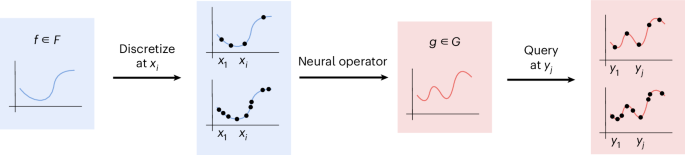
Contextual Overview The rapid advancement of deep learning technologies over the past decade has demonstrated transformative potential across various fields, notably in computer vision, speech recognition, and natural language processing. As these technologies evolve, they are set to revolutionize the natural sciences, particularly in domains such as Smart Manufacturing and Robotics. Traditional deep learning models, primarily based on neural networks, process data in finite-dimensional vectors, which can be limiting when addressing the continuum descriptions inherent in many physical phenomena, such as those governed by partial differential equations (PDEs). These phenomena often require outputs that can be evaluated at arbitrary coordinates, necessitating models that are not constrained by fixed discretizations. Main Goals and Achievements The primary objective is to develop neural operators that extend standard neural architectures to function spaces, allowing them to learn mappings between continuous functions. Achieving this goal involves several key principles: ensuring that the learned mappings are discretization agnostic, maintaining a fixed number of learnable parameters regardless of discretization, and being able to universally approximate regular operators with minimal error. By doing so, neural operators can effectively model complex physical systems and phenomena that are not adequately captured by traditional neural networks. Structured Advantages of Neural Operators Discretization Agnosticism: Neural operators can process functions at any discretization, producing consistent outputs across varying resolutions. This property enhances the robustness of models in real-world applications where data may come from different sources or formats. Data Efficiency: Neural operators can leverage datasets with varying discretizations, thus making efficient use of available training data. This is particularly beneficial in the Smart Manufacturing sector, where computational resources are often limited, and high-resolution data can be scarce. Universal Approximation Capability: The architecture of neural operators enables them to approximate complex function-to-function mappings, ensuring high fidelity in predictions across a range of applications. This is crucial in robotics, where precision is paramount. Flexible Inference: Trained neural operators can deliver consistent predictions even for discretizations that were not included in the training dataset, facilitating applications such as zero-shot super-resolution—an important feature for manufacturing scenarios where real-time adaptability is needed. Streamlined Training Processes: The ability to implement curriculum learning, where simpler tasks are tackled before progressing to more complex ones, can accelerate training and improve overall model performance. Implications for the Future of AI in Smart Manufacturing and Robotics The integration of neural operators into Smart Manufacturing and Robotics signifies a paradigm shift in how complex systems are modeled and controlled. As AI technologies continue to develop, we can anticipate several key implications: Enhanced Automation: With improved predictive capabilities, AI systems will better integrate into automated manufacturing processes, allowing for more dynamic and responsive production lines. Real-Time Adaptability: The ability of neural operators to generalize across resolutions will enable robots and automated systems to adapt to new tasks and environments without the need for extensive retraining. Cost Reduction: More efficient data usage and reduced computational demands will lower operational costs, making advanced AI applications accessible to a broader range of industries. Increased Collaboration Between Humans and Robots: As AI systems become more sophisticated, they will enhance human-robot collaboration, leading to safer and more efficient workplaces. Disclaimer The content on this site is generated using AI technology that analyzes publicly available blog posts to extract and present key takeaways. We do not own, endorse, or claim intellectual property rights to the original blog content. Full credit is given to original authors and sources where applicable. Our summaries are intended solely for informational and educational purposes, offering AI-generated insights in a condensed format. They are not meant to substitute or replicate the full context of the original material. If you are a content owner and wish to request changes or removal, please contact us directly. Source link : Click Here


