Transforming a Progressive Web App into Native iOS and macOS Applications Using AI-Driven Architecture

Contextual Overview

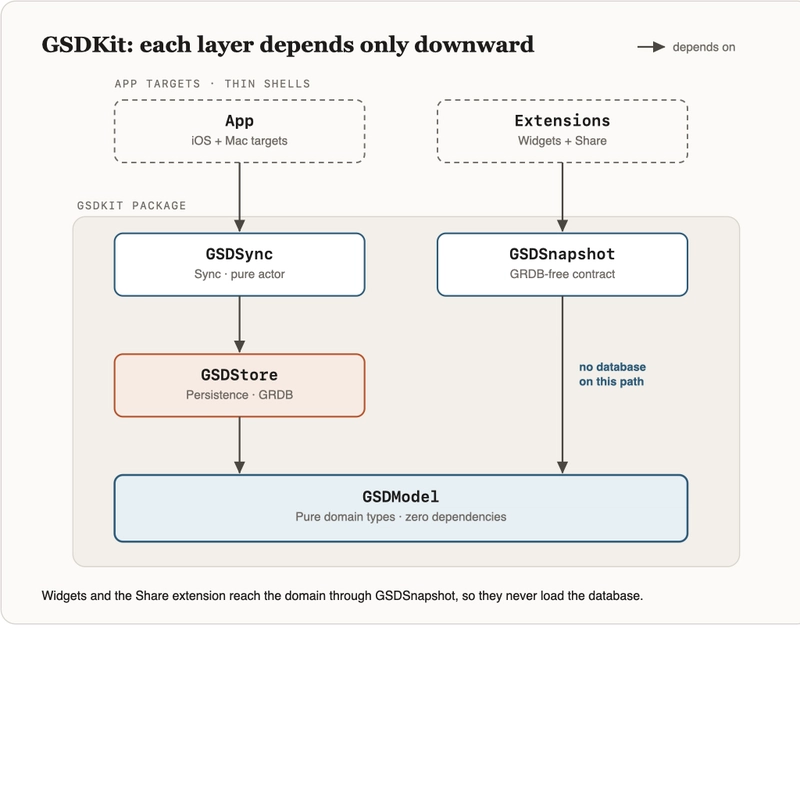
The development landscape for software applications is rapidly evolving, particularly in the domain of mobile applications and their integration with artificial intelligence (AI). A recent case study highlights the transition of a web-based application, known as GSD (Get Stuff Done), into a native iOS and Mac app, facilitated by an AI agent. This transformation underscores the importance of architectural discipline and the enforcement of operational boundaries within software development. Such principles are increasingly relevant in various fields, including Computer Vision and Image Processing, where precision and the integrity of data flow are paramount.

Main Goal and Its Achievement

The principal objective discussed in the original content is to illustrate how a clear architectural framework, alongside effective utilization of AI, can lead to the successful delivery of a software product. Achieving this goal necessitates the establishment of well-defined boundaries within the application’s architecture, ensuring that all components interact according to predetermined rules. This can be accomplished through the implementation of layered software architectures that enforce dependencies and maintain data integrity, thereby enhancing the reliability of the application.

Advantages of Architectural Discipline

  • Enhanced Reliability: By enforcing strict boundaries within the architecture, developers can ensure that data integrity is maintained throughout the application. This prevents unintended interactions that could lead to data loss or corruption.
  • Improved Development Efficiency: Utilizing an AI agent to assist in coding and testing can significantly accelerate the development process. The AI can quickly generate code based on predefined specifications, reducing the time required for manual coding.
  • Fast Verification Loop: A well-structured architecture allows for rapid testing and verification of changes, facilitating quicker iterations and more reliable releases. This is crucial for applications that require frequent updates, such as those in the field of Computer Vision.
  • Better User Experience: By tailoring the application to fully leverage native platform capabilities, developers can enhance user engagement and satisfaction. This is particularly important in applications that rely on real-time data capture and processing.
  • Increased Focus on Core Functionality: Clear architectural boundaries enable teams to concentrate on improving core functionalities without the risk of impacting other parts of the system. This is essential in fields like Computer Vision, where performance and precision are critical.

Caveats and Limitations

Despite the numerous advantages, there are potential limitations to consider. The initial development cost may be higher when opting for a native approach versus a cross-platform solution. Additionally, the reliance on an AI agent requires careful oversight to ensure that the generated code aligns with the intended design and functionality. Any lapses in the specifications or architectural guidelines could lead to inconsistencies or bugs that may be difficult to trace back to their source.

Future Implications of AI in Computer Vision

Looking ahead, the integration of AI in software development, particularly in Computer Vision and Image Processing, is poised to revolutionize the industry. As AI technology advances, it will increasingly be capable of automating complex tasks, such as data annotation and model training, which currently require significant human intervention. This shift will likely result in faster development cycles and the ability to handle larger datasets more efficiently. Furthermore, enhanced AI capabilities could lead to the emergence of smarter applications that can adapt and learn from user interactions, further improving their functionality and user experience.

Disclaimer

The content on this site is generated using AI technology that analyzes publicly available blog posts to extract and present key takeaways. We do not own, endorse, or claim intellectual property rights to the original blog content. Full credit is given to original authors and sources where applicable. Our summaries are intended solely for informational and educational purposes, offering AI-generated insights in a condensed format. They are not meant to substitute or replicate the full context of the original material. If you are a content owner and wish to request changes or removal, please contact us directly.

Source link :

Click Here

How We Help

Our comprehensive technical services deliver measurable business value through intelligent automation and data-driven decision support. By combining deep technical expertise with practical implementation experience, we transform theoretical capabilities into real-world advantages, driving efficiency improvements, cost reduction, and competitive differentiation across all industry sectors.

We'd Love To Hear From You

Transform your business with our AI.

Get In Touch