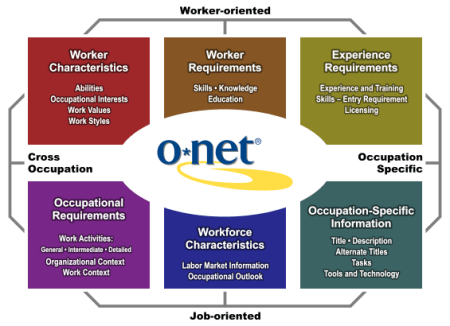
In the realm of labor economics, the ability to identify transition pathways for workers is increasingly vital, particularly as automation and technological advancements reshape job markets. The original post, “Identifying skills-based occupational transition pathways with the O*NET,” outlines a methodology to estimate potential labor market transitions by analyzing the similarity of skills, abilities, and knowledge across various occupations. By leveraging the O*NET database—an extensive resource detailing the characteristics of over 800 occupations—researchers can glean insights into how workers can transition between jobs, especially in the face of automation and evolving market demands. This approach offers a structured framework for data engineers and professionals in the Data Analytics and Insights industry to assess labor market dynamics effectively.
The primary goal established in the original post is the identification of viable occupational transition pathways for workers, particularly for those currently employed in roles subject to automation, such as truck drivers. This goal can be achieved through a systematic analysis of occupational data, focusing on the following key steps:
1. **Data Analysis**: Utilize the O*NET database to extract relevant occupational data.
2. **Skill Similarity Assessment**: Calculate similarity scores based on the skills and attributes required for different occupations.
3. **Transition Pathway Identification**: Identify potential job transitions that workers can undertake based on their existing skill sets.
By employing these steps, organizations can not only support workers in navigating their career paths but also enhance workforce planning and policy development.
1. **Enhanced Labor Market Insights**: The methodology provides a detailed understanding of how similar occupations are, which can guide workforce development initiatives. As noted in the original content, the similarities in skills and abilities can facilitate smoother transitions between jobs.
2. **Data-Driven Decision Making**: By utilizing empirical data from the O*NET database, organizations can make informed decisions regarding training programs and workforce allocation. This approach aligns with evidence indicating that similar jobs require similar skills, making it easier for workers to transition.
3. **Policy Development**: Policymakers can utilize the findings to design targeted interventions for workers in occupations at risk of automation. The data can inform the development of training programs aimed at equipping workers with the necessary skills for transition.
4. **Broad Applicability**: The methodology is adaptable to various labor markets and occupational classifications, allowing for broader application beyond the US context. This flexibility can enhance its relevance to international workforce challenges.
While the advantages are compelling, there are limitations to consider:
1. **Data Coverage**: The analysis may not cover all occupations, as indicated by the original post, which noted that a percentage of occupations may not be represented in the O*NET database. This limitation can skew the similarity scores and potentially overlook viable transition pathways.
2. **Variability in Occupation Characteristics**: The approach relies on the assumption that skill similarities translate into job transition feasibility, which may not hold true in all cases. Factors such as wage differentials, geographic mobility, and personal circumstances can significantly impact a worker’s ability to transition.
3. **Dynamic Labor Markets**: The rapidly changing nature of labor markets, influenced by technology and economic conditions, may mean that findings can quickly become outdated. Continuous updates to the data and methodology are essential to maintain relevance.
Looking ahead, the integration of AI into labor market analysis holds significant promise. As AI technologies evolve, they can enhance the accuracy and efficiency of occupational data analysis. For instance, machine learning algorithms can be employed to predict occupational transitions more effectively by analyzing vast datasets for patterns that may not be immediately apparent through traditional methods. Additionally, AI can facilitate real-time updates to occupational data, ensuring that workforce development strategies remain aligned with current market conditions.
Moreover, AI-driven personalization in training and education could further empower workers by providing tailored learning pathways based on individual skill sets and career aspirations. As AI continues to revolutionize the workplace, the methodologies developed for identifying occupational transition pathways will likely become increasingly sophisticated, enabling organizations to better support their workforce in an ever-evolving labor landscape.
In summary, while the methodology for identifying skills-based occupational transition pathways offers substantial benefits for labor market analysis, it is crucial to remain vigilant about its limitations and adapt to the dynamic nature of the workforce, particularly as AI continues to shape our understanding of labor market dynamics.
Disclaimer
The content on this site is generated using AI technology that analyzes publicly available blog posts to extract and present key takeaways. We do not own, endorse, or claim intellectual property rights to the original blog content. Full credit is given to original authors and sources where applicable. Our summaries are intended solely for informational and educational purposes, offering AI-generated insights in a condensed format. They are not meant to substitute or replicate the full context of the original material. If you are a content owner and wish to request changes or removal, please contact us directly.
Source link :