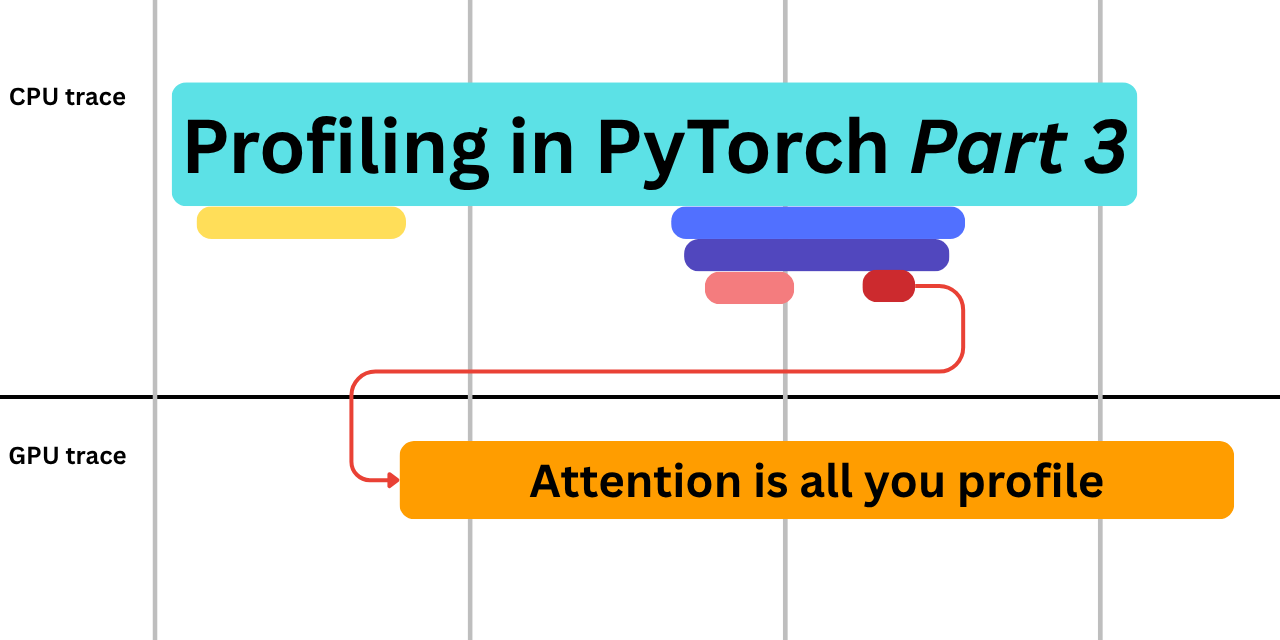
The evolution of Generative AI has brought forth significant advancements, particularly in the realm of neural network architectures like Transformers. One of the pivotal components of these architectures is the attention mechanism, known for its capacity to model dependencies between inputs irrespective of their distance in the data. The ongoing series titled “Profiling in PyTorch” elucidates the importance of understanding profiling traces and tables, which serve as critical tools for optimizing the performance of deep learning models.
This analysis centers on enhancing familiarity with profiling techniques, enabling data scientists and machine learning engineers to make informed decisions about the performance of their models. In previous parts of the series, foundational operations within PyTorch were profiled, revealing insights into algorithmic hotspots and their execution timelines. The current focus shifts to attention mechanisms, which, despite their quadratic-time complexity, can be optimized through various strategies.
The primary objective of the original post is to provide a comprehensive understanding of profiling attention mechanisms within the context of PyTorch, specifically focusing on attention algorithms used in Generative AI models. Achieving this goal involves:
The original content highlights several advantages associated with profiling attention mechanisms in Generative AI:
However, it is important to note that profiling results can vary significantly based on hardware configurations, the size of datasets, and the specific implementations of algorithms used. Thus, while profiling serves as a valuable tool for optimization, its findings must be contextualized within the specific operational environment.
As Generative AI continues to evolve, the implications for profiling attention mechanisms are substantial. Future advancements in AI architectures may lead to more complex models, necessitating even more sophisticated profiling techniques to ensure optimal performance. Here are a few anticipated trends:
In summary, as the field of Generative AI progresses, mastering profiling techniques will become increasingly essential for data scientists and engineers striving to develop efficient, scalable models capable of meeting the demands of modern applications.
Disclaimer
The content on this site is generated using AI technology that analyzes publicly available blog posts to extract and present key takeaways. We do not own, endorse, or claim intellectual property rights to the original blog content. Full credit is given to original authors and sources where applicable. Our summaries are intended solely for informational and educational purposes, offering AI-generated insights in a condensed format. They are not meant to substitute or replicate the full context of the original material. If you are a content owner and wish to request changes or removal, please contact us directly.
Source link :