Contextual Overview of the AgriBusiness Global Mid-Year Survey
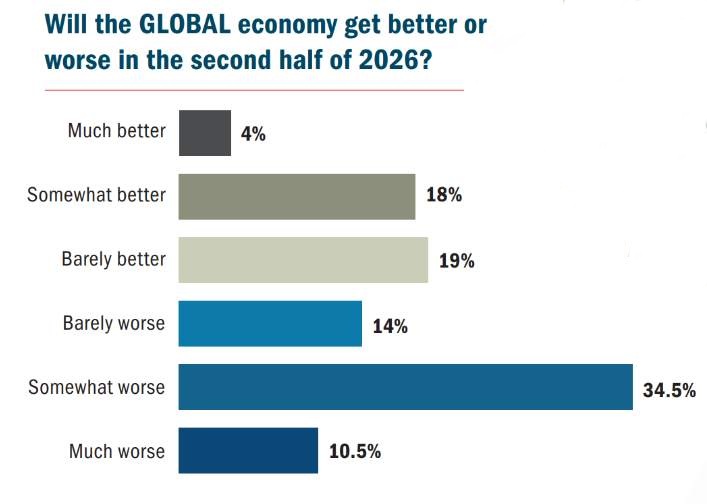
The 2026 AgriBusiness Global Mid-Year Survey provides an insightful snapshot of the agribusiness sector’s resilience amidst global economic challenges. Despite the prevailing market pressures, a significant proportion of respondents expressed optimism regarding their companies’ profitability and growth trajectories relative to the previous year. This sentiment is particularly notable in the context of ongoing fluctuations in global trade policies, supply chain disruptions, and environmental factors that have historically impacted the agricultural sector.
Main Goals and Strategies for Achieving Growth
The primary goal highlighted in the survey is the continuous pursuit of profitability and market expansion within the agribusiness sector. This objective can be achieved through strategic initiatives such as diversifying product lines, exploring new geographical markets, and enhancing operational efficiencies. Companies are encouraged to adopt innovative practices that leverage technology and data analytics to optimize resources and respond dynamically to market demands.
Advantages of Resilience in Agribusiness
- Increased Profitability: The survey indicates that a majority of companies anticipate revenue growth in 2026 compared to 2025, underscoring a collective confidence in the sector’s recovery and profitability.
- Innovation in Product Development: A significant number of respondents indicated plans to develop new product lines, which can enhance competitiveness and meet the evolving needs of consumers.
- Market Expansion Opportunities: The intention to launch products in new countries reflects a proactive approach to capturing emerging markets and diversifying revenue streams.
- Adaptation to Economic Changes: The survey results suggest that companies are increasingly aware of economic factors affecting their operations, such as U.S. tariffs. This awareness enables businesses to formulate strategic responses to mitigate potential adverse effects.
However, it is essential to recognize the caveat that while optimism prevails, external factors such as geopolitical tensions and climate change remain potential disruptors that could impact these growth plans.
Future Implications and the Role of AI in Agribusiness
Looking ahead, advancements in artificial intelligence (AI) are poised to significantly transform the agribusiness landscape. AI-driven technologies can enhance predictive analytics, enabling companies to make data-informed decisions regarding crop management, supply chain optimization, and consumer engagement. Moreover, AI can facilitate the development of precision agriculture techniques, improving resource efficiency and sustainability practices. As the industry embraces these technologies, the potential for enhanced productivity and resilience in the face of ongoing market pressures will undoubtedly increase.
Disclaimer
The content on this site is generated using AI technology that analyzes publicly available blog posts to extract and present key takeaways. We do not own, endorse, or claim intellectual property rights to the original blog content. Full credit is given to original authors and sources where applicable. Our summaries are intended solely for informational and educational purposes, offering AI-generated insights in a condensed format. They are not meant to substitute or replicate the full context of the original material. If you are a content owner and wish to request changes or removal, please contact us directly.
Source link :