Contextual Background In a significant discourse on the ethical implications of artificial intelligence (AI), Pope Leo XIV, alongside the co-founder of Anthropic, recently unveiled his inaugural encyclical titled “Magnifica Humanitas” (“Magnificent Humanity”) in Rome. This encyclical articulates a pressing call for the “disarmament” of AI technologies, aiming to align them with the common good of society. Pope Leo acknowledges the gravity of his chosen terminology, emphasizing that the current moment necessitates impactful language to awaken public consciousness and propose constructive avenues for humanity’s future. He posits that AI must be liberated from frameworks that transform it into an agent of oppression, exclusion, and destruction. The encyclical, encompassing 40,000 words, presents robust critiques of autonomous weapons systems powered by AI, as well as the neo-colonial mindset governing data acquisition and ownership. Importantly, it challenges the monopolization of emergent assets such as patents, algorithms, technological infrastructures, and personal data. Beyond mere criticism, the document seeks to update the principles of Catholic social teaching, urging all individuals to partake in a process of constructive “building,” a concept that resonates deeply within Silicon Valley. In this vision, “building” transcends conventional boundaries, advocating for the establishment of a “civilization of love” where technology enhances human experience and serves the collective welfare. Main Goal and Achievements The principal objective articulated in the encyclical revolves around the imperative to reorient AI technologies towards humanitarian ends. This entails a comprehensive re-evaluation of how AI is developed and deployed, ensuring that it facilitates rather than hinders human flourishing. Achieving this goal necessitates collaborative efforts among technologists, policymakers, and ethical philosophers to establish frameworks that prioritize the welfare of individuals and communities over profit and power. Advantages of Ethical AI Development Promotion of Inclusivity: By advocating for the equitable distribution of AI benefits, the encyclical highlights the importance of inclusivity, ensuring that technological advancements do not exacerbate existing social divides. Enhancement of Human Dignity: The call for disarmament fosters a paradigm in which AI serves to enhance human dignity, rather than undermine it. This is crucial for fostering trust in technological innovations. Mitigation of Risks Associated with Autonomous Systems: By prioritizing ethical considerations in AI development, the encyclical aims to reduce the potential dangers linked to autonomous weapons and other AI applications that may threaten societal safety. Encouragement of Responsible Innovation: The encyclical’s emphasis on building a “civilization of love” encourages innovators to pursue projects that align with ethical standards and promote the common good, leading to responsible advancements in technology. Future Implications of AI Developments As we progress further into the age of AI, the implications of Pope Leo’s encyclical will become increasingly relevant. The intersection of technology and ethical considerations in AgriTech, particularly in smart farming practices, will necessitate continuous dialogue among stakeholders. The drive towards ethical AI will likely influence regulatory frameworks, guiding the development of technologies that prioritize sustainability, food security, and equitable access to agricultural innovations. Furthermore, as AI systems evolve, it will be essential for AgriTech innovators to remain vigilant against the potential pitfalls of technological domination. The principles outlined in “Magnifica Humanitas” can serve as a blueprint for ensuring that future advancements contribute positively to society, reinforcing the notion that technology must remain a tool for empowerment rather than exclusion. Disclaimer The content on this site is generated using AI technology that analyzes publicly available blog posts to extract and present key takeaways. We do not own, endorse, or claim intellectual property rights to the original blog content. Full credit is given to original authors and sources where applicable. Our summaries are intended solely for informational and educational purposes, offering AI-generated insights in a condensed format. They are not meant to substitute or replicate the full context of the original material. If you are a content owner and wish to request changes or removal, please contact us directly. Source link : Click Here
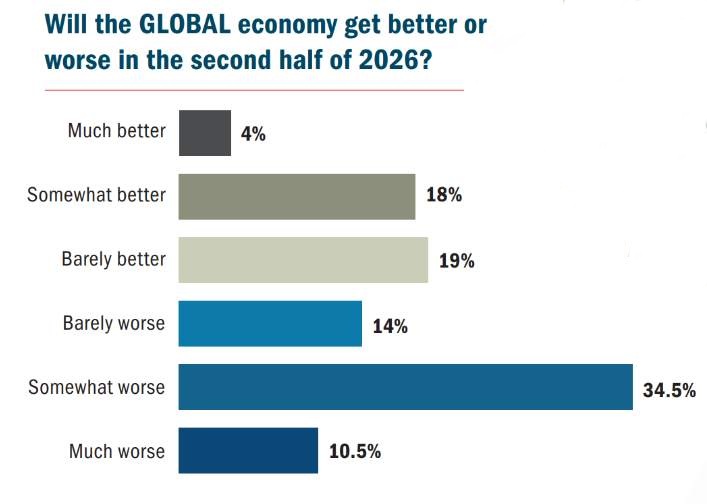
Contextual Overview of the AgriBusiness Global Mid-Year Survey The 2026 AgriBusiness Global Mid-Year Survey provides an insightful snapshot of the agribusiness sector’s resilience amidst global economic challenges. Despite the prevailing market pressures, a significant proportion of respondents expressed optimism regarding their companies’ profitability and growth trajectories relative to the previous year. This sentiment is particularly notable in the context of ongoing fluctuations in global trade policies, supply chain disruptions, and environmental factors that have historically impacted the agricultural sector. Main Goals and Strategies for Achieving Growth The primary goal highlighted in the survey is the continuous pursuit of profitability and market expansion within the agribusiness sector. This objective can be achieved through strategic initiatives such as diversifying product lines, exploring new geographical markets, and enhancing operational efficiencies. Companies are encouraged to adopt innovative practices that leverage technology and data analytics to optimize resources and respond dynamically to market demands. Advantages of Resilience in Agribusiness Increased Profitability: The survey indicates that a majority of companies anticipate revenue growth in 2026 compared to 2025, underscoring a collective confidence in the sector’s recovery and profitability. Innovation in Product Development: A significant number of respondents indicated plans to develop new product lines, which can enhance competitiveness and meet the evolving needs of consumers. Market Expansion Opportunities: The intention to launch products in new countries reflects a proactive approach to capturing emerging markets and diversifying revenue streams. Adaptation to Economic Changes: The survey results suggest that companies are increasingly aware of economic factors affecting their operations, such as U.S. tariffs. This awareness enables businesses to formulate strategic responses to mitigate potential adverse effects. However, it is essential to recognize the caveat that while optimism prevails, external factors such as geopolitical tensions and climate change remain potential disruptors that could impact these growth plans. Future Implications and the Role of AI in Agribusiness Looking ahead, advancements in artificial intelligence (AI) are poised to significantly transform the agribusiness landscape. AI-driven technologies can enhance predictive analytics, enabling companies to make data-informed decisions regarding crop management, supply chain optimization, and consumer engagement. Moreover, AI can facilitate the development of precision agriculture techniques, improving resource efficiency and sustainability practices. As the industry embraces these technologies, the potential for enhanced productivity and resilience in the face of ongoing market pressures will undoubtedly increase. Disclaimer The content on this site is generated using AI technology that analyzes publicly available blog posts to extract and present key takeaways. We do not own, endorse, or claim intellectual property rights to the original blog content. Full credit is given to original authors and sources where applicable. Our summaries are intended solely for informational and educational purposes, offering AI-generated insights in a condensed format. They are not meant to substitute or replicate the full context of the original material. If you are a content owner and wish to request changes or removal, please contact us directly. Source link : Click Here

Context As technology evolves, devices can become obsolete, leading users to question their utility. A recent development involving Amazon’s Kindle and Fire tablet models from 2012 and earlier highlights this phenomenon. While these devices have lost access to software updates and new content from the Kindle Store, they still retain significant utility for their owners. This scenario mirrors challenges faced by practitioners in the Applied Machine Learning (ML) industry, where older models and algorithms can remain relevant despite technological advancements. Main Goal The primary goal of the original post is to inform Kindle users about the discontinuation of software support for older devices, while simultaneously providing insights on how these users can maximize the remaining functionalities of their devices. In the context of Applied Machine Learning, this translates to encouraging ML practitioners to leverage existing models and algorithms effectively, despite the availability of newer technologies. This can be achieved by exploring methods to repurpose older models, adapting them to new datasets, and integrating them into more comprehensive systems. Advantages of Using Older Devices and Models Access to Existing Resources: Users can still access previously purchased content on their Kindles, similar to how ML practitioners can utilize existing datasets and models to continue their work without needing constant updates. Cost-Effectiveness: With a focus on sustainable technology use, older devices can provide significant value without the financial burden of upgrading to the latest models or technologies. This parallels the reduced costs associated with using pre-trained models in ML. Community Support and Resource Sharing: Both Kindle users and ML practitioners often benefit from online communities that share tips, hacks, and workarounds, fostering collaboration and knowledge exchange. Longevity of Devices: The Kindle’s long support period (10-15 years) demonstrates that devices can remain functional and useful for extended periods, much like established ML models that can be retrained or fine-tuned for new tasks. Caveats and Limitations While older devices and models can be advantageous, there are inherent limitations. Kindle users cannot download new content or receive updates, which may restrict their reading experience. Similarly, ML practitioners may find that older algorithms lack the robustness or efficiency of newer techniques. Additionally, integrating outdated models into modern applications may require significant adjustments and expertise. Future Implications The end of support for older Kindle devices poses questions about the future of technology and its lifecycle. As artificial intelligence continues to evolve, similar trends may emerge in the ML domain. The challenge will lie in maintaining a balance between embracing cutting-edge techniques and utilizing established models effectively. Innovations in transfer learning and model compression could pave the way for older models to be adapted and integrated into new systems, thereby prolonging their relevance. Furthermore, as AI development progresses, the ability to leverage historical data and established algorithms will be crucial for practitioners aiming to enhance their work while minimizing costs. Disclaimer The content on this site is generated using AI technology that analyzes publicly available blog posts to extract and present key takeaways. We do not own, endorse, or claim intellectual property rights to the original blog content. Full credit is given to original authors and sources where applicable. Our summaries are intended solely for informational and educational purposes, offering AI-generated insights in a condensed format. They are not meant to substitute or replicate the full context of the original material. If you are a content owner and wish to request changes or removal, please contact us directly. Source link : Click Here
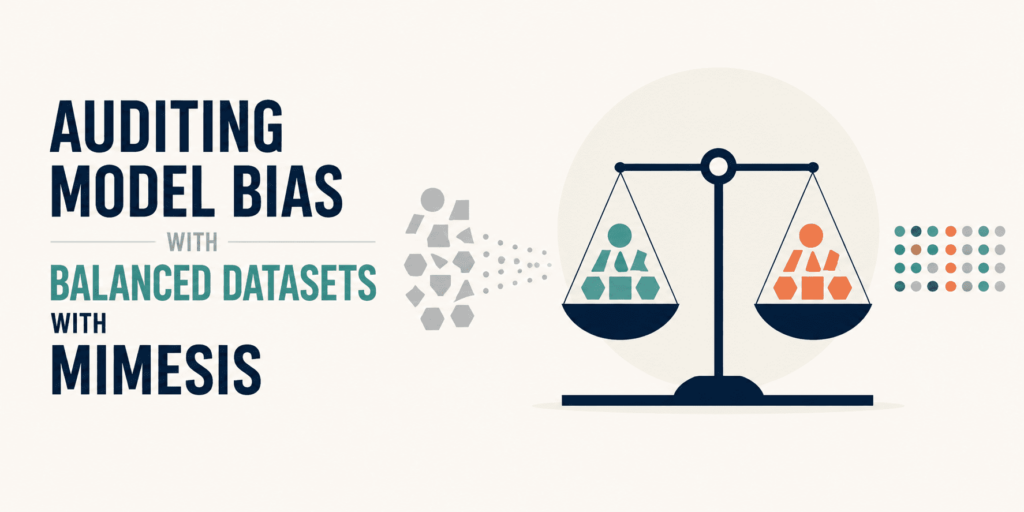
Introduction In the realm of artificial intelligence (AI) and machine learning (ML), the integrity of algorithms is paramount, especially in applications such as Natural Language Understanding (NLU) and Language Understanding (LU). These models, ranging from traditional classifiers to advanced large language models (LLMs), may inadvertently inherit biases from their training datasets. This poses significant challenges in high-stakes environments where decisions can profoundly influence individuals’ lives. The question arises: how can practitioners effectively audit models for bias while ensuring that real-world sensitive information remains uncompromised? This discussion delves into the methodology of utilizing Mimesis, an open-source library, to generate counterfactual datasets conducive to auditing machine learning models. Through the creation of synthetic yet balanced datasets, stakeholders can evaluate whether their models unfairly discriminate against specific demographic groups, thus fostering fairness and accountability in AI systems. The Goal of Auditing Model Bias The primary objective of auditing model bias is to ascertain whether a machine learning model exhibits discriminatory behavior towards certain demographics, particularly when dealing with sensitive data. This can be effectively achieved by employing counterfactual analysis, wherein identical financial profiles differing only in protected attributes—such as gender—are analyzed. By observing discrepancies in model predictions based on these profiles, one can identify potential biases embedded within the model’s decision-making process. Advantages of Using Mimesis for Bias Auditing The implementation of Mimesis in the auditing process offers several key advantages: Generation of Balanced Datasets: Mimesis facilitates the creation of counterfactual datasets that adhere to statistical parity, thereby eliminating the influence of confounding variables. This allows for a more accurate assessment of model behavior. Privacy Preservation: By synthesizing data instead of using real-world sensitive information, Mimesis ensures compliance with privacy regulations, mitigating risks associated with data breaches. Isolation of Variables: The ability to construct cloned profiles differing solely in protected attributes enables a clear evaluation of how these attributes affect model predictions, thereby highlighting any biases present. Informed Decision-Making: Identifying biases equips organizations with the information necessary to take corrective actions, such as augmenting training datasets or employing bias mitigation strategies, thus fostering fairer AI systems. However, practitioners should be aware of limitations, such as the potential oversimplification of complex social issues when relying solely on synthetic data, which may not fully capture the intricacies of real-world scenarios. Future Implications of AI Developments The implications of advancements in AI and machine learning technologies are profound, particularly concerning bias detection and mitigation. As models become increasingly sophisticated, the importance of robust auditing mechanisms will only grow. Future developments in AI may yield enhanced tools for bias detection, enabling real-time monitoring of model behavior in production environments. Moreover, as the discourse surrounding ethical AI continues to evolve, regulatory frameworks may emerge, mandating stringent auditing practices to ensure fairness and accountability in AI applications. In conclusion, the intersection of AI, bias auditing, and ethical considerations presents both challenges and opportunities for Natural Language Understanding scientists. By leveraging tools such as Mimesis, stakeholders can not only enhance the fairness of their models but also contribute to the broader goal of ethical AI. Disclaimer The content on this site is generated using AI technology that analyzes publicly available blog posts to extract and present key takeaways. We do not own, endorse, or claim intellectual property rights to the original blog content. Full credit is given to original authors and sources where applicable. Our summaries are intended solely for informational and educational purposes, offering AI-generated insights in a condensed format. They are not meant to substitute or replicate the full context of the original material. If you are a content owner and wish to request changes or removal, please contact us directly. Source link : Click Here

Contextual Overview In recent developments within the field of artificial intelligence and cybersecurity, Anthropic has unveiled its “Mythos” model, a significant advancement in AI capabilities designed to address critical security challenges. Initially announced in April 2026, the Mythos model is characterized as a frontier technology that exhibits substantial improvements in code reasoning and autonomous functionality compared to its predecessor, Opus 4.7. Its potential to automate the generation of sophisticated cyberattacks raises concerns regarding its implications for both private and public software systems. As organizations increasingly rely on digital infrastructures, the introduction of such powerful AI models necessitates a careful examination of security measures and proactive defense strategies. Main Objective and Implementation The primary goal of deploying the Mythos model is to enhance the security posture of software applications by identifying and mitigating vulnerabilities before exploitation can occur. Anthropic emphasizes the importance of implementing a robust guardrail system to prevent the misuse of the Mythos model in launching automated attacks. By collaborating with various organizations through its initiative “Glasswing,” Anthropic aims to leverage the capabilities of the Mythos model to identify potential AI-driven exploits, thereby fortifying critical software against emerging threats. This collaborative approach is vital for ensuring that the advancements in AI are harnessed for defensive purposes rather than allowing malicious actors to exploit these technologies. Advantages of the Mythos Model Enhanced Vulnerability Detection: In its initial month, the Mythos model successfully identified over 10,000 high- and critical-severity vulnerabilities, showcasing its effectiveness in proactive security measures. Improved Code Reasoning: The model’s advanced capabilities in code reasoning allow for better understanding and analysis of software vulnerabilities, ultimately enabling more efficient patching and remediation. Collaboration with Industry Partners: Through partnerships with up to 50 organizations, the model benefits from diverse insights and data, enhancing its ability to detect and address security flaws across various platforms. Long-term Defense Efficacy: While immediate risks may favor attackers, the long-term potential of Mythos lies in its ability to empower defenders, allowing for more efficient resource allocation and preemptive bug fixes. It is crucial to note, however, that the deployment of such advanced models comes with caveats. The potential for misuse by malicious actors remains a pressing concern, necessitating ongoing vigilance and robust security frameworks to mitigate risks associated with the public release of the Mythos model. Future Implications of AI Developments The advent of sophisticated AI models like Mythos signifies a paradigm shift in the landscape of cybersecurity and software development. As these technologies evolve, their impact on data analytics and insights will be profound. Data engineers and security professionals must adapt to the changing dynamics of threat detection and vulnerability management. The integration of AI-driven tools is likely to streamline processes, enhance the accuracy of threat assessments, and facilitate rapid response mechanisms. However, the dual-use nature of such technologies requires a balanced approach to ensure that defensive capabilities are prioritized in the face of potential threats. In conclusion, the Mythos model represents both a remarkable advancement in AI capabilities and a critical challenge for cybersecurity. Its successful implementation hinges on collaborative efforts to safeguard digital infrastructures while maximizing its potential for enhancing security measures. As the field continues to evolve, the intersection of AI, data analytics, and cybersecurity will undoubtedly shape the future of technology. Disclaimer The content on this site is generated using AI technology that analyzes publicly available blog posts to extract and present key takeaways. We do not own, endorse, or claim intellectual property rights to the original blog content. Full credit is given to original authors and sources where applicable. Our summaries are intended solely for informational and educational purposes, offering AI-generated insights in a condensed format. They are not meant to substitute or replicate the full context of the original material. If you are a content owner and wish to request changes or removal, please contact us directly. Source link : Click Here


