
Contextual Overview of Grok Build and Grok 4.6 in Applied Machine Learning In the realm of Applied Machine Learning, the capabilities of advanced AI models are evolving rapidly. xAI’s Grok 4.6 represents a significant advancement, specifically optimized for coding, agentic tasks, and knowledge work. This model is designed to handle long-running agents that can traverse complex codebases, address intricate research challenges, and execute multi-step tasks efficiently. The model’s performance is benchmarked at frontier levels, aligning with the capabilities of GPT-5.6 Sol, as indicated by the Artificial Analysis Intelligence Index. Enhancing the developer experience, Grok Build serves as a terminal coding agent that provides an interactive terminal user interface (TUI). This bespoke environment eliminates the dependency on external coding interfaces, offering a tailored solution for developers working with Grok 4.6. This guide delineates the process of constructing an end-to-end data science project centered on predicting customer wait times for coffee orders using Grok Build and a series of strategically formulated prompts. Main Goal and Its Achievement The primary objective permeating the original post is to demonstrate how Grok Build can facilitate the creation of a comprehensive data science project, enabling users to predict coffee order wait times. This goal is realized through a systematic approach that encompasses data generation, cleaning, exploratory data analysis, model training, API development, and deployment. Users are guided through the process via four pivotal prompts that harness the capabilities of Grok Build, thus simplifying the traditionally complex workflows associated with data science projects. Advantages of Using Grok Build for Data Science Projects Streamlined Development Workflow: Grok Build integrates various stages of a data science project—from dataset creation and cleaning to model deployment—into a cohesive workflow. This integration minimizes the friction often encountered in disparate tool usage. Enhanced Model Performance: Leveraging the Grok 4.6 model allows users to achieve high-performance metrics in their predictive models, as evidenced by the reported Mean Absolute Error (MAE) of 1.101 and R² of 0.934 for the best-performing Gradient Boosting model. Automated API Development: Grok Build facilitates the rapid creation of a FastAPI application with built-in validation and error handling capabilities, streamlining the process of making machine learning models accessible for real-time predictions. Interactive Testing: The tool includes features for testing API endpoints directly within the development environment, thus ensuring the reliability and functionality of deployed models before they go live. Documentation and Reproducibility: Grok Build generates a comprehensive README file that encapsulates the project workflow, results, and deployment instructions, enhancing the reproducibility and clarity of the project for future users. Limitations and Caveats Despite the numerous advantages, there are inherent limitations associated with Grok Build and the underlying Grok 4.6 model. The reliance on a single integrated platform may not suit every developer’s workflow preference, particularly those accustomed to a diverse toolchain. Moreover, the performance of Grok 4.6, while impressive, is contingent on the quality of the input data and the design of the prompts used during model training and application development. Users may encounter challenges if they exceed usage limits without prior planning, as evidenced by the experience of needing to upgrade plans during model training. Future Implications of AI Developments in Machine Learning The advancements encapsulated in Grok Build and Grok 4.6 signal a broader trend within the field of Applied Machine Learning: the increasing integration of AI capabilities into the data science workflow. As models like Grok 4.6 continue to evolve, they are expected to enhance the efficiency of coding tasks and reduce the barrier to entry for novice data scientists. The implications for future developments include the potential for even more sophisticated AI tools that can autonomously navigate complex machine learning projects, thereby allowing practitioners to focus on higher-level decision-making and strategic insights rather than routine coding tasks. Conclusion The introduction of Grok Build and Grok 4.6 marks a pivotal moment in the evolution of Applied Machine Learning tools. By leveraging these innovations, data scientists can not only streamline their workflows but also achieve enhanced model performance and operational efficiency. As the landscape of AI continues to evolve, the integration of such advanced tools promises to transform the methodologies employed by data scientists, ultimately leading to more precise and actionable insights across various sectors. Disclaimer The content on this site is generated using AI technology that analyzes publicly available blog posts to extract and present key takeaways. We do not own, endorse, or claim intellectual property rights to the original blog content. Full credit is given to original authors and sources where applicable. Our summaries are intended solely for informational and educational purposes, offering AI-generated insights in a condensed format. They are not meant to substitute or replicate the full context of the original material. If you are a content owner and wish to request changes or removal, please contact us directly. Source link : Click Here

Contextualizing Aspect-Based Sentiment Analysis In the realm of customer feedback, consider a review of a wireless earbud that states: “The sound quality is incredible, but the battery dies in two hours and customer support never answered my emails.” If a product manager interprets this review as merely “positive,” they are misled, missing the nuanced insights embedded within the feedback. This exemplifies the limitations of traditional sentiment analysis—an issue that aspect-based sentiment analysis (ABSA) seeks to address. By dissecting the components of customer opinions, ABSA enhances the understanding of consumer sentiment, ultimately transforming how businesses gauge product performance and customer satisfaction. The Shortcomings of Binary Sentiment Analysis Conventional sentiment analysis simplifies complex feedback into a single emotional classification—positive, negative, or neutral. While this approach may suffice for straightforward statements, it falters in capturing the intricacies of human opinion. For instance, a customer may express love for a product’s features while harboring dissatisfaction with its price. This reductionist view risks omitting critical insights, as it amalgamates diverse sentiments into a single score, thereby obscuring vital information that could guide business decisions. Defining the Objectives of ABSA The primary objective of ABSA is to provide a granular analysis of customer feedback by identifying and evaluating sentiment at the level of specific product attributes. This is achieved through two fundamental steps: Aspect Extraction: The system delineates specific features or attributes mentioned in customer feedback, such as “sound quality” and “customer support.” Various methodologies, including rule-based and machine learning techniques, can facilitate this extraction. Aspect-Level Sentiment Classification: Following the identification of aspects, the sentiment associated with each feature is classified independently, allowing for a nuanced understanding of customer opinions. Advantages of Aspect-Based Sentiment Analysis The implementation of ABSA offers several advantages for businesses and Natural Language Understanding (NLU) scientists: Enhanced Data Insights: ABSA breaks down customer opinions into actionable data points, enabling businesses to understand which features are performing well and which require attention. Improved Decision-Making: By providing a clear framework for evaluating product attributes, ABSA aids in strategic decision-making processes, such as product development and inventory management. Trend Analysis: The aggregation of aspect-level data facilitates the identification of trends over time, allowing organizations to monitor shifts in customer sentiment related to specific features. Separation of Concerns: ABSA enables businesses to distinguish between different types of feedback (e.g., product quality vs. customer service), ensuring targeted improvements. However, it is important to acknowledge potential limitations of ABSA, including the need for sophisticated algorithms and the challenge of accurately capturing sentiment in ambiguous or nuanced language. Future Implications of AI in Aspect-Based Sentiment Analysis As advancements in artificial intelligence continue to evolve, the potential for ABSA to become more sophisticated is substantial. Future developments may include: Increased Accuracy: Enhanced natural language processing algorithms could improve the precision of aspect extraction and sentiment classification, leading to more reliable insights. Real-Time Analysis: The integration of ABSA with real-time data streams may allow businesses to react promptly to shifts in customer sentiment, fostering a more agile approach to product management. Broader Applications: The principles of ABSA could extend to various fields beyond product reviews, including political sentiment analysis and social media monitoring, offering insights into public opinion and behavior. In conclusion, the evolution of aspect-based sentiment analysis represents a significant advancement in the understanding of customer feedback. By shifting the focus from monolithic sentiment scores to a more nuanced, aspect-based approach, businesses can glean valuable insights that inform product development, marketing strategies, and customer engagement practices. Disclaimer The content on this site is generated using AI technology that analyzes publicly available blog posts to extract and present key takeaways. We do not own, endorse, or claim intellectual property rights to the original blog content. Full credit is given to original authors and sources where applicable. Our summaries are intended solely for informational and educational purposes, offering AI-generated insights in a condensed format. They are not meant to substitute or replicate the full context of the original material. If you are a content owner and wish to request changes or removal, please contact us directly. Source link : Click Here

Context: Preparing Data Engineers for the Future In an increasingly data-driven world, the role of universities in shaping future professionals, particularly Data Engineers, is paramount. Just as Y Combinator has refined its model for identifying promising startup founders, educational institutions must recognize and adapt their curricula to prepare students effectively for careers in Data Analytics and Insights. This preparation is vital, as success in data-centric roles hinges on a robust understanding of technical disciplines rather than conventional business management or finance. The core competencies required in this field are deeply rooted in the realms of computer science, statistics, and data engineering. Main Goals and Their Achievement The primary objective of educational institutions in preparing future Data Engineers is to foster a comprehensive understanding of data manipulation and analysis. This can be achieved by embedding rigorous technical training within existing programs rather than creating separate “data engineering” tracks. Consequently, universities should focus on teaching core subjects such as computer science, statistics, and machine learning, which are essential for mastering data-driven decision-making. By doing so, they empower students to become adept at building data solutions rather than merely managing them. Advantages of a Robust Educational Framework Deep Understanding of Technical Concepts: Students gain a profound knowledge of essential technical subjects, which enhances their ability to work with complex data systems and algorithms. A solid foundation in these areas is critical for successful data engineering. Encouragement to Pursue Independent Projects: When universities promote an environment where students engage in personal projects, it cultivates creativity and innovation. Such projects often lead to practical applications of theoretical knowledge, which is invaluable in the field. Development of Collaborative Skills: Working on projects enables students to form connections and discover potential co-founders or collaborators. This is particularly important in data analytics, where interdisciplinary teamwork is often necessary. Enhanced Problem-Solving Abilities: Engaging with real-world data problems fosters critical thinking and problem-solving skills. Students learn to approach challenges methodically, which is essential for any Data Engineer. Alignment with Industry Needs: By equipping students with relevant skills and knowledge, universities can better align their outputs with industry demands, ensuring that graduates are ready for the workforce. Future Implications and the Role of AI The evolution of artificial intelligence (AI) is set to transform the landscape of Data Analytics and Insights profoundly. As AI tools become more sophisticated, they will automate various data processing tasks, allowing Data Engineers to focus on higher-level analytical functions. Consequently, educational institutions must adapt their curricula to include AI literacy alongside traditional data engineering education. This dual focus will empower future professionals to leverage AI tools effectively while maintaining a strong foundational knowledge of data principles. In conclusion, universities can significantly enhance the preparedness of Data Engineers by emphasizing technical education through established disciplines and fostering an environment conducive to independent project work. As the industry evolves with AI advancements, educational frameworks must remain agile, ensuring graduates are not only equipped to navigate current challenges but are also prepared for future developments in the field. Disclaimer The content on this site is generated using AI technology that analyzes publicly available blog posts to extract and present key takeaways. We do not own, endorse, or claim intellectual property rights to the original blog content. Full credit is given to original authors and sources where applicable. Our summaries are intended solely for informational and educational purposes, offering AI-generated insights in a condensed format. They are not meant to substitute or replicate the full context of the original material. If you are a content owner and wish to request changes or removal, please contact us directly. Source link : Click Here

Contextual Overview The recent advancements in cloud computing technologies have revolutionized various sectors, including gaming. The introduction of GeForce NOW supporting Firefox marks a significant milestone in enhancing accessibility and performance in high-end gaming. This initiative allows users to engage in high-performance PC gaming directly from their web browsers, eliminating the need for extensive downloads or dedicated applications. Such developments not only broaden the user base across diverse devices, such as school laptops and personal computers but also align with the growing trend of cloud-based solutions in various fields, including generative AI models and applications. Main Goal and Achievement The primary objective of integrating GeForce NOW with Firefox is to simplify the gaming experience by providing seamless access to high-performance gaming without the conventional constraints associated with traditional gaming setups. This goal can be achieved by ensuring that users can play supported games directly from their browsers, ultimately reducing the barriers to entry for high-quality gaming experiences. By leveraging the cloud’s computational power, users can enjoy gaming at resolutions up to 1440p and frame rates of 120 FPS, particularly benefiting GeForce NOW Ultimate members. Advantages of Browser-Based Gaming Accessibility: Users can initiate gaming sessions on various devices without the need for installation, allowing more players to engage with high-performance titles. Storage Efficiency: The cloud-based model alleviates storage concerns as games are hosted remotely, freeing up valuable local storage on user devices. High-Performance Graphics: The integration supports GeForce RTX technology, delivering superior graphics performance that meets the demanding requirements of modern gaming. No Download Delays: Players can bypass lengthy download and update processes, enabling immediate access to gaming content. Cross-Platform Functionality: The support of multiple web browsers, including Firefox, Chrome, Edge, and Opera, enhances cross-platform compatibility, allowing users to switch devices seamlessly. However, it is essential to consider potential limitations, such as dependency on a stable internet connection and possible latency issues, which could impact the gaming experience. Future Implications of AI Developments The advancements in generative AI models and applications are poised to significantly influence the future of cloud gaming and similar fields. As AI technologies evolve, we anticipate more personalized gaming experiences that adapt to individual user preferences, enhancing engagement and satisfaction. Furthermore, machine learning algorithms can optimize cloud resource allocation, improving performance and reducing latency. Enhanced AI can also facilitate more sophisticated game environments and interactions, thus providing richer gaming experiences. In conclusion, the integration of GeForce NOW with Firefox not only illustrates the potential of cloud computing in the gaming industry but also signifies the broader implications for generative AI scientists. By embracing cloud-based solutions, professionals in this field can explore innovative applications that transcend traditional limitations, creating new paradigms in both gaming and AI technology. Disclaimer The content on this site is generated using AI technology that analyzes publicly available blog posts to extract and present key takeaways. We do not own, endorse, or claim intellectual property rights to the original blog content. Full credit is given to original authors and sources where applicable. Our summaries are intended solely for informational and educational purposes, offering AI-generated insights in a condensed format. They are not meant to substitute or replicate the full context of the original material. If you are a content owner and wish to request changes or removal, please contact us directly. Source link : Click Here

Contextual Overview of Market Models in AI Research and Innovation The application of sophisticated market models in the context of AI Research and Innovation has emerged as a powerful tool for organizations seeking to optimize revenue generation and decision-making processes. As articulated by Dominic Kennedy, senior vice president of revenue management, sales, and e-commerce at Virgin Atlantic, the integration of market models facilitates the development of generative pricing engines. These models enable organizations to execute more precise, rapid, and informed commercial decisions. In an era marked by rapid technological advancement and competitive pressures, the use of real-time data inputs—such as demand, capacity, and competitive positioning—becomes crucial for organizations aiming to navigate complex market environments. Main Goals of Market Models in AI The primary goal of employing market models within AI frameworks is to enhance decision-making capabilities through data-driven insights. By leveraging extensive datasets, organizations can identify hidden revenue streams that may have previously gone unnoticed. This can be achieved through methods such as: Real-Time Data Analysis: Continuous assessment of market variables enables timely adjustments to pricing strategies and resource allocation. Competitive Benchmarking: Understanding one’s position relative to competitors allows for strategic positioning and targeted marketing efforts. Demand Forecasting: Predictive analytics can inform future demand patterns, assisting organizations in aligning supply with anticipated market needs. Advantages of Implementing Market Models The adoption of market models yields several advantages for organizations engaged in AI Research and Innovation: Enhanced Decision-Making: Access to granular data empowers organizations to make informed choices, reducing the likelihood of missteps based on outdated or incomplete information. Increased Revenue Opportunities: By identifying hidden revenue streams, organizations can capitalize on emerging market trends, thus maximizing profitability. Agility in Operations: The ability to rapidly assess and respond to market changes enhances operational efficiency and responsiveness, a crucial factor in today’s fast-paced business environment. Improved Customer Insights: Market models facilitate a deeper understanding of customer behavior and preferences, allowing for more tailored offerings and improved customer satisfaction. However, it is important to note that the success of these models is contingent upon the quality of data inputs and the sophistication of analytical techniques employed. Organizations must invest in robust data infrastructure and analytics capabilities to fully leverage the potential of market models. Future Implications of AI Developments on Market Models As the field of AI continues to evolve, the implications for market models in AI Research and Innovation are profound. Key future developments may include: Integration of Advanced AI Techniques: The incorporation of machine learning and predictive analytics will refine the accuracy of market forecasts, enabling organizations to stay ahead of market trends. Increased Personalization: As AI capabilities improve, organizations will be able to deliver more personalized customer experiences, driving loyalty and repeat business. Enhanced Collaboration Across Sectors: The convergence of AI with other technologies, such as blockchain and IoT, will create new opportunities for collaboration and innovation, further enriching market model applications. In conclusion, the strategic utilization of market models in AI Research and Innovation not only facilitates better decision-making but also unlocks potential revenue streams that are critical for sustained organizational success. As advancements in AI continue to unfold, the efficacy and importance of these models will only grow, necessitating ongoing investment and adaptation by organizations. Disclaimer The content on this site is generated using AI technology that analyzes publicly available blog posts to extract and present key takeaways. We do not own, endorse, or claim intellectual property rights to the original blog content. Full credit is given to original authors and sources where applicable. Our summaries are intended solely for informational and educational purposes, offering AI-generated insights in a condensed format. They are not meant to substitute or replicate the full context of the original material. If you are a content owner and wish to request changes or removal, please contact us directly. Source link : Click Here
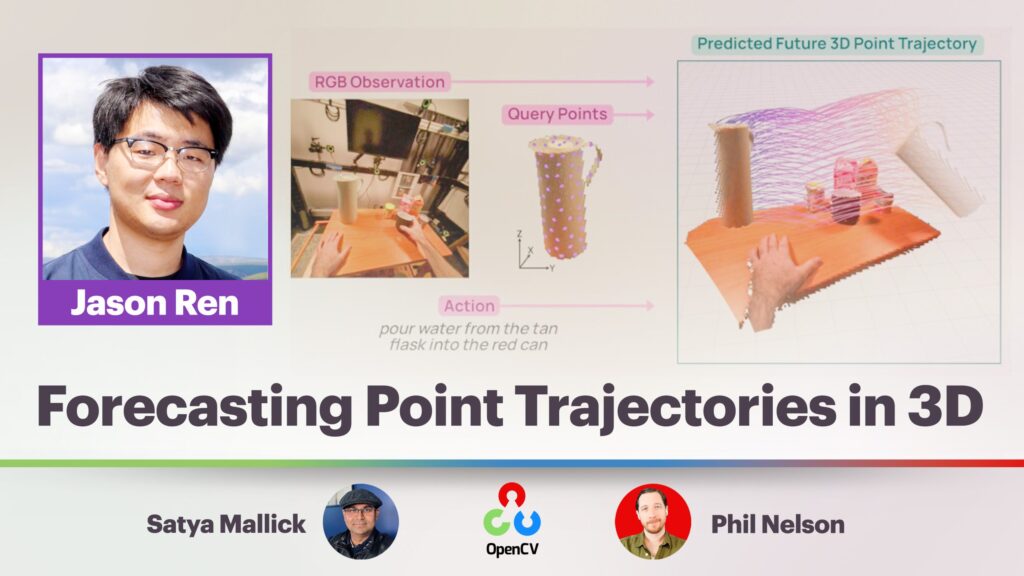
Context The advent of advanced computational techniques has significantly transformed the fields of computer vision and image processing. One notable development is the MolmoMotion framework, presented by Jason Ren from the Allen Institute for AI, during OpenCV Live! 221. This innovative framework focuses on forecasting point trajectories in three-dimensional (3D) space through natural language instructions. By leveraging open multimodal models, MolmoMotion transcends traditional methodologies that merely describe scenes, enabling predictive capabilities that are essential for various applications in robotics, video understanding, and embodied AI agents. This discussion aims to elucidate the significance of MolmoMotion within the domain of computer vision, particularly for vision scientists engaged in trajectory estimation and predictive modeling. Main Goal and Achievement Methodology The primary objective of MolmoMotion is to enable the prediction of point trajectories in 3D environments based on plain-language instructions. Achieving this goal involves a sophisticated integration of language processing and motion estimation algorithms. The framework employs a training data set that includes diverse scenarios, allowing the model to learn from a multitude of contexts and subsequently generate accurate trajectory forecasts. This capability not only enhances the interaction between humans and machines but also facilitates more intuitive and efficient robotic behaviors in real-world applications. Advantages of MolmoMotion Enhanced Predictive Capabilities: By utilizing natural language inputs, MolmoMotion allows users to communicate trajectory predictions with greater ease and clarity. This feature streamlines the interaction process, making advanced technology more accessible. Real-time Feedback: The framework supports live demonstrations, showcasing its ability to provide immediate responses to user queries. This real-time capability is critical for applications requiring rapid decision-making, such as autonomous navigation. Interdisciplinary Applications: The implications of MolmoMotion extend beyond robotics. It opens avenues for enhanced video understanding and the development of embodied agents, thus broadening the scope of research and application in computer vision. Community Engagement: The integration of live Q&A sessions fosters a collaborative environment, encouraging knowledge sharing and community involvement in the advancement of AI technologies. Limitations While MolmoMotion presents numerous advantages, several caveats must be acknowledged. The system’s reliance on high-quality training data is crucial; insufficient or biased data could lead to inaccurate predictions. Moreover, the complexity of real-world environments may present challenges that the model has not encountered during training, potentially affecting its performance in diverse settings. Future Implications The ongoing developments in artificial intelligence, particularly in multimodal models like MolmoMotion, are poised to have profound implications for the field of computer vision. As these technologies evolve, we can anticipate enhanced accuracy and versatility in trajectory prediction, thereby facilitating more sophisticated robotic systems and applications. The potential for integration with other AI domains, such as natural language processing and machine learning, suggests a future where human-computer interaction is seamless and intuitive. Vision scientists will play a pivotal role in advancing these technologies, ensuring that they are applied effectively and responsibly in various contexts. Disclaimer The content on this site is generated using AI technology that analyzes publicly available blog posts to extract and present key takeaways. We do not own, endorse, or claim intellectual property rights to the original blog content. Full credit is given to original authors and sources where applicable. Our summaries are intended solely for informational and educational purposes, offering AI-generated insights in a condensed format. They are not meant to substitute or replicate the full context of the original material. If you are a content owner and wish to request changes or removal, please contact us directly. Source link : Click Here

Contextual Overview As enterprises increasingly adopt Databricks to manage and analyze their most sensitive data, the need for secure and efficient data traffic management becomes paramount. Inbound Private Link has emerged as a critical solution, enabling organizations to route user-to-Databricks traffic privately through their cloud networks, thereby eliminating exposure to the public internet. This enhancement is particularly vital for businesses operating across multiple workspaces and regions. Recent advancements in Inbound Private Link, including support for account-level resources such as Genie One, the account console, and custom URLs, provide significant improvements tailored to meet the evolving needs of large-scale data operations. Main Goals and Achievements The primary goal of the recent updates to Inbound Private Link is to enhance data security and accessibility for enterprises leveraging Databricks. These advancements facilitate the integration of account-level resources into private networking configurations, ensuring that sensitive data remains protected while providing seamless access to necessary tools and applications. This can be achieved through various mechanisms, including: Implementing support for account-level Genie One and associated resources. Allowing the use of custom URLs and managed disaster recovery stable URLs. Consolidating endpoint management into a single General Access endpoint, thereby streamlining operations. Structured Advantages 1. Enhanced Security: By utilizing Inbound Private Link, enterprises can maintain strict control over data traffic, ensuring that sensitive information is transmitted securely within their private networks. 2. Simplified Network Management: The introduction of a General Access endpoint eliminates the need for creating multiple endpoints across different regions, thereby reducing administrative overhead and associated costs. 3. Flexibility with Custom URLs: The capability to use custom URLs enhances user experience and accessibility while maintaining security protocols. 4. Integration with Context-Based Ingress Controls: The new context-based ingress allows for the formulation of fine-grained security policies based on user identity, network source, and destination resource, offering comprehensive control over data access. 5. Minimal Disruption: Existing users of Inbound Private Link can seamlessly transition to the new features without any service interruptions, ensuring continuity in operations. Caveats: Organizations must ensure that they properly configure context-based ingress rules to avoid unintentional access denials. Additionally, performance-intensive services may still require distinct regional configurations. Future Implications of AI Developments Looking ahead, the intersection of artificial intelligence and data engineering is poised to reshape the operational landscape. As AI technologies continue to evolve, they will likely enhance the capabilities of Inbound Private Link and similar solutions. For instance, AI-driven analytics could optimize traffic management, predict potential security threats, and automate policy adjustments based on usage patterns. Moreover, the integration of machine learning algorithms could improve the efficiency of context-based ingress controls, allowing for real-time adjustments to security policies as enterprise needs change. This will not only bolster data security but also enhance the overall agility of data operations within organizations. Disclaimer The content on this site is generated using AI technology that analyzes publicly available blog posts to extract and present key takeaways. We do not own, endorse, or claim intellectual property rights to the original blog content. Full credit is given to original authors and sources where applicable. Our summaries are intended solely for informational and educational purposes, offering AI-generated insights in a condensed format. They are not meant to substitute or replicate the full context of the original material. If you are a content owner and wish to request changes or removal, please contact us directly. Source link : Click Here
Context The evolution of web agents presents a critical juncture in the field of Applied Machine Learning (ML), particularly concerning the automation of tasks traditionally executed through human interaction with web interfaces. The recent advancements, as exemplified by frameworks such as Webwright, signal a transformative approach—transitioning from mere click-based interactions to code generation. This paradigm shift addresses the inherent inefficiencies of existing agents, which often falter when faced with dynamic web environments. Main Goal and Achievement The primary aim of the discussed framework, Webwright, is to enhance the reliability and reusability of web data extraction processes by transitioning from action-based commands to code-writing capabilities. This goal can be realized by allowing agents to generate executable scripts that automate interactions with web pages, thereby overcoming the limitations of traditional click-based methodologies. By enabling agents to write and execute code, Webwright facilitates the creation of reusable tools that can adapt to various web structures, ultimately yielding greater efficiency in data extraction tasks. Advantages of Code-Writing Frameworks Enhanced Reliability: Code-writing frameworks like Webwright utilize robust selection mechanisms to interact with web elements, significantly reducing the fragility associated with pixel-based or element ID-based interactions. This is evidenced by the ability of Webwright to maintain performance even amidst layout changes or dynamic content loading. Reusable Output: Unlike traditional agents that execute one-off sequences, Webwright generates scripts that can be saved and reused in future tasks. This capability not only saves time but also streamlines the process of data extraction across multiple sessions. Improved Efficiency: The ability to utilize loops and functions within the code allows for more complex tasks to be executed succinctly, minimizing the number of individual actions required. This efficiency is highlighted by the reduction in the number of steps needed to complete tasks, as noted in comparative analyses of Webwright against other agent frameworks. Transparent Process: The generated scripts provide a clear audit trail of actions taken, making it easier to debug and verify the accuracy of the data extracted. This transparency enhances trust in automated processes, especially in critical applications where data integrity is paramount. Caveats and Limitations Despite its advantages, the implementation of code-writing agents is not without challenges. The initial setup can be more complex than traditional scraping methods, requiring a browser installation and technical knowledge to manage and understand the generated code. Additionally, while the framework significantly improves reliability, the operational costs associated with running complex models and generating code can be higher compared to simpler scraping methods. Future Implications The trajectory of AI developments in web automation signifies a broader trend towards integrating machine learning capabilities with real-world applications. As frameworks like Webwright continue to evolve, we may witness a proliferation of intelligent agents capable of automating increasingly complex tasks with greater accuracy. This evolution will not only enhance the efficiency of data collection processes but also expand the scope of automation across various industries, ultimately leading to more sophisticated interactions between machines and the web. Conclusion In summary, the shift from click-based web agents to code-writing frameworks like Webwright represents a significant advancement in the field of Applied Machine Learning. By prioritizing the generation of reusable code and enhancing the reliability of web scraping tasks, such innovations are set to redefine how automated agents operate, paving the way for a future where intelligent automation is seamlessly integrated into our digital interactions. Disclaimer The content on this site is generated using AI technology that analyzes publicly available blog posts to extract and present key takeaways. We do not own, endorse, or claim intellectual property rights to the original blog content. Full credit is given to original authors and sources where applicable. Our summaries are intended solely for informational and educational purposes, offering AI-generated insights in a condensed format. They are not meant to substitute or replicate the full context of the original material. If you are a content owner and wish to request changes or removal, please contact us directly. Source link : Click Here

Contextualizing the Utility of Small Language Models Small Language Models (SLMs) have become increasingly relevant in the era of artificial intelligence and natural language processing. Despite common misconceptions regarding their limitations, particularly the notion that they lack sufficient knowledge, SLMs possess unique capabilities that can be harnessed effectively in various scenarios. The primary contention against SLMs is their perceived inability to match the performance of larger language models; however, this perspective often overlooks the specific contexts where SLMs can excel. In this discourse, we will explore the practical applications of SLMs, highlighting their roles in environments where data privacy, cost efficiency, and latency are crucial considerations. Main Goal and Its Achievement The primary objective of employing SLMs is to leverage their operational capabilities in situations where larger models are either impractical or unavailable. This can be achieved by focusing on tasks that do not require extensive reasoning, recall of intricate details, or managing complex contextual inputs. By understanding the limitations of SLMs and structuring tasks accordingly, users can effectively deploy these models to achieve meaningful outcomes in their applications. Advantages of Small Language Models Data Privacy: SLMs are particularly advantageous in situations where sensitive data cannot be transmitted to external servers. This is crucial for industries such as healthcare and finance, where regulatory compliance mandates strict data handling protocols. Cost Efficiency: Utilizing SLMs can significantly reduce operational costs associated with processing large volumes of data. For example, when dealing with bulk labeling tasks, SLMs can handle the majority of straightforward cases, allowing more complex queries to be escalated to larger models or human operators. Latency Management: SLMs can deliver responses in real-time, making them ideal for applications requiring immediate feedback. This immediacy is particularly beneficial in customer service scenarios, where quick responses can enhance user experience. Task Structuring: SLMs excel in tasks where the complexity is managed externally. By using schema-constrained inputs, organizations can guide the model’s output, ensuring that results are structured and relevant to the query at hand. Caveats and Limitations Despite their advantages, SLMs are not without limitations. They struggle with tasks requiring extended reasoning or deep contextual understanding, such as solving complex mathematical problems or generating intricate code. Their recall capabilities are also restricted, as the knowledge embedded within these models is fixed at the time of training and cannot be updated dynamically. Consequently, SLMs may produce unreliable outputs when faced with niche topics or information that has changed since their last training cycle. Furthermore, the effective context window of SLMs is often less than advertised, leading to potential inaccuracies in longer inputs. Future Implications of AI Developments The evolution of artificial intelligence, particularly in natural language processing, will undoubtedly influence the capabilities of SLMs. As advancements continue, we may witness improvements in the efficiency and effectiveness of SLMs, making them more versatile tools in various domains. Furthermore, the integration of hybrid approaches, where SLMs work in conjunction with larger models, could optimize performance while addressing cost and latency concerns. In summary, the future landscape of language modeling will likely involve a nuanced interplay between model size, task complexity, and operational requirements, paving the way for innovative applications in the realm of artificial intelligence. Conclusion In summary, while Small Language Models may not possess the extensive knowledge or reasoning capabilities of their larger counterparts, they serve crucial roles in specific contexts. Their strengths in data privacy, cost efficiency, and real-time processing make them indispensable tools for Natural Language Understanding scientists and various industries. By acknowledging their limitations and strategically employing SLMs, organizations can harness their potential to drive innovation and efficiency in natural language applications. Disclaimer The content on this site is generated using AI technology that analyzes publicly available blog posts to extract and present key takeaways. We do not own, endorse, or claim intellectual property rights to the original blog content. Full credit is given to original authors and sources where applicable. Our summaries are intended solely for informational and educational purposes, offering AI-generated insights in a condensed format. They are not meant to substitute or replicate the full context of the original material. If you are a content owner and wish to request changes or removal, please contact us directly. Source link : Click Here
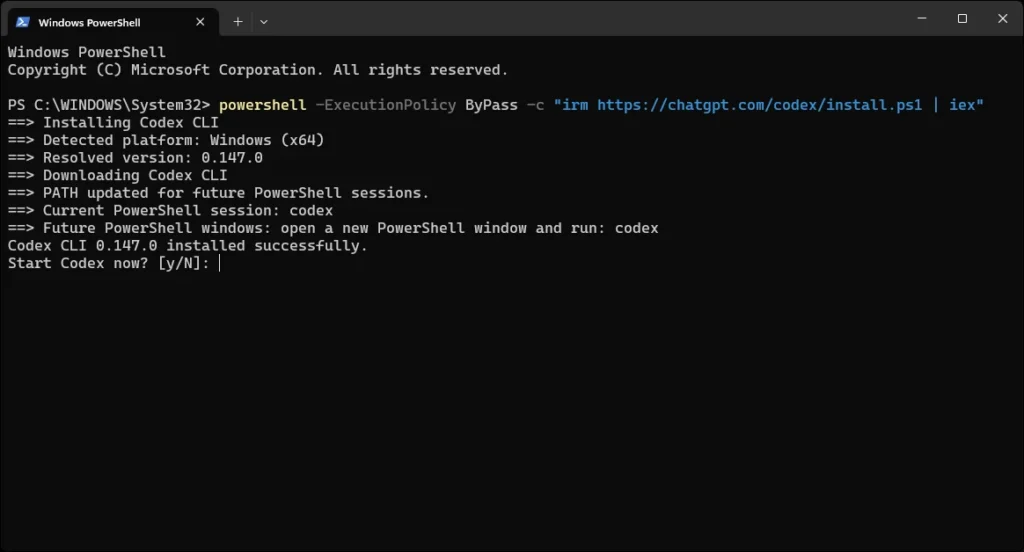
Context The Codex CLI is a powerful tool that integrates AI assistance directly into local development environments, enhancing productivity and streamlining workflows for data engineers and developers alike. By utilizing Codex, users can leverage AI capabilities within their repositories, shell environments, and testing frameworks, ultimately leading to more efficient coding practices. The installation process is straightforward, requiring only a single command. However, users must navigate several setup choices to ensure a clean and effective implementation. This guide will provide a comprehensive overview of installing the Codex CLI on various operating systems, including Windows, macOS, and Linux, while also emphasizing best practices for a successful setup. Before You Install Prior to installation, it is crucial to determine the most suitable method based on your existing environment and tooling preferences. Users who do not manage developer tools through package managers such as Homebrew or npm should opt for the standalone installer. The prerequisites for installation vary slightly across operating systems: Windows: Utilize PowerShell on a supported Windows system; Windows Subsystem for Linux (WSL2) is optional. macOS or Linux: Access to a terminal with curl is necessary. Account: Users must have either a ChatGPT account or an OpenAI Platform API key. Workspace: Ensure that you have a project folder that you can trust and manage. Main Goal and Achievement The primary objective of the original post is to guide users through the installation and initial setup of Codex CLI effectively. Achieving this goal involves following a structured sequence of steps that include running the installer, configuring the environment, and ensuring proper authentication. These steps collectively enable users to harness the full potential of Codex in their development workflow. Advantages of Using Codex CLI Streamlined Integration: Codex CLI integrates seamlessly with local development environments, allowing for smoother coding experiences. Enhanced Productivity: By utilizing AI assistance, developers can reduce the time spent on repetitive tasks and focus on more complex problems. Flexible Authentication Options: Users can choose from multiple sign-in methods, accommodating various workflows and security preferences. Customization and Control: Codex provides commands to manage permissions and configurations, enabling users to tailor the tool to their specific needs. Robust Documentation: The availability of extensive documentation and community support helps users troubleshoot issues and optimize usage. Limitations and Considerations While Codex CLI offers numerous advantages, users should also consider potential limitations. For instance, the reliance on accurate directory trust settings is critical; incorrect configurations may lead to unauthorized access or functionality issues. Additionally, users must be aware of the billing structure associated with API-key usage, as it may differ from standard ChatGPT usage plans. Future Implications The ongoing advancements in artificial intelligence are poised to significantly influence the landscape of data analytics and engineering. As tools like Codex evolve, they are expected to become more intelligent and capable of performing increasingly complex tasks. This evolution will likely lead to enhanced automation within development environments, freeing data engineers from mundane tasks and allowing them to focus on high-level strategy and innovation. Furthermore, as AI technology becomes integrated into more development tools, the demand for skilled professionals who can navigate and leverage these advancements will continue to rise. Conclusion In summary, the installation and setup of Codex CLI represent a pivotal step for data engineers seeking to enhance their productivity through AI integration. By following the outlined steps and understanding the advantages and limitations of the tool, users can successfully implement Codex into their workflows. With the trajectory of AI technology pointing towards greater automation and intelligence, embracing tools like Codex will be essential for staying competitive in the evolving field of data analytics. Disclaimer The content on this site is generated using AI technology that analyzes publicly available blog posts to extract and present key takeaways. We do not own, endorse, or claim intellectual property rights to the original blog content. Full credit is given to original authors and sources where applicable. Our summaries are intended solely for informational and educational purposes, offering AI-generated insights in a condensed format. They are not meant to substitute or replicate the full context of the original material. If you are a content owner and wish to request changes or removal, please contact us directly. Source link : Click Here


