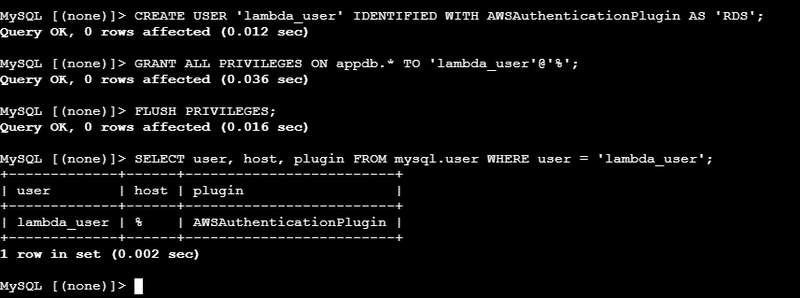
Context: The Importance of Secure Database Access in Lambda Functions In the realm of cloud computing, particularly within the AWS ecosystem, Lambda functions play a crucial role in executing code in response to events without provisioning or managing servers. However, these functions often require access to databases, such as Amazon RDS, to perform their tasks. A common yet insecure practice is to hardcode database credentials—username and password—into the Lambda environment variables. While this may seem convenient, it poses significant security risks. A single misconfiguration in IAM policies, accidental exposure of logs, or a compromised deployment artifact can lead to unauthorized access to sensitive data. Amazon Web Services (AWS) provides a robust solution to mitigate these risks through the use of IAM authentication in conjunction with RDS Proxy. This method allows Lambda functions to connect to databases without the need for static credentials, thereby enhancing security and simplifying management. Achieving Credential-Free Database Access with IAM Authentication The primary goal of implementing IAM authentication with RDS Proxy is to eliminate the need for static database credentials in Lambda functions. Instead of relying on hardcoded usernames and passwords, Lambda can generate a temporary IAM token (valid for 15 minutes) to authenticate against the database. This process is seamless, as AWS handles the validation internally, ensuring that sensitive credentials never leave the Lambda environment. Advantages of IAM Authentication with RDS Proxy Enhanced Security: By removing static credentials, the attack surface for potential breaches is significantly reduced. IAM roles can be fine-tuned, providing only the necessary permissions, thereby following the principle of least privilege. No Credential Management Headaches: With IAM authentication, there is no need for regular password rotations or secrets management, which can often lead to human error and additional administration overhead. Temporary Access Tokens: The use of temporary tokens for authentication means that even if a token is compromised, its validity is limited to a short time frame (15 minutes), thus reducing the window of opportunity for misuse. Auditability: IAM authentication allows for detailed logging of database access attempts through AWS CloudTrail, facilitating compliance and security audits. Seamless Integration: This authentication method integrates well with existing AWS services, allowing organizations to leverage their current IAM policies and practices. Caveats and Limitations While the advantages of IAM authentication are compelling, there are certain considerations to keep in mind: Initial Setup Complexity: Configuring IAM roles and policies may require a deeper understanding of AWS security models, which can be daunting for new users. Dependency on AWS Infrastructure: Organizations that utilize IAM authentication are inherently tied to AWS services and may face challenges if they consider migrating to other cloud providers. Short-lived Tokens: The temporary nature of IAM tokens means that they must be regenerated frequently, which can add complexity in scenarios with high-frequency Lambda invocations. Future Implications: The Role of AI in Database Security As artificial intelligence continues to evolve, its integration into cloud security practices will likely enhance the capabilities of IAM authentication and RDS Proxy. AI algorithms can analyze access patterns and identify anomalies, thereby providing real-time alerts for suspicious activities. The combination of machine learning with IAM could lead to adaptive security measures that dynamically adjust access permissions based on user behavior and contextual data, further minimizing risk. In the Computer Vision and Image Processing fields, where large datasets are processed and analyzed, the secure management of database access becomes paramount. As reliance on cloud resources grows, leveraging IAM authentication for secure and efficient database interactions will become a standard best practice. This approach not only secures sensitive information but also streamlines operations, allowing researchers and practitioners to focus on deriving insights from data rather than managing security compliance. Disclaimer The content on this site is generated using AI technology that analyzes publicly available blog posts to extract and present key takeaways. We do not own, endorse, or claim intellectual property rights to the original blog content. Full credit is given to original authors and sources where applicable. Our summaries are intended solely for informational and educational purposes, offering AI-generated insights in a condensed format. They are not meant to substitute or replicate the full context of the original material. If you are a content owner and wish to request changes or removal, please contact us directly. Source link : Click Here
Contextualizing the Privacy Landscape in Data Brokerage In the evolving landscape of data brokerage, the case of Radaris.com serves as a pivotal example of the challenges and legal repercussions that consumer data brokers face when disregarding privacy laws. Radaris, a prominent player in the online people-search service domain, has a longstanding history of neglecting requests for the removal of personal data. This disregard culminated in legal action initiated by Atlas Data Privacy Corp, which accused Radaris of violating Daniel’s Law in New Jersey. This law grants law enforcement officials, government employees, judges, and their families the right to have their personal information removed from commercial data brokers, imposing fines for non-compliance. Main Goals and Their Achievement The central goal of the legal actions against Radaris is to enforce compliance with privacy regulations that protect individuals’ personal information from unauthorized exposure. Achieving this goal requires a concerted effort from legal entities, public awareness, and a commitment to upholding privacy laws. By successfully transferring the radaris.com domain and its associated sites to the plaintiffs, a precedent has been set, emphasizing the legal accountability of data brokers in safeguarding personal data. Advantages of Robust Data Privacy Regulations Enhanced Consumer Protection: Legal frameworks like Daniel’s Law directly protect sensitive information from being exploited by data brokers, thereby enhancing consumer trust in data handling practices. Accountability for Data Brokers: The legal actions against Radaris highlight the importance of holding data brokers accountable, setting a standard for compliance that benefits consumers and deters potential violations. Encouragement of Ethical Data Practices: Enforced regulations encourage data brokers to adopt ethical data handling practices, fostering a culture of respect for privacy. Precedent for Future Litigation: The outcomes of cases like Radaris can serve as a reference for future litigation, emboldening other entities to pursue justice regarding data privacy violations. Increased Public Awareness: High-profile cases draw attention to the importance of privacy rights, educating consumers about their rights and the risks associated with data brokerage. Despite these advantages, it is crucial to recognize the limitations inherent in the current legal framework. The ongoing challenge of navigating jurisdictional issues and the complexities of international law can hinder enforcement efforts against data brokers operating from abroad. Future Implications: The Intersection of AI and Data Privacy As artificial intelligence (AI) technologies continue to advance, their implications for data privacy and the operations of data brokers will be profound. AI’s ability to analyze and synthesize vast amounts of personal data raises significant concerns about privacy infringement and unauthorized data sharing. Future developments in AI may lead to enhanced data mining techniques, exacerbating existing challenges in protecting personal information. Moreover, as legislative bodies attempt to address these challenges, the interplay between technological innovation and regulatory frameworks will become increasingly critical. It is anticipated that lawmakers will need to adapt existing privacy laws to account for the complexities introduced by AI, ensuring that consumer protections remain robust in the face of evolving technologies. In conclusion, while the Radaris case underscores the importance of enforcing data privacy laws, the future landscape will require ongoing vigilance and adaptation as new technologies emerge and the data brokerage industry continues to evolve. Disclaimer The content on this site is generated using AI technology that analyzes publicly available blog posts to extract and present key takeaways. We do not own, endorse, or claim intellectual property rights to the original blog content. Full credit is given to original authors and sources where applicable. Our summaries are intended solely for informational and educational purposes, offering AI-generated insights in a condensed format. They are not meant to substitute or replicate the full context of the original material. If you are a content owner and wish to request changes or removal, please contact us directly. Source link : Click Here
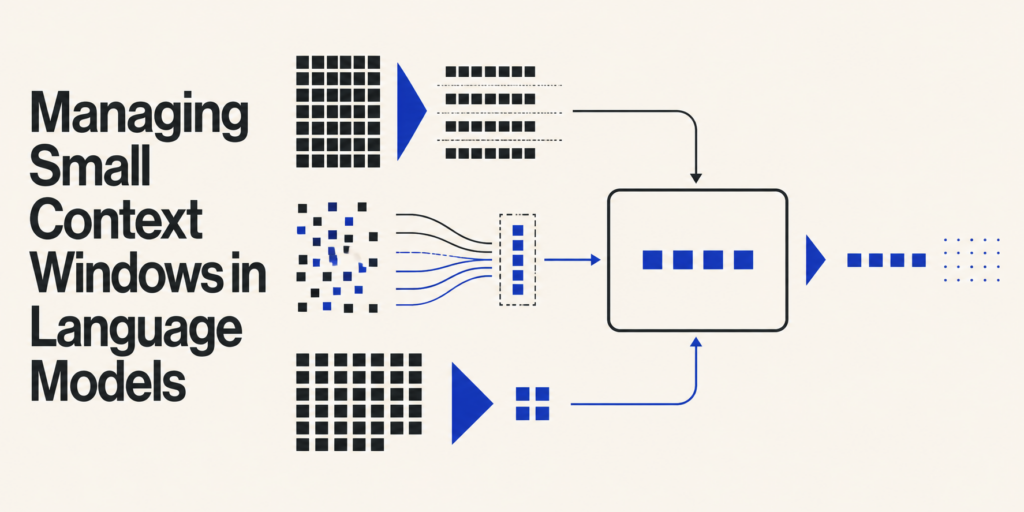
Context for Managing Small Context Windows in Language Models In the rapidly evolving landscape of artificial intelligence, especially within the domain of applied machine learning, the management of small context windows in language models has emerged as a critical area of focus. This article presents three pragmatic strategies designed to optimize the handling of small context windows, accompanied by Python examples that illustrate the application of two of these strategies. The primary topics discussed include: Utilizing context truncation through a sliding window approach to maintain predictable and flat token usage. Employing token budgeting alongside retrieval-augmented generation (RAG) to ensure that only the most pertinent context is included within a prompt. A brief examination of supplementary strategies tailored for specialized applications, including rolling summaries, prompt compression, and observation masking. Introduction In the field of artificial intelligence, there is a prevailing fascination with language models that can process extensive context windows, enabling them to integrate vast amounts of information. However, these large context windows pose significant challenges, such as elevated API costs, increased latency, and the notorious “lost in the middle” problem, where critical information may be overlooked within a voluminous prompt. Consequently, effectively managing small context windows can lead to enhanced performance, reduced costs, and improved focus on relevant data, ultimately refining the model’s output. This article elaborates on three widely adopted strategies for mastering small context windows in language models, supplemented by practical examples to facilitate understanding and implementation. Main Goal and Achievement The central aim of managing small context windows is to enhance the efficiency and effectiveness of language models in processing and generating responses. This can be accomplished through the implementation of practical strategies that prioritize the most relevant information while minimizing unnecessary data. By applying techniques such as sliding window truncation and token budgeting, practitioners can ensure that the model operates within a manageable context size, yielding better performance and lower operational costs. Advantages of Managing Small Context Windows Several advantages arise from effectively managing small context windows in language models: Controlled Token Usage: The sliding window approach enables fixed control over token consumption, leading to predictable latency and cost management. Enhanced Relevance of Information: Token budgeting ensures that only the most pertinent data is included, mitigating the “lost in the middle” issue and facilitating more accurate responses. Versatile Implementation: The strategies discussed can be readily adapted for various applications, from chatbots to automated content generation, enhancing the utility of language models in diverse fields. Reduction in Latency: By concentrating on relevant context and avoiding excessive data processing, response times can be significantly improved, leading to a more efficient user experience. Despite these advantages, it is crucial to acknowledge potential limitations, such as the need for careful parameter tuning and the requirement for additional computational resources in certain strategies, which may introduce complexity in implementation. Future Implications of AI Developments The evolution of artificial intelligence, particularly in the context of language models, suggests a promising future for the management of small context windows. As advancements in AI algorithms continue to emerge, we can anticipate more sophisticated strategies that leverage machine learning techniques to further optimize context management. This could lead to more intuitive user interactions, greater efficiency in data processing, and enhanced capabilities in understanding and generating human-like responses. Furthermore, as industry standards shift toward more cost-effective and efficient AI solutions, the importance of mastering small context windows will likely grow, positioning practitioners to better meet the demands of an increasingly competitive landscape. Closing Remarks In summary, the effective management of small context windows should not be viewed merely as a limitation but rather as an opportunity to innovate and refine AI applications. By employing the strategies outlined in this article, practitioners can enhance the functionality of language models, paving the way for faster, more accurate, and cost-effective solutions in the field of applied machine learning. Disclaimer The content on this site is generated using AI technology that analyzes publicly available blog posts to extract and present key takeaways. We do not own, endorse, or claim intellectual property rights to the original blog content. Full credit is given to original authors and sources where applicable. Our summaries are intended solely for informational and educational purposes, offering AI-generated insights in a condensed format. They are not meant to substitute or replicate the full context of the original material. If you are a content owner and wish to request changes or removal, please contact us directly. Source link : Click Here
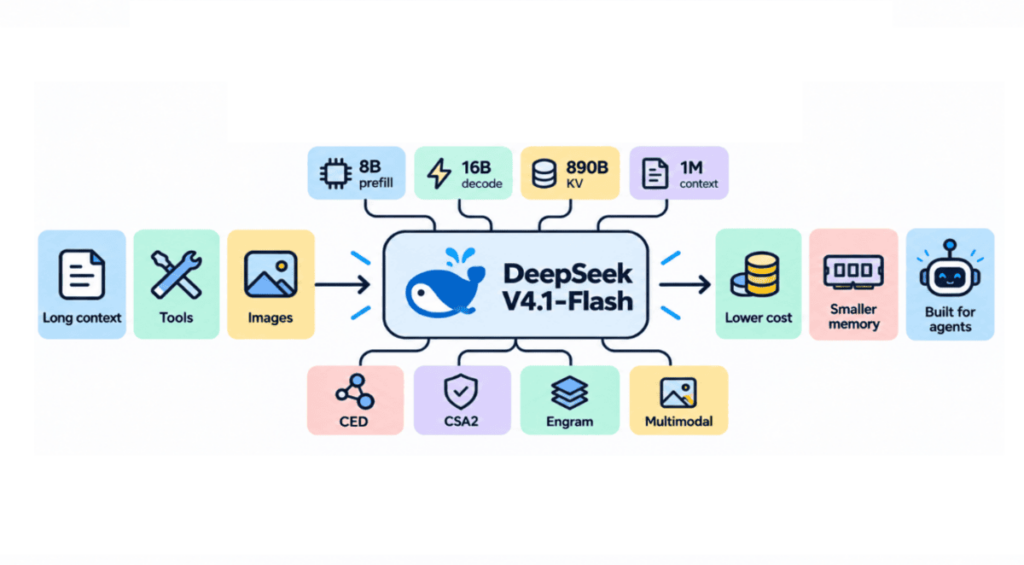
Context The recent release of DeepSeek-V4.1-Flash marks a significant advancement in the field of Natural Language Processing (NLP), particularly for applications involving long-context AI systems. While the performance metrics of the model are noteworthy, the architectural innovations represent the most compelling aspects of this release. DeepSeek addresses critical challenges in the realm of AI agents, including the high costs associated with prefill computations, extensive key-value (KV) caches, prolonged contexts, and the efficiency of maintaining agent states throughout interactions. Rather than merely scaling up model size, DeepSeek has re-engineered various components within the architecture and inference stack to facilitate more economical operations for long-context AI systems. This article will elucidate the transformative changes introduced in DeepSeek-V4.1-Flash and their implications for the field of Natural Language Understanding (NLU). Main Goal and Achievement The central objective of DeepSeek-V4.1-Flash is to create a model that not only excels in computational efficiency but also enhances the performance of long-context AI agents. This goal is achieved through a multifaceted architectural redesign that optimizes both the prefill and decoding stages of language model inference. By implementing a Causal Encoder-Decoder (CED) architecture, the model limits the active parameters during prefill and decoding processes, thereby reducing the computational burden. The model’s ability to manage extensive context windows while minimizing memory requirements is a pivotal achievement that enhances its practicality for real-world applications. Advantages of DeepSeek-V4.1-Flash Reduced Memory Footprint: DeepSeek-V4.1-Flash achieves a global KV cache size of only 890 bytes per token, a substantial reduction that enhances memory efficiency compared to its predecessor, allowing for larger context windows without excessive resource consumption. Optimized Parameter Usage: The model utilizes a total of 552 billion parameters, activating only 8 billion during prefill and 16 billion during decoding. This selective activation significantly lowers computational costs while maintaining performance. Enhanced Context Management: The architecture supports a context window of 1 million tokens, addressing the growing demand for AI systems to process extensive inputs effectively. Improved Inference Speed: Through innovations such as Single-Pass mHC and DSpark Speculative Decoding, the model accelerates token generation, making it more suitable for applications requiring rapid response times. Scalable Architecture: By incorporating techniques such as Compressed Sparse Attention 2 (CSA2) and SWA Bounded Replay, the model minimizes redundant computations across layers, allowing for better resource allocation and faster processing. Caveats and Limitations While the advancements presented in DeepSeek-V4.1-Flash are substantial, it is essential to acknowledge certain limitations. The model’s efficacy in specific domains may still vary, and while it excels in reducing latency and memory usage, its overall intelligence and output quality may not surpass the best-performing models in all scenarios. Additionally, the complexity of its architecture may pose challenges for broader adoption, particularly in resource-constrained environments. Future Implications The developments represented by DeepSeek-V4.1-Flash are expected to significantly influence the future of Natural Language Understanding and AI agent design. As the demand for more sophisticated AI interactions increases, the need for models that balance efficiency with computational power will become paramount. The architectural innovations introduced in this release may serve as a blueprint for future models, promoting a trend toward more efficient memory usage and processing speeds. Furthermore, as open-source implementations based on the MIT licensing gain traction, the dissemination of these ideas could catalyze further research and improvements in the field, potentially leading to groundbreaking advancements in AI applications. Disclaimer The content on this site is generated using AI technology that analyzes publicly available blog posts to extract and present key takeaways. We do not own, endorse, or claim intellectual property rights to the original blog content. Full credit is given to original authors and sources where applicable. Our summaries are intended solely for informational and educational purposes, offering AI-generated insights in a condensed format. They are not meant to substitute or replicate the full context of the original material. If you are a content owner and wish to request changes or removal, please contact us directly. Source link : Click Here

Contextual Overview In the evolving landscape of data analytics and insights, the ability to manipulate and interact with data efficiently is paramount. The integration of MIDI controllers, such as the Behringer FCB1010, into macOS environments exemplifies how unconventional tools can enhance user interaction with data systems. The fcbnerd application serves as a command-line interface that connects MIDI sources to execute specific actions based on footswitch inputs. This innovative approach allows users to streamline their workflows by leveraging MIDI commands to trigger various data-related tasks, thereby enhancing productivity and efficiency for data engineers. Main Goal and Implementation The primary objective of utilizing a MIDI foot controller with the fcbnerd application is to facilitate the execution of commands on macOS through footswitch activation. This method allows for a hands-free interaction model which can be particularly beneficial in environments where multitasking is essential. To achieve this goal, users must configure bindings that link MIDI messages to specific shell commands. For instance, a user can bind a footswitch to open a folder on their system or execute a script that processes data, thereby simplifying the management of data workflows. Advantages of Implementing MIDI Controllers in Data Engineering Enhanced Workflow Efficiency: By integrating MIDI foot controllers, data engineers can streamline their workflows, allowing for quicker access to important commands without the need for manual input. This is particularly advantageous during presentations or data analysis sessions where hands-free operation is preferred. Customizability: The flexibility of the fcbnerd application allows for the customization of MIDI bindings that cater to individual user needs. Each user can tailor the tool to fit their specific workflow requirements, enhancing overall productivity. Real-time Data Interaction: The ability to trigger commands in real-time facilitates immediate interaction with data processes. This is crucial in scenarios that require quick decision-making based on live data feeds. Minimal Permissions Required: Unlike many applications that require extensive permissions to interact with system-level commands, fcbnerd operates by only reading MIDI inputs, thus reducing potential security concerns and simplifying the setup process. Limitations and Caveats While the implementation of MIDI controllers offers numerous advantages, there are inherent limitations. The effectiveness of this approach may vary based on the user’s familiarity with command-line interfaces and the complexity of the commands being executed. Additionally, the reliance on specific MIDI hardware, such as the Behringer FCB1010, may restrict accessibility for users who do not possess compatible equipment. Furthermore, the learning curve associated with configuring MIDI bindings can be a barrier for less technically inclined users. Future Implications in the AI Domain As artificial intelligence continues to advance, the integration of MIDI controllers and command-line tools like fcbnerd could evolve significantly. Future developments may include AI-driven automation that allows for predictive command execution based on user behavior and data patterns. This could enhance the tool’s capability by not only reacting to manual inputs but also anticipating user needs, leading to a more intuitive interaction model. Moreover, as more data analytics processes become automated, the use of MIDI controllers may transition from a niche application to a standard practice in data engineering environments, further streamlining operations and enhancing productivity. Disclaimer The content on this site is generated using AI technology that analyzes publicly available blog posts to extract and present key takeaways. We do not own, endorse, or claim intellectual property rights to the original blog content. Full credit is given to original authors and sources where applicable. Our summaries are intended solely for informational and educational purposes, offering AI-generated insights in a condensed format. They are not meant to substitute or replicate the full context of the original material. If you are a content owner and wish to request changes or removal, please contact us directly. Source link : Click Here

Context The evolution of coding agents like Claude Code and Codex has revolutionized the landscape of technological communication, particularly within the realms of Computer Vision and Image Processing. However, a prominent challenge persists: the dense, unformatted information delivered in terminal windows can hinder effective understanding and decision-making. This challenge is particularly significant for Vision Scientists who rely on clear communication to interpret complex data outputs. As the processing of visual information is fundamentally intricate, efficient interaction with coding agents is paramount for optimizing outcomes in research and application development. Main Goal and Its Achievement The primary goal of enhancing communication with coding agents is to improve the clarity and accessibility of information presented to users. This can be achieved by utilizing structured formats, such as HTML, to present data. This structured approach allows coding agents to relay significant information in a more visually appealing and digestible manner. By implementing techniques that promote better formatting and organization, users can quickly identify and comprehend critical insights, thus facilitating informed decision-making. Advantages of Improved Communication with Coding Agents Enhanced Readability: Structured formats like HTML allow for the incorporation of headings, bullet points, and visuals, which significantly improve the readability of information. This allows Vision Scientists to quickly locate and interpret essential data without sifting through unorganized text. Increased Efficiency: By streamlining the flow of information, coding agents can present relevant outputs at the end of interactions, reducing the cognitive load on users. This efficiency is critical in fast-paced research environments where timely decisions are necessary. Visual Representation: The ability to present information visually, such as through diagrams and charts, enables users to grasp complex concepts more intuitively. For instance, in Computer Vision, visual representations of data processing workflows can clarify intricate processes, aiding in better understanding and troubleshooting. Contextual Clarity: By requesting coding agents to include contextually relevant information alongside outputs, users can better understand the significance of the data presented, thereby enhancing their decision-making capabilities. Limitations and Caveats While the advantages of using structured communication formats are substantial, there are caveats to consider. Dependency on specific formats may limit flexibility in communication, and not all coding agents may support advanced formatting options. Additionally, excessive visual data can lead to information overload, which may counteract the intended benefits. Therefore, a balanced approach is necessary to ensure that the presentation of information remains clear and effective. Future Implications The trajectory of artificial intelligence and machine learning is poised to further impact the field of Computer Vision and Image Processing. As coding agents become more sophisticated, the potential for enhanced communication will likely expand, enabling even greater interaction between humans and machines. The advent of advanced AI could facilitate real-time data analysis and dynamic visualizations, allowing Vision Scientists to engage with their coding agents in an increasingly intuitive manner. This evolution will be crucial as the complexity of visual data continues to grow, underscoring the importance of efficient communication in driving innovation and research outcomes. Disclaimer The content on this site is generated using AI technology that analyzes publicly available blog posts to extract and present key takeaways. We do not own, endorse, or claim intellectual property rights to the original blog content. Full credit is given to original authors and sources where applicable. Our summaries are intended solely for informational and educational purposes, offering AI-generated insights in a condensed format. They are not meant to substitute or replicate the full context of the original material. If you are a content owner and wish to request changes or removal, please contact us directly. Source link : Click Here

Contextual Overview The integration of advanced coding tools such as the GitHub Copilot app signifies a transformative shift in software development practices, particularly for Big Data Engineering professionals. As data engineers frequently collaborate on complex codebases, the ability to review, execute, and analyze code changes seamlessly within a single interface enhances both efficiency and productivity. This comprehensive approach alleviates the previous necessity of toggling between multiple applications—such as code editors, terminal windows, and web browsers—thereby streamlining the workflow and improving the overall coding experience. Main Objective of the GitHub Copilot App The primary goal of the GitHub Copilot app is to facilitate a smoother coding process by providing integrated functionalities that allow users to review code changes, execute commands, and visualize outcomes without interruption. By employing built-in panels within the application, users can complete a full cycle of the coding loop—reviewing changes through the diff panel, executing commands in the terminal, and testing modifications in the browser—ultimately resulting in a more controlled and coherent coding environment. Advantages of Utilizing the GitHub Copilot App Enhanced Code Review Process: The diff panel offers a clear visualization of changes made to the code, with additions and deletions distinctly marked. This clarity empowers data engineers to make informed decisions regarding code acceptance, thereby reducing errors and maintaining code integrity. Integrated Execution Environment: By allowing users to run commands directly within the application’s terminal panel, the GitHub Copilot app simplifies the execution of project-specific scripts. This integration minimizes the cognitive load associated with switching contexts and allows for more focused development efforts. Immediate Feedback Loop: The browser panel enables real-time testing of features, allowing users to interact with their code as if they were engaging with a live application. This immediate feedback mechanism fosters iterative development and rapid troubleshooting. Control Over Code Modifications: The app provides data engineers with the autonomy to accept, comment on, or request further modifications to agent-generated code. This control mitigates the fear associated with adopting automated changes and reinforces the engineer’s role in the decision-making process. Considerations and Limitations While the GitHub Copilot app presents numerous advantages, it is crucial to acknowledge certain limitations. For instance, the reliance on automated suggestions may lead to a reduction in individual coding skills over time, as engineers might become dependent on the tool for generating code. Additionally, the app’s effectiveness is contingent upon the quality of the AI’s suggestions, which may not always align with specific project requirements or best practices. Thus, continued engagement with foundational coding principles is essential for data engineers. Future Implications of AI in Big Data Engineering The evolving landscape of artificial intelligence will undoubtedly have profound implications for the field of Big Data Engineering. As AI-driven tools become increasingly sophisticated, we can anticipate further enhancements in automation capabilities, including more refined suggestions for code generation and optimization. These advancements may lead to a paradigm shift in how data engineers approach coding tasks, potentially enabling them to focus more on strategic decision-making and data architecture rather than routine coding procedures. However, it will be paramount for professionals in this field to remain adaptable and committed to ongoing learning, ensuring they can leverage these innovations effectively while maintaining a strong grasp of traditional coding methodologies. Disclaimer The content on this site is generated using AI technology that analyzes publicly available blog posts to extract and present key takeaways. We do not own, endorse, or claim intellectual property rights to the original blog content. Full credit is given to original authors and sources where applicable. Our summaries are intended solely for informational and educational purposes, offering AI-generated insights in a condensed format. They are not meant to substitute or replicate the full context of the original material. If you are a content owner and wish to request changes or removal, please contact us directly. Source link : Click Here

Context: The Dawn of the AGI Era with GPT-6 Astra The recent unveiling of OpenAI’s GPT-6 Astra has triggered a significant paradigm shift in the realm of artificial intelligence. This model is heralded as a critical milestone towards achieving artificial general intelligence (AGI), which is characterized by systems that can outperform humans in a majority of economically valuable tasks. OpenAI’s co-founder Greg Brockman encapsulated this sentiment by proclaiming, “Welcome to the AGI era.” This statement underscores the transformative potential of Astra, positioning it not merely as an enhancement to existing AI capabilities but as a substantial leap towards a future where human-computer interactions are fundamentally redefined. Astra promises to revolutionize how users engage with technology, enabling hands-free operations and reducing the necessity for traditional input methods like typing or clicking. Main Goal and Its Achievement The primary objective of GPT-6 Astra is to create a more intuitive user experience in computer operations, thus allowing users to focus on higher-order decision-making rather than mundane tasks. This goal can be achieved through Astra’s ability to autonomously navigate various software applications, producing complex outputs like documents and presentations without continuous human instruction. By leveraging advanced natural language processing and machine learning techniques, Astra is designed to execute multi-step workflows, enabling users to delegate complex tasks efficiently. This shift represents a fundamental change in how AI systems can be integrated into business environments, leading to potentially increased productivity and innovation. Advantages of GPT-6 Astra Enhanced User Experience: Astra enables users to operate computers through natural language commands, significantly reducing the reliance on traditional input devices. Increased Efficiency: OpenAI reports that Astra can complete tasks approximately 47% faster than its predecessor, GPT-5.6 Sol, showcasing its capability to streamline workflows and enhance productivity. Broader Application Spectrum: The model can interact with various software applications, from spreadsheets and databases to web browsers, effectively acting as a multifunctional assistant. Improved Task Delegation: Astra allows users to oversee AI operations rather than continually provide instructions, fostering a higher level of task delegation and strategic oversight. Significant Training Improvements: Astra represents OpenAI’s largest-scale training run to date, indicating substantial advancements in model capabilities, as evidenced by its superior performance on multiple benchmarks. Caveats and Limitations Despite the numerous advantages, there are notable caveats associated with Astra. The absence of OpenAI’s GDPval benchmark, which evaluates performance on economically valuable tasks, raises questions about the model’s real-world applicability in professional settings. Additionally, while Astra achieves high scores on various benchmarks, the implications of these scores in terms of actual economic impact remain to be fully understood. Furthermore, as the model operates with increased autonomy, the challenges of governance and safety become more complex, necessitating robust monitoring and alignment mechanisms. Future Implications of AI Developments The introduction of GPT-6 Astra is likely to catalyze a broader transformation within the AI landscape, particularly in how organizations approach automation and workflow efficiency. As generative AI models continue to evolve, we can anticipate enhanced capabilities that will influence various sectors, including finance, healthcare, and creative industries. This evolution will necessitate a reevaluation of workforce dynamics, as employees may transition from performing routine tasks to focusing on strategic oversight and decision-making. Furthermore, the implications for cybersecurity and ethical governance will demand rigorous frameworks to manage the dual-use nature of highly autonomous AI systems, ensuring that their deployment maximizes benefits while minimizing risks. Disclaimer The content on this site is generated using AI technology that analyzes publicly available blog posts to extract and present key takeaways. We do not own, endorse, or claim intellectual property rights to the original blog content. Full credit is given to original authors and sources where applicable. Our summaries are intended solely for informational and educational purposes, offering AI-generated insights in a condensed format. They are not meant to substitute or replicate the full context of the original material. If you are a content owner and wish to request changes or removal, please contact us directly. Source link : Click Here

Contextual Background The decision of whether to upgrade to the latest technology often hinges on the perceived value of the new features offered. In the context of the smartphone market, individual choices can reflect broader trends in consumer behavior, particularly in the realm of innovative designs such as foldable smartphones. The original post articulates a personal decision to forgo the latest iPhone model in favor of an anticipated foldable iPhone, highlighting a significant shift in consumer preference towards devices that offer unique functionalities. This sentiment resonates particularly well in the Applied Machine Learning (ML) industry, where advancements in technology can facilitate novel applications and enhance productivity. Main Goal Identification The principal goal expressed in the original content is to evaluate the necessity of upgrading to the iPhone 18 Pro Max while contrasting it with the allure of a foldable iPhone Ultra. This goal can be achieved by undertaking a comprehensive assessment of the technological advancements promised by new devices against the backdrop of existing functionalities. In the ML industry, a similar approach can be adopted by practitioners who evaluate whether new algorithms or models offer substantial benefits over established methodologies. Structured List of Advantages 1. **Enhanced User Experience with Larger Displays**: The anticipated foldable iPhone Ultra boasts a 7.8-inch inner screen, which is projected to provide an immersive user experience. This aligns with findings in ML, where larger data visualization tools have been shown to improve comprehension and decision-making among practitioners. 2. **Multi-Tasking Capabilities**: The iPhone Ultra is expected to support a dual-app interface, akin to iPad functionalities. In ML, this capability would resonate with the need for simultaneous data analysis and model training, facilitating more efficient workflows. 3. **Increased Battery Capacity**: With a projected battery capacity of 5,400 to 5,800 mAh, the foldable phone aims to meet the demands of extensive usage. For ML practitioners, longer battery life can enhance productivity, particularly during fieldwork or in environments with limited access to power sources. 4. **First-Mover Advantage**: The allure of acquiring a first-generation foldable device parallels the excitement surrounding first-generation machine learning technologies. Early adopters in both fields may benefit from unique insights and a competitive edge, fostering innovation. Caveats and Limitations 1. **Lack of Established Features**: The foldable iPhone is rumored to forgo Face ID, opting instead for a return to Touch ID. This absence of familiar features may deter users accustomed to the convenience of facial recognition, akin to how ML practitioners may hesitate to adopt unproven algorithms lacking robustness. 2. **Camera Limitations**: The expected absence of a telephoto lens may limit photographic capabilities, which could be a significant drawback for users who prioritize camera performance. Similarly, in the ML landscape, choosing a model that lacks essential features can hinder overall effectiveness. 3. **Potential Pricing Concerns**: The anticipated cost of over $2,000 for the foldable iPhone may restrict adoption. This mirrors the financial considerations faced by organizations when investing in advanced ML technologies, where budget constraints can impede access to cutting-edge solutions. Future Implications of AI Developments The evolution of AI technologies is likely to have profound implications for both consumer electronics and the ML landscape. As companies like Apple continue to innovate with foldable devices, the integration of AI-driven features—such as enhanced user interfaces and predictive analytics—will become increasingly common. These advancements may lead to the development of more intuitive devices that seamlessly adapt to user needs, thereby enhancing productivity and user satisfaction. In the ML realm, the convergence of AI and mobile technology is expected to foster new applications, driving improvements in data processing, visualization, and real-time decision-making. Disclaimer The content on this site is generated using AI technology that analyzes publicly available blog posts to extract and present key takeaways. We do not own, endorse, or claim intellectual property rights to the original blog content. Full credit is given to original authors and sources where applicable. Our summaries are intended solely for informational and educational purposes, offering AI-generated insights in a condensed format. They are not meant to substitute or replicate the full context of the original material. If you are a content owner and wish to request changes or removal, please contact us directly. Source link : Click Here

Context The advent of artificial intelligence (AI) has brought about transformative changes in various sectors, particularly in Natural Language Processing (NLP) and Natural Language Understanding (NLU). A common challenge faced by developers and researchers in these fields is the necessity to optimize the performance of large language models (LLMs). The traditional approach typically involves routing every request to a single, powerful model, leading to unnecessary costs and latency. NVIDIA’s open-source solution, Switchyard, provides a unique routing layer that addresses this issue. Switchyard functions as an intermediary, determining which model should handle each request based on its complexity, thus enhancing efficiency and reducing operational expenses. Main Goal and Its Achievement The primary goal of Switchyard is to optimize model selection for various types of requests in AI applications. By implementing a routing layer, it allows applications to dynamically choose between different models—ranging from more cost-effective options to more advanced ones—depending on the specific requirements of each request. This is achieved through a systematic configuration that includes random routing for initial testing and transitions to more sophisticated, content-aware routing methods as system capabilities mature. Advantages of Using Switchyard Cost Efficiency: Switchyard significantly reduces the costs associated with redundant processing by ensuring that simpler tasks are directed to less expensive models. This not only lowers operational costs but also allows for better resource allocation. Improved Latency: By routing requests to the most appropriate model, Switchyard minimizes response times, enhancing the user experience in real-time applications. Dynamic Model Selection: The library employs sophisticated routing strategies, such as random and intelligent routing, which adapt based on the complexity of tasks, ensuring optimal performance without requiring manual intervention. Scalability: As AI applications expand, Switchyard’s architecture allows for easy integration of additional models, making it a flexible solution for evolving needs. Performance Metrics: Switchyard provides insights through Prometheus metrics and statistics regarding requests, errors, and latency. This data-driven approach enables continuous optimization and refinement of routing strategies. Limitations and Considerations While Switchyard offers numerous advantages, it is essential to acknowledge certain limitations. The effectiveness of the routing system heavily relies on accurate model configurations and the complexity assessments of requests. Moreover, improper configurations could lead to suboptimal routing, thereby negating the benefits of the system. Future Implications The trajectory of AI development suggests that the need for efficient model routing will only increase as applications become more complex and widely adopted. Future advancements in AI may bring about more nuanced models capable of understanding context and intent at deeper levels. As organizations strive for enhanced functionality and reduced costs, systems like Switchyard will play a pivotal role in balancing these needs. Furthermore, as the landscape of AI continues to evolve, the integration of advanced routing mechanisms will likely become a standard practice, paving the way for more intelligent and responsive AI systems in various domains. Disclaimer The content on this site is generated using AI technology that analyzes publicly available blog posts to extract and present key takeaways. We do not own, endorse, or claim intellectual property rights to the original blog content. Full credit is given to original authors and sources where applicable. Our summaries are intended solely for informational and educational purposes, offering AI-generated insights in a condensed format. They are not meant to substitute or replicate the full context of the original material. If you are a content owner and wish to request changes or removal, please contact us directly. Source link : Click Here


