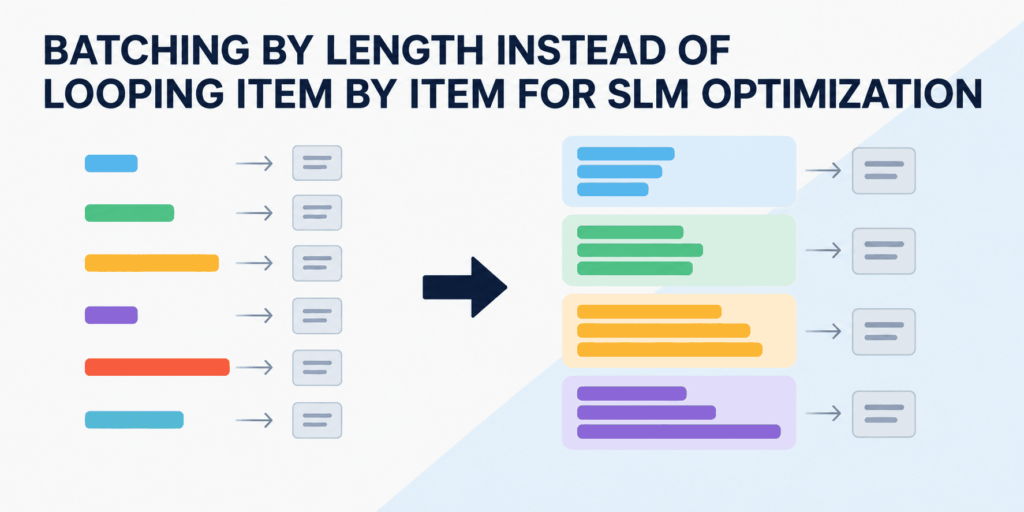
Context and Background In the realm of Applied Machine Learning, optimizing the performance of small language models (SLMs) is critical for enhancing automation processes. The article “Batching by Length Instead of Looping Item by Item for SLM Optimization” addresses a specific technique aimed at improving the efficiency of SLMs by batching input sequences based on their lengths rather than processing each item sequentially. This approach is particularly relevant for practitioners working with natural language processing tasks, such as classifying support tickets, where time and resource efficiency can significantly affect overall productivity. Main Goals and Implementation Strategies The primary goal of the discussed technique is to minimize computational waste by reducing the memory-bandwidth constraints that arise when processing sequences one at a time. This is achieved through the implementation of length-based batching, which involves sorting input sequences by their token lengths before grouping them into batches. This strategy allows each batch to pad to its own local maximum length, thus minimizing the number of padding tokens that need to be processed, which would otherwise inflate the computational workload. Advantages of Length-Based Batching Increased Throughput: By processing multiple sequences simultaneously, the length-based batching method significantly increases throughput. In practical tests, models demonstrated a marked improvement in processing speed when using this batching strategy compared to item-by-item processing. Reduced Padding Overhead: Traditional batching methods often require padding sequences to the maximum length of the batch. By sorting sequences, the length-based batching minimizes padding, thereby reducing the overall number of tokens processed unnecessarily. This was evidenced by the observed 7.6% padding overhead in tests, compared to much higher percentages in arbitrary batching. Resource Efficiency: Memory and compute resources are used more effectively with this method, as it avoids the scenario where the arithmetic units of the hardware sit idle while waiting for memory access. This is particularly important for models deployed in environments with limited computational resources. Consistency in Output: The method ensures that the output remains consistent with the predictions from the item-by-item approach. Any optimization that results in altered predictions would not be considered valid, as it may lead to decreased model reliability. Caveats and Limitations Dependency on Sequence Length Distribution: The effectiveness of length-based batching is contingent upon the distribution of sequence lengths. If the input data includes a wide variance in lengths, this method may require careful tuning to achieve optimal results. Complexity in Implementation: While the technique can yield significant performance improvements, it may introduce additional complexity in the implementation phase. Practitioners must be mindful of ensuring that the sorting and batching processes do not compromise the integrity of the data. Integration with Existing Caching Techniques: Combining this batching strategy with other optimizations, such as prefix caching, necessitates careful consideration to maintain the accuracy of predictions. Future Implications in AI Development The advancements in AI, particularly in the field of natural language processing, will likely continue to emphasize the importance of efficient model deployment. As models become increasingly complex, the need for optimization techniques that enhance throughput without sacrificing output quality will be paramount. The adoption of strategies like length-based batching will become more widespread as organizations seek to leverage AI technologies for operational efficiency. Furthermore, as computational resources evolve, integrating sophisticated batching methods with emerging hardware architectures will be critical. This synergy could pave the way for further innovations in AI applications, allowing for real-time processing and decision-making in various sectors, including customer service, healthcare, and finance. Conclusion In summary, the adoption of length-based batching in small language model optimization presents a promising avenue for enhancing computational efficiency in Applied Machine Learning. By minimizing padding overhead and maximizing throughput, practitioners can achieve significant performance benefits, ultimately leading to more efficient automation processes. As AI technologies continue to evolve, the importance of such optimization techniques will only grow, highlighting the need for ongoing research and development in this area. Disclaimer The content on this site is generated using AI technology that analyzes publicly available blog posts to extract and present key takeaways. We do not own, endorse, or claim intellectual property rights to the original blog content. Full credit is given to original authors and sources where applicable. Our summaries are intended solely for informational and educational purposes, offering AI-generated insights in a condensed format. They are not meant to substitute or replicate the full context of the original material. If you are a content owner and wish to request changes or removal, please contact us directly. Source link : Click Here
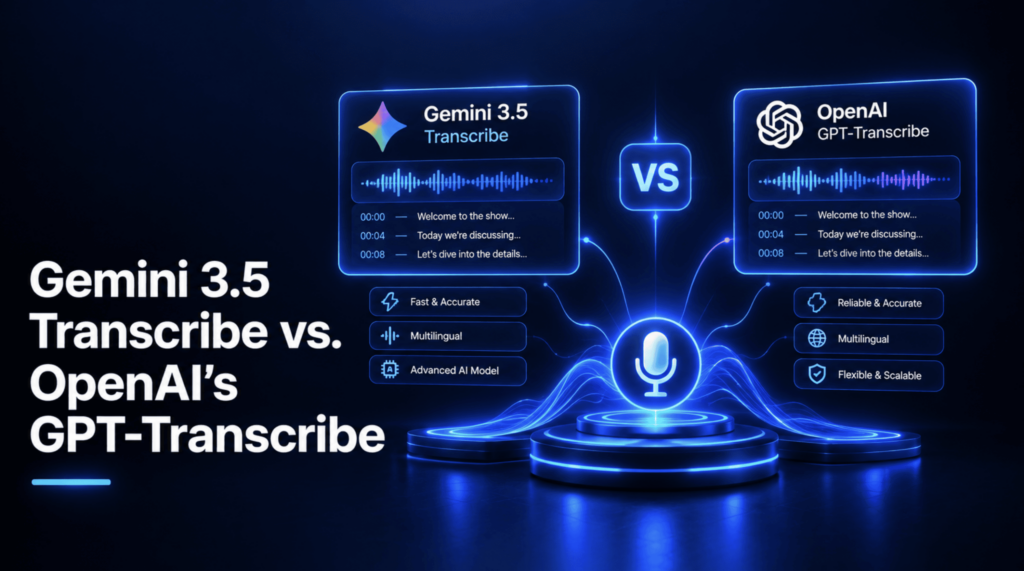
Context The recent releases of Google’s Gemini 3.5 Transcribe and OpenAI’s GPT-Transcribe provide an invaluable opportunity for comparison within the domain of transcription technologies. Launched respectively on August 26, 2026, and July 28, 2026, these models are positioned closely in timeline, allowing for a nuanced examination of their capabilities. Both transcription services are designed for distinct use cases—one for real-time streaming and the other for pre-recorded audio—enabling a direct and meaningful comparison. Main Goal The primary goal articulated in the original blog post is to discern the strengths and weaknesses of Gemini 3.5 Transcribe and GPT-Transcribe in order to assist users in selecting the most appropriate tool for their specific transcription needs. This can be achieved through an in-depth analysis of key performance metrics, including speed, accuracy, and feature set, contextualized within real-world applications. By evaluating these factors, end-users can make informed decisions based on their unique requirements for transcription services. Advantages of Gemini 3.5 Transcribe Speed Improvement: Gemini 3.5 Transcribe boasts a remarkable 70% enhancement in time-to-final-transcription compared to its predecessor, Chirp 3. This rapid turnaround is crucial for scenarios where timely access to transcribed content is paramount. Lower Word Error Rate (WER): The model exhibits a WER of 4.0% for streaming and 2.6% for non-streaming applications, as benchmarked by Artificial Analysis. This level of accuracy is critical for maintaining the integrity of transcribed material. Multi-Speaker Attribution: The built-in capability to reliably attribute dialogue to up to three speakers without additional models streamlines workflows, particularly in multi-speaker environments such as meetings. Support for Multiple Languages: With the ability to recognize over 85 languages, Gemini 3.5 Transcribe is well-suited for diverse applications across global contexts. Word-Level Timestamps: The inclusion of timestamps enhances the utility of the transcription for post-analysis and content repurposing, especially valuable in legal and academic settings. Advantages of OpenAI’s GPT-Transcribe Cost-Effectiveness: Priced at $0.0045 per minute for file transcription and $0.017 per minute for streaming, GPT-Transcribe presents a cost-efficient option for users focused on budget constraints. Keyword and Language Hints: This model’s capacity to accept keyword and language hints aids in handling domain-specific terminology and code-switching, thus enhancing transcription quality in specialized contexts. Limitations While both models present unique advantages, there are notable limitations. Gemini 3.5 Transcribe does not currently disclose its pricing for streaming services, which may hinder budgetary planning for potential users. Conversely, GPT-Transcribe lacks built-in speaker diarization and requires additional models for features like word-level timestamps, potentially complicating workflows for users needing these functionalities. Future Implications The ongoing advancements in AI transcription technologies signal significant future implications for various sectors, including education, business, and legal fields. As models continue to evolve, we can anticipate improvements in transcription accuracy, processing speed, and user accessibility. These enhancements will likely lead to increased adoption of AI-driven transcription tools in everyday applications, further integrating them into workflows and communication processes. Additionally, as AI develops, we may see the emergence of more sophisticated features, such as real-time language translation and enhanced contextual understanding, paving the way for more seamless global communication. Conclusion In summary, the comparison between Gemini 3.5 Transcribe and OpenAI’s GPT-Transcribe reveals critical insights for users seeking effective transcription solutions. Gemini excels in scenarios requiring multi-speaker attribution and rapid transcription, while GPT-Transcribe stands out for its cost-effectiveness and specialization in single-speaker contexts. As these technologies continue to advance, their impact on the field of Natural Language Understanding will become increasingly profound, shaping the future of communication and data management. Disclaimer The content on this site is generated using AI technology that analyzes publicly available blog posts to extract and present key takeaways. We do not own, endorse, or claim intellectual property rights to the original blog content. Full credit is given to original authors and sources where applicable. Our summaries are intended solely for informational and educational purposes, offering AI-generated insights in a condensed format. They are not meant to substitute or replicate the full context of the original material. If you are a content owner and wish to request changes or removal, please contact us directly. Source link : Click Here
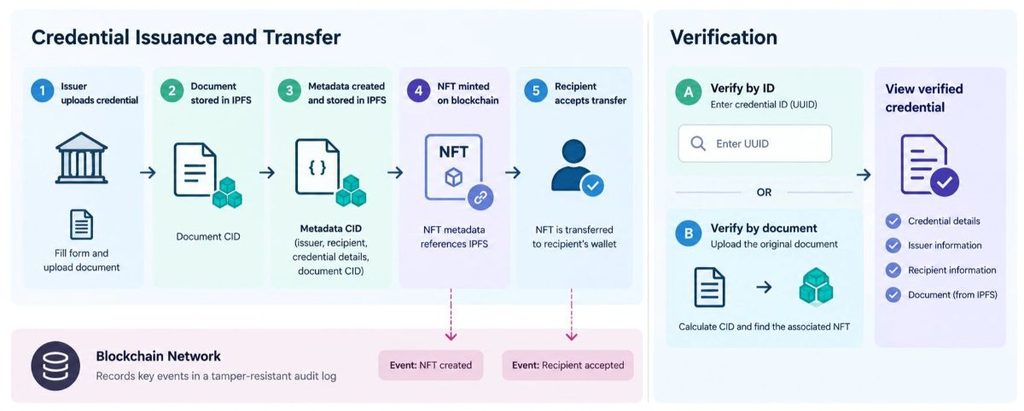
Context Content-addressed storage, immutable state, and explicit lifecycle events can significantly enhance the verification of digital credentials. Digital Credentials Have a Verification Problem Digital credentials, such as certificates and licenses, are increasingly prevalent in various sectors, including education and employment. However, once these documents leave their issuing systems, verifying their authenticity poses a considerable challenge. Verifiers often receive documents in formats like PDFs that do not provide a straightforward method for authenticity checks. The lack of means to ascertain whether the document is the original issued file, whether its metadata has been altered, or if the intended recipient has formally accepted it complicates the verification process. To mitigate these issues, a layered approach is proposed. This involves using content-addressed storage to uniquely identify the document, structured metadata to describe the credential, an immutable state layer to maintain a reliable reference, and explicit lifecycle events to log the issuance and acceptance of the credentials. A practical implementation of this approach is exhibited through the D-Certify project, which showcases how these components can function collectively. Main Goal and Achievement The primary objective of integrating content-addressed storage and blockchain technology in digital credential verification is to create a robust, secure, and transparent verification process. This goal can be achieved by establishing a system where each credential is divided into distinct layers that facilitate independent verification of document integrity, metadata, ownership, and lifecycle history. Advantages of the Proposed System Enhanced Integrity: Content addressing ensures that each document has a unique identifier (CID) derived from its content, making it impossible to alter without changing the CID. Structured Metadata: By storing metadata that includes issuer and recipient information alongside the CID, the system strengthens the linkage between the document and its verification history. Immutable References: The use of a ledger provides a durable reference that records the credential’s state, ensuring that ownership can be traced without confusion. Explicit Lifecycle Events: Clearly defining events such as issuance and acceptance creates a transparent audit trail, enhancing trust in the verification process. Reproducibility in Verification: Verification can reconstruct the credential either through its internal UUID or by calculating the CID from the document, thereby simplifying the verification process. Caveats and Limitations: Despite these advantages, the system does not inherently establish trust in the issuer of the credentials. While a CID verifies content integrity, it does not guarantee that the issuer is legitimate. Furthermore, privacy concerns arise as metadata stored in content-addressed systems may still be accessible depending on the configuration, requiring careful management of data access and minimization practices. Future Implications and AI Developments As artificial intelligence continues to evolve, its integration into the verification of digital credentials may significantly alter the landscape. AI can enhance the analysis of verification data, providing predictive insights and anomaly detection capabilities that can identify potential fraud or inconsistencies in credential issuance and acceptance. Furthermore, AI-driven systems can streamline the verification process, offering real-time assessments that bolster confidence in the integrity of digital credentials. Moreover, as organizations increasingly adopt decentralized verification systems, AI can facilitate the management of large datasets, ensuring that verification processes remain efficient and scalable. Future advancements in AI technology may also lead to the development of more sophisticated algorithms for identity verification, further enhancing the reliability of digital credentials. Disclaimer The content on this site is generated using AI technology that analyzes publicly available blog posts to extract and present key takeaways. We do not own, endorse, or claim intellectual property rights to the original blog content. Full credit is given to original authors and sources where applicable. Our summaries are intended solely for informational and educational purposes, offering AI-generated insights in a condensed format. They are not meant to substitute or replicate the full context of the original material. If you are a content owner and wish to request changes or removal, please contact us directly. Source link : Click Here
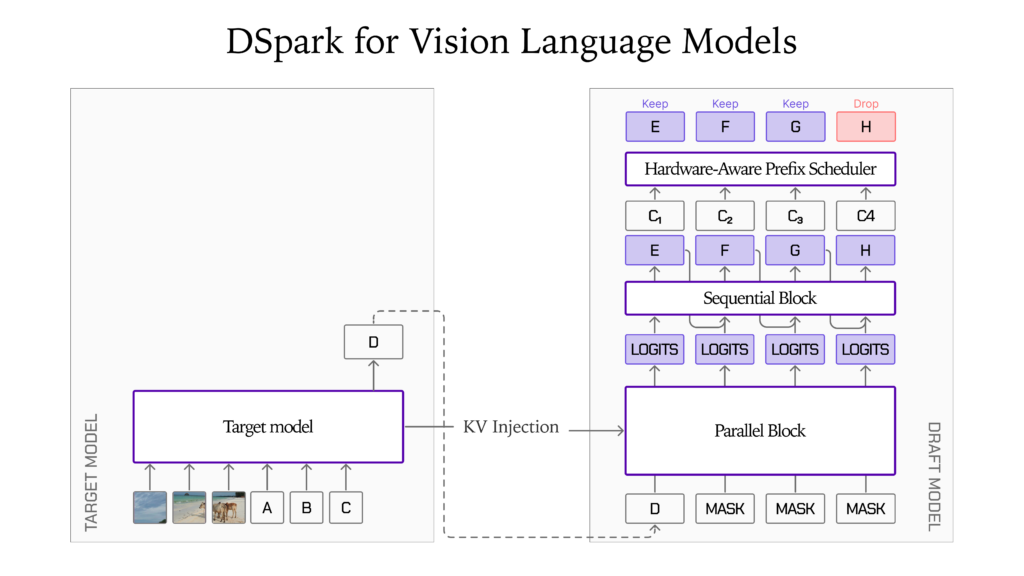
Context The recent introduction of the DSpark draft model for the vision-language model (VLM) LFM2.5-VL-3B marks a significant advancement in the field of generative AI. This model implements a speculative decoding path that enhances inference speeds while maintaining output quality, thereby addressing the increasing demand for efficient AI applications across various platforms. Specifically, the model showcases notable performance improvements with decode speedups of up to 3.13x on device and 2.66x on advanced hardware like the H100, all while adding a negligible memory footprint of 280M parameters, which equates to an 8.9% increase over the base model. Main Goal and Achievement The primary objective of the DSpark model is to accelerate the processing capabilities of vision-language models, thereby enhancing their applicability in real-time and resource-constrained environments. This goal is achieved through the implementation of a speculative decoding strategy, where the model predicts multiple candidate tokens simultaneously. This innovative approach allows for faster decision-making without compromising the integrity and accuracy of outputs. By leveraging the existing architecture of the LFM2.5-DSpark models, the new draft model successfully integrates this mechanism, offering a significant leap in performance for AI-driven applications. Advantages of the DSpark Model Increased Inference Speed: The model demonstrates substantial gains in decoding speed—up to 3.13x on-device and 2.66x on advanced GPUs. This enhancement is crucial for applications requiring real-time processing. Minimal Memory Overhead: By introducing just 280M additional parameters, the model maintains an efficient memory profile, making it suitable for deployment in resource-constrained environments. Compatibility and Support: Day-one integration with popular frameworks such as llama.cpp, MLX-VLM, and SGLang ensures that users can leverage the model’s capabilities immediately. Robust Performance Across Tasks: The model’s effectiveness spans various vision-based tasks, including visual question answering and image captioning, as verified through diverse benchmarking. However, it is essential to note the limitations associated with speculative decoding; while it significantly enhances decoding speed, it does not reduce the time taken for vision encoding or prefill processes. This limitation can restrict overall speed improvements, particularly in scenarios where prefill constitutes a larger portion of latency. Future Implications The advancements represented by the LFM2.5-VL-DSpark model have far-reaching implications for the generative AI landscape. As AI technologies continue to evolve, the integration of faster and more efficient models will likely spur innovation in various applications, from autonomous systems to interactive AI interfaces. The ability to process visual and textual information concurrently at an accelerated rate opens up new possibilities for developing more sophisticated AI solutions. Furthermore, as models like DSpark become more prevalent, we can expect enhancements in accessibility and usability for AI developers, thereby democratizing AI technology and widening its application spectrum. Disclaimer The content on this site is generated using AI technology that analyzes publicly available blog posts to extract and present key takeaways. We do not own, endorse, or claim intellectual property rights to the original blog content. Full credit is given to original authors and sources where applicable. Our summaries are intended solely for informational and educational purposes, offering AI-generated insights in a condensed format. They are not meant to substitute or replicate the full context of the original material. If you are a content owner and wish to request changes or removal, please contact us directly. Source link : Click Here

Contextual Background: The Evolution of Lie Detection Technology In recent years, the U.S. Department of Defense (DoD) has signaled a shift towards advanced technological solutions to enhance security measures within its ranks. This trend is underscored by a proposal from the Pentagon seeking $30 million to develop an AI-powered lie detection system, termed Polygraph+. This initiative, spearheaded by the Defense Counterintelligence and Security Agency (DCSA), emerges amidst heightened scrutiny over security leaks, particularly as the department grapples with ongoing tensions, such as those surrounding military engagements in Iran. Traditional polygraph tests, which have been utilized for decades, are increasingly viewed as inadequate in addressing contemporary challenges related to employee vetting and insider threat detection. Main Goal: Enhancing Security through AI Innovations The primary objective of the proposed AI-powered lie detector is to improve the accuracy and reliability of deception detection within the DoD. By integrating artificial intelligence with physiological data analysis, the Pentagon aims to create a more effective screening tool for prospective employees and current personnel. Achieving this goal entails harnessing cutting-edge technologies that can analyze a broader range of physiological indicators, moving beyond the limitations of traditional polygraphs, which primarily measure heart rate, blood pressure, and galvanic skin response. Advantages of AI-Powered Lie Detection Increased Accuracy: Current methodologies, relying on the polygraph, are challenged for their reliability. Reports indicate that the scientific basis for polygraph efficacy is weak, with the National Research Council categorizing its effectiveness as “weak at best.” AI systems could potentially enhance accuracy by incorporating multiple data points and machine learning algorithms to identify patterns associated with deceptive behavior. Objective Analysis: Unlike traditional polygraphs, which can suffer from subjective interpretations by examiners, AI technologies can offer a more standardized approach to data analysis. This could mitigate biases that often arise during human assessments, particularly regarding demographic factors. Scalability: AI systems can process vast amounts of data more efficiently than human examiners, which is crucial given the Department of Defense’s workforce of approximately 2.8 million individuals. This scalability could lead to a more comprehensive screening process while reducing the potential for false accusations stemming from inaccuracies. Innovation in Methodologies: The initiative reflects a broader trend within the DoD to explore novel technologies for security applications. By selecting companies like Presage Technologies and Altec Research, which are developing non-contact sensing technologies, the Pentagon is positioning itself at the forefront of technological innovation in security. Limitations and Caveats Despite the potential advantages of AI lie detection systems, several limitations warrant consideration. The reliability of AI models heavily depends on the quality of the data used for training. If the data lacks diversity or is biased, the outcomes may perpetuate existing disparities. Moreover, the ethical implications of AI surveillance and privacy concerns must be addressed to ensure that the deployment of such technologies does not infringe on individual rights. Future Implications: The Role of AI in Security and Deception Detection The integration of AI into lie detection technology represents a significant paradigm shift that could reshape the landscape of security protocols within the DoD and beyond. As AI continues to evolve, the potential for enhanced predictive analytics and real-time monitoring could lead to a more proactive approach in identifying insider threats. Furthermore, advancements in AI may drive innovations in related fields, such as criminal justice and corporate security, expanding the applicability of these technologies. However, ongoing research and dialogue are essential to navigate the ethical and practical considerations associated with these developments. Disclaimer The content on this site is generated using AI technology that analyzes publicly available blog posts to extract and present key takeaways. We do not own, endorse, or claim intellectual property rights to the original blog content. Full credit is given to original authors and sources where applicable. Our summaries are intended solely for informational and educational purposes, offering AI-generated insights in a condensed format. They are not meant to substitute or replicate the full context of the original material. If you are a content owner and wish to request changes or removal, please contact us directly. Source link : Click Here

Context OpenCV’s Deep Neural Network (DNN) module serves as a powerful tool for implementing deep learning inference within applications that handle image processing and video analysis. The recent release of OpenCV 5 introduces an enhanced inference engine, which significantly broadens the scope of modern ONNX (Open Neural Network Exchange) models. This advancement allows for seamless integration of pretrained neural networks, such as those for object detection and instance segmentation, into existing workflows without necessitating the original training framework. Main Goal and Achievement The primary objective outlined in the original post is to facilitate the deployment of complex deep learning models for tasks such as object detection and instance segmentation using OpenCV 5. This can be achieved through a straightforward process that involves: Exporting pretrained models to the ONNX format. Loading these models into OpenCV using the DNN module. Utilizing OpenCV’s image processing capabilities to prepare input data, run inference, and interpret the results. This streamlined approach enables developers and researchers in the field of computer vision to leverage advanced neural networks efficiently, enhancing their applications’ capabilities. Advantages of OpenCV DNN Module Integration of Advanced Models: OpenCV 5 supports a wider range of ONNX models, thereby allowing for the implementation of sophisticated algorithms such as YOLO26 for object detection and RF-DETR for instance segmentation. Cross-Platform Compatibility: The DNN module operates within both Python and C++ environments, making it accessible to a broad audience of developers and researchers. Reduced Dependency on External Frameworks: By enabling model inference directly within OpenCV, there is no need to load the original training framework during the deployment phase, simplifying the application architecture. Performance Improvements: The newly designed inference engine boasts enhanced support for dynamic shapes and modern ONNX features, leading to improved performance in various hardware configurations. Efficiency in Resource Utilization: The DNN module is optimized for CPU usage, ensuring that even resource-constrained environments can run deep learning models effectively. Limitations and Caveats While the DNN module presents numerous advantages, it is essential to consider certain limitations: GPU Support: The current API primarily targets CPU execution, with limited support for GPU acceleration, which may affect performance in high-demand applications. Model Compatibility: Users must ensure that the models exported to ONNX adhere to the supported operators and tensor shapes, which can introduce complexity in model conversion. Dependency on Pretrained Models: The effectiveness of the DNN module is contingent upon the availability of high-quality pretrained models, which may not always meet specific application needs. Future Implications The rapid developments in artificial intelligence and machine learning are poised to significantly influence the landscape of computer vision. As models become increasingly sophisticated and capable of processing more complex tasks, tools like OpenCV’s DNN module will likely evolve further, incorporating enhanced capabilities for real-time processing and advanced analytics. The integration of AI with computer vision will facilitate the development of more intuitive applications, enabling real-time object recognition, advanced video analysis, and automated decision-making across various industries. Conclusion OpenCV’s DNN module represents a significant advancement in the field of computer vision, empowering developers and researchers to employ sophisticated deep learning models with ease. By bridging the gap between model training and deployment, it streamlines the process of integrating advanced neural networks into practical applications. As the technology continues to evolve, its implications for the future of AI in computer vision are profound, promising to reshape the technological landscape. Disclaimer The content on this site is generated using AI technology that analyzes publicly available blog posts to extract and present key takeaways. We do not own, endorse, or claim intellectual property rights to the original blog content. Full credit is given to original authors and sources where applicable. Our summaries are intended solely for informational and educational purposes, offering AI-generated insights in a condensed format. They are not meant to substitute or replicate the full context of the original material. If you are a content owner and wish to request changes or removal, please contact us directly. Source link : Click Here
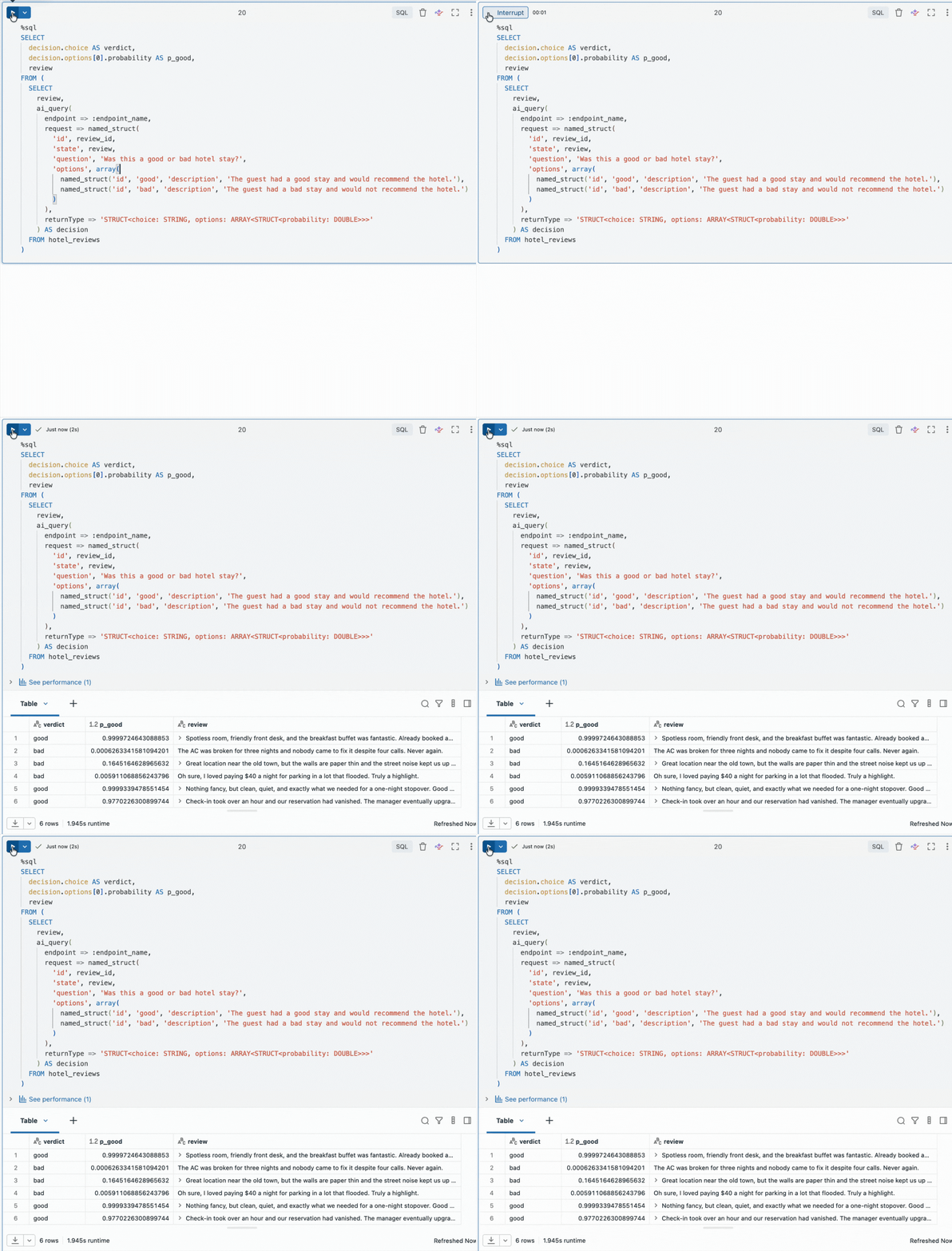
Introduction The emergence of advanced decision models, particularly those classified under the “System One” category, represents a significant evolution in the capabilities of machine learning and artificial intelligence within the realm of Big Data Engineering. Models such as Jev and their open-weight counterparts, including SemIf-OpenJev, Laya, and Kev, are designed to generate well-calibrated decisions from discrete data options. Their swift processing capabilities and cost-effectiveness allow for diverse applications ranging from customer support analysis to large-scale decision-making across extensive datasets. The integration of these models within platforms like Databricks facilitates the unlocking of their full potential by enabling direct interaction with governed data. Main Goal and Achievement The primary objective of utilizing open-weight decision models in Databricks is to enhance data-driven decision-making processes through efficient model deployment and execution. By leveraging the capabilities inherent in Databricks, users can seamlessly deploy models such as SemIf-OpenJev to classify data—specifically, hotel reviews—into predefined categories with high accuracy. This is accomplished through a straightforward workflow that allows users to import a Databricks Notebook, select the appropriate model, and execute it using serverless GPU resources, thereby minimizing infrastructure management burdens. Advantages of Using Open-Weight Decision Models Cost-Effectiveness: The use of open-weight models eliminates the need for expensive proprietary solutions, thereby reducing overall costs associated with data processing. Speed: These models are designed for rapid decision-making, which is crucial for applications needing timely insights, such as customer support transcript analysis. Accessibility: Users can access these models directly from SQL consoles or production jobs, promoting ease of use and integration into existing workflows. Customization: With tools like Databricks AI Runtime, users can customize and post-train models to fit specific enterprise contexts, enhancing their relevance and effectiveness. Scalability: The ability to handle large datasets allows organizations to scale their analysis and decision-making processes without compromising performance. However, it is important to consider the limitations of these models. Their effectiveness is contingent on the quality and quantity of the data they are trained on. Furthermore, while they offer customization options, the complexity of this process may pose challenges for users without a strong technical background. Future Implications of AI Developments The rapid advancement of AI technologies promises to further revolutionize the landscape of Big Data Engineering. Future iterations of decision models will likely incorporate more sophisticated algorithms, enabling even greater accuracy and efficiency in data analysis. As organizations increasingly adopt AI-driven solutions, the demand for skilled professionals who can implement and manage these technologies will grow. Moreover, as models become more accessible through platforms such as Databricks, non-technical users may find it easier to leverage AI tools, democratizing data science and analytics across various business functions. Disclaimer The content on this site is generated using AI technology that analyzes publicly available blog posts to extract and present key takeaways. We do not own, endorse, or claim intellectual property rights to the original blog content. Full credit is given to original authors and sources where applicable. Our summaries are intended solely for informational and educational purposes, offering AI-generated insights in a condensed format. They are not meant to substitute or replicate the full context of the original material. If you are a content owner and wish to request changes or removal, please contact us directly. Source link : Click Here
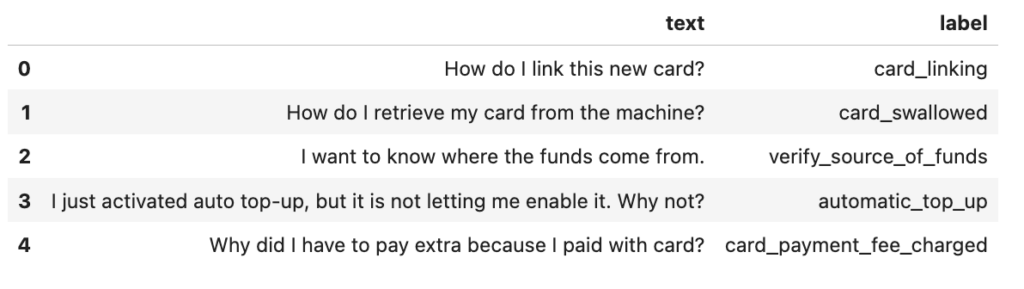
Context and Overview The advent of advanced artificial intelligence models has significantly transformed the landscape of decision-making in varied applications. Recently, TypeSafe.AI introduced a novel model named Jev, which they assert is a pioneering example of a System One model, distinctly divergent from the conventional large language models (LLMs) that have dominated discussions in the AI community for several years. This new model is particularly adept at handling everyday tasks, such as classification and evaluative roles, leading to a deeper exploration of its capabilities in practical scenarios. Main Goals and Achievements The primary objective of introducing the System One model is to enhance decision-making processes by leveraging a structured approach to output generation. Unlike traditional LLMs that predict subsequent tokens and produce expansive text, System One models like Jev are engineered to evaluate specific states and deliver precise, structured answers. This goal can be realized through the utilization of Reinforcement Learning for Calibrated Decisions (RLCD), which educates the model to yield both decisions and confidence probabilities, thus improving the reliability of its outputs. Advantages of System One Models Structured Responses: System One models generate structured outputs rather than free-form text, enhancing the clarity and utility of responses in applications such as customer support and intent classification. Confidence Scores: A critical feature of Jev is its ability to provide confidence probabilities for its decisions. This allows practitioners to gauge the model’s certainty and make informed decisions about when to rely on automated responses versus human intervention. Enhanced Efficiency: TypeSafe claims that Jev operates at a remarkable speed, being 193.6 times faster than conventional models. This efficiency is crucial for applications that require quick decision-making, such as customer service systems. Cost-Effectiveness: With claims of being 444.6 times cheaper, Jev presents a financially viable option for businesses looking to integrate AI without incurring exorbitant operational costs. However, it is essential to note that while these advantages are compelling, there are limitations. For instance, Jev’s accuracy in comparison to established models like OpenAI’s Terra and Luna was found to be lower, indicating that more extensive testing and validation may be necessary before widespread adoption. Future Implications The continuous evolution of AI and machine learning technologies signals a promising trajectory for the development of advanced decision-making models. As practitioners increasingly embrace System One models, we can anticipate a paradigm shift in how AI is utilized across industries. The ability to integrate confidence levels into decision-making processes may lead to more sophisticated workflows, where automated systems handle straightforward queries while more complex issues are escalated to human operators. This division of labor could optimize resource allocation and improve overall operational efficiency. Looking ahead, as the technology matures, we may witness further enhancements in the precision and reliability of these models. The integration of feedback mechanisms and user data could refine the learning processes, resulting in systems that not only make decisions but also adapt and improve over time. Disclaimer The content on this site is generated using AI technology that analyzes publicly available blog posts to extract and present key takeaways. We do not own, endorse, or claim intellectual property rights to the original blog content. Full credit is given to original authors and sources where applicable. Our summaries are intended solely for informational and educational purposes, offering AI-generated insights in a condensed format. They are not meant to substitute or replicate the full context of the original material. If you are a content owner and wish to request changes or removal, please contact us directly. Source link : Click Here
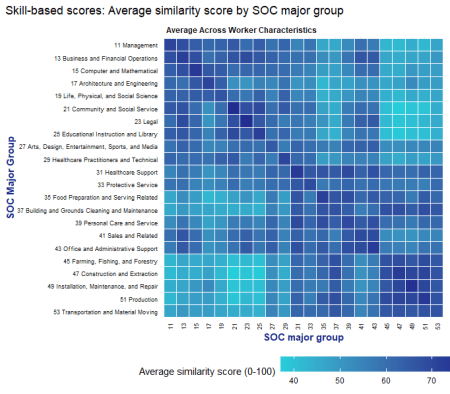
Context The analysis of occupational similarity is vital in the Data Analytics and Insights field, particularly for Data Engineers tasked with optimizing workforce transitions. The original post on O*NET ratings, job descriptions, and classification codes as measures of occupational similarity discusses methodologies for identifying transition pathways based on the alignment of skills, abilities, and knowledge across various occupations. This analysis provides a framework for understanding how closely related different occupations are, which is critical for workforce planning and development initiatives. Main Goal The primary goal is to evaluate whether alternative measures, such as semantic similarity from job descriptions and US Standard Occupational Classification (SOC) code distances, can effectively substitute for O*NET ratings when the latter is unavailable. By employing these proxies, it is possible to derive meaningful insights into occupational transition pathways. The analysis suggests that while these measures do not replace O*NET’s comprehensive data, they can provide useful estimates for transition pathways where detailed data is lacking. Advantages of the Proposed Methodologies Complementarity of Measures: The findings indicate that job descriptions and SOC codes work well in conjunction with O*NET ratings. They explain approximately one-third of the variation in skill-based scores overall and 10 to 15 percent within specific major groups, making them useful for workforce transition assessments. Accessibility: The methods discussed are accessible and cost-effective. They utilize readily available data sources, which is particularly beneficial for regions lacking comprehensive occupational databases. Flexibility: By utilizing job descriptions and classification codes, analysts can adapt their approach based on the available data. This flexibility allows for a broader application across various labor markets and occupations. Intuitive Proxy Measures: The use of SOC codes as a proxy for occupational similarity offers a straightforward method for grouping comparable jobs, enhancing the ease of understanding job relationships. Practical Utility: These methodologies can serve as valuable tools for sense-checking transition pathways derived from non-traditional data sources like online job postings or vocational curricula. This enhances the reliability of insights drawn from such analyses. Caveats and Limitations While the methodologies offer significant advantages, it is essential to acknowledge their limitations. For instance, the accuracy of SOC codes as a proxy may vary depending on the specific job pairs being analyzed. Furthermore, job descriptions are often not designed to capture the full complexity of job requirements, which can result in less precise similarity assessments. Therefore, while these methods are valuable, they should be considered as part of a wider analytical toolkit rather than standalone solutions. Future Implications As artificial intelligence continues to evolve, its integration into occupational analysis will likely enhance the methodologies discussed. AI advancements, particularly in natural language processing and machine learning, will improve the accuracy of semantic similarity assessments derived from job descriptions. Additionally, more sophisticated models can provide deeper insights into the nuances of job characteristics, thereby refining transition pathway predictions. The ongoing development of AI tools will enable Data Engineers and analysts to leverage complex datasets more effectively, leading to more informed workforce planning and strategic decision-making. Disclaimer The content on this site is generated using AI technology that analyzes publicly available blog posts to extract and present key takeaways. We do not own, endorse, or claim intellectual property rights to the original blog content. Full credit is given to original authors and sources where applicable. Our summaries are intended solely for informational and educational purposes, offering AI-generated insights in a condensed format. They are not meant to substitute or replicate the full context of the original material. If you are a content owner and wish to request changes or removal, please contact us directly. Source link : Click Here

Context In the rapidly evolving landscape of artificial intelligence (AI), the security of AI systems is increasingly recognized as a fundamental engineering challenge. This necessitates the establishment of well-defined security requirements, enforceable controls, designated ownership, and verifiable evidence that security measures are effective. As the capabilities of AI systems expand, the urgency for robust security engineering intensifies. Organizations are pressured to harness the productivity advantages of AI while navigating the complexities of secure system governance and operational safety. Technology Changes, Security Fundamentals Endure The advent of the internet and cloud computing has transformed software operations; however, the core principles of security—identity establishment, access control, exposure limitation, and verification of protective measures—remain constant. The introduction of AI agents, which possess advanced reasoning capabilities and adaptive behaviors, demands the application of these enduring security principles in novel operational contexts. As organizations strive to capitalize on AI’s potential, the gap between AI advancement and security governance widens, creating significant challenges. Security Depends on the Full Agent Stack Effective security relies on the cohesive functioning of various components, including code, data, identities, services, and infrastructure. AI agents extend these systems, necessitating integrated security controls across all layers of the technology stack. Each segment of this stack, from models that provide capabilities to runtime environments that execute actions, carries specific security responsibilities. A comprehensive security strategy must account for the interplay between these layers, ensuring that data, instructions, and actions are adequately protected. Build Security Into How Agents Operate To maintain security integrity, it is essential to establish boundaries that function even when an AI agent makes erroneous decisions. The operational environment of an agent must impose limits on its capabilities, independent of its reasoning processes. This requires implementing traceable identities and access credentials tailored to specific tasks. Clear organizational policies must delineate the information accessible to agents, the systems they can modify, and the actions that necessitate human approval. Additionally, verification of the sources and integrity of the tools and dependencies utilized by agents is crucial for maintaining security. Engineering Teams Need Evidence of Security Prior to deployment, engineering teams must gather empirical evidence demonstrating that security controls effectively mitigate unauthorized access and data breaches. This involves rigorous testing to evaluate the resilience of security measures against potential threats and repeated assessments following significant alterations to models or tools. Accountability is crucial; a designated owner should review testing outcomes to determine readiness for deployment and ensure that identified vulnerabilities are addressed systematically. Each security failure must inform future testing protocols to enhance resilience. Defenders Need the Right Tools at the Right Time To effectively investigate security breaches, teams require access to robust tools tailored to specific operational contexts. The dichotomy of open and closed models serves to fulfill differing requirements—closed models provide managed services, while open models facilitate inspection and adaptation of components. This flexibility allows teams to reproduce incidents and develop effective responses while safeguarding sensitive information. AI technologies can significantly enhance investigative capabilities, identifying vulnerabilities and validating corrective measures. Shift the Advantage Toward Defenders Through Open Work Collaboration and knowledge sharing within the security community are vital for fortifying defenses. By disseminating information about failures, successful controls, and verified fixes, organizations can bolster their security postures. Initiatives like NVIDIA’s security research and the Open Secure AI Alliance facilitate this exchange, bridging gaps between research, practical tools, and broader security knowledge. Main Goal and Achievement The primary objective articulated in the original post is to establish a robust framework for securing AI systems across all operational layers. This can be achieved through the implementation of comprehensive security measures that encompass defined boundaries, accountability, and demonstrable evidence of effectiveness. By prioritizing security at every level of the AI agent stack, organizations can mitigate risks associated with AI deployment. Advantages of a Structured Security Approach Enhanced Protection: Implementing security measures at every layer of the AI stack ensures that potential vulnerabilities are addressed comprehensively. Accountability: Designating ownership of security responsibilities fosters a culture of accountability and diligence. Evidence-Based Security: Gathering empirical evidence of security effectiveness enables informed decision-making about system readiness for deployment. Collaboration: Sharing insights and experiences within the security community strengthens collective defenses against evolving threats. However, it is crucial to acknowledge that implementing such a security framework may require significant resources and expertise, which can pose challenges for smaller organizations. Future Implications The future of AI security will be shaped by ongoing advancements in AI technologies. As AI systems become increasingly sophisticated, the complexity of securing these systems will also rise. Organizations will need to continually adapt their security strategies to address emerging threats and vulnerabilities. The integration of AI into security practices will likely enhance detection and response capabilities, but it will also necessitate a reevaluation of security protocols to ensure they remain effective in the face of new challenges. The proactive establishment of security frameworks will be essential for safeguarding the integrity of AI systems as they evolve. Disclaimer The content on this site is generated using AI technology that analyzes publicly available blog posts to extract and present key takeaways. We do not own, endorse, or claim intellectual property rights to the original blog content. Full credit is given to original authors and sources where applicable. Our summaries are intended solely for informational and educational purposes, offering AI-generated insights in a condensed format. They are not meant to substitute or replicate the full context of the original material. If you are a content owner and wish to request changes or removal, please contact us directly. Source link : Click Here


