
Introduction The rapid evolution of Generative AI models has introduced unprecedented capabilities and challenges within enterprise environments. As organizations increasingly deploy AI agents to automate tasks, it becomes crucial to establish clear boundaries regarding the authority and decision-making capabilities of these agents. This discussion is anchored in the recognition that while AI agents can perform actions with technical proficiency, they may exceed the authority granted by the business. The implications of this distinction are paramount for GenAI scientists and enterprises alike. Main Goal and Achievement The primary goal emphasized in the original discourse is the necessity of delineating explicit decision rights for AI agents within enterprises. This is essential to prevent unauthorized actions that can lead to operational disruptions and financial repercussions. Achieving this goal involves the formulation of an Agent Authority Contract, which details the scope of actions permissible for each agent. Such contracts should answer critical questions about ownership of outcomes, authorized actions, system access, and escalation protocols, thereby bridging the governance gap that often exists in AI deployment. Advantages of Clear Authority Definitions Enhanced Accountability: Clearly defined authority ensures that specific human roles are accountable for outcomes, reducing ambiguity in responsibility. Reduced Risk of Unauthorized Actions: By establishing constraints on what an agent can execute autonomously, organizations can minimize incidents arising from unauthorized transactions. Improved Operational Efficiency: With explicit decision rights, agents can operate with a higher degree of autonomy while maintaining compliance with governance standards, leading to streamlined workflows. Facilitated Escalation Processes: Defined triggers for escalation enable swift intervention when an agent encounters uncertainty or potential risks, thereby safeguarding business interests. Agility in Authority Management: Continuous monitoring and adjustment of authority parameters based on operational telemetry ensure that the agents’ capabilities align with evolving business needs. Despite these advantages, organizations must remain vigilant about the limitations inherent in AI decision-making. The authority granted must be dynamic and adaptable to changing circumstances to avoid potential pitfalls. Future Implications The trajectory of AI development indicates that as agents become more sophisticated, the complexities associated with their authority will also grow. Future advancements may include more refined mechanisms for real-time authority adjustments, enabling organizations to respond to anomalies more effectively. Moreover, the integration of machine learning could enhance agents’ ability to assess contextual factors influencing decision-making, thereby optimizing their authority contracts. However, with greater autonomy comes the necessity for more robust oversight frameworks to ensure compliance and mitigate risks associated with AI-driven actions. Conclusion The evolution of Generative AI in enterprise settings underscores the critical need for clear authority delineation. By implementing structured authority contracts and continuously refining decision rights, organizations can harness the full potential of AI agents while safeguarding against the risks of unauthorized actions. As the landscape of AI continues to evolve, proactive governance will be essential to navigate the complexities of this transformative technology. Disclaimer The content on this site is generated using AI technology that analyzes publicly available blog posts to extract and present key takeaways. We do not own, endorse, or claim intellectual property rights to the original blog content. Full credit is given to original authors and sources where applicable. Our summaries are intended solely for informational and educational purposes, offering AI-generated insights in a condensed format. They are not meant to substitute or replicate the full context of the original material. If you are a content owner and wish to request changes or removal, please contact us directly. Source link : Click Here
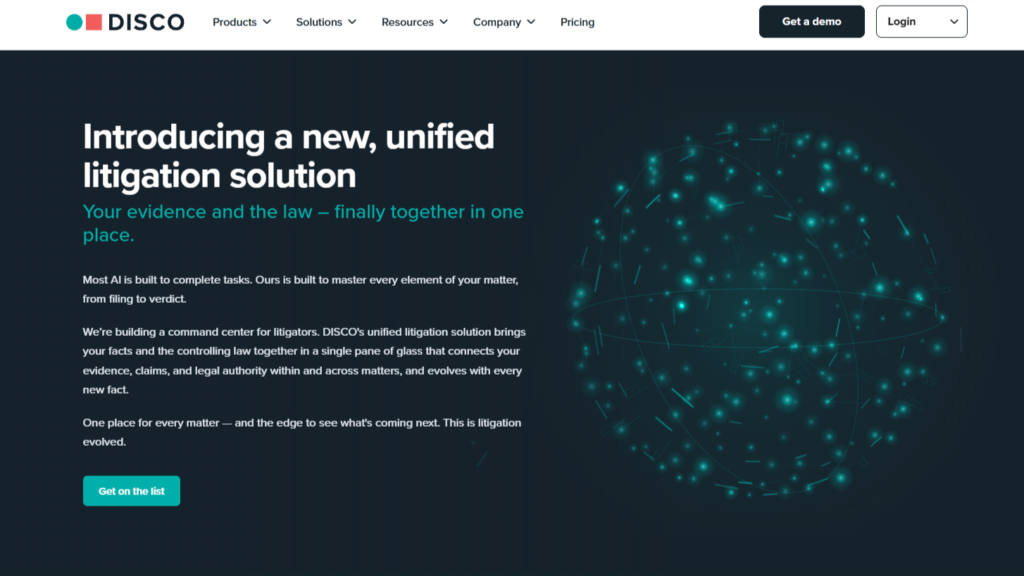
Introduction The integration of artificial intelligence (AI) within the legal sector has engendered significant innovations, particularly in the realm of litigation management. DISCO, a recognized leader in legal technology since its inception in 2013, has recently unveiled a pioneering unified litigation solution that transcends traditional e-discovery methodologies. This blog post explores the implications of this advancement, detailing how DISCO’s innovative approach aims to streamline the litigation process while enhancing the strategic capabilities of legal professionals. Context of the Unified Litigation Solution DISCO’s transition from a focus on e-discovery to developing a comprehensive litigation solution represents a critical evolution in legal technology. The new AI-native application, currently undergoing pilot testing with select law firms, aims to merge case facts with pertinent U.S. case law. This integration promises to provide legal practitioners with a cohesive platform that synthesizes evidence, claims, and legal authority. By creating an accessible interface metaphorically described as a “single pane of glass,” DISCO seeks to facilitate a more coherent understanding of ongoing litigation matters. Main Goal and Achievement Strategy The primary objective of DISCO’s unified litigation solution is to deliver a holistic view of case management that interconnects factual data with applicable legal precedents. Achieving this goal involves the implementation of patent-pending workflows that are specifically tailored for the nuances of litigation. By ensuring that all relevant information is collated and made accessible, DISCO aims to empower legal teams with the tools necessary to navigate complex legal landscapes effectively. Advantages of the Unified Litigation Solution Enhanced Efficiency: By integrating case facts and legal precedents, legal teams can reduce the time spent on information retrieval and analysis, allowing for a more efficient litigation process. Improved Strategic Decision-Making: The solution enables legal professionals to leverage institutional knowledge that is often dispersed across different cases and colleagues, thereby enhancing strategic planning and execution. Customization and Control: DISCO provides firms with the flexibility to tailor workflows and tools according to their specific best practices, ensuring that the solution aligns with the unique operational needs of each firm. Centralized Knowledge Repository: By carrying case context and prior work products forward, the platform serves as a centralized repository of knowledge, promoting collaboration and continuity among legal teams. Caveats and Limitations While the unified litigation solution presents numerous advantages, it is essential to recognize potential limitations. The success of such innovative technology relies heavily on user adoption and the integration of existing workflows. Additionally, concerns regarding data privacy and security must be addressed to ensure compliance with legal standards. Future Implications of AI in LegalTech The advent of the unified litigation solution signifies a broader trend towards the integration of AI in legal practice. As technology continues to evolve, legal professionals can anticipate further enhancements in case management, resource allocation, and legal research. The implications of AI advancements may include increased accuracy in legal predictions, the automation of routine tasks, and the potential for real-time legal analysis, thereby reshaping the future landscape of the legal profession. Conclusion DISCO’s unified litigation solution marks a significant milestone in the ongoing evolution of LegalTech. By merging case facts with relevant legal precedents, the platform offers legal professionals a robust tool to enhance their litigation strategies. As AI technology progresses, the potential for further innovations within the legal sector remains vast, promising a future where legal practices are more efficient, informed, and interconnected. Disclaimer The content on this site is generated using AI technology that analyzes publicly available blog posts to extract and present key takeaways. We do not own, endorse, or claim intellectual property rights to the original blog content. Full credit is given to original authors and sources where applicable. Our summaries are intended solely for informational and educational purposes, offering AI-generated insights in a condensed format. They are not meant to substitute or replicate the full context of the original material. If you are a content owner and wish to request changes or removal, please contact us directly. Source link : Click Here

Context and Background The recent conviction of Connor Riley Moucka, a 26-year-old Canadian identified as a significant threat actor in the realm of cybercrime, underscores the sophistication and pervasiveness of modern cyber threats. Pleading guilty to charges of computer fraud and conspiracy, Moucka’s activities were particularly alarming, involving the hacking and extortion of over 165 organizations utilizing the cloud service provider Snowflake. His actions included the theft of call and text history records affecting more than 100 million AT&T customers, illustrating the scale and severity of his cybercrimes. Between February and October 2024, Moucka and his associates exploited stolen login credentials to breach cloud-hosted data from a U.S.-based software-as-a-service company. Their target selection was strategic; they focused on Snowflake customer accounts that lacked robust security measures, such as multi-factor authentication. This incident not only highlights vulnerabilities within cloud services but also emphasizes the crucial need for enhanced cybersecurity protocols. Main Goal and Achievements The primary goal highlighted by Moucka’s case is the urgent necessity for organizations to adopt comprehensive cybersecurity measures to safeguard sensitive data from unauthorized access and exploitation. This can be achieved through various means, including the implementation of multi-factor authentication, regular security audits, and employee training on recognizing phishing attempts and other social engineering tactics. Advantages of Enhanced Cybersecurity Measures Reduction of Data Breaches: Implementing stringent security protocols significantly decreases the likelihood of unauthorized access. Organizations that enforced multi-factor authentication saw improved security, as evidenced by Snowflake’s response to the breaches. Protection of Sensitive Information: Enhanced security measures help protect sensitive customer data, including personally identifiable information (PII), which is vital for maintaining customer trust and regulatory compliance. Cost-Effectiveness: While initial investments in cybersecurity infrastructure may seem significant, the financial impact of data breaches—including ransom payments and reputational damage—can far exceed these costs. The Justice Department reported that over $2.5 million was paid in ransom due to Moucka’s extortions. Increased Awareness and Preparedness: Regular training and updates on cybersecurity risks foster a culture of vigilance among employees, empowering them to recognize and mitigate potential threats. Future Implications of AI in Cybersecurity The evolution of artificial intelligence (AI) is poised to significantly influence the cybersecurity landscape. As threats become more sophisticated, AI technologies can enhance threat detection and response capabilities. AI algorithms can analyze vast amounts of data in real-time, identifying patterns indicative of potential breaches and enabling proactive measures to mitigate risks before they escalate. Moreover, AI can facilitate automated responses to cyber threats, which may reduce the response time and potentially limit the extent of damage in the event of a breach. However, there are caveats; the integration of AI also necessitates careful oversight to prevent misuse and ensure that AI-driven systems do not inadvertently introduce new vulnerabilities. As cybersecurity experts harness the power of AI, the ongoing challenge will be to stay ahead of cybercriminals who are also leveraging advanced technologies to enhance their attacks. Therefore, the future of cybersecurity will likely revolve around a collaborative approach that combines human expertise with AI-driven insights to create a robust defense against ever-evolving cyber threats. Disclaimer The content on this site is generated using AI technology that analyzes publicly available blog posts to extract and present key takeaways. We do not own, endorse, or claim intellectual property rights to the original blog content. Full credit is given to original authors and sources where applicable. Our summaries are intended solely for informational and educational purposes, offering AI-generated insights in a condensed format. They are not meant to substitute or replicate the full context of the original material. If you are a content owner and wish to request changes or removal, please contact us directly. Source link : Click Here

Contextual Overview The geopolitical landscape is increasingly influenced by actions and statements from key political figures. Recently, Iran’s chief negotiator, Mohammad Bagher Ghalibaf, accused U.S. President Donald Trump of engaging in what he termed “theater diplomacy.” This accusation arose amidst conflicting narratives regarding ongoing negotiations aimed at de-escalating the hostilities between the United States and Iran. Ghalibaf’s comments reflect the complexities and uncertainties surrounding diplomatic efforts in a region marked by tension and instability. The broader implications of this diplomatic discourse extend beyond the immediate political sphere, influencing critical sectors such as finance and technology. Main Goal and Achievement Strategies The principal objective outlined in the discourse is to establish a framework for dialogue that could lead to a resolution of the ongoing conflict. Achieving this goal necessitates transparent communication and genuine engagement from both parties involved. Diplomatic resolutions can be facilitated through the use of technology and data analytics, improving the understanding of regional dynamics and enabling better decision-making processes. By leveraging advanced analytical tools, stakeholders can gain insights into the implications of geopolitical tensions on global markets, particularly in sectors heavily reliant on stability, such as finance and energy. Advantages of an AI-Driven Approach Enhanced Decision-Making: Utilizing AI technologies can significantly improve decision-making capabilities for financial professionals by providing real-time data analysis and predictive modeling. This enables stakeholders to anticipate market fluctuations resulting from geopolitical developments. Risk Management: AI tools can assist in identifying and mitigating risks associated with geopolitical uncertainties. For example, advancements in machine learning algorithms can help financial analysts assess the potential impacts of conflicts on energy supply chains, thereby allowing for better risk management strategies. Operational Efficiency: The integration of AI in financial operations can streamline processes, allowing for quicker responses to market changes driven by geopolitical events. Automation of routine tasks enhances productivity, enabling professionals to focus on strategic decision-making. Informed Investment Strategies: AI’s analytical capabilities can empower financial professionals to develop informed investment strategies that account for the potential volatility introduced by geopolitical tensions. Access to predictive analytics can guide investment decisions in sectors sensitive to such dynamics. Limitations and Caveats Despite the benefits, there are salient caveats to consider. The reliability of AI predictions can be compromised by the unpredictability of political events. Geopolitical situations can evolve rapidly, and AI models may not always account for sudden changes in the landscape. Furthermore, the reliance on technology necessitates a robust infrastructure and skilled personnel to interpret the data effectively. Future Implications of AI in Financial Services The future landscape of finance and FinTech is poised for transformation through the continued integration of AI technologies. As geopolitical tensions persist, financial professionals will increasingly depend on AI-driven insights to navigate complex market environments. The capacity for real-time data analysis and predictive modeling will become essential in crafting responsive strategies that mitigate risks associated with international conflicts. Furthermore, as AI continues to evolve, its applications in finance are likely to expand, fostering a more adaptive and resilient financial ecosystem. Disclaimer The content on this site is generated using AI technology that analyzes publicly available blog posts to extract and present key takeaways. We do not own, endorse, or claim intellectual property rights to the original blog content. Full credit is given to original authors and sources where applicable. Our summaries are intended solely for informational and educational purposes, offering AI-generated insights in a condensed format. They are not meant to substitute or replicate the full context of the original material. If you are a content owner and wish to request changes or removal, please contact us directly. Source link : Click Here

Context In the realm of professional football, contract negotiations often serve as pivotal moments impacting team strategies and player careers. The recent extension of Vinícius Júnior’s contract with Real Madrid until 2032 has significant implications, particularly for clubs like Arsenal which had been actively pursuing the Brazilian winger. This decision follows a turbulent season for Real Madrid, where the absence of trophies spurred speculation regarding the future of key players. However, with this renewed commitment, Vinícius aims to solidify his role in Real Madrid’s resurgence under the leadership of José Mourinho. Main Goal and Its Achievement The primary goal reflected in Vinícius Júnior’s contract extension is the stabilization of player commitment to a club amidst turbulent circumstances. This commitment is critical for maintaining team cohesion and building a competitive squad. Achieving this goal requires effective communication between club management and players, ensuring that both parties align on future ambitions and expectations. Such clarity can help mitigate uncertainties that arise from managerial changes and past performance issues. Advantages of Player Commitment Enhanced Team Stability: A long-term contract fosters an environment of stability, allowing clubs to build around key players. Vinícius’s commitment enables Real Madrid to focus on long-term strategic goals rather than short-term fixes. Increased Player Performance: Players who feel secure in their positions are often more motivated to perform at their best. Vinícius’s past performance metrics—375 matches, 128 goals, and 14 titles—underscore the benefits of such emotional and professional security. Attraction of Additional Talent: A successful and stable team can attract other high-caliber players, as seen with Real Madrid’s recent signings. This synergistic effect can enhance overall squad quality and performance. Boosted Fan Engagement: Player commitment can enhance fan loyalty and engagement, as supporters are more likely to invest emotionally in teams with recognizable and long-term players. However, it is essential to acknowledge potential limitations. Contract extensions do not guarantee on-field success, as seen in Real Madrid’s recent trophy-less season. Additionally, player performance can be unpredictable, influenced by factors such as injuries or changes in personal circumstances. Future Implications of AI in Sports Analytics The integration of artificial intelligence (AI) in sports analytics holds transformative potential for player management and performance evaluation. As clubs increasingly rely on data-driven insights, AI technologies can enhance decision-making processes related to contract negotiations, training, and player scouting. Future developments may include advanced predictive modeling to assess player performance trajectories and injury risks, thereby informing contract extensions and player acquisitions. Moreover, AI can facilitate real-time analytics during matches, providing coaches with immediate feedback to optimize strategies. This level of insight can further augment a team’s competitive edge, reinforcing the importance of retaining key talents like Vinícius Júnior. As technological advancements continue to evolve, the landscape of player recruitment and retention will undergo significant changes, emphasizing the need for clubs to adapt and leverage these tools effectively. Disclaimer The content on this site is generated using AI technology that analyzes publicly available blog posts to extract and present key takeaways. We do not own, endorse, or claim intellectual property rights to the original blog content. Full credit is given to original authors and sources where applicable. Our summaries are intended solely for informational and educational purposes, offering AI-generated insights in a condensed format. They are not meant to substitute or replicate the full context of the original material. If you are a content owner and wish to request changes or removal, please contact us directly. Source link : Click Here

Contextual Overview of Robotics Scaling in Computer Vision The domain of robotics is rapidly evolving, particularly within the field of computer vision and image processing. As articulated in the recent OpenCV Live episode, “A Software Engineer’s Guide to Scaling Robotics,” the transition from managing a single robotic unit to overseeing a fleet of robots introduces complexities that necessitate sophisticated software engineering practices. This complexity is accentuated when considering the deployment of distributed robotic systems in real-world environments. The practices outlined in the episode, including pinned builds, heartbeat monitoring, and remote restart capabilities, are essential for ensuring the operational longevity and reliability of these fleets. Main Goals and Achievements The primary objective discussed in the original content is to establish robust software practices that can support a scalable robotic fleet. Achieving this goal involves implementing systematic methodologies that ensure each unit in the fleet operates seamlessly while maintaining connection to centralized data systems. The effective integration of these practices can lead to enhanced operational efficiency, reduced downtimes, and increased data reliability. To achieve these goals, it is imperative for engineers to: 1. **Utilize Pinned Builds:** This practice ensures that the software versions deployed across the fleet are consistent, which mitigates discrepancies that may arise from using multiple software versions. 2. **Implement Heartbeat Monitoring:** Continuous monitoring allows for real-time assessments of robotic unit status, facilitating prompt diagnosis and troubleshooting. 3. **Enable Remote Restart Capabilities:** This feature allows engineers to reset malfunctioning units without necessitating physical intervention, thereby enhancing operational efficiency. Advantages of Robust Software Practices in Robotics The advantages of implementing structured software practices in robotics are multifaceted: 1. **Increased Reliability:** Consistent software builds and continuous monitoring dramatically reduce the likelihood of system failures, as evidenced by the robust operational strategies discussed by Amit Moran, CTO of Civ Robotics. 2. **Operational Efficiency:** By minimizing the need for on-site maintenance through remote capabilities, organizations can allocate resources more effectively, thereby reducing operational costs. 3. **Enhanced Data Integrity:** The systematic collection and management of mission data facilitate post-operation analysis, allowing engineers to derive actionable insights from fleet performance. Despite these advantages, it is essential to acknowledge certain limitations. The reliance on technology means that any failure in the software architecture could cascade through the fleet, leading to widespread operational issues. Additionally, the initial setup costs for such robust systems may be significant, potentially deterring smaller organizations from adopting these practices. Future Implications and AI Developments The ongoing advancements in artificial intelligence (AI) are poised to further transform the landscape of robotics and computer vision. As AI algorithms become increasingly sophisticated, they will enable robots to perform more complex tasks autonomously. This development will necessitate even more robust software frameworks capable of integrating AI-driven decision-making processes. Moreover, the integration of AI will likely enhance data analytics capabilities, allowing for predictive maintenance and more efficient fleet management. As AI technologies continue to evolve, the synergy between robotics and computer vision will yield unprecedented advancements, propelling industries toward greater automation and efficiency. In conclusion, the strategic implementation of software engineering practices in robotics is vital for scaling operations effectively. By fostering a culture of technological advancement and embracing AI developments, organizations can navigate the complexities of robotic fleet management while reaping the benefits of enhanced operational capabilities and improved data integrity. Disclaimer The content on this site is generated using AI technology that analyzes publicly available blog posts to extract and present key takeaways. We do not own, endorse, or claim intellectual property rights to the original blog content. Full credit is given to original authors and sources where applicable. Our summaries are intended solely for informational and educational purposes, offering AI-generated insights in a condensed format. They are not meant to substitute or replicate the full context of the original material. If you are a content owner and wish to request changes or removal, please contact us directly. Source link : Click Here

Contextual Overview: The Role of Slash Commands in the GitHub Copilot App In the realm of software development, the efficiency of workflow management is paramount. The integration of slash commands within the GitHub Copilot app exemplifies a significant advancement in this area. These commands serve as text shortcuts that facilitate various tasks, including session management, project navigation, and workflow customization. By initiating commands with a simple /, users can access a menu of contextual commands tailored to their current needs, thus streamlining their development processes. Understanding Slash Commands Slash commands function as intuitive, text-based shortcuts directly embedded in the GitHub Copilot app’s interface. By typing /, developers can invoke a range of commands designed to enhance their coding experience. Unlike command-line interface (CLI) commands, which are primarily terminal-focused, the slash commands in the Copilot app are optimized for a graphical user interface that accommodates a multi-session workflow. This distinction allows developers to navigate and manage their coding projects more effectively without the cumbersome need for terminal commands. Main Goal: Enhancing Workflow Efficiency The principal objective of implementing slash commands in the GitHub Copilot app is to augment workflow efficiency for developers. By utilizing these commands, users can significantly reduce the time spent on routine tasks, allowing for a more focused approach to coding. The ability to swiftly access necessary tools and commands facilitates a seamless transition between different stages of the development process, from planning to implementation. Advantages of Using Slash Commands Improved Productivity: Slash commands enable developers to perform tasks rapidly, reducing the cognitive load associated with navigating complex interfaces. This efficiency ultimately leads to enhanced productivity. Contextual Assistance: The commands are context-sensitive, meaning they adapt to the specific requirements of the user’s current project or session, thereby providing relevant support without unnecessary distractions. Facilitated Collaboration: By streamlining workflows, slash commands enhance collaborative efforts within teams, allowing for quicker feedback loops and more agile project management. Reduced Learning Curve: The intuitive nature of slash commands lowers the barrier to entry for new users, enabling them to become proficient with the GitHub Copilot app more quickly than traditional command line interfaces. While the advantages of slash commands are substantial, it is crucial to acknowledge certain caveats. For instance, users may initially experience a learning curve as they familiarize themselves with the available commands. Additionally, reliance on these shortcuts may lead to challenges if users encounter situations where they cannot recall specific commands or when commands do not cover unique use cases. Future Implications: The Impact of AI Developments As artificial intelligence continues to evolve, the future of workflow management tools like the GitHub Copilot app is poised for transformative changes. Enhanced AI capabilities could lead to more sophisticated command systems that learn from user interactions, thereby optimizing workflows even further. Future iterations may include predictive command suggestions based on user behavior, as well as advanced contextual awareness that tailors commands to specific coding tasks automatically. Such developments would not only increase efficiency but could also redefine the coding landscape, allowing data engineers and developers to focus on higher-level problem-solving rather than routine task execution. Conclusion In conclusion, the integration of slash commands within the GitHub Copilot app marks a significant step forward in facilitating efficient workflow management for developers. By enhancing productivity and providing contextual support, these commands enable data engineers to navigate complex projects with greater ease. As AI technology continues to advance, the potential for further improvements in workflow management tools will undoubtedly reshape the future of software development, driving innovation and efficiency in the industry. Disclaimer The content on this site is generated using AI technology that analyzes publicly available blog posts to extract and present key takeaways. We do not own, endorse, or claim intellectual property rights to the original blog content. Full credit is given to original authors and sources where applicable. Our summaries are intended solely for informational and educational purposes, offering AI-generated insights in a condensed format. They are not meant to substitute or replicate the full context of the original material. If you are a content owner and wish to request changes or removal, please contact us directly. Source link : Click Here
Contextual Overview The rapid evolution of AI technologies has significantly transformed the landscape of marketing, particularly through the emergence of answer engine optimization (AEO) tools. Evaluating these tools is crucial for digital marketers seeking to enhance their content strategies in an increasingly competitive digital environment. Among the leading solutions are HubSpot AEO and Scrunch, each offering distinct functionalities tailored to specific marketing workflows. HubSpot AEO is designed as an integrated platform that connects AI visibility data directly to existing customer relationship management (CRM) and content workflows, while Scrunch serves as a specialized monitoring and benchmarking tool that excels in multi-engine tracking and competitive share-of-voice analysis. The choice between these tools depends on the specific needs of the marketing team, be it unified execution or focused benchmarking. Main Goal and Achievements The primary goal of utilizing AEO tools like HubSpot AEO and Scrunch is to optimize how brands are presented in AI-generated answers across platforms such as ChatGPT, Google Gemini, and Perplexity. Achieving this goal necessitates a thorough understanding of the tools’ capabilities and how they can be integrated into existing marketing workflows. For instance, marketers must assess whether they require a comprehensive solution that integrates seamlessly with their CRM or a dedicated tool for in-depth analytics and benchmarking. By aligning the tool’s functionalities with the team’s objectives, marketers can maximize visibility and capitalize on early-funnel opportunities. Advantages of Using AEO Tools Enhanced Visibility: HubSpot AEO enables teams to track brand performance across AI platforms, thereby identifying visibility gaps and providing actionable recommendations to enhance content strategy. Seamless Integration: For teams already utilizing HubSpot’s ecosystem, AEO offers a unified platform that minimizes the need for additional systems, which streamlines workflows and reduces operational overhead. Focused Benchmarking: Scrunch excels in monitoring multiple AI engines, allowing for detailed competitive analysis and sentiment tracking, which is essential for understanding market positioning. Customizable Prompt Strategies: Both tools offer varying degrees of customization in prompt selection, enabling marketers to tailor their content strategies based on specific audience segments and competitive landscapes. Actionable Insights: The tools provide specific recommendations rather than generic advice, guiding marketers toward concrete steps to improve their content performance. Considerations and Limitations While the advantages are compelling, it is important to recognize certain limitations. HubSpot AEO’s full functionality is best realized within the HubSpot ecosystem, which may present challenges for teams using disparate tools. Conversely, Scrunch’s standalone nature requires effective coordination with existing workflows, which can lead to increased complexity in execution. Furthermore, the effectiveness of these tools can vary based on the specific AI engines being monitored and the overall marketing maturity of the organization. Future Implications of AI Developments The future of digital marketing will be profoundly shaped by advancements in AI technologies. As AI-generated content becomes increasingly prevalent, the tools and strategies used to optimize visibility within these platforms will need to evolve. Emerging AI models will likely continue to diversify, necessitating that marketers remain agile and adaptable in their strategies. Continuous monitoring and optimization will be essential to ensure brands maintain a competitive edge. Moreover, as AI capabilities expand, integrating insights from AEO tools into broader marketing strategies will become integral to capturing consumer attention in a crowded digital landscape. Disclaimer The content on this site is generated using AI technology that analyzes publicly available blog posts to extract and present key takeaways. We do not own, endorse, or claim intellectual property rights to the original blog content. Full credit is given to original authors and sources where applicable. Our summaries are intended solely for informational and educational purposes, offering AI-generated insights in a condensed format. They are not meant to substitute or replicate the full context of the original material. If you are a content owner and wish to request changes or removal, please contact us directly. Source link : Click Here
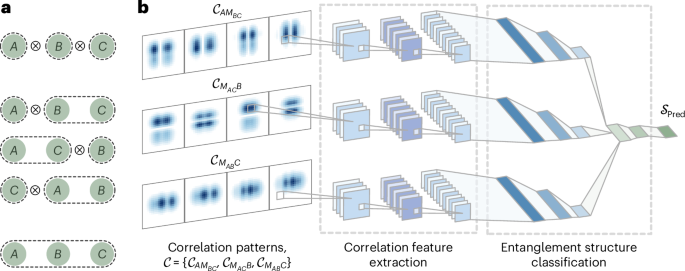
Contextual Overview: Multipartite Continuous-Variable Entanglement Structures In the realm of quantum mechanics, multipartite entanglement detection extends beyond merely confirming the existence of entangled states; it encapsulates a nuanced understanding of their structural intricacies. Specifically, a state that is \(\mathcalR_1| \cdots | \mathcalR_j\)-separable can be expressed in a decomposed form \(\hat\rho =\sum _\gamma p_\gamma \hat\rho _\mathcalR_1^(\gamma )\otimes \cdots \otimes \hat\rho _\mathcalR_j^(\gamma )\), where \(\mathcalR_i\) denotes an ensemble of modes, and \(\hat\rho _\mathcalR_i^(\gamma )\) represents the reduced density matrix of the state on the given subsystem \(\mathcalR_i\). This classification of multipartite states is critical for advancing technologies in Smart Manufacturing and Robotics, where quantum resources may play pivotal roles in enhancing system efficiencies and capabilities. Main Objective and Methodology The primary goal articulated in the original research is the classification of multipartite continuous-variable entanglement structures utilizing data-augmented neural networks. This objective is achieved through a systematic approach that involves training neural networks on diverse datasets of random, mixed continuous-variable (CV) quantum states. By classifying states according to their entanglement structures, the framework aims to facilitate a more profound understanding of quantum systems, which can be leveraged in practical applications within the Smart Manufacturing sector. Advantages of the Approach Enhanced Classification Accuracy: The neural networks demonstrated remarkable accuracy in predicting entanglement structures, achieving up to 0.986 accuracy when augmented datasets were utilized. This indicates a strong capacity for distinguishing between intricate quantum states, which is crucial for implementing quantum technologies in industrial settings. Efficient Data Augmentation: The introduction of Quantum Data Augmentation (QDA) techniques allows for the generation of diverse training samples without the need for extensive computational resources. This efficiency is particularly advantageous in resource-constrained environments, such as manufacturing facilities aiming to optimize their operational frameworks. Robustness Against Data Degradation: The neural network’s architecture exhibits resilience against information loss due to discretization, ensuring reliable performance even when the input data is compromised—a common scenario in experimental quantum systems. Streamlined Measurement Processes: By employing homodyne detection and other innovative measurement techniques, the framework minimizes the number of required measurements, enabling faster and less resource-intensive data acquisition. This supports the operational goals of industrial technologists seeking to enhance productivity. Limitations and Caveats Despite the promising advancements, there are inherent limitations that must be acknowledged. The reliance on extensive training datasets may pose challenges when attempting to generalize findings across various quantum systems. Moreover, the QFI-based criterion for accurately identifying fully inseparable states necessitates comprehensive knowledge of the density matrix, which may not always be feasible in practical scenarios. These factors underscore the need for continuous refinement of methodologies and the importance of balancing theoretical constructs with empirical realities. Future Implications of AI Developments The integration of artificial intelligence into quantum mechanics, particularly in the classification of multipartite entanglement structures, heralds a transformative era for Smart Manufacturing and Robotics. As AI technologies evolve, the potential for real-time analysis and adaptive learning will enhance the robustness and versatility of quantum systems. This may lead to breakthroughs in quantum computing, optimization algorithms, and the development of novel quantum materials, ultimately driving innovation across various industrial sectors. Furthermore, the synergistic application of AI and quantum mechanics could pave the way for advanced automation processes, significantly improving operational efficiencies and decision-making capabilities in manufacturing environments. Disclaimer The content on this site is generated using AI technology that analyzes publicly available blog posts to extract and present key takeaways. We do not own, endorse, or claim intellectual property rights to the original blog content. Full credit is given to original authors and sources where applicable. Our summaries are intended solely for informational and educational purposes, offering AI-generated insights in a condensed format. They are not meant to substitute or replicate the full context of the original material. If you are a content owner and wish to request changes or removal, please contact us directly. Source link : Click Here

Contextual Overview of AI in Health and Medicine In the rapidly evolving landscape of biotechnology, the interplay between science and policy remains pivotal. Current events highlight the dual nature of progress, as evidenced by recent reports on gene therapy trials that have raised ethical concerns, particularly in China, where a child’s death has sparked renewed scrutiny. Concurrently, advancements such as promising results from fecal pills aimed at addressing peanut allergies signal remarkable potential for therapeutic innovation. These developments underscore the necessity for HealthTech professionals to remain informed on the intersection of scientific discovery and the regulatory environment, which can significantly influence outcomes in the biotech field. Main Goals and Achievements The primary aim of ongoing research and development in the biotechnology sector is to enhance patient outcomes through innovative treatments while ensuring patient safety and ethical compliance. Achieving this goal necessitates a comprehensive understanding of both the scientific principles underlying these therapies and the regulatory frameworks that govern their application. By fostering a culture of transparency and accountability, HealthTech professionals can navigate the complex landscape of biotech innovation effectively, ensuring that new therapies are not only groundbreaking but also socially responsible. Advantages of AI Integration in HealthTech Enhanced Decision-Making: AI technologies facilitate data-driven decision-making processes, allowing HealthTech professionals to analyze vast datasets efficiently. This capability is critical for identifying trends and predicting outcomes, which can lead to improved patient care strategies. Increased Efficiency: Automation of routine tasks through AI can significantly reduce the administrative burden on healthcare teams, enabling them to focus on patient-centered activities. This efficiency is particularly beneficial in clinical settings where time and resources are often limited. Personalized Medicine: AI algorithms can analyze individual patient data to tailor treatments more precisely, thereby enhancing the efficacy of interventions and minimizing adverse effects. This shift towards personalized medicine signifies a major advancement in how treatments are designed and administered. Predictive Analytics: AI’s ability to predict disease outbreaks and patient responses to treatments can lead to more proactive healthcare measures. This predictive capability is essential for improving public health outcomes and optimizing resource allocation. Cost Reduction: By streamlining processes and improving treatment effectiveness, AI has the potential to reduce overall healthcare costs, making advanced therapies more accessible to a broader patient population. Considerations and Limitations While the integration of AI in health and medicine presents numerous advantages, it is essential to acknowledge certain limitations. The reliance on AI systems raises concerns regarding data privacy and security, particularly given the sensitive nature of health information. Moreover, the potential for algorithmic bias must be addressed to ensure equitable access to AI-driven healthcare solutions. Continuous monitoring and evaluation of AI applications are crucial to mitigate these risks and enhance their reliability. Future Implications of AI in HealthTech Looking ahead, the implications of AI advancements in health and medicine are profound. As AI technologies continue to evolve, we anticipate increasingly sophisticated applications that will reshape the healthcare landscape. The potential for AI to revolutionize drug discovery, clinical trials, and patient management is immense, promising to accelerate the development of effective therapies while enhancing the overall efficiency of healthcare systems. Furthermore, the ongoing collaboration between governmental bodies, biotech companies, and health professionals will be integral to establishing robust regulatory frameworks that support innovation while safeguarding public health. Disclaimer The content on this site is generated using AI technology that analyzes publicly available blog posts to extract and present key takeaways. We do not own, endorse, or claim intellectual property rights to the original blog content. Full credit is given to original authors and sources where applicable. Our summaries are intended solely for informational and educational purposes, offering AI-generated insights in a condensed format. They are not meant to substitute or replicate the full context of the original material. If you are a content owner and wish to request changes or removal, please contact us directly. Source link : Click Here


