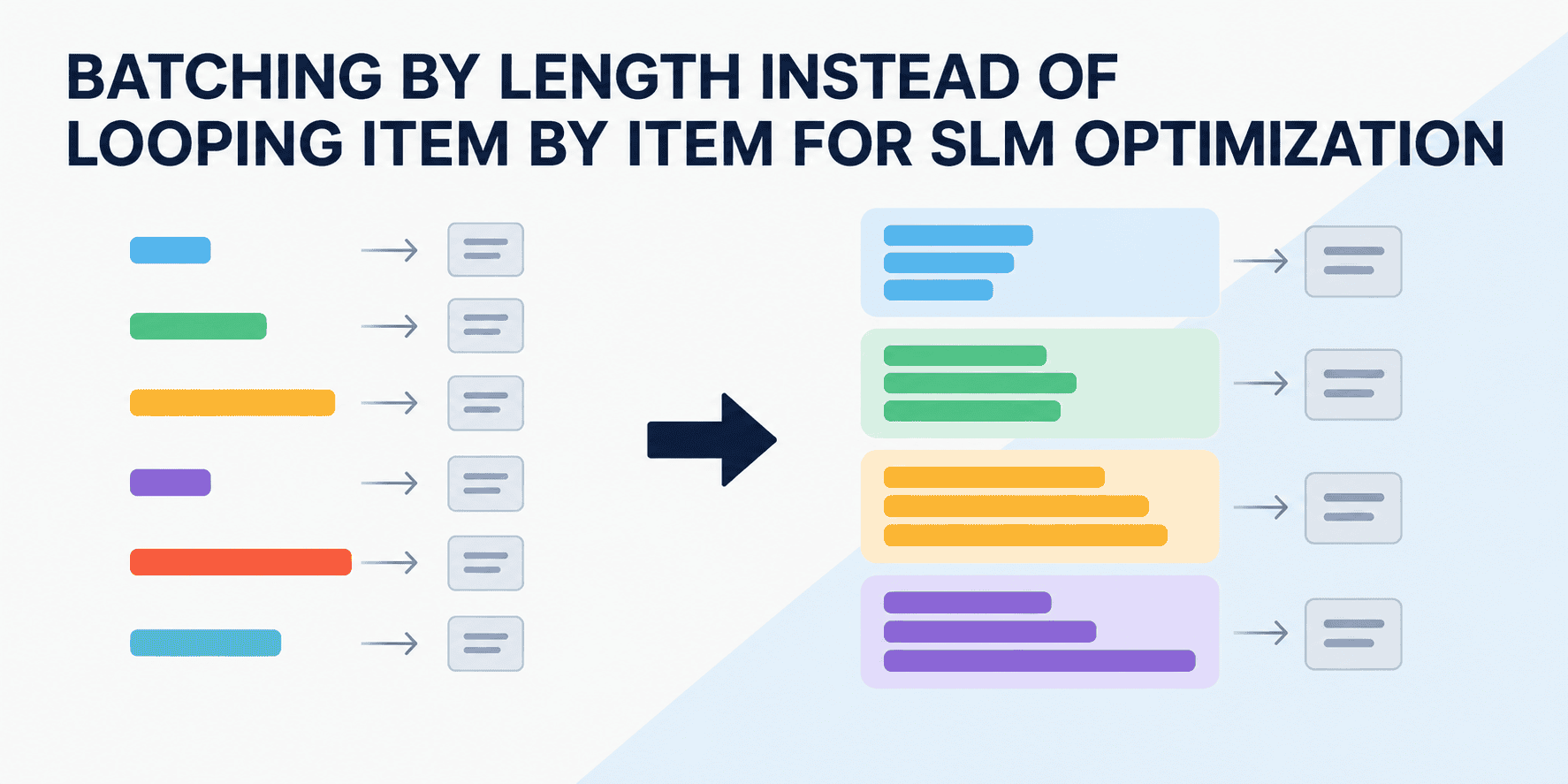
In the realm of Applied Machine Learning, optimizing the performance of small language models (SLMs) is critical for enhancing automation processes. The article “Batching by Length Instead of Looping Item by Item for SLM Optimization” addresses a specific technique aimed at improving the efficiency of SLMs by batching input sequences based on their lengths rather than processing each item sequentially. This approach is particularly relevant for practitioners working with natural language processing tasks, such as classifying support tickets, where time and resource efficiency can significantly affect overall productivity.
The primary goal of the discussed technique is to minimize computational waste by reducing the memory-bandwidth constraints that arise when processing sequences one at a time. This is achieved through the implementation of length-based batching, which involves sorting input sequences by their token lengths before grouping them into batches. This strategy allows each batch to pad to its own local maximum length, thus minimizing the number of padding tokens that need to be processed, which would otherwise inflate the computational workload.
The advancements in AI, particularly in the field of natural language processing, will likely continue to emphasize the importance of efficient model deployment. As models become increasingly complex, the need for optimization techniques that enhance throughput without sacrificing output quality will be paramount. The adoption of strategies like length-based batching will become more widespread as organizations seek to leverage AI technologies for operational efficiency.
Furthermore, as computational resources evolve, integrating sophisticated batching methods with emerging hardware architectures will be critical. This synergy could pave the way for further innovations in AI applications, allowing for real-time processing and decision-making in various sectors, including customer service, healthcare, and finance.
In summary, the adoption of length-based batching in small language model optimization presents a promising avenue for enhancing computational efficiency in Applied Machine Learning. By minimizing padding overhead and maximizing throughput, practitioners can achieve significant performance benefits, ultimately leading to more efficient automation processes. As AI technologies continue to evolve, the importance of such optimization techniques will only grow, highlighting the need for ongoing research and development in this area.
Disclaimer
The content on this site is generated using AI technology that analyzes publicly available blog posts to extract and present key takeaways. We do not own, endorse, or claim intellectual property rights to the original blog content. Full credit is given to original authors and sources where applicable. Our summaries are intended solely for informational and educational purposes, offering AI-generated insights in a condensed format. They are not meant to substitute or replicate the full context of the original material. If you are a content owner and wish to request changes or removal, please contact us directly.
Source link :