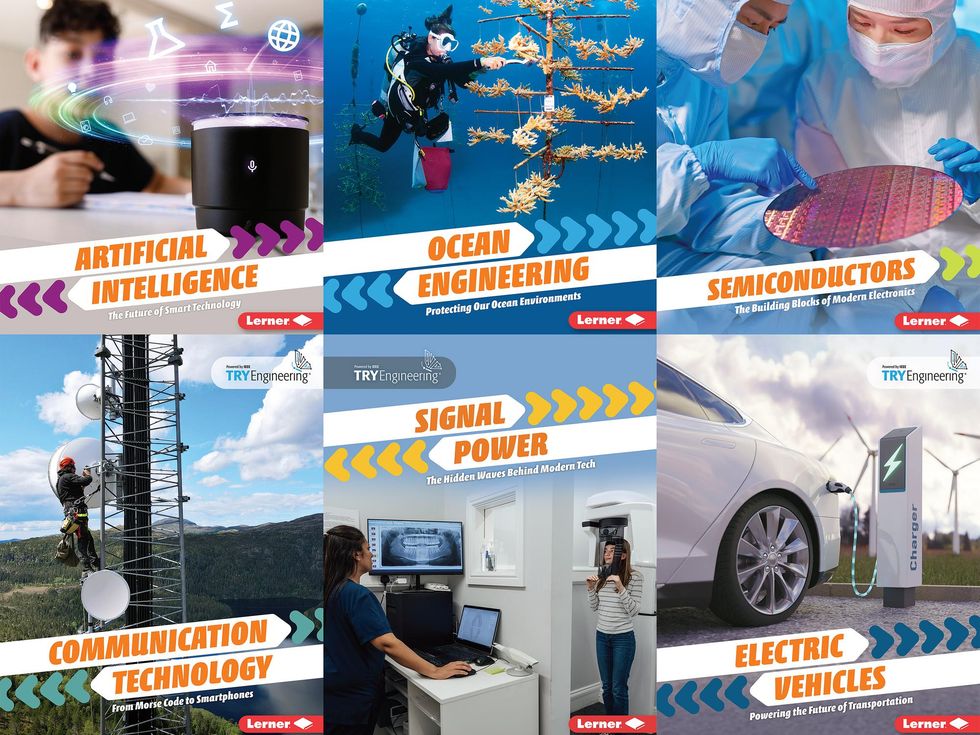
Contextual Overview The IEEE TryEngineering initiative plays a pivotal role in cultivating intellectual curiosity among young learners, particularly in the fields of science, technology, engineering, and mathematics (STEM). As we navigate an era characterized by rapid technological advancements—particularly in artificial intelligence, electric vehicles, and marine exploration—preparing the next generation of innovators becomes increasingly vital. The introduction of the STEM-focused book series, Tomorrow’s Technology With TryEngineering, Powered by IEEE, aims to demystify complex technological concepts for children aged 8 to 12. This series is designed to engage young minds through age-appropriate narratives, real-world applications, and interactive challenges, thus fostering critical thinking and creativity. Main Goal and Methodology The primary objective of the Tomorrow’s Technology book series is to equip children with a foundational understanding of contemporary technologies that influence their daily lives. Achieving this goal entails presenting intricate subjects in an accessible format, utilizing engaging storytelling, relatable examples, and hands-on design challenges to stimulate curiosity. By bridging the gap between theoretical concepts and practical applications, the series encourages students to view themselves as future problem-solvers and innovators. Advantages of the STEM Book Series Enhanced Engagement: The series employs engaging narratives and relatable examples that resonate with young readers, enhancing their interest in STEM fields. Real-World Relevance: By connecting theoretical concepts to everyday technologies—like smartphones and electric vehicles—the series makes learning applicable and meaningful. Critical Thinking Development: The inclusion of design challenges encourages students to think analytically and creatively, fostering essential problem-solving skills. Collaboration with Experts: The partnership with various IEEE societies ensures that the content is accurate, relevant, and aligned with current technological trends. Accessibility: Available through multiple platforms, including Amazon and Lerner Publishing Group, the series is easily accessible to educators, libraries, and families. While these advantages are significant, it is important to note that the effectiveness of the series largely depends on how it is integrated into educational settings. Educators must actively encourage exploration and discussion around the topics presented to maximize the learning experience. Future Implications in the Context of AI Developments Looking ahead, the implications of advancements in artificial intelligence and related technologies are profound. As AI continues to evolve, it is anticipated that educational tools like the Tomorrow’s Technology series will adapt to incorporate more interactive and immersive learning experiences, such as virtual reality and gamified learning. This evolution will not only enhance engagement but also provide learners with real-time exposure to the technologies shaping their world. Moreover, as AI systems become increasingly integrated into daily life, the importance of ethical considerations—such as bias and privacy—will necessitate a curriculum that prepares students to navigate these complex issues critically and thoughtfully. The ongoing partnership between educational initiatives and technological advancements will be crucial in shaping a generation of informed, responsible innovators. Disclaimer The content on this site is generated using AI technology that analyzes publicly available blog posts to extract and present key takeaways. We do not own, endorse, or claim intellectual property rights to the original blog content. Full credit is given to original authors and sources where applicable. Our summaries are intended solely for informational and educational purposes, offering AI-generated insights in a condensed format. They are not meant to substitute or replicate the full context of the original material. If you are a content owner and wish to request changes or removal, please contact us directly. Source link : Click Here

Contextual Overview The partnership between Plantik Biosciences and Hudson River Biotechnology signifies a pivotal advancement in agricultural biotechnology, particularly in the realm of heat tolerance for crops. This collaboration aims to develop a heat-tolerance trait that can be licensed by strawberry breeders, addressing an urgent need in agriculture due to the increasing frequency of extreme heat events globally. With strawberries being particularly vulnerable to high temperatures, which adversely affect flowering and fruit quality, this initiative promises significant improvements in crop resilience. Main Goal and Achievement Pathway The primary objective of this partnership is to create validated heat tolerance traits in crops, specifically strawberries, that can be easily adopted by breeders. This goal is set to be achieved by leveraging Plantik’s advanced genome editing capabilities, which focus on the regulatory elements of DNA that control gene expression, in conjunction with Hudson River’s innovative genome editing methodologies. By utilizing these technologies, the companies aim to expedite the development process, transforming trait discoveries into enhanced crop varieties within a remarkably short timeframe. Structured Advantages Rapid Development: Plantik’s ATLANTIS platform enables swift identification and editing of heat tolerance traits, allowing the development of new crop varieties in approximately 12 months, as opposed to the traditional breeding timeline of five to eight years. Increased Crop Resilience: By focusing on heat tolerance, the initiative directly addresses the threats posed by climate change, ensuring that crops such as strawberries can maintain yield and quality under adverse conditions. Cost-Effective Solutions: The BioMaas platform from Hudson River provides breeders with access to advanced genome editing without the need for extensive in-house R&D, significantly lowering the financial barriers typically associated with trait development. Collaboration and Knowledge Sharing: The partnership fosters a collaborative environment where trait developers like Plantik can share insights and innovations with Hudson River’s network of breeders, enhancing the overall effectiveness of the breeding process. De-risking the Breeding Process: By offering a technological solution that reduces the failure rate of trait development from 90% to 10%, the partnership empowers smaller breeders with the tools necessary to compete against larger seed companies. Future Implications of AI Developments The integration of artificial intelligence (AI) in agricultural biotechnology is poised to revolutionize crop breeding and trait development. As AI technologies advance, they will enhance the capabilities of platforms like Plantik’s ATLANTIS, enabling more precise editing of genomes and the identification of beneficial traits. Furthermore, AI-driven data analytics could streamline the validation process of crop traits, accelerating the time from research to market. This evolution in technology will not only bolster the efficiency of trait development but also democratize access to advanced breeding techniques, allowing a broader range of innovators within the AgriTech sector to contribute to sustainable agricultural practices. Disclaimer The content on this site is generated using AI technology that analyzes publicly available blog posts to extract and present key takeaways. We do not own, endorse, or claim intellectual property rights to the original blog content. Full credit is given to original authors and sources where applicable. Our summaries are intended solely for informational and educational purposes, offering AI-generated insights in a condensed format. They are not meant to substitute or replicate the full context of the original material. If you are a content owner and wish to request changes or removal, please contact us directly. Source link : Click Here
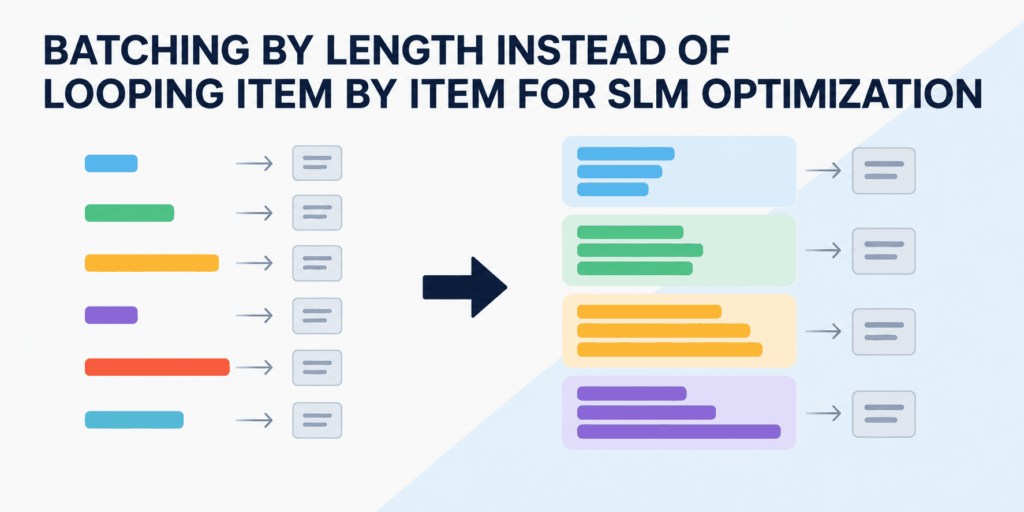
Context and Background In the realm of Applied Machine Learning, optimizing the performance of small language models (SLMs) is critical for enhancing automation processes. The article “Batching by Length Instead of Looping Item by Item for SLM Optimization” addresses a specific technique aimed at improving the efficiency of SLMs by batching input sequences based on their lengths rather than processing each item sequentially. This approach is particularly relevant for practitioners working with natural language processing tasks, such as classifying support tickets, where time and resource efficiency can significantly affect overall productivity. Main Goals and Implementation Strategies The primary goal of the discussed technique is to minimize computational waste by reducing the memory-bandwidth constraints that arise when processing sequences one at a time. This is achieved through the implementation of length-based batching, which involves sorting input sequences by their token lengths before grouping them into batches. This strategy allows each batch to pad to its own local maximum length, thus minimizing the number of padding tokens that need to be processed, which would otherwise inflate the computational workload. Advantages of Length-Based Batching Increased Throughput: By processing multiple sequences simultaneously, the length-based batching method significantly increases throughput. In practical tests, models demonstrated a marked improvement in processing speed when using this batching strategy compared to item-by-item processing. Reduced Padding Overhead: Traditional batching methods often require padding sequences to the maximum length of the batch. By sorting sequences, the length-based batching minimizes padding, thereby reducing the overall number of tokens processed unnecessarily. This was evidenced by the observed 7.6% padding overhead in tests, compared to much higher percentages in arbitrary batching. Resource Efficiency: Memory and compute resources are used more effectively with this method, as it avoids the scenario where the arithmetic units of the hardware sit idle while waiting for memory access. This is particularly important for models deployed in environments with limited computational resources. Consistency in Output: The method ensures that the output remains consistent with the predictions from the item-by-item approach. Any optimization that results in altered predictions would not be considered valid, as it may lead to decreased model reliability. Caveats and Limitations Dependency on Sequence Length Distribution: The effectiveness of length-based batching is contingent upon the distribution of sequence lengths. If the input data includes a wide variance in lengths, this method may require careful tuning to achieve optimal results. Complexity in Implementation: While the technique can yield significant performance improvements, it may introduce additional complexity in the implementation phase. Practitioners must be mindful of ensuring that the sorting and batching processes do not compromise the integrity of the data. Integration with Existing Caching Techniques: Combining this batching strategy with other optimizations, such as prefix caching, necessitates careful consideration to maintain the accuracy of predictions. Future Implications in AI Development The advancements in AI, particularly in the field of natural language processing, will likely continue to emphasize the importance of efficient model deployment. As models become increasingly complex, the need for optimization techniques that enhance throughput without sacrificing output quality will be paramount. The adoption of strategies like length-based batching will become more widespread as organizations seek to leverage AI technologies for operational efficiency. Furthermore, as computational resources evolve, integrating sophisticated batching methods with emerging hardware architectures will be critical. This synergy could pave the way for further innovations in AI applications, allowing for real-time processing and decision-making in various sectors, including customer service, healthcare, and finance. Conclusion In summary, the adoption of length-based batching in small language model optimization presents a promising avenue for enhancing computational efficiency in Applied Machine Learning. By minimizing padding overhead and maximizing throughput, practitioners can achieve significant performance benefits, ultimately leading to more efficient automation processes. As AI technologies continue to evolve, the importance of such optimization techniques will only grow, highlighting the need for ongoing research and development in this area. Disclaimer The content on this site is generated using AI technology that analyzes publicly available blog posts to extract and present key takeaways. We do not own, endorse, or claim intellectual property rights to the original blog content. Full credit is given to original authors and sources where applicable. Our summaries are intended solely for informational and educational purposes, offering AI-generated insights in a condensed format. They are not meant to substitute or replicate the full context of the original material. If you are a content owner and wish to request changes or removal, please contact us directly. Source link : Click Here
Context The recent releases of Google’s Gemini 3.5 Transcribe and OpenAI’s GPT-Transcribe provide an invaluable opportunity for comparison within the domain of transcription technologies. Launched respectively on August 26, 2026, and July 28, 2026, these models are positioned closely in timeline, allowing for a nuanced examination of their capabilities. Both transcription services are designed for distinct use cases—one for real-time streaming and the other for pre-recorded audio—enabling a direct and meaningful comparison. Main Goal The primary goal articulated in the original blog post is to discern the strengths and weaknesses of Gemini 3.5 Transcribe and GPT-Transcribe in order to assist users in selecting the most appropriate tool for their specific transcription needs. This can be achieved through an in-depth analysis of key performance metrics, including speed, accuracy, and feature set, contextualized within real-world applications. By evaluating these factors, end-users can make informed decisions based on their unique requirements for transcription services. Advantages of Gemini 3.5 Transcribe Speed Improvement: Gemini 3.5 Transcribe boasts a remarkable 70% enhancement in time-to-final-transcription compared to its predecessor, Chirp 3. This rapid turnaround is crucial for scenarios where timely access to transcribed content is paramount. Lower Word Error Rate (WER): The model exhibits a WER of 4.0% for streaming and 2.6% for non-streaming applications, as benchmarked by Artificial Analysis. This level of accuracy is critical for maintaining the integrity of transcribed material. Multi-Speaker Attribution: The built-in capability to reliably attribute dialogue to up to three speakers without additional models streamlines workflows, particularly in multi-speaker environments such as meetings. Support for Multiple Languages: With the ability to recognize over 85 languages, Gemini 3.5 Transcribe is well-suited for diverse applications across global contexts. Word-Level Timestamps: The inclusion of timestamps enhances the utility of the transcription for post-analysis and content repurposing, especially valuable in legal and academic settings. Advantages of OpenAI’s GPT-Transcribe Cost-Effectiveness: Priced at $0.0045 per minute for file transcription and $0.017 per minute for streaming, GPT-Transcribe presents a cost-efficient option for users focused on budget constraints. Keyword and Language Hints: This model’s capacity to accept keyword and language hints aids in handling domain-specific terminology and code-switching, thus enhancing transcription quality in specialized contexts. Limitations While both models present unique advantages, there are notable limitations. Gemini 3.5 Transcribe does not currently disclose its pricing for streaming services, which may hinder budgetary planning for potential users. Conversely, GPT-Transcribe lacks built-in speaker diarization and requires additional models for features like word-level timestamps, potentially complicating workflows for users needing these functionalities. Future Implications The ongoing advancements in AI transcription technologies signal significant future implications for various sectors, including education, business, and legal fields. As models continue to evolve, we can anticipate improvements in transcription accuracy, processing speed, and user accessibility. These enhancements will likely lead to increased adoption of AI-driven transcription tools in everyday applications, further integrating them into workflows and communication processes. Additionally, as AI develops, we may see the emergence of more sophisticated features, such as real-time language translation and enhanced contextual understanding, paving the way for more seamless global communication. Conclusion In summary, the comparison between Gemini 3.5 Transcribe and OpenAI’s GPT-Transcribe reveals critical insights for users seeking effective transcription solutions. Gemini excels in scenarios requiring multi-speaker attribution and rapid transcription, while GPT-Transcribe stands out for its cost-effectiveness and specialization in single-speaker contexts. As these technologies continue to advance, their impact on the field of Natural Language Understanding will become increasingly profound, shaping the future of communication and data management. Disclaimer The content on this site is generated using AI technology that analyzes publicly available blog posts to extract and present key takeaways. We do not own, endorse, or claim intellectual property rights to the original blog content. Full credit is given to original authors and sources where applicable. Our summaries are intended solely for informational and educational purposes, offering AI-generated insights in a condensed format. They are not meant to substitute or replicate the full context of the original material. If you are a content owner and wish to request changes or removal, please contact us directly. Source link : Click Here
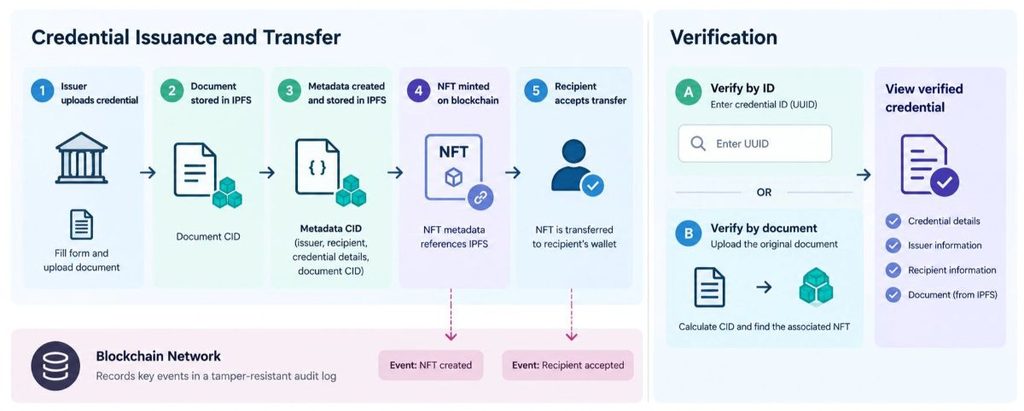
Context Content-addressed storage, immutable state, and explicit lifecycle events can significantly enhance the verification of digital credentials. Digital Credentials Have a Verification Problem Digital credentials, such as certificates and licenses, are increasingly prevalent in various sectors, including education and employment. However, once these documents leave their issuing systems, verifying their authenticity poses a considerable challenge. Verifiers often receive documents in formats like PDFs that do not provide a straightforward method for authenticity checks. The lack of means to ascertain whether the document is the original issued file, whether its metadata has been altered, or if the intended recipient has formally accepted it complicates the verification process. To mitigate these issues, a layered approach is proposed. This involves using content-addressed storage to uniquely identify the document, structured metadata to describe the credential, an immutable state layer to maintain a reliable reference, and explicit lifecycle events to log the issuance and acceptance of the credentials. A practical implementation of this approach is exhibited through the D-Certify project, which showcases how these components can function collectively. Main Goal and Achievement The primary objective of integrating content-addressed storage and blockchain technology in digital credential verification is to create a robust, secure, and transparent verification process. This goal can be achieved by establishing a system where each credential is divided into distinct layers that facilitate independent verification of document integrity, metadata, ownership, and lifecycle history. Advantages of the Proposed System Enhanced Integrity: Content addressing ensures that each document has a unique identifier (CID) derived from its content, making it impossible to alter without changing the CID. Structured Metadata: By storing metadata that includes issuer and recipient information alongside the CID, the system strengthens the linkage between the document and its verification history. Immutable References: The use of a ledger provides a durable reference that records the credential’s state, ensuring that ownership can be traced without confusion. Explicit Lifecycle Events: Clearly defining events such as issuance and acceptance creates a transparent audit trail, enhancing trust in the verification process. Reproducibility in Verification: Verification can reconstruct the credential either through its internal UUID or by calculating the CID from the document, thereby simplifying the verification process. Caveats and Limitations: Despite these advantages, the system does not inherently establish trust in the issuer of the credentials. While a CID verifies content integrity, it does not guarantee that the issuer is legitimate. Furthermore, privacy concerns arise as metadata stored in content-addressed systems may still be accessible depending on the configuration, requiring careful management of data access and minimization practices. Future Implications and AI Developments As artificial intelligence continues to evolve, its integration into the verification of digital credentials may significantly alter the landscape. AI can enhance the analysis of verification data, providing predictive insights and anomaly detection capabilities that can identify potential fraud or inconsistencies in credential issuance and acceptance. Furthermore, AI-driven systems can streamline the verification process, offering real-time assessments that bolster confidence in the integrity of digital credentials. Moreover, as organizations increasingly adopt decentralized verification systems, AI can facilitate the management of large datasets, ensuring that verification processes remain efficient and scalable. Future advancements in AI technology may also lead to the development of more sophisticated algorithms for identity verification, further enhancing the reliability of digital credentials. Disclaimer The content on this site is generated using AI technology that analyzes publicly available blog posts to extract and present key takeaways. We do not own, endorse, or claim intellectual property rights to the original blog content. Full credit is given to original authors and sources where applicable. Our summaries are intended solely for informational and educational purposes, offering AI-generated insights in a condensed format. They are not meant to substitute or replicate the full context of the original material. If you are a content owner and wish to request changes or removal, please contact us directly. Source link : Click Here