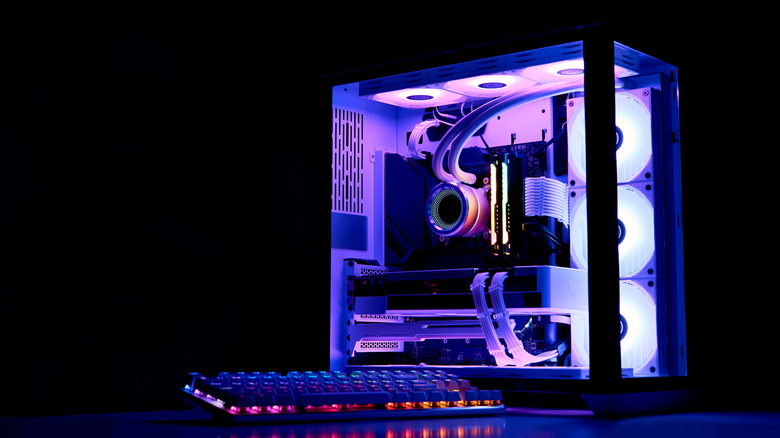
Unplugging your PC during a blackout might be exactly what saves it.
Power outages are unpredictable events that often catch individuals off guard. In these moments, the immediate concern tends to focus on safety and securing basic needs, such as light sources. However, it is crucial to also consider the potential risks posed to electronic devices, especially personal computers (PCs). Leaving a PC connected to the power supply during an outage can expose it to significant damage once power is restored.
An often-misguided belief is that simply turning off a PC is sufficient to protect it. In reality, even a powered-off computer remains linked to the home’s electrical system, which poses a risk due to potential damage from electrical surges. The vulnerability of PCs is exacerbated by the sensitivity of their internal components, including the motherboard, RAM, and solid-state drives (SSDs) that feature delicate circuits prone to voltage fluctuations.
Understanding the risks associated with power outages is vital. When power is abruptly cut—due to factors such as grid overload or equipment failure—the electrical system does not simply cease to function. Instead, there can be sharp voltage fluctuations immediately before and after the outage, with the surge that follows power restoration often causing more harm than the outage itself. In the United States, standard household circuits operate at 120 volts; any substantial spike beyond this threshold can lead to irreversible damage to sensitive electronic components. By following appropriate protective measures, individuals can mitigate the risk of costly repairs and data loss.
It is critical to recognize that turning off a PC prior to a power outage does not guarantee safety. Electrical current can still traverse the power cord and reach internal components even when the machine appears to be off. Power surges, which occur due to sudden increases in electrical current—often triggered by lightning strikes or damage to power lines—pose a significant risk. These surges can enter a household’s electrical system and affect devices connected to it. Additionally, when the power grid is restored after an outage, it frequently delivers an elevated voltage spike, further exacerbating the risk to electronics.
If a PC is in operation during a sudden power loss, there are additional concerns. Files that are currently being saved or modified may become corrupted, leading to system failures or data loss. For computers utilizing hard disk drives (HDDs), abrupt shutdowns can physically damage the mechanical heads, further jeopardizing system integrity.
To effectively safeguard a PC from damage during power outages, proactive measures should be employed. It is advisable to shut down and unplug the system when adverse weather conditions are anticipated. In cases where power has already been disrupted, unplugging the machine remains a prudent action. It is equally important to unplug other essential electronics, such as routers, which are particularly susceptible to damage during electrical storms. Regularly restarting the router is also recommended as a preventative measure.
For desktop computers, switching off the power supply unit (PSU) can help to prevent electrical current from entering the system. However, extreme events, such as lightning strikes, may still result in damage. A surge protector serves as an effective initial line of defense, absorbing voltage spikes before they can impact connected devices.
Investing in an uninterruptible power supply (UPS) is an even more effective strategy. A UPS combines surge protection with battery backup, providing a buffer during brief outages and enabling users to save work and perform a controlled shutdown. For comprehensive protection, it may be beneficial to consult a licensed electrician to install whole-house surge protection systems that cover all outlets.
Upon restoration of power, it is advisable to delay reconnecting devices. Allowing a few minutes ensures that the power supply remains stable. When reconnecting, plug in the surge protector first, followed by the PC and any additional peripherals.
Unplugging a PC during a power outage is a quick and straightforward action that can significantly protect electronic investments. Coupled with a surge protector or UPS, this simple habit can substantially lower the likelihood of hardware damage and data loss, making the effort well worth it.
The primary goal of safeguarding a PC during power outages is to prevent damage from electrical surges and abrupt power loss. This can be accomplished by adopting preventative measures such as unplugging devices, utilizing surge protectors, and investing in a UPS. By employing these strategies, users can minimize the risk of costly repairs and data loss.
However, it is important to note that while unplugging devices is effective, it may not be foolproof against extreme conditions such as direct lightning strikes. Therefore, additional protective measures, such as surge protection systems, are recommended.
The integration of Artificial Intelligence (AI) into electronic devices and power management systems may significantly alter how we approach power outage protection in the future. AI could enable smarter systems capable of predicting outages based on weather patterns or grid data, allowing for preemptive measures to be automated. Furthermore, AI could enhance surge protection technologies, optimizing responses to voltage fluctuations in real-time. As technology advances, the evolution of these protective measures will likely lead to even greater resilience against power disruptions, ensuring that devices remain safe and operational.
Disclaimer
The content on this site is generated using AI technology that analyzes publicly available blog posts to extract and present key takeaways. We do not own, endorse, or claim intellectual property rights to the original blog content. Full credit is given to original authors and sources where applicable. Our summaries are intended solely for informational and educational purposes, offering AI-generated insights in a condensed format. They are not meant to substitute or replicate the full context of the original material. If you are a content owner and wish to request changes or removal, please contact us directly.
Source link :