
Context: The Importance of Unplugging Your PC During Power Outages Unplugging your PC during a blackout might be exactly what saves it. Power outages are unpredictable events that often catch individuals off guard. In these moments, the immediate concern tends to focus on safety and securing basic needs, such as light sources. However, it is crucial to also consider the potential risks posed to electronic devices, especially personal computers (PCs). Leaving a PC connected to the power supply during an outage can expose it to significant damage once power is restored. An often-misguided belief is that simply turning off a PC is sufficient to protect it. In reality, even a powered-off computer remains linked to the home’s electrical system, which poses a risk due to potential damage from electrical surges. The vulnerability of PCs is exacerbated by the sensitivity of their internal components, including the motherboard, RAM, and solid-state drives (SSDs) that feature delicate circuits prone to voltage fluctuations. Understanding the risks associated with power outages is vital. When power is abruptly cut—due to factors such as grid overload or equipment failure—the electrical system does not simply cease to function. Instead, there can be sharp voltage fluctuations immediately before and after the outage, with the surge that follows power restoration often causing more harm than the outage itself. In the United States, standard household circuits operate at 120 volts; any substantial spike beyond this threshold can lead to irreversible damage to sensitive electronic components. By following appropriate protective measures, individuals can mitigate the risk of costly repairs and data loss. Turning Off Your PC Is Not Enough It is critical to recognize that turning off a PC prior to a power outage does not guarantee safety. Electrical current can still traverse the power cord and reach internal components even when the machine appears to be off. Power surges, which occur due to sudden increases in electrical current—often triggered by lightning strikes or damage to power lines—pose a significant risk. These surges can enter a household’s electrical system and affect devices connected to it. Additionally, when the power grid is restored after an outage, it frequently delivers an elevated voltage spike, further exacerbating the risk to electronics. If a PC is in operation during a sudden power loss, there are additional concerns. Files that are currently being saved or modified may become corrupted, leading to system failures or data loss. For computers utilizing hard disk drives (HDDs), abrupt shutdowns can physically damage the mechanical heads, further jeopardizing system integrity. How to Protect Your PC During a Power Outage To effectively safeguard a PC from damage during power outages, proactive measures should be employed. It is advisable to shut down and unplug the system when adverse weather conditions are anticipated. In cases where power has already been disrupted, unplugging the machine remains a prudent action. It is equally important to unplug other essential electronics, such as routers, which are particularly susceptible to damage during electrical storms. Regularly restarting the router is also recommended as a preventative measure. For desktop computers, switching off the power supply unit (PSU) can help to prevent electrical current from entering the system. However, extreme events, such as lightning strikes, may still result in damage. A surge protector serves as an effective initial line of defense, absorbing voltage spikes before they can impact connected devices. Investing in an uninterruptible power supply (UPS) is an even more effective strategy. A UPS combines surge protection with battery backup, providing a buffer during brief outages and enabling users to save work and perform a controlled shutdown. For comprehensive protection, it may be beneficial to consult a licensed electrician to install whole-house surge protection systems that cover all outlets. Upon restoration of power, it is advisable to delay reconnecting devices. Allowing a few minutes ensures that the power supply remains stable. When reconnecting, plug in the surge protector first, followed by the PC and any additional peripherals. Unplugging a PC during a power outage is a quick and straightforward action that can significantly protect electronic investments. Coupled with a surge protector or UPS, this simple habit can substantially lower the likelihood of hardware damage and data loss, making the effort well worth it. Main Goal and Its Achievement The primary goal of safeguarding a PC during power outages is to prevent damage from electrical surges and abrupt power loss. This can be accomplished by adopting preventative measures such as unplugging devices, utilizing surge protectors, and investing in a UPS. By employing these strategies, users can minimize the risk of costly repairs and data loss. Advantages of Unplugging Your PC Prevention of Electrical Damage: Unplugging the PC eliminates the risk of voltage surges that can lead to component failure. Data Protection: Reduces the chances of data corruption that can occur during sudden power loss. Cost Efficiency: Preventative measures can save significant expenses associated with repairs and data recovery. Enhanced Longevity: Proactive actions contribute to the overall lifespan of electronic devices. However, it is important to note that while unplugging devices is effective, it may not be foolproof against extreme conditions such as direct lightning strikes. Therefore, additional protective measures, such as surge protection systems, are recommended. Future Implications and AI Developments The integration of Artificial Intelligence (AI) into electronic devices and power management systems may significantly alter how we approach power outage protection in the future. AI could enable smarter systems capable of predicting outages based on weather patterns or grid data, allowing for preemptive measures to be automated. Furthermore, AI could enhance surge protection technologies, optimizing responses to voltage fluctuations in real-time. As technology advances, the evolution of these protective measures will likely lead to even greater resilience against power disruptions, ensuring that devices remain safe and operational. Disclaimer The content on this site is generated using AI technology that analyzes publicly available blog posts to extract and present key takeaways. We do not own, endorse, or claim intellectual property rights to the original blog content. Full credit is given to

Introduction The agricultural sector is undergoing a transformative shift, characterized by the integration of technology and innovation. The Women in Agricultural Innovation Award (WiAI), initiated by FIRA USA, exemplifies this transformation by recognizing women who are leading advancements across various facets of AgTech. Originally launched as the Women in AgRobotics of the Year Award in 2025, the award has evolved to encompass a broader range of contributions within the agricultural innovation landscape. This expansion signifies a commitment to celebrating female trailblazers who are not only advancing technology but also inspiring future generations within the AgTech ecosystem. Main Goal of the Award The primary objective of the Women in Agricultural Innovation Award is to acknowledge and celebrate the achievements of women who play pivotal roles in shaping the future of agriculture through innovative technologies. By broadening the award’s scope beyond robotics to include various domains such as precision agriculture, biotechnology, and software development, the initiative aims to highlight the diverse contributions of women in the agricultural sector. Achieving this goal requires a concerted effort from the community to nominate deserving candidates, thereby amplifying their visibility and influence in a traditionally male-dominated field. Advantages of the Award The WiAI offers several significant advantages that can positively impact AgTech innovators: 1. **Visibility and Recognition**: By spotlighting women’s contributions, the award enhances the visibility of female leaders in AgTech, encouraging greater participation and engagement within the sector. 2. **Networking Opportunities**: Winners gain access to a network of industry professionals, facilitating collaboration and mentorship that can drive further innovation. 3. **Inspiration for Future Generations**: Celebrating role models in AgTech serves as an inspiration for young women, motivating them to pursue careers in science, technology, engineering, and mathematics (STEM) related to agriculture. 4. **Community Engagement**: The award fosters a sense of community among women in AgTech, creating a supportive environment where ideas can be shared and developed collaboratively. While these advantages are compelling, it is important to acknowledge potential limitations, such as the need for increased awareness and outreach to ensure that deserving candidates from diverse backgrounds are recognized. Future Implications of AI in AgTech The advancements in artificial intelligence (AI) are poised to further revolutionize the agricultural sector. As AI technologies become increasingly integrated into farming practices, they will enhance decision-making processes, improve resource management, and enable precision agriculture techniques. The continued recognition of women innovating in this space will be crucial, as they bring diverse perspectives that can lead to more effective and inclusive solutions. Moreover, the evolution of AI will likely create new roles and opportunities within AgTech, necessitating a workforce that is not only skilled in technology but also adaptable to the changing landscape of agriculture. The WiAI serves as a catalyst for this transformation, encouraging women to take on leadership positions and drive the future of agricultural innovation. Conclusion The Women in Agricultural Innovation Award represents a significant step forward in acknowledging the contributions of women in the AgTech sector. By fostering visibility, recognition, and community engagement, the award plays a crucial role in shaping a more inclusive and innovative agricultural landscape. As we look to the future, the integration of AI and related technologies will undoubtedly enhance the impact of these initiatives, paving the way for a new generation of leaders in agriculture. Disclaimer The content on this site is generated using AI technology that analyzes publicly available blog posts to extract and present key takeaways. We do not own, endorse, or claim intellectual property rights to the original blog content. Full credit is given to original authors and sources where applicable. Our summaries are intended solely for informational and educational purposes, offering AI-generated insights in a condensed format. They are not meant to substitute or replicate the full context of the original material. If you are a content owner and wish to request changes or removal, please contact us directly. Source link : Click Here

Context and Overview The advent of advanced artificial intelligence models has significantly transformed the landscape of decision-making in varied applications. Recently, TypeSafe.AI introduced a novel model named Jev, which they assert is a pioneering example of a System One model, distinctly divergent from the conventional large language models (LLMs) that have dominated discussions in the AI community for several years. This new model is particularly adept at handling everyday tasks, such as classification and evaluative roles, leading to a deeper exploration of its capabilities in practical scenarios. Main Goals and Achievements The primary objective of introducing the System One model is to enhance decision-making processes by leveraging a structured approach to output generation. Unlike traditional LLMs that predict subsequent tokens and produce expansive text, System One models like Jev are engineered to evaluate specific states and deliver precise, structured answers. This goal can be realized through the utilization of Reinforcement Learning for Calibrated Decisions (RLCD), which educates the model to yield both decisions and confidence probabilities, thus improving the reliability of its outputs. Advantages of System One Models Structured Responses: System One models generate structured outputs rather than free-form text, enhancing the clarity and utility of responses in applications such as customer support and intent classification. Confidence Scores: A critical feature of Jev is its ability to provide confidence probabilities for its decisions. This allows practitioners to gauge the model’s certainty and make informed decisions about when to rely on automated responses versus human intervention. Enhanced Efficiency: TypeSafe claims that Jev operates at a remarkable speed, being 193.6 times faster than conventional models. This efficiency is crucial for applications that require quick decision-making, such as customer service systems. Cost-Effectiveness: With claims of being 444.6 times cheaper, Jev presents a financially viable option for businesses looking to integrate AI without incurring exorbitant operational costs. However, it is essential to note that while these advantages are compelling, there are limitations. For instance, Jev’s accuracy in comparison to established models like OpenAI’s Terra and Luna was found to be lower, indicating that more extensive testing and validation may be necessary before widespread adoption. Future Implications The continuous evolution of AI and machine learning technologies signals a promising trajectory for the development of advanced decision-making models. As practitioners increasingly embrace System One models, we can anticipate a paradigm shift in how AI is utilized across industries. The ability to integrate confidence levels into decision-making processes may lead to more sophisticated workflows, where automated systems handle straightforward queries while more complex issues are escalated to human operators. This division of labor could optimize resource allocation and improve overall operational efficiency. Looking ahead, as the technology matures, we may witness further enhancements in the precision and reliability of these models. The integration of feedback mechanisms and user data could refine the learning processes, resulting in systems that not only make decisions but also adapt and improve over time. Disclaimer The content on this site is generated using AI technology that analyzes publicly available blog posts to extract and present key takeaways. We do not own, endorse, or claim intellectual property rights to the original blog content. Full credit is given to original authors and sources where applicable. Our summaries are intended solely for informational and educational purposes, offering AI-generated insights in a condensed format. They are not meant to substitute or replicate the full context of the original material. If you are a content owner and wish to request changes or removal, please contact us directly. Source link : Click Here
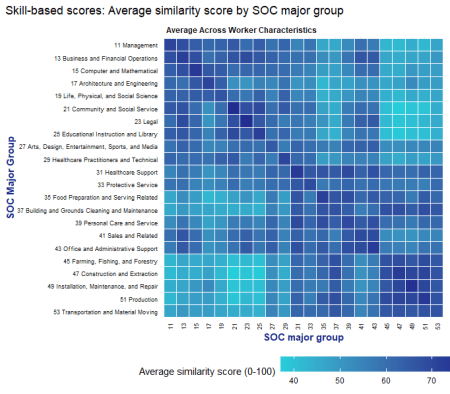
Context The analysis of occupational similarity is vital in the Data Analytics and Insights field, particularly for Data Engineers tasked with optimizing workforce transitions. The original post on O*NET ratings, job descriptions, and classification codes as measures of occupational similarity discusses methodologies for identifying transition pathways based on the alignment of skills, abilities, and knowledge across various occupations. This analysis provides a framework for understanding how closely related different occupations are, which is critical for workforce planning and development initiatives. Main Goal The primary goal is to evaluate whether alternative measures, such as semantic similarity from job descriptions and US Standard Occupational Classification (SOC) code distances, can effectively substitute for O*NET ratings when the latter is unavailable. By employing these proxies, it is possible to derive meaningful insights into occupational transition pathways. The analysis suggests that while these measures do not replace O*NET’s comprehensive data, they can provide useful estimates for transition pathways where detailed data is lacking. Advantages of the Proposed Methodologies Complementarity of Measures: The findings indicate that job descriptions and SOC codes work well in conjunction with O*NET ratings. They explain approximately one-third of the variation in skill-based scores overall and 10 to 15 percent within specific major groups, making them useful for workforce transition assessments. Accessibility: The methods discussed are accessible and cost-effective. They utilize readily available data sources, which is particularly beneficial for regions lacking comprehensive occupational databases. Flexibility: By utilizing job descriptions and classification codes, analysts can adapt their approach based on the available data. This flexibility allows for a broader application across various labor markets and occupations. Intuitive Proxy Measures: The use of SOC codes as a proxy for occupational similarity offers a straightforward method for grouping comparable jobs, enhancing the ease of understanding job relationships. Practical Utility: These methodologies can serve as valuable tools for sense-checking transition pathways derived from non-traditional data sources like online job postings or vocational curricula. This enhances the reliability of insights drawn from such analyses. Caveats and Limitations While the methodologies offer significant advantages, it is essential to acknowledge their limitations. For instance, the accuracy of SOC codes as a proxy may vary depending on the specific job pairs being analyzed. Furthermore, job descriptions are often not designed to capture the full complexity of job requirements, which can result in less precise similarity assessments. Therefore, while these methods are valuable, they should be considered as part of a wider analytical toolkit rather than standalone solutions. Future Implications As artificial intelligence continues to evolve, its integration into occupational analysis will likely enhance the methodologies discussed. AI advancements, particularly in natural language processing and machine learning, will improve the accuracy of semantic similarity assessments derived from job descriptions. Additionally, more sophisticated models can provide deeper insights into the nuances of job characteristics, thereby refining transition pathway predictions. The ongoing development of AI tools will enable Data Engineers and analysts to leverage complex datasets more effectively, leading to more informed workforce planning and strategic decision-making. Disclaimer The content on this site is generated using AI technology that analyzes publicly available blog posts to extract and present key takeaways. We do not own, endorse, or claim intellectual property rights to the original blog content. Full credit is given to original authors and sources where applicable. Our summaries are intended solely for informational and educational purposes, offering AI-generated insights in a condensed format. They are not meant to substitute or replicate the full context of the original material. If you are a content owner and wish to request changes or removal, please contact us directly. Source link : Click Here


