Contextual Overview
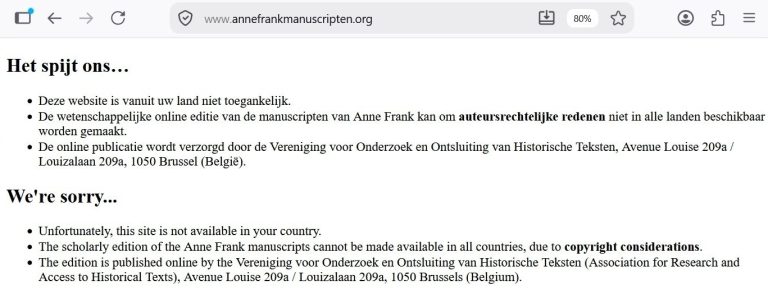
The recent ruling by the Court of Justice of the European Union (CJEU) in the Anne Frank Fonds case has significant implications for the intersection of digital content access, copyright law, and geoblocking measures. The case illustrates the complexities surrounding the provision of copyrighted materials across different jurisdictions, particularly in the digital realm where geographical limitations can be easily circumvented through technological means such as Virtual Private Networks (VPNs). This judgment emphasizes the necessity for content providers to effectively implement geoblocking measures to avoid liability for copyright infringement while navigating the increasingly convoluted landscape of international copyright laws.
Main Goal and Achievement
The primary objective highlighted in the original post is to delineate the legal responsibilities of content providers concerning the use of geoblocking technologies to restrict access to copyrighted works. This can be achieved through the adoption of effective, state-of-the-art geoblocking measures that comply with EU law, ensuring that content is only accessible in jurisdictions where it is legally permissible. The court’s ruling clarifies that the onus is on content providers to ascertain the legality of their content distribution based on the geographical location of their users, thereby reinforcing the necessity for robust compliance frameworks within the digital content industry.
Structured Advantages
- Legal Clarity: The CJEU ruling provides clear guidelines on the liability of content providers, which can bolster legal certainty for businesses operating in the digital space. This clarity assists legal professionals in advising clients on compliance with copyright laws.
- Facilitation of Content Availability: By establishing rules around geoblocking, the judgment may lead to an increase in the availability of content online, as providers can confidently distribute works within their legal frameworks.
- Encouragement of Technological Innovation: The emphasis on effective geoblocking measures may spur the development of advanced technological solutions, encouraging the LegalTech sector to innovate in creating compliance-oriented tools.
- International Cooperation: The ruling fosters an environment for international collaboration among content providers and legal experts, as they work together to navigate the complexities of cross-border copyright issues.
However, there are important caveats to consider. The effectiveness of geoblocking measures can vary significantly, and excessive reliance on technology without a nuanced understanding of the legal landscape may lead to inadvertent infringements.
Future Implications of AI Developments
As advancements in Artificial Intelligence (AI) continue to evolve, their impact on copyright law and geoblocking measures will likely be profound. AI technologies can enhance the effectiveness of geoblocking by employing sophisticated algorithms to identify and restrict access based on user location more accurately. Additionally, AI can assist legal professionals in predicting potential copyright issues by analyzing user behavior and content access patterns. This predictive capability could lead to more proactive compliance approaches, ultimately minimizing legal risks for content providers.
Moreover, the integration of AI in LegalTech applications may streamline the process of content licensing and distribution, allowing for real-time legal assessments of content visibility across jurisdictions. In this way, AI could foster a more compliant and efficient digital environment, ensuring that legal practitioners and content providers are equipped to navigate the evolving challenges presented by international copyright laws.
Disclaimer
The content on this site is generated using AI technology that analyzes publicly available blog posts to extract and present key takeaways. We do not own, endorse, or claim intellectual property rights to the original blog content. Full credit is given to original authors and sources where applicable. Our summaries are intended solely for informational and educational purposes, offering AI-generated insights in a condensed format. They are not meant to substitute or replicate the full context of the original material. If you are a content owner and wish to request changes or removal, please contact us directly.
Source link :