Context: The Banned Book Library Project
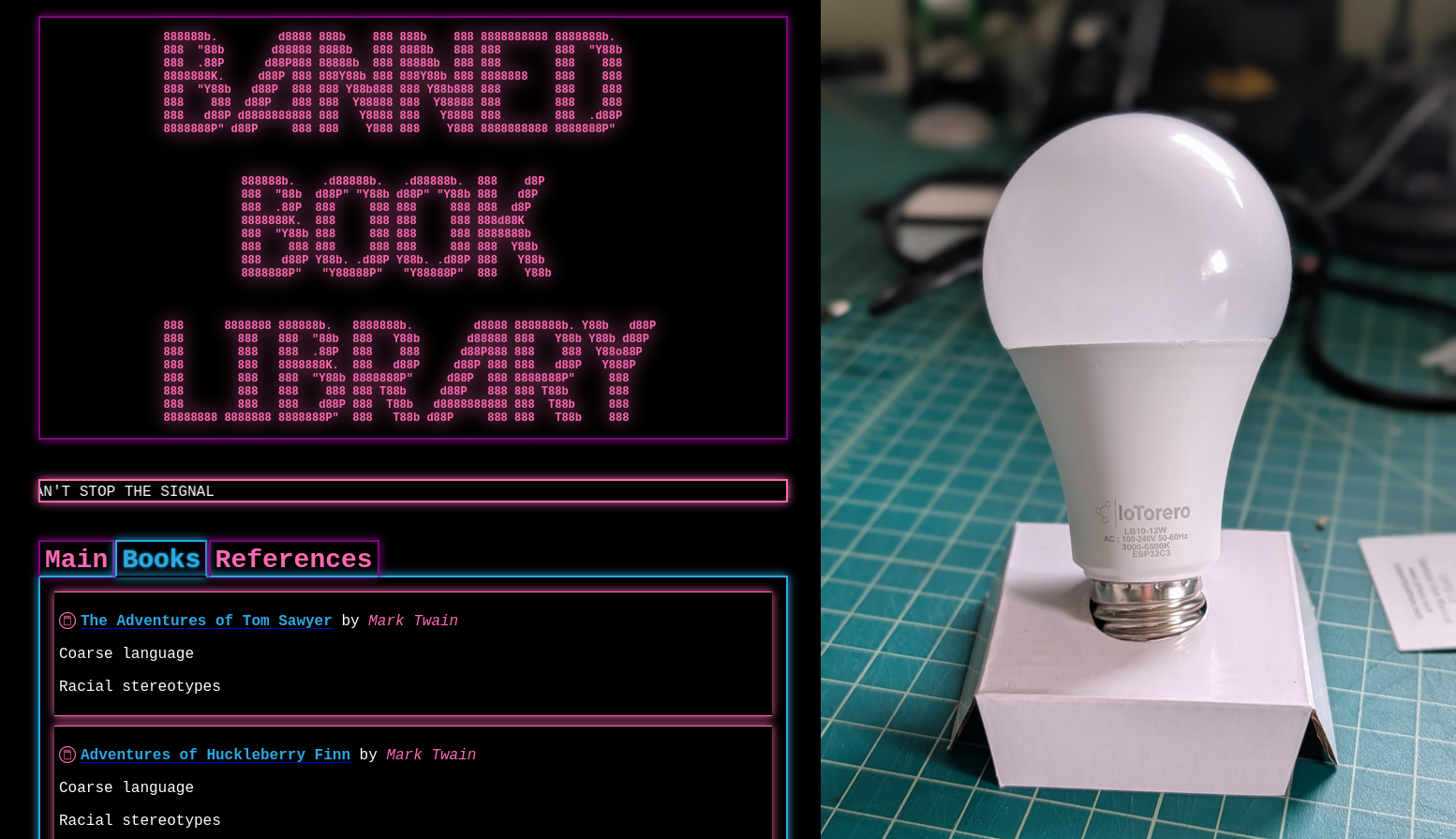
The Banned Book Library project exemplifies an innovative approach to information dissemination in environments where access to specific literature is restricted. By repurposing WiFi-enabled LED light bulbs as a means to host digital copies of banned books, the initiative reflects a broader concern regarding censorship and the importance of information accessibility. The project leverages technology in a manner reminiscent of a cyberpunk narrative, creating discreet, open-access points for knowledge sharing within communities.
Main Goal and Achievement Methodology
The principal objective of the Banned Book Library project is to provide a covert platform for accessing literature that may be banned in certain regions. This is achieved by modifying smart light bulbs to function as WiFi access points, allowing individuals to connect and access a library of digital books. The project underscores the importance of innovative thinking in utilizing existing technologies for socio-political purposes, demonstrating how everyday devices can facilitate the preservation and sharing of information in a restricted context.
Advantages of the Banned Book Library Initiative
- Increased Accessibility: By transforming light bulbs into information access points, the project enhances the availability of banned literature to individuals who might otherwise lack access.
- Cost-Effectiveness: The use of inexpensive smart bulbs makes the project financially viable, allowing for multiple installations without significant expense.
- Community Engagement: The project encourages local participation in knowledge sharing, fostering a community-oriented approach to combating censorship.
- Technological Innovation: It showcases the potential of repurposing existing technology for new applications, highlighting the versatility of smart devices in addressing social issues.
- Environmental Awareness: Utilizing LED bulbs not only provides energy-efficient solutions but also promotes awareness about sustainable practices in technology use.
Limitations and Caveats
Despite its advantages, the Banned Book Library project faces notable limitations. The primary concern revolves around storage capacity, as the firmware and the hosted literature must all fit within the device’s 4MB limit. This constraint restricts the number and diversity of books that can be made available. Additionally, modifying light bulbs requires technical expertise, which may deter some potential participants from engaging with the project. Furthermore, the security of the WiFi access points may pose risks, as they could potentially expose sensitive user data.
Future Implications and the Impact of AI Developments
Looking ahead, the intersection of AI and technology will likely enhance projects like the Banned Book Library. Future advancements in AI could lead to improved methods for data compression, enabling more extensive libraries to be hosted within the limited storage of such devices. Additionally, AI-driven algorithms could facilitate more efficient management of digital libraries, allowing for better cataloging, retrieval, and user recommendations based on individual preferences.
Moreover, the integration of AI technologies in the development of secure communication protocols could mitigate some of the security concerns associated with public access points. As society continues to grapple with issues of censorship and information access, projects like the Banned Book Library may serve as vital precedents for leveraging technology to foster knowledge sharing in constrained environments.
Disclaimer
The content on this site is generated using AI technology that analyzes publicly available blog posts to extract and present key takeaways. We do not own, endorse, or claim intellectual property rights to the original blog content. Full credit is given to original authors and sources where applicable. Our summaries are intended solely for informational and educational purposes, offering AI-generated insights in a condensed format. They are not meant to substitute or replicate the full context of the original material. If you are a content owner and wish to request changes or removal, please contact us directly.
Source link :