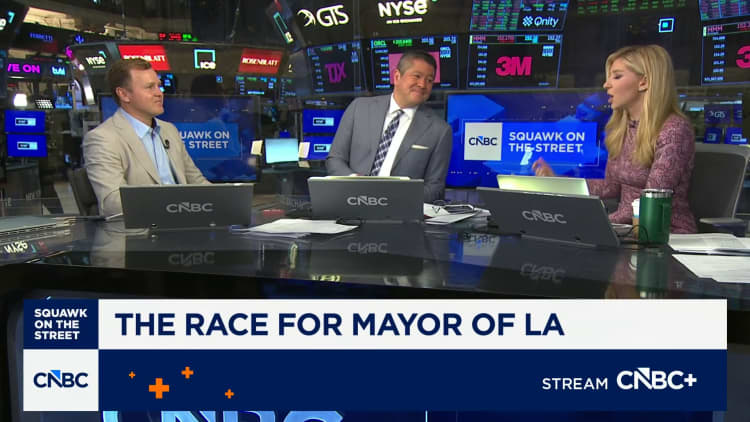
The emergence of unconventional candidates in political races, such as reality television star Spencer Pratt in the Los Angeles mayoral race, highlights the intersection of celebrity culture and public policy. As Pratt’s campaign progresses, it raises questions about the effectiveness of non-traditional candidates in addressing pressing urban issues. This phenomenon mirrors trends within the finance sector, particularly in the realm of artificial intelligence (AI) and fintech, where innovative solutions are increasingly championed by figures outside traditional expertise.
Spencer Pratt’s unexpected rise in the Los Angeles mayoral race, where he is polling competitively against incumbent Karen Bass and City Councilmember Nithya Raman, underscores the potential for disruption in established political arenas. Pratt’s campaign has focused on addressing local issues such as homelessness, crime, and business regulations, echoing sentiments often expressed in discussions about urban governance. His celebrity status has garnered significant media attention, allowing him to position himself as a voice for change amidst criticism of existing political structures.
The primary goal of Pratt’s campaign is to challenge the status quo of Los Angeles governance by advocating for common-sense solutions to local problems. This objective can be achieved by engaging voters through a relatable narrative, emphasizing community safety, and proposing actionable policies. Such strategies not only resonate with constituents but also reflect a growing trend in political campaigning where personal experiences and public persona play crucial roles in electoral success.
1. **Increased Voter Engagement**: Non-traditional candidates like Pratt often draw interest from demographics that may feel disenfranchised by conventional politicians. His celebrity status has enabled him to connect with younger voters who may be more inclined to participate in the electoral process due to his relatable persona.
2. **Focus on Local Issues**: By prioritizing local concerns, Pratt’s campaign can resonate more deeply with constituents, potentially leading to increased voter turnout. This localized approach reflects a broader trend in political campaigning that emphasizes grassroots engagement.
3. **Challenging the Political Norms**: Non-traditional candidates often disrupt established political narratives, prompting incumbents to address issues they may have previously overlooked. This could lead to more comprehensive policy discussions and innovations in urban governance.
4. **Media Visibility**: The inherent media attention surrounding celebrity candidates can amplify their messages, ensuring that local issues receive broader coverage. This visibility can catalyze discussions around critical topics, such as homelessness and public safety, which are essential to the urban electorate.
While the engagement of non-traditional candidates offers several advantages, there are notable caveats. Firstly, celebrity status does not inherently translate to effective governance. Voter skepticism regarding the candidate’s ability to implement complex policies may hinder their electoral viability. Additionally, the ephemeral nature of media attention can lead to fleeting support, as public interest often shifts rapidly.
The influence of non-traditional figures in politics parallels the transformative role of AI in the finance and fintech sectors. As AI continues to evolve, financial professionals are likely to experience significant shifts in their operational frameworks. Key developments may include enhanced predictive analytics, improved customer service through AI-driven chatbots, and streamlined compliance processes aided by machine learning algorithms.
Furthermore, as AI technologies become increasingly integrated into financial systems, professionals must adapt to new tools that enhance decision-making and efficiency. The long-term implications for financial professionals will likely include a demand for ongoing education and skill development to remain competitive in an AI-augmented landscape.
The rise of candidates like Spencer Pratt reflects a broader societal shift towards valuing authenticity and relatability in leadership. This trend resonates strongly within the finance sector, where AI and fintech innovations challenge traditional paradigms and create opportunities for agile, informed decision-making. As both political and financial landscapes continue to evolve, stakeholders must remain vigilant and responsive to these changes to effectively navigate the complexities of modern governance and economic management.
Disclaimer
The content on this site is generated using AI technology that analyzes publicly available blog posts to extract and present key takeaways. We do not own, endorse, or claim intellectual property rights to the original blog content. Full credit is given to original authors and sources where applicable. Our summaries are intended solely for informational and educational purposes, offering AI-generated insights in a condensed format. They are not meant to substitute or replicate the full context of the original material. If you are a content owner and wish to request changes or removal, please contact us directly.
Source link :