
Introduction The emergence of unconventional candidates in political races, such as reality television star Spencer Pratt in the Los Angeles mayoral race, highlights the intersection of celebrity culture and public policy. As Pratt’s campaign progresses, it raises questions about the effectiveness of non-traditional candidates in addressing pressing urban issues. This phenomenon mirrors trends within the finance sector, particularly in the realm of artificial intelligence (AI) and fintech, where innovative solutions are increasingly championed by figures outside traditional expertise. Setting the Context: The Spencer Pratt Campaign Spencer Pratt’s unexpected rise in the Los Angeles mayoral race, where he is polling competitively against incumbent Karen Bass and City Councilmember Nithya Raman, underscores the potential for disruption in established political arenas. Pratt’s campaign has focused on addressing local issues such as homelessness, crime, and business regulations, echoing sentiments often expressed in discussions about urban governance. His celebrity status has garnered significant media attention, allowing him to position himself as a voice for change amidst criticism of existing political structures. Main Goals and Achievements The primary goal of Pratt’s campaign is to challenge the status quo of Los Angeles governance by advocating for common-sense solutions to local problems. This objective can be achieved by engaging voters through a relatable narrative, emphasizing community safety, and proposing actionable policies. Such strategies not only resonate with constituents but also reflect a growing trend in political campaigning where personal experiences and public persona play crucial roles in electoral success. Advantages of Non-Traditional Candidates 1. **Increased Voter Engagement**: Non-traditional candidates like Pratt often draw interest from demographics that may feel disenfranchised by conventional politicians. His celebrity status has enabled him to connect with younger voters who may be more inclined to participate in the electoral process due to his relatable persona. 2. **Focus on Local Issues**: By prioritizing local concerns, Pratt’s campaign can resonate more deeply with constituents, potentially leading to increased voter turnout. This localized approach reflects a broader trend in political campaigning that emphasizes grassroots engagement. 3. **Challenging the Political Norms**: Non-traditional candidates often disrupt established political narratives, prompting incumbents to address issues they may have previously overlooked. This could lead to more comprehensive policy discussions and innovations in urban governance. 4. **Media Visibility**: The inherent media attention surrounding celebrity candidates can amplify their messages, ensuring that local issues receive broader coverage. This visibility can catalyze discussions around critical topics, such as homelessness and public safety, which are essential to the urban electorate. Caveats and Limitations While the engagement of non-traditional candidates offers several advantages, there are notable caveats. Firstly, celebrity status does not inherently translate to effective governance. Voter skepticism regarding the candidate’s ability to implement complex policies may hinder their electoral viability. Additionally, the ephemeral nature of media attention can lead to fleeting support, as public interest often shifts rapidly. Future Implications: AI in Finance and FinTech The influence of non-traditional figures in politics parallels the transformative role of AI in the finance and fintech sectors. As AI continues to evolve, financial professionals are likely to experience significant shifts in their operational frameworks. Key developments may include enhanced predictive analytics, improved customer service through AI-driven chatbots, and streamlined compliance processes aided by machine learning algorithms. Furthermore, as AI technologies become increasingly integrated into financial systems, professionals must adapt to new tools that enhance decision-making and efficiency. The long-term implications for financial professionals will likely include a demand for ongoing education and skill development to remain competitive in an AI-augmented landscape. Conclusion The rise of candidates like Spencer Pratt reflects a broader societal shift towards valuing authenticity and relatability in leadership. This trend resonates strongly within the finance sector, where AI and fintech innovations challenge traditional paradigms and create opportunities for agile, informed decision-making. As both political and financial landscapes continue to evolve, stakeholders must remain vigilant and responsive to these changes to effectively navigate the complexities of modern governance and economic management. Disclaimer The content on this site is generated using AI technology that analyzes publicly available blog posts to extract and present key takeaways. We do not own, endorse, or claim intellectual property rights to the original blog content. Full credit is given to original authors and sources where applicable. Our summaries are intended solely for informational and educational purposes, offering AI-generated insights in a condensed format. They are not meant to substitute or replicate the full context of the original material. If you are a content owner and wish to request changes or removal, please contact us directly. Source link : Click Here

Contextual Background: The Connecticut Sun and AI in Sports Analytics The recent developments surrounding the Connecticut Sun, particularly the waiver of their third-leading scorer, juxtaposed with the anticipated return of a franchise player, underscore critical dynamics within professional sports organizations. This scenario not only highlights strategic decision-making but also opens up discussions on the role of artificial intelligence (AI) in sports analytics, particularly as it pertains to player performance evaluation and team management. The increasing intertwining of AI technologies in sports has become a focal point for sports data enthusiasts, who are keen on leveraging data-driven insights to enhance competitive edge. Main Goal: Enhancing Performance through Data Analytics The principal objective articulated in the context of the Connecticut Sun is to optimize team performance by effectively evaluating player contributions and making informed decisions regarding player retention and acquisition. This goal can be achieved through advanced sports analytics methodologies, which utilize AI to analyze vast datasets, including player statistics, game footage, and injury reports, thereby enabling teams to make data-informed decisions that can lead to improved outcomes on the court. Advantages of AI in Sports Analytics Data-Driven Decision Making: AI algorithms can process extensive datasets more efficiently than traditional methods, allowing teams to uncover insights that drive strategic decisions. Performance Prediction: Machine learning models can predict player performance based on historical data, which aids in assessing potential impacts of player acquisitions or trades. Injury Prevention: AI technologies can analyze patterns related to player injuries, helping teams implement preventive measures that extend player careers and maintain team strength. Enhanced Fan Engagement: Data analytics can be utilized to create personalized fan experiences, which enhances loyalty and boosts attendance and viewership. Scouting Efficiency: AI can assist in identifying emerging talent by analyzing player performance metrics across different leagues, thereby streamlining the scouting process for teams. While these advantages are compelling, it is crucial to acknowledge the limitations inherent in AI applications. Data quality and availability are paramount; poor data can lead to misleading conclusions. Furthermore, over-reliance on AI might overshadow the importance of human intuition and experience in the decision-making process. Future Implications of AI in Sports Analytics The future trajectory of AI developments in sports analytics is poised to significantly impact various dimensions of team operations. As AI technologies continue to evolve, we can anticipate enhancements in predictive analytics, allowing teams to not only forecast player performance but also simulate game scenarios with unprecedented accuracy. These advancements could inform coaching strategies and in-game decision-making, thus redefining competitive practices in sports. Moreover, the integration of real-time analytics during games can facilitate on-the-fly adjustments, enhancing team responsiveness to opponents’ strategies. As more teams adopt AI-driven approaches, the competitive landscape will likely shift towards those organizations that can adeptly harness these technologies for strategic advantage, thereby raising the overall standard of play across leagues. Disclaimer The content on this site is generated using AI technology that analyzes publicly available blog posts to extract and present key takeaways. We do not own, endorse, or claim intellectual property rights to the original blog content. Full credit is given to original authors and sources where applicable. Our summaries are intended solely for informational and educational purposes, offering AI-generated insights in a condensed format. They are not meant to substitute or replicate the full context of the original material. If you are a content owner and wish to request changes or removal, please contact us directly. Source link : Click Here
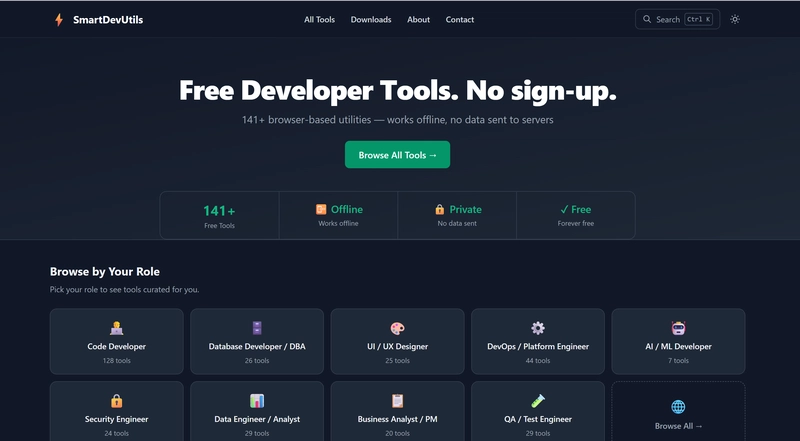
Introduction In the realm of Computer Vision and Image Processing, practitioners frequently encounter a myriad of online tools designed to facilitate essential tasks. These tasks often involve manipulating data formats, decoding information, and streamlining processes vital for effective analysis. However, reliance on numerous single-purpose web utilities can introduce significant risks, notably regarding data security and operational efficiency. In this context, a solution emerges: SmartDevUtils, a comprehensive suite of developer utilities designed specifically for a seamless and secure user experience. The Everyday Friction in Computer Vision For professionals in the field of Computer Vision, repetitive tasks such as decoding image metadata or converting various data formats into usable structures are commonplace. These tasks, which may individually take only a few seconds, collectively impose a cognitive burden on the scientists involved. The need to search for reliable online tools for these tasks not only disrupts workflow but also exposes sensitive data to potential security threats. SmartDevUtils addresses this friction by offering a centralized platform that eliminates the need for constant web searches and the associated risks of using unknown sites. Main Goal and Achievement The primary objective of utilizing SmartDevUtils is to streamline the workflow of Vision Scientists by providing a single client-side tool that integrates various functionalities. This goal can be achieved through SmartDevUtils’ architecture, which processes all tasks within the user’s browser. By doing so, it mitigates risks associated with data exposure and enhances operational speed, allowing researchers to focus on their core tasks without interruption. Advantages of SmartDevUtils Data Security: All processing is conducted locally, ensuring that sensitive data, such as proprietary algorithms or patient information, remains confidential. This is particularly critical in the field of Computer Vision, where data integrity is paramount. Efficiency: The elimination of backend server communication reduces latency, enabling immediate feedback and results. This aspect is crucial for Vision Scientists who often require real-time analysis and adjustments. Offline Capability: SmartDevUtils functions without an internet connection, making it accessible in environments where network connectivity is limited, such as remote fieldwork or secure research facilities. No Account Requirement: Users are not required to create accounts, thus avoiding the complications and potential security risks associated with account management and data retention policies. Caveats and Limitations Despite its numerous advantages, it is essential to acknowledge certain limitations. The reliance on client-side processing may restrict the ability to handle extremely large datasets efficiently, as local machine resources could become a bottleneck. Additionally, while SmartDevUtils offers a robust set of tools, it may not encompass every specific utility a Vision Scientist might require, necessitating a careful evaluation of its suitability for particular tasks. Future Implications in the Era of AI As advancements in artificial intelligence continue to evolve, the implications for tools like SmartDevUtils are profound. Future iterations may incorporate AI-driven functionalities that enhance data processing capabilities, improve the accuracy of image analysis, and automate routine tasks. Furthermore, as AI technologies increasingly integrate with Computer Vision, the need for secure, efficient, and user-friendly tools will become even more critical. Emphasizing client-side processing will likely become a standard best practice, ensuring that sensitive data remains protected while enabling rapid innovation in the field. Conclusion SmartDevUtils represents a significant stride towards enhancing the efficiency and security of workflows in Computer Vision and Image Processing. By centralizing essential tools within a single client-side platform, it alleviates the friction experienced by Vision Scientists and offers a robust solution to the challenges posed by traditional online utilities. As AI technologies advance, the continued evolution of such tools will be vital in supporting the dynamic needs of the industry. Disclaimer The content on this site is generated using AI technology that analyzes publicly available blog posts to extract and present key takeaways. We do not own, endorse, or claim intellectual property rights to the original blog content. Full credit is given to original authors and sources where applicable. Our summaries are intended solely for informational and educational purposes, offering AI-generated insights in a condensed format. They are not meant to substitute or replicate the full context of the original material. If you are a content owner and wish to request changes or removal, please contact us directly. Source link : Click Here

Contextualizing the Creative Process in Data Engineering In the realm of Big Data Engineering, the creative process often mirrors the inspiration derived from leisure activities. Just as developers may find ingenious solutions while engaging in informal settings—like floating in a pool or enjoying a beach picnic—Data Engineers can benefit from stepping away from their typical work environments. This shift in perspective can ignite innovative problem-solving techniques that enhance their work efficiency and effectiveness. Main Goal and Achievements in Big Data Engineering The primary goal of fostering creativity in data engineering is to encourage innovative solutions to complex data challenges. This can be accomplished by promoting a work culture that values breaks and encourages team members to engage in activities outside their usual professional confines. By allowing for mental relaxation and rejuvenation, the potential for creativity can significantly increase, leading to breakthrough ideas that address the persistent issues faced by Data Engineers. Structured List of Advantages Enhanced Problem-Solving Skills: Engaging in recreational activities can stimulate cognitive processes, leading to improved problem-solving skills. Research has shown that breaks can enhance creativity and productivity. Increased Team Collaboration: Informal settings provide opportunities for team bonding, which can foster collaboration and improve communication among Data Engineers. This synergy can often lead to more innovative approaches to data management. Reduced Stress Levels: Regular breaks and leisure activities have been linked to reduced stress levels, which can improve overall job satisfaction and performance among Data Engineers. Improved Work-Life Balance: Encouraging a culture that promotes breaks and leisure activities helps to create a healthier work-life balance, which can lead to greater employee retention and lower turnover rates. Caveats and Limitations While the advantages of fostering creativity through leisure activities are evident, it is essential to acknowledge potential limitations. For instance, not all teams may have the flexibility to integrate leisure into their work culture due to strict deadlines or high-pressure environments. Additionally, the effectiveness of breaks may vary among individuals, with some Data Engineers potentially feeling unproductive when away from their tasks. Thus, it’s crucial to tailor such initiatives to the specific needs and preferences of the team. Future Implications in the Era of AI The future of Big Data Engineering will inevitably be shaped by developments in artificial intelligence (AI). As AI technology continues to evolve, Data Engineers will need to adapt their problem-solving strategies to leverage AI tools effectively. The incorporation of AI can enhance the efficiency of data processing and analysis, leading to more profound insights and innovative solutions. Furthermore, with AI’s potential to automate routine tasks, Data Engineers may find themselves with more time to engage in creative thinking and exploration of new ideas. This evolution will necessitate a reevaluation of traditional work practices and an embrace of a culture that encourages innovation through varied experiences. Disclaimer The content on this site is generated using AI technology that analyzes publicly available blog posts to extract and present key takeaways. We do not own, endorse, or claim intellectual property rights to the original blog content. Full credit is given to original authors and sources where applicable. Our summaries are intended solely for informational and educational purposes, offering AI-generated insights in a condensed format. They are not meant to substitute or replicate the full context of the original material. If you are a content owner and wish to request changes or removal, please contact us directly. Source link : Click Here

Introduction In an evolving landscape of digital advertising, OpenAI has made significant strides by introducing cost-per-action (CPA) ads within its ChatGPT platform. This development, initially reported by Digiday, marks a pivotal shift in how advertisers engage with AI-driven marketing tools. By allowing advertisers to pay solely for specific user actions, such as clicks or conversions, OpenAI is positioning itself as a formidable competitor to established advertising giants like Meta and Google. Contextual Overview The introduction of CPA ads is part of OpenAI’s broader strategy to refine its advertising infrastructure. Previously, advertisers were charged for every thousand impressions or clicks, irrespective of the resulting user engagement. This transition to a performance-based model aligns with trends in digital marketing where accountability and measurable outcomes are paramount. Asad Awan, OpenAI’s head of monetization, indicated that this feature was anticipated, underscoring a proactive approach to enhancing the platform’s ad offerings. Main Goal and Achievement The primary objective of implementing CPA advertising is to improve the effectiveness of ad spending by linking costs directly to user actions. By providing a mechanism for advertisers to focus on outcomes rather than mere visibility, OpenAI seeks to attract a diverse range of advertisers who prioritize measurable performance. Achieving this goal necessitates robust infrastructure for conversion tracking, which has recently been established through the introduction of OpenAI’s pixel technology. This advancement enables the effective connection between ad exposure and subsequent user actions, thereby enhancing the overall advertising ecosystem. Advantages of CPA Advertising Performance-Based Pricing: Advertisers only incur costs when users take specific actions, thereby maximizing return on investment (ROI). Diversified Advertiser Pool: The introduction of CPA ads enables OpenAI to attract a wider range of advertisers, from startups to established brands, enhancing its market presence. Alignment with Industry Standards: By adopting a CPA model, OpenAI’s offerings now more closely resemble those of Meta and Google, facilitating easier integration for advertisers familiar with these platforms. Enhanced Measurement Capabilities: The incorporation of conversion tracking allows for more informed decision-making based on actionable insights rather than surface-level metrics like impressions or clicks. Market Experimentation: OpenAI has positioned itself as a testing ground for innovative advertising strategies, appealing to brands willing to explore new marketing avenues. Limitations and Considerations While the transition to CPA advertising presents numerous advantages, several caveats must be considered. For instance, the success of this model hinges on the accuracy and reliability of conversion tracking technology. Moreover, early adopters may experience variations in performance as the platform continues to optimize its offerings. Additionally, advertisers may need to recalibrate their strategies to align with a more outcome-focused approach, which could entail additional resources and expertise. Future Implications of AI in Marketing The advancements in AI-powered marketing, as exemplified by OpenAI’s CPA ads, are likely to shape the future of digital advertising significantly. As AI technologies continue to evolve, we can anticipate even more sophisticated targeting and personalization capabilities. This will empower marketers to create highly tailored campaigns that resonate with specific audience segments, ultimately leading to improved engagement and conversion rates. Furthermore, as the competitive landscape intensifies, ongoing innovations will be essential for platforms like OpenAI to maintain relevance and attract advertisers seeking measurable success. Conclusion OpenAI’s introduction of cost-per-action ads within ChatGPT represents a transformative shift in digital advertising. By focusing on measurable outcomes and optimizing the user experience, OpenAI positions itself as a serious contender in the advertising space. As the industry adapts to these changes, the implications for digital marketers will be profound, necessitating a strategic reevaluation of advertising approaches to leverage the full potential of AI in driving business outcomes. Disclaimer The content on this site is generated using AI technology that analyzes publicly available blog posts to extract and present key takeaways. We do not own, endorse, or claim intellectual property rights to the original blog content. Full credit is given to original authors and sources where applicable. Our summaries are intended solely for informational and educational purposes, offering AI-generated insights in a condensed format. They are not meant to substitute or replicate the full context of the original material. If you are a content owner and wish to request changes or removal, please contact us directly. Source link : Click Here
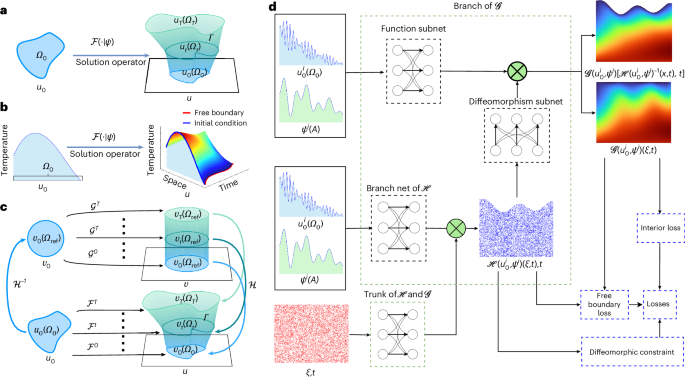
Context: Free Boundary Problems and Their Relevance to Smart Manufacturing In the domain of Smart Manufacturing and Robotics, the efficient management of evolving physical systems is paramount. The concept of Free Boundary Problems (FBPs) is integral to this, as it involves understanding the dynamics of systems where the boundaries of domains change over time. Such scenarios can be observed in various industrial applications, including materials processing, thermal management, and fluid dynamics, where the physical properties of materials and their configurations must adapt to changing conditions. FBPs can be mathematically formulated as a family of evolving domains, where each domain represents a measurable compact set at any given time. The challenge lies in modeling these domains and their associated physical quantities, particularly when the boundaries are not fixed and are influenced by internal and external factors. This aspect of FBPs resonates with industrial technologists who require sophisticated models to predict the behavior of materials under varying operational conditions. Main Goal: Achieving Accurate Solutions for Free Boundary Problems The primary goal of employing advanced methodologies, such as deep neural operators within FBPs, is to accurately predict the behavior of systems with free boundaries. This can be achieved through the development of a solution operator that maps initial conditions to the evolving states of the system. By leveraging neural networks, particularly architectures designed to handle complex mappings, it becomes possible to approximate the solution operator with high fidelity. This approach not only enhances the accuracy of predictions but also allows for real-time computations, which are critical in smart manufacturing environments. Advantages of Using Deep Neural Operators in Smart Manufacturing 1. **Enhanced Accuracy**: The use of deep neural networks for modeling FBPs allows for high-precision predictions of the evolving boundaries and internal states of materials. Empirical data indicates that the neural network can reduce relative errors significantly, achieving accuracy levels that are essential for critical manufacturing processes. 2. **Real-Time Processing**: Neural operators can process data and generate predictions rapidly, facilitating real-time decision-making in manufacturing environments. This capability is particularly advantageous when quick adjustments are necessary in response to changing operational conditions. 3. **Robustness to Geometric Variability**: The methodology demonstrates robustness against variations in domain geometries, as evidenced by minimal sensitivity to changes in topological complexity. This feature is crucial for industrial applications where materials may undergo significant deformations. 4. **Integration of Physics-Informed Constraints**: By incorporating physics-based constraints within the neural network training process, the model ensures that predictions remain physically plausible, minimizing the risk of unrealistic outcomes that could arise from purely data-driven approaches. 5. **Scalability and Adaptability**: The framework can be adapted to various manufacturing scenarios, enabling the modeling of diverse physical phenomena, from heat transfer to fluid dynamics. This versatility supports a wide range of applications within smart manufacturing. Limitations and Caveats Despite the numerous advantages, there are notable limitations in the application of deep neural operators in FBPs. The reliance on computational resources means that significant infrastructure investments may be necessary to implement these solutions effectively. Moreover, the quality of predictions can be highly dependent on the availability and quality of training data. In scenarios where data is sparse or of low fidelity, the performance of the neural operator may be compromised. Future Implications: The Role of AI in Smart Manufacturing The ongoing advancements in artificial intelligence (AI) and machine learning are poised to revolutionize the field of Smart Manufacturing. As AI techniques become more sophisticated, they will enhance the modeling and simulation of complex systems, particularly in the context of FBPs. Future developments may lead to: – **Increased Autonomy**: AI systems could autonomously adapt operations based on real-time feedback, optimizing processes without direct human intervention. – **Improved Predictive Maintenance**: Enhanced predictive capabilities will enable early identification of potential failures or inefficiencies in manufacturing systems, reducing downtime and maintenance costs. – **Customization and Flexibility**: AI-driven approaches will allow manufacturers to rapidly customize products in response to market demands, facilitating greater responsiveness and competitiveness. In conclusion, the integration of deep neural operators in solving FBPs represents a significant leap forward for Smart Manufacturing and Robotics. By leveraging these technologies, industrial technologists can enhance operational efficiency, product quality, and responsiveness to changing market conditions, setting the stage for a more advanced and automated manufacturing landscape. Disclaimer The content on this site is generated using AI technology that analyzes publicly available blog posts to extract and present key takeaways. We do not own, endorse, or claim intellectual property rights to the original blog content. Full credit is given to original authors and sources where applicable. Our summaries are intended solely for informational and educational purposes, offering AI-generated insights in a condensed format. They are not meant to substitute or replicate the full context of the original material. If you are a content owner and wish to request changes or removal, please contact us directly. Source link : Click Here


