Introduction
In the realm of artificial intelligence (AI) and machine learning (ML), the integrity of algorithms is paramount, especially in applications such as Natural Language Understanding (NLU) and Language Understanding (LU). These models, ranging from traditional classifiers to advanced large language models (LLMs), may inadvertently inherit biases from their training datasets. This poses significant challenges in high-stakes environments where decisions can profoundly influence individuals’ lives. The question arises: how can practitioners effectively audit models for bias while ensuring that real-world sensitive information remains uncompromised?
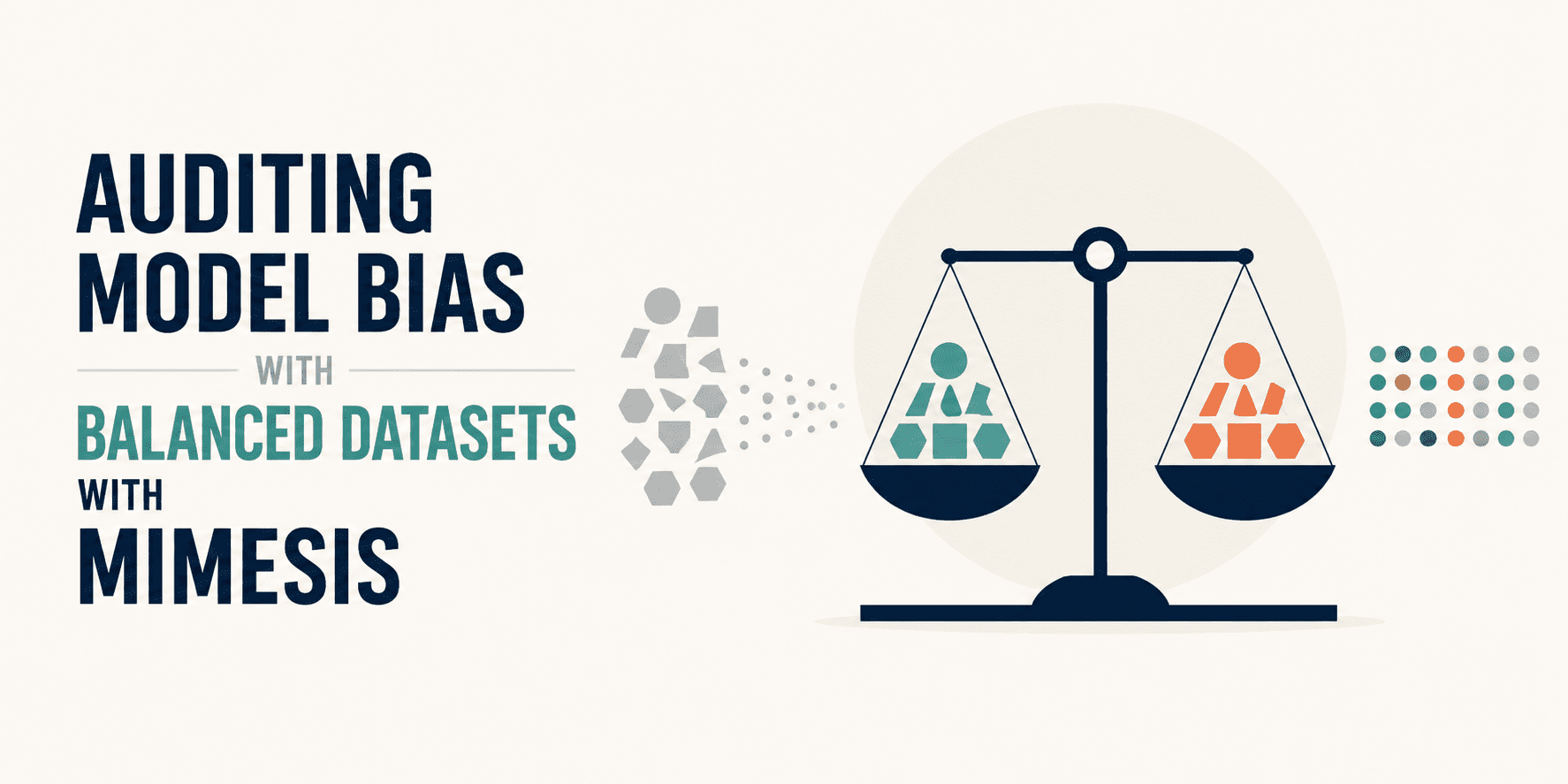
This discussion delves into the methodology of utilizing Mimesis, an open-source library, to generate counterfactual datasets conducive to auditing machine learning models. Through the creation of synthetic yet balanced datasets, stakeholders can evaluate whether their models unfairly discriminate against specific demographic groups, thus fostering fairness and accountability in AI systems.
The Goal of Auditing Model Bias
The primary objective of auditing model bias is to ascertain whether a machine learning model exhibits discriminatory behavior towards certain demographics, particularly when dealing with sensitive data. This can be effectively achieved by employing counterfactual analysis, wherein identical financial profiles differing only in protected attributes—such as gender—are analyzed. By observing discrepancies in model predictions based on these profiles, one can identify potential biases embedded within the model’s decision-making process.
Advantages of Using Mimesis for Bias Auditing
The implementation of Mimesis in the auditing process offers several key advantages:
- Generation of Balanced Datasets: Mimesis facilitates the creation of counterfactual datasets that adhere to statistical parity, thereby eliminating the influence of confounding variables. This allows for a more accurate assessment of model behavior.
- Privacy Preservation: By synthesizing data instead of using real-world sensitive information, Mimesis ensures compliance with privacy regulations, mitigating risks associated with data breaches.
- Isolation of Variables: The ability to construct cloned profiles differing solely in protected attributes enables a clear evaluation of how these attributes affect model predictions, thereby highlighting any biases present.
- Informed Decision-Making: Identifying biases equips organizations with the information necessary to take corrective actions, such as augmenting training datasets or employing bias mitigation strategies, thus fostering fairer AI systems.
However, practitioners should be aware of limitations, such as the potential oversimplification of complex social issues when relying solely on synthetic data, which may not fully capture the intricacies of real-world scenarios.
Future Implications of AI Developments
The implications of advancements in AI and machine learning technologies are profound, particularly concerning bias detection and mitigation. As models become increasingly sophisticated, the importance of robust auditing mechanisms will only grow. Future developments in AI may yield enhanced tools for bias detection, enabling real-time monitoring of model behavior in production environments. Moreover, as the discourse surrounding ethical AI continues to evolve, regulatory frameworks may emerge, mandating stringent auditing practices to ensure fairness and accountability in AI applications.
In conclusion, the intersection of AI, bias auditing, and ethical considerations presents both challenges and opportunities for Natural Language Understanding scientists. By leveraging tools such as Mimesis, stakeholders can not only enhance the fairness of their models but also contribute to the broader goal of ethical AI.
Disclaimer
The content on this site is generated using AI technology that analyzes publicly available blog posts to extract and present key takeaways. We do not own, endorse, or claim intellectual property rights to the original blog content. Full credit is given to original authors and sources where applicable. Our summaries are intended solely for informational and educational purposes, offering AI-generated insights in a condensed format. They are not meant to substitute or replicate the full context of the original material. If you are a content owner and wish to request changes or removal, please contact us directly.
Source link :
Click Here