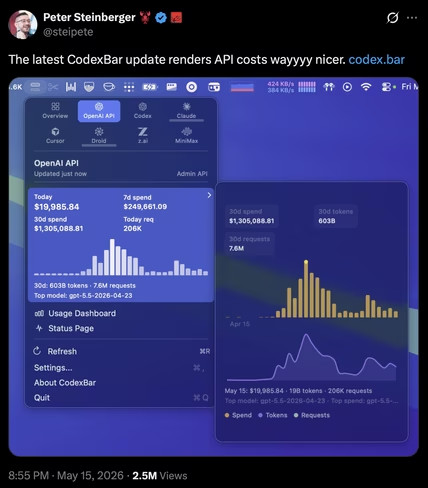
Context The advent of artificial intelligence (AI) in software development has ushered in unprecedented changes, as exemplified by Peter Steinberger’s recent endeavors with OpenClaw. Over a span of 30 days, Steinberger, now an engineer at OpenAI, utilized 100 AI Codex instances, resulting in an expenditure of $1.3 million in API tokens. This expenditure, amounting to 603 billion tokens across 7.6 million requests, serves as a pivotal case study, shedding light on the economic implications of employing autonomous AI agents in software development without financial constraints. The data underscores not only the rapid escalation of costs associated with continuous AI operation but also provides a crucial public data point regarding the financial dynamics of large-scale autonomous coding. Main Goal and Achievement Methodology The principal objective of Steinberger’s initiative is to explore the capacities and economic ramifications of autonomous AI-driven software development. By leveraging an extensive array of Codex instances, Steinberger aimed to establish a benchmark for understanding the cost implications tied to the operation of AI agents in a large-scale coding environment. Achieving this goal necessitates a rigorous approach to monitoring resource consumption, understanding token economics, and optimizing AI operations to discern the balance between cost and productivity. Furthermore, the commitment to open-source principles ensures that the insights generated can benefit the broader developer community. Advantages of AI in Software Development Increased Efficiency: Steinberger’s autonomous development pipeline enables tasks such as reviewing pull requests and scanning for security vulnerabilities, traditionally requiring a larger engineering team, to be executed by a small group of humans overseeing multiple AI agents. Scalability: The ability of AI agents to manage extensive workloads, as evidenced by the completion of 7.6 million requests, demonstrates the potential for scaling development processes far beyond human capabilities. Real-time Performance Monitoring: AI agents can continuously monitor performance and flag regressions, ensuring immediate feedback and adjustments to the development process. Cost Transparency: Steinberger’s detailed breakdown of costs, including the implications of different pricing models, provides valuable insights for organizations contemplating the integration of AI tools into their development workflows. Caveats and Limitations Despite the advantages, there are significant caveats to consider. The high operational costs, as demonstrated by the $1.3 million expenditure, highlight the financial risks associated with extensive AI deployment. Additionally, reliance on proprietary models may pose challenges regarding sustainability and accessibility for smaller enterprises. The necessity of a robust infrastructure to support such operations cannot be overlooked, as it may not be feasible for all organizations to replicate Steinberger’s model. Future Implications The implications of Steinberger’s project extend beyond immediate financial considerations and into the broader landscape of software development. As organizations increasingly adopt AI-assisted coding tools, fundamental questions regarding the economics of AI development will arise. The divergence in pricing models, where traditional subscription frameworks may not align with the demands of autonomous agents, signals a need for new pricing structures that reflect the realities of AI usage. Furthermore, as advancements in AI technology continue, the potential for reduced inference costs and enhanced efficiencies could reshape the economic landscape, making these tools more accessible to a wider array of developers and organizations. Disclaimer The content on this site is generated using AI technology that analyzes publicly available blog posts to extract and present key takeaways. We do not own, endorse, or claim intellectual property rights to the original blog content. Full credit is given to original authors and sources where applicable. Our summaries are intended solely for informational and educational purposes, offering AI-generated insights in a condensed format. They are not meant to substitute or replicate the full context of the original material. If you are a content owner and wish to request changes or removal, please contact us directly. Source link : Click Here

Contextual Background The cultivation of heirloom tomatoes presents unique opportunities for farmers seeking to enhance their crop diversity and market appeal. Heirloom tomatoes, characterized by their open-pollinated nature and historical significance, offer a plethora of varieties ranging from slicers and beefsteaks to cherries. These varieties are not only cherished for their taste but also for their potential to adapt to different agricultural practices and climates. For AgriTech innovators, understanding the nuances of these heirloom varieties can lead to better breeding and cultivation practices, ultimately supporting sustainable agricultural methods. Main Goals of Heirloom Tomato Cultivation The primary goal of growing heirloom tomatoes is to preserve their genetic diversity while maximizing their yield and flavor potential. Achieving this involves selecting varieties that are well-suited to local climates and growing conditions. Farmers are encouraged to leverage their knowledge of seasonal lengths and climate tendencies to determine which varieties will thrive in their specific environments. This approach not only increases the likelihood of successful harvests but also enables breeders to develop unique varieties that meet market demands. Advantages of Heirloom Tomato Cultivation Diverse Flavor Profiles: Heirloom tomatoes are renowned for their rich flavors and unique textures, which can significantly enhance culinary applications. Varieties such as the Cherokee Purple and San Marzano are sought after for their exceptional taste, attracting customers who seek quality produce. Genetic Diversity: The open-pollinated nature of heirloom tomatoes facilitates genetic diversity, which is essential for resilience against pests and diseases. This genetic variability allows growers to cultivate varieties that can withstand local environmental challenges. Market Differentiation: Growing heirloom tomatoes can provide a competitive edge in the marketplace. Unique varieties can attract niche markets, thereby enhancing profitability and customer loyalty. Breeding Opportunities: The adaptability of heirloom varieties offers breeding potential for farmers interested in developing new cultivars tailored to specific needs or preferences. This can lead to increased sustainability within farming practices. Caveats and Limitations While the benefits of heirloom tomato cultivation are substantial, there are limitations to consider. Heirloom varieties often have lower yields compared to hybrid counterparts, which can pose challenges for large-scale commercial farming. Additionally, these tomatoes may require specific growing conditions and increased management practices to thrive, necessitating a more hands-on approach from farmers. Future Implications of AI in Heirloom Tomato Cultivation As AgriTech continues to evolve, the integration of artificial intelligence (AI) into the agricultural sector promises to revolutionize heirloom tomato cultivation. AI technologies can enhance data collection regarding growth patterns, soil health, and climate impacts, allowing for more precise cultivation strategies. Predictive analytics can assist farmers in making informed decisions about which heirloom varieties to plant based on real-time environmental data. Furthermore, AI-driven genetic analysis could facilitate more effective breeding programs, leading to the development of heirloom varieties that are better adapted to changing climate conditions. Conclusion The cultivation of heirloom tomatoes stands as a testament to the intersection of tradition and innovation within agriculture. By understanding the advantages and limitations of these varieties, AgriTech innovators can play a pivotal role in preserving genetic diversity while enhancing crop resilience and market appeal. The future of heirloom tomato cultivation looks promising, especially with the anticipated advancements in AI, which will further refine cultivation practices and contribute to sustainable agricultural development. Disclaimer The content on this site is generated using AI technology that analyzes publicly available blog posts to extract and present key takeaways. We do not own, endorse, or claim intellectual property rights to the original blog content. Full credit is given to original authors and sources where applicable. Our summaries are intended solely for informational and educational purposes, offering AI-generated insights in a condensed format. They are not meant to substitute or replicate the full context of the original material. If you are a content owner and wish to request changes or removal, please contact us directly. Source link : Click Here

Contextual Overview The integration of artificial intelligence (AI) into marketing has emerged as a transformative approach, enhancing the efficiency and effectiveness of marketing campaigns. The contemporary marketing landscape increasingly relies on AI technologies to facilitate data-driven strategies, allowing marketers to execute more personalized and impactful campaigns. According to industry surveys, a significant percentage of marketers consider AI software as a critical component of their overall data strategy. This post examines the essential AI marketing tools that can empower marketers to leverage AI capabilities, streamline their processes, and maximize their campaign effectiveness. Main Goal and Achievements The primary objective of employing AI marketing tools is to optimize marketing strategies by automating processes, personalizing content, and improving audience engagement. Marketers can achieve this through various AI-driven platforms that analyze consumer behavior, generate content, and enhance decision-making processes. By selecting and implementing the right tools, marketers can significantly reduce the time spent on mundane tasks, allowing them to focus on strategic initiatives that drive growth. Advantages of AI Marketing Tools 1. **Enhanced Personalization**: AI tools enable marketers to tailor their messages and campaigns based on individual consumer behavior and preferences. For instance, tools like Personalize utilize real-time data analytics to identify the interests of contacts, allowing for targeted marketing efforts that resonate more effectively with the audience. 2. **Increased Efficiency**: AI tools such as Jasper Ai streamline content creation processes. By automating writing tasks, marketers can produce high-quality content in a fraction of the time it would traditionally take, thus enhancing productivity and reducing operational costs. 3. **Data-Driven Insights**: AI marketing platforms provide valuable insights through advanced analytics. Tools like Seventh Sense analyze consumer behavior patterns to optimize email marketing campaigns by determining the best times to send communications, ultimately improving open rates and engagement. 4. **Improved SEO Strategy**: Platforms like HubSpot SEO employ machine learning algorithms to refine content strategies, helping marketers identify and rank for relevant topics that drive organic traffic. This capability is vital for businesses aiming to enhance their online visibility in a competitive landscape. 5. **Scalability and Adaptability**: AI tools, such as Albert AI, offer scalable solutions that adapt to changing market conditions and consumer preferences. This adaptability is crucial in a rapidly evolving digital landscape, allowing brands to remain relevant and competitive. 6. **Cost-Effectiveness**: Many AI marketing tools are designed to provide enterprise-grade technology at a fraction of the cost, making advanced marketing capabilities accessible to small and medium-sized businesses. This democratization of technology enables a broader range of companies to engage in sophisticated marketing strategies. Caveats and Limitations While the advantages of AI marketing tools are substantial, there are important considerations to bear in mind. The accuracy of AI-driven insights is contingent upon the quality of data input; poor data can lead to misguided decisions. Additionally, the reliance on automated tools may result in a lack of human touch in marketing communications, potentially alienating certain audiences. It is essential for marketers to balance automation with personalized customer interaction to maintain authenticity in their brand messaging. Future Implications of AI in Marketing As AI technology continues to advance, its influence on marketing strategies will expand even further. Emerging trends such as predictive analytics, natural language processing, and machine learning will empower marketers to anticipate consumer needs and preferences with unprecedented accuracy. Future developments may include more sophisticated AI tools that offer deeper insights into customer journeys, enabling businesses to craft even more personalized experiences. Moreover, as ethical considerations surrounding AI usage grow, there will be an increasing emphasis on transparency and data privacy. Marketers will need to navigate these challenges while leveraging AI capabilities to maintain consumer trust and loyalty. In conclusion, the integration of AI marketing tools represents a pivotal shift in the marketing landscape, empowering practitioners to enhance their strategies through automation, personalization, and data-driven insights. By embracing these technologies, marketers can position themselves for sustained success in an increasingly competitive environment. Disclaimer The content on this site is generated using AI technology that analyzes publicly available blog posts to extract and present key takeaways. We do not own, endorse, or claim intellectual property rights to the original blog content. Full credit is given to original authors and sources where applicable. Our summaries are intended solely for informational and educational purposes, offering AI-generated insights in a condensed format. They are not meant to substitute or replicate the full context of the original material. If you are a content owner and wish to request changes or removal, please contact us directly. Source link : Click Here

Introduction Large language models (LLMs) have revolutionized the field of Natural Language Processing (NLP) by offering sophisticated conversational abilities and generating human-like text. However, their propensity for producing verbose and complex responses poses significant challenges for users and developers alike. This tendency is often linked to a phenomenon known as “hallucination,” wherein the model generates content that is inaccurate or fabricated. Thus, establishing effective guardrails to mitigate verbosity and hallucinations is essential for ensuring the reliability and clarity of LLM-generated outputs. This blog post explores strategies for measuring and managing verbosity in LLM responses, focusing on the integration of the Textstat Python library and the LangChain framework. Understanding the Goals of Verbosity Management The primary objective of managing verbosity in LLMs is to enhance the clarity and accuracy of generated text. By controlling the complexity of language used by the model, developers can ensure that responses remain grounded in factual information, reducing the risk of hallucinations. This can be achieved by setting a complexity threshold—measured using metrics like the Automated Readability Index (ARI)—that dictates the acceptable level of verbosity in model outputs. When a generated response exceeds this threshold, a re-prompting mechanism can be employed to elicit a more concise and straightforward answer from the model. Advantages of Implementing Verbosity Checks Improved Readability: By applying readability metrics, such as ARI, models can produce responses that are more accessible to a wider audience, including non-experts. Reduced Hallucination Rates: Limiting verbosity can help ground responses in factual data, thereby minimizing the incidence of hallucinations that often arise from overly elaborate language. Enhanced User Experience: Concise and clear responses improve user satisfaction, making interactions with LLMs more efficient and effective. Scalable Solutions: The integration of libraries like Textstat and frameworks such as LangChain allows for the automation of verbosity checks, making it easier to manage LLM outputs at scale. Caveats and Limitations Despite the numerous advantages of implementing verbosity checks, several limitations must be acknowledged. The effectiveness of readability metrics varies across different contexts; what is deemed “readable” for one audience may not be for another. Additionally, the use of lightweight models, such as distilgpt2, may yield less robust summarizations compared to more advanced models designed specifically for text summarization. Consequently, while the ARI score may decrease, the quality of generated text may not meet all user expectations. Future Implications for AI Development As advancements in AI continue to evolve, the importance of managing verbosity and hallucinations will become even more critical. Future developments may introduce more sophisticated metrics for assessing language quality, including semantic consistency checks and enhanced inference techniques. This will not only improve the reliability of LLMs but also expand their applications across diverse fields, from educational tools to customer service solutions. Consequently, researchers and developers must prioritize the implementation of robust verbosity management strategies to harness the full potential of LLMs while maintaining ethical standards and user trust. Disclaimer The content on this site is generated using AI technology that analyzes publicly available blog posts to extract and present key takeaways. We do not own, endorse, or claim intellectual property rights to the original blog content. Full credit is given to original authors and sources where applicable. Our summaries are intended solely for informational and educational purposes, offering AI-generated insights in a condensed format. They are not meant to substitute or replicate the full context of the original material. If you are a content owner and wish to request changes or removal, please contact us directly. Source link : Click Here

Context: Recent Developments in Large Language Models (LLMs) The landscape of Large Language Models (LLMs) has experienced significant transformations over the past six months, particularly marked by the November 2025 inflection point, which heralded substantial advancements in model capabilities, especially in coding tasks. This period has seen a dynamic interchange of the title of the “best” model among prominent AI providers, including OpenAI, Anthropic, and Google, reflecting a rapidly evolving competitive environment. The introduction of innovative coding agents that leverage reinforcement learning has notably improved the practical applications of these models in software development, presenting new opportunities and challenges for data engineers and analysts. Main Goal of Advancements in LLMs The primary objective of these advancements in LLM technology is to enhance the efficiency and accuracy of coding processes, thereby transforming how software development is approached. By leveraging the capabilities of advanced LLMs, data engineers can automate routine coding tasks, reduce errors, and improve productivity. Achieving this involves integrating these models into existing workflows and continuously refining their training through user feedback and real-world application scenarios. Structured List of Advantages Enhanced Coding Accuracy: Recent models exhibit significantly improved accuracy in generating code, as evidenced by successful implementations in complex coding scenarios. Increased Productivity: The automation of simple and repetitive coding tasks allows engineers to focus on more complex and creative aspects of software development. Rapid Model Development: The competitive nature of AI providers has led to accelerated innovation, resulting in models that are not only more powerful but also faster and more efficient. Accessibility of Powerful Models: The emergence of models that can run on standard laptops democratizes access to advanced AI tools, allowing smaller teams to leverage powerful technology without significant investment in infrastructure. Continuous Improvement: The iterative development process of these models ensures that they are constantly evolving based on user experiences and feedback, leading to better performance over time. However, it is essential to acknowledge certain caveats, such as the potential for models to produce incorrect outputs or the need for substantial computational resources for training and deployment. Additionally, the reliance on AI may introduce new challenges related to code quality and maintainability. Future Implications of AI Developments in Data Analytics and Insights The ongoing advancements in AI and LLMs are poised to have profound implications for the field of data analytics and insights. As these models become more sophisticated, they will facilitate more complex data analysis tasks, enabling data engineers to derive insights faster and with greater accuracy. The integration of AI into data workflows could lead to a paradigm shift where data engineers not only focus on data management and processing but also on strategic decision-making based on AI-driven insights. Furthermore, the growing capabilities of local models suggest that organizations will increasingly rely on in-house solutions, potentially reducing the need for cloud-based resources and enhancing data security. In conclusion, the developments in LLMs over the past six months represent a significant leap forward for the data analytics industry. As these technologies continue to evolve, data engineers must remain adaptable, embracing new tools and methodologies to harness the full potential of AI in their work. Disclaimer The content on this site is generated using AI technology that analyzes publicly available blog posts to extract and present key takeaways. We do not own, endorse, or claim intellectual property rights to the original blog content. Full credit is given to original authors and sources where applicable. Our summaries are intended solely for informational and educational purposes, offering AI-generated insights in a condensed format. They are not meant to substitute or replicate the full context of the original material. If you are a content owner and wish to request changes or removal, please contact us directly. Source link : Click Here

Contextual Overview In the realm of cloud gaming, the convergence of technology and user experience allows players to access high-quality games without the burden of extensive hardware requirements. The recent launch of Subnautica 2 on GeForce NOW exemplifies this trend, offering a seamless transition into a captivating alien ocean environment. This integration of cloud gaming platforms signifies a transformative shift, enabling users to engage with new titles concurrently with their official release. Notably, the introduction of 11 new games this week, including limited-time events such as the HITMAN World of Assassination rewards, further emphasizes GeForce NOW’s commitment to enhancing gaming accessibility across various devices. Main Objective and Its Achievement The primary objective of the current trend in cloud gaming is to democratize access to gaming experiences by eliminating the need for high-end hardware and lengthy installations. This goal can be achieved through the implementation of robust cloud infrastructure, which facilitates instant access to games with high fidelity and minimal latency. By leveraging such technologies, platforms like GeForce NOW enable users to engage with their favorite titles immediately, thus enhancing user satisfaction and retention. Advantages of Cloud Gaming Platforms Accessibility: Cloud gaming platforms allow players to access games from multiple devices, including smartphones, tablets, and low-spec PCs. This flexibility broadens the audience for gaming titles, particularly for those without access to expensive hardware. Instant Play: Players can dive straight into games without waiting for downloads or updates, significantly enhancing user experience and engagement rates. Cost-Effectiveness: Users can enjoy high-end gaming experiences without the associated costs of purchasing and maintaining advanced hardware. This model encourages a more extensive user base, as seen with the diverse offerings on GeForce NOW. Regular Updates: Cloud platforms often provide automatic game updates, ensuring that players always have access to the latest features and improvements without manual intervention. Despite these advantages, it is crucial to acknowledge potential limitations, such as internet connectivity requirements and varying performance based on bandwidth. These factors can impact the overall gaming experience, particularly in regions with less reliable internet infrastructure. Future Implications of AI in Cloud Gaming As technological advancements continue to evolve, the integration of Artificial Intelligence (AI) within cloud gaming platforms is poised to redefine user interactions and gaming experiences. Future developments may include personalized gaming environments tailored to individual preferences, enhanced matchmaking algorithms, and improved in-game AI behaviors that adapt to player styles. Such innovations are likely to foster greater immersion and engagement, further solidifying the role of cloud gaming in the broader gaming ecosystem. Disclaimer The content on this site is generated using AI technology that analyzes publicly available blog posts to extract and present key takeaways. We do not own, endorse, or claim intellectual property rights to the original blog content. Full credit is given to original authors and sources where applicable. Our summaries are intended solely for informational and educational purposes, offering AI-generated insights in a condensed format. They are not meant to substitute or replicate the full context of the original material. If you are a content owner and wish to request changes or removal, please contact us directly. Source link : Click Here
Contextual Overview The transformative landscape of legal services is largely influenced by the evolving economics of law firm talent, driven by the dual forces of flexible legal staffing and the increasing pressures exerted by artificial intelligence (AI). This shift is underscored by insights from prominent figures in the legal sector, such as Alex Su and Andy Chagui of Latitude. Their discussion highlights a future-oriented strategy that accommodates rising client expectations for speed, value, and technological integration. As law firms adapt to these changes, they increasingly rely on experienced attorneys who prefer engagement-based work over traditional full-time roles. This model not only addresses the immediate staffing needs of law firms and corporate legal departments but also represents a significant evolution in legal service delivery. Main Goal and Achievement The primary goal elucidated in this discourse is to adapt legal staffing models to meet the changing demands of the legal market while leveraging AI technologies effectively. Achieving this goal involves embracing flexible legal talent solutions that allow firms to respond dynamically to fluctuating workloads and client expectations. By employing experienced attorneys who are adept at navigating various legal challenges without the overhead of permanent hires, firms can optimize their operational efficiency while maintaining quality service. Advantages of Flexible Legal Talent 1. **Enhanced Operational Flexibility**: The rise of remote work and the acceptance of distributed teams enable law firms to engage seasoned attorneys for specific projects without long-term commitments. This flexibility allows firms to scale their workforce in response to fluctuating demand. 2. **Access to Experienced Talent**: Many attorneys involved in flexible staffing possess 10 or more years of experience, requiring less supervision and enabling them to contribute to projects almost immediately. This contrasts sharply with the traditional model that often emphasizes junior associates who may require more guidance. 3. **Effective Integration of AI**: As firms adopt AI tools, the need for subject matter experts becomes paramount. Flexible legal talent can assist in training these AI systems and reviewing AI-generated outputs, thereby alleviating the burden on associates who are already pressed for billable hours. 4. **Cost-Effective Resource Allocation**: The model allows firms to manage costs effectively by utilizing experienced attorneys for non-billable tasks that would otherwise be deprioritized by associates focused on billable hours. This leads to better resource allocation and improved project management. 5. **New Career Pathways for Attorneys**: The flexible model supports attorneys seeking career paths outside of the traditional partnership track. By working on diverse projects, attorneys can gain exposure to new areas of law and develop specialized skills that enhance their marketability. Caveats and Limitations Despite its advantages, the flexible staffing model is not without its challenges. Law firms must ensure that the quality of work remains high, necessitating rigorous vetting processes for flexible talent. Additionally, the reliance on non-permanent staff can create continuity issues, particularly for long-term projects where institutional knowledge is crucial. Firms must strike a balance between using flexible talent and maintaining a core group of permanent attorneys to ensure stability and cohesion within teams. Future Implications of AI in Legal Services The integration of AI into legal workflows is poised to reshape the landscape of legal services significantly. As foundational AI models advance, they are likely to take on more complex tasks traditionally performed by junior associates. This potential shift raises critical questions regarding the future roles of attorneys in law firms, particularly concerning the necessity for entry-level positions. While AI can enhance efficiency, it may also lead to a reduced demand for certain types of legal work, necessitating a reevaluation of hiring practices and career trajectories within the profession. In conclusion, the legal industry’s evolution towards flexible staffing models, coupled with the integration of AI, presents both opportunities and challenges. Legal professionals must remain adaptive and forward-thinking to leverage these changes effectively while ensuring that the core values of legal practice—such as trust, accountability, and quality—are upheld amidst this transformation. Disclaimer The content on this site is generated using AI technology that analyzes publicly available blog posts to extract and present key takeaways. We do not own, endorse, or claim intellectual property rights to the original blog content. Full credit is given to original authors and sources where applicable. Our summaries are intended solely for informational and educational purposes, offering AI-generated insights in a condensed format. They are not meant to substitute or replicate the full context of the original material. If you are a content owner and wish to request changes or removal, please contact us directly. Source link : Click Here


