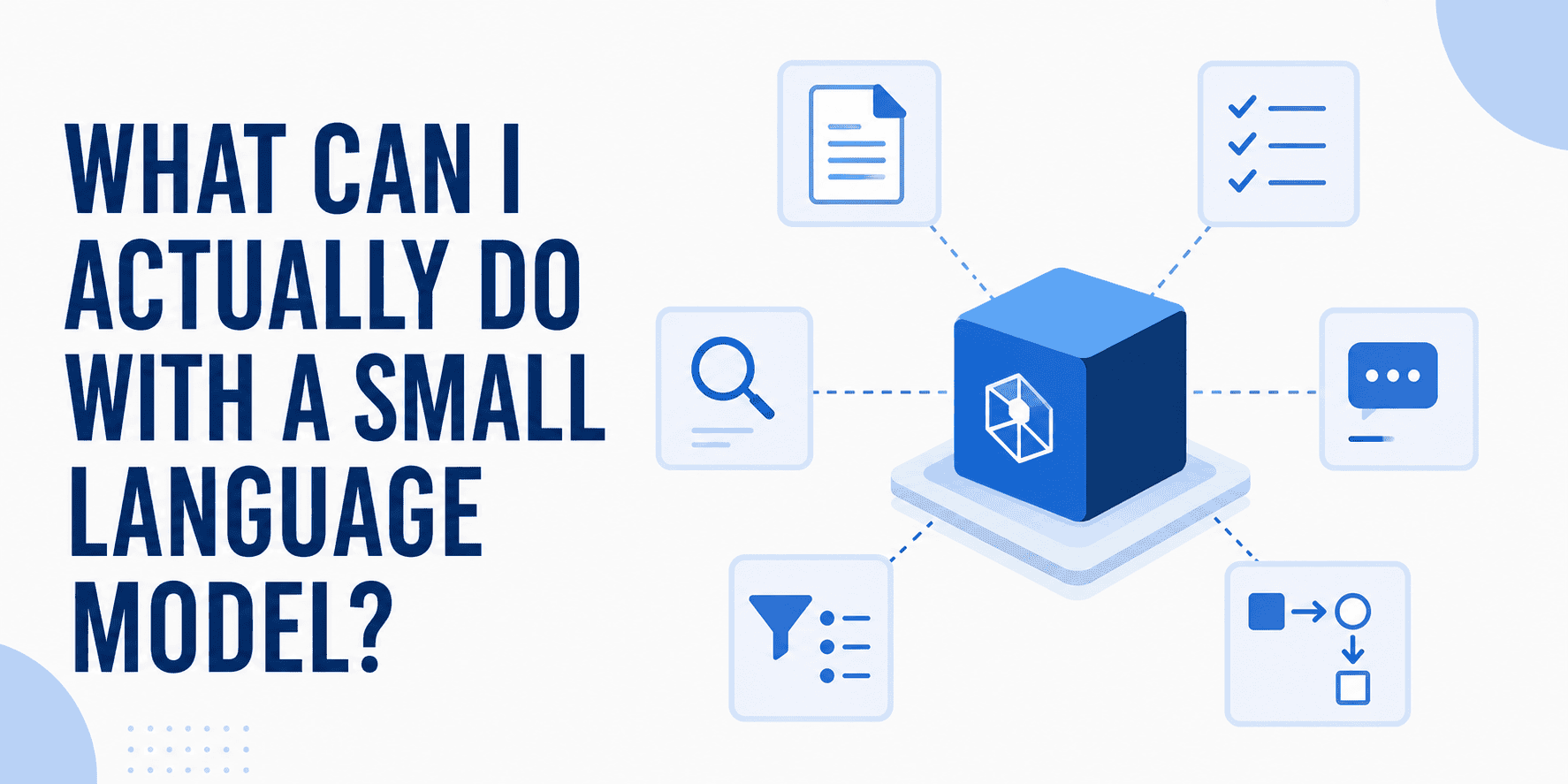
Small Language Models (SLMs) have become increasingly relevant in the era of artificial intelligence and natural language processing. Despite common misconceptions regarding their limitations, particularly the notion that they lack sufficient knowledge, SLMs possess unique capabilities that can be harnessed effectively in various scenarios. The primary contention against SLMs is their perceived inability to match the performance of larger language models; however, this perspective often overlooks the specific contexts where SLMs can excel. In this discourse, we will explore the practical applications of SLMs, highlighting their roles in environments where data privacy, cost efficiency, and latency are crucial considerations.
The primary objective of employing SLMs is to leverage their operational capabilities in situations where larger models are either impractical or unavailable. This can be achieved by focusing on tasks that do not require extensive reasoning, recall of intricate details, or managing complex contextual inputs. By understanding the limitations of SLMs and structuring tasks accordingly, users can effectively deploy these models to achieve meaningful outcomes in their applications.
Despite their advantages, SLMs are not without limitations. They struggle with tasks requiring extended reasoning or deep contextual understanding, such as solving complex mathematical problems or generating intricate code. Their recall capabilities are also restricted, as the knowledge embedded within these models is fixed at the time of training and cannot be updated dynamically. Consequently, SLMs may produce unreliable outputs when faced with niche topics or information that has changed since their last training cycle. Furthermore, the effective context window of SLMs is often less than advertised, leading to potential inaccuracies in longer inputs.
The evolution of artificial intelligence, particularly in natural language processing, will undoubtedly influence the capabilities of SLMs. As advancements continue, we may witness improvements in the efficiency and effectiveness of SLMs, making them more versatile tools in various domains. Furthermore, the integration of hybrid approaches, where SLMs work in conjunction with larger models, could optimize performance while addressing cost and latency concerns. In summary, the future landscape of language modeling will likely involve a nuanced interplay between model size, task complexity, and operational requirements, paving the way for innovative applications in the realm of artificial intelligence.
In summary, while Small Language Models may not possess the extensive knowledge or reasoning capabilities of their larger counterparts, they serve crucial roles in specific contexts. Their strengths in data privacy, cost efficiency, and real-time processing make them indispensable tools for Natural Language Understanding scientists and various industries. By acknowledging their limitations and strategically employing SLMs, organizations can harness their potential to drive innovation and efficiency in natural language applications.
Disclaimer
The content on this site is generated using AI technology that analyzes publicly available blog posts to extract and present key takeaways. We do not own, endorse, or claim intellectual property rights to the original blog content. Full credit is given to original authors and sources where applicable. Our summaries are intended solely for informational and educational purposes, offering AI-generated insights in a condensed format. They are not meant to substitute or replicate the full context of the original material. If you are a content owner and wish to request changes or removal, please contact us directly.
Source link :