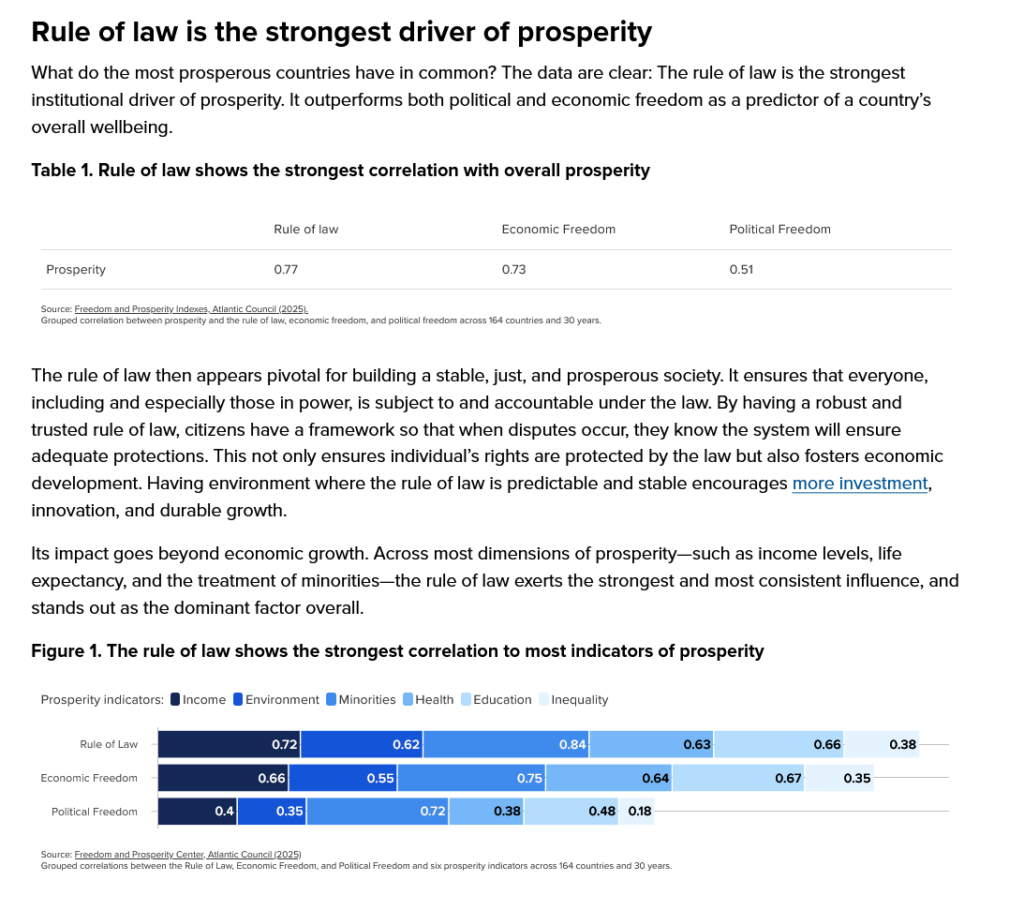
The relationship between the rule of law and various institutional dimensions is an essential area of study within the field of Data Analytics and Insights. The original post, “Institutions Are a Package Deal: What a Correlation Can’t Tell You About the Rule of Law,” emphasizes that institutions cannot be evaluated in isolation, as they are interdependent components of a complex systemic framework. This notion is crucial for Data Engineers and analysts, who often rely on correlations to derive insights from data. Understanding that these correlations may be influenced by underlying interdependencies helps to avoid erroneous conclusions and facilitates a more nuanced analysis.
The primary goal of the original post is to illustrate the interconnectedness of institutional dimensions and the critical need to analyze them collectively rather than in isolation. Achieving this goal involves utilizing analytical frameworks such as the Worldwide Governance Indicators (WGI) to demonstrate how institutions like the rule of law, government effectiveness, and corruption control exhibit mutual reinforcement. By employing these frameworks, data professionals can better understand the systemic relationships that underpin institutional effectiveness and economic performance.
While the advantages of understanding institutional interdependencies are clear, several limitations must be considered:
Advancements in artificial intelligence (AI) are poised to significantly impact the field of Data Analytics and Insights, particularly concerning institutional analysis. AI technologies, such as machine learning algorithms, can enhance the ability to process vast datasets, uncovering complex relationships that may not be immediately apparent. For data engineers, this means that the tools available for analyzing institutional interdependencies will become increasingly sophisticated, enabling more accurate modeling and forecasting.
Moreover, AI can facilitate real-time data analysis, allowing for more dynamic assessments of institutional performance as conditions evolve. This capability can lead to timely interventions and policy modifications, thereby enhancing governance outcomes. Nonetheless, it is essential for data professionals to remain vigilant regarding the ethical implications of AI in governance, ensuring that the deployment of these technologies aligns with principles of fairness and transparency.
The interconnected nature of institutional dimensions underscores the necessity for data engineers and analysts to adopt a comprehensive approach to analyzing governance systems. By recognizing the limitations of isolated analysis and leveraging advanced analytical techniques, professionals in the field can contribute to more effective governance and sustainable development. As AI continues to evolve, its integration into the analysis of institutions will further enhance the capacity to derive meaningful insights and inform policy decisions.
Disclaimer
The content on this site is generated using AI technology that analyzes publicly available blog posts to extract and present key takeaways. We do not own, endorse, or claim intellectual property rights to the original blog content. Full credit is given to original authors and sources where applicable. Our summaries are intended solely for informational and educational purposes, offering AI-generated insights in a condensed format. They are not meant to substitute or replicate the full context of the original material. If you are a content owner and wish to request changes or removal, please contact us directly.
Source link :