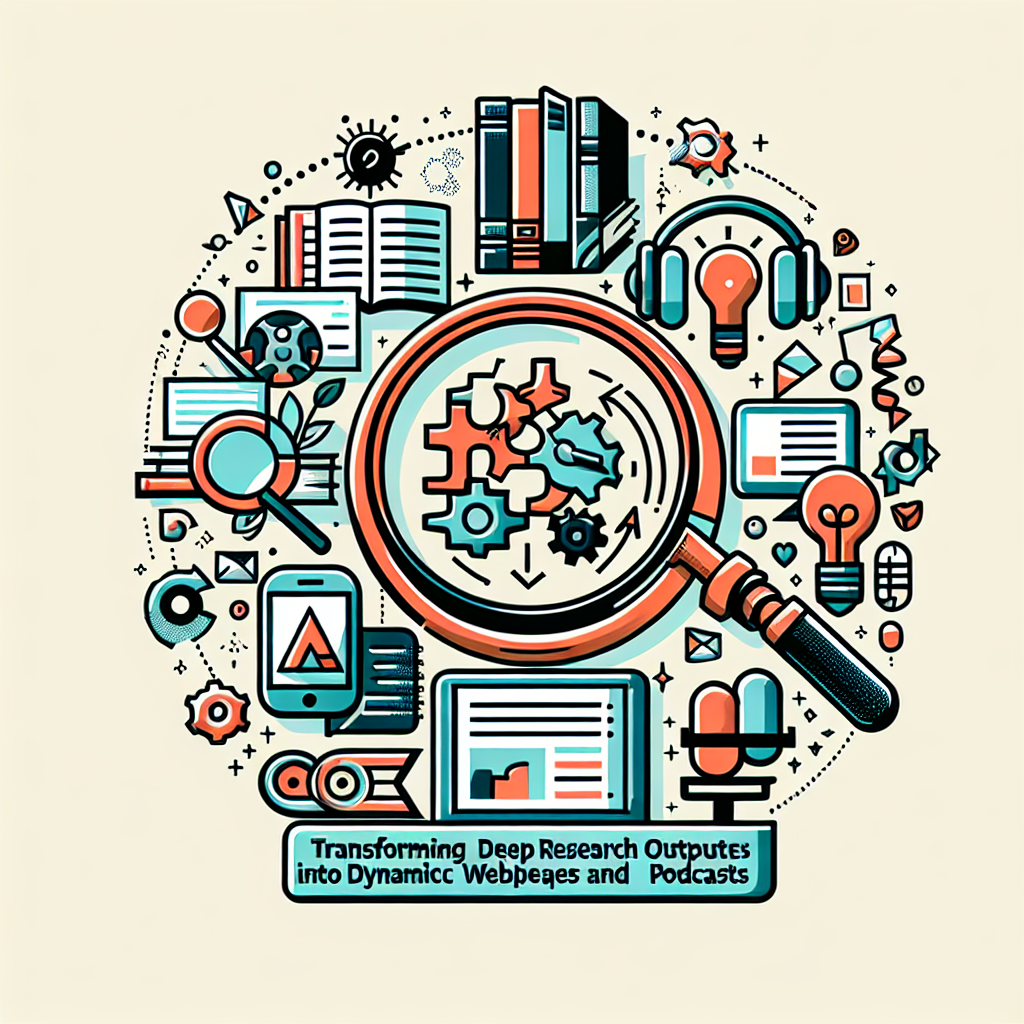
The recent advancements in the Qwen Deep Research tool, introduced by Alibaba’s Qwen Team, signify a transformative shift in the generative AI landscape, particularly for professionals engaged in research and content creation. This update enables users to swiftly convert comprehensive research reports into various digital formats, including interactive web pages and podcasts, with minimal effort. The integration of functionalities such as Qwen3-Coder, Qwen-Image, and Qwen3-TTS illustrates a significant proprietary expansion that enhances the utility of AI in research environments. By facilitating an integrated workflow, the Qwen Deep Research tool empowers users to generate, publish, and disseminate knowledge efficiently, thus aligning with the demands of modern content consumption.
The primary goal of the Qwen Deep Research update is to streamline the research process from initiation to publication by enabling multi-format output. Users can achieve this by utilizing the Qwen Chat interface to request specific information, after which the AI generates a comprehensive report. This report can subsequently be transformed into a live web page or an audio podcast through a straightforward user interface. The effective combination of AI capabilities allows for a seamless transition from text-based research to interactive and auditory formats, catering to diverse audience preferences.
– **Multi-Modal Output**: The tool allows for the creation of diverse content forms—written reports, interactive web pages, and audio podcasts—enabling comprehensive knowledge dissemination across various platforms.
– **User-Friendly Interface**: The design of the Qwen Chat interface facilitates a smooth user experience, allowing researchers to generate complex content with just a few clicks, thus reducing the time and effort typically required in traditional research workflows.
– **Integrated Workflow**: By hosting the entire process—from research execution to content deployment—Qwen eliminates the need for users to configure or maintain separate infrastructures, which enhances productivity and reduces overhead.
– **Customization Options**: The podcast feature offers a selection of different voice outputs, adding a personalized touch to audio content, which can appeal to a broader audience.
– **Real-Time Data Analysis**: The platform’s capability to pull data from multiple sources and analyze discrepancies in real time supports accurate and reliable research outputs.
However, it is crucial to note certain limitations:
– **Audio Quality and Language Constraints**: Early users have reported that the voice outputs may sound robotic compared to other AI tools. Additionally, the current version may not support language changes, limiting accessibility for non-English speakers.
– **Dependency on Proprietary Infrastructure**: While the tool offers integrated services, it also confines users within a proprietary ecosystem, potentially hindering those who prefer or require more customizable solutions.
As generative AI continues to evolve, tools like Qwen Deep Research are likely to redefine the landscape of research and content creation. The implications of this development are far-reaching:
– **Enhanced Accessibility**: The ability to generate multiple content formats from a single source could democratize access to information, allowing diverse audiences to engage with research findings in ways that suit their preferences.
– **Shift in Research Methodologies**: Traditional research practices may need to adapt to incorporate AI-driven tools that emphasize efficiency and multi-format output, potentially leading to a more collaborative and dynamic research environment.
– **Emergence of New Content Standards**: As tools become more advanced, expectations regarding the quality and presentation of research outputs may rise, prompting users to seek even greater sophistication in AI capabilities.
In summary, the Qwen Deep Research update exemplifies a significant stride in the deployment of generative AI models within the research domain, underscoring the potential for AI to enhance productivity and accessibility in knowledge-sharing. The future will likely see continued integration of such technologies, further shaping the way research is conducted and communicated.
Disclaimer
The content on this site is generated using AI technology that analyzes publicly available blog posts to extract and present key takeaways. We do not own, endorse, or claim intellectual property rights to the original blog content. Full credit is given to original authors and sources where applicable. Our summaries are intended solely for informational and educational purposes, offering AI-generated insights in a condensed format. They are not meant to substitute or replicate the full context of the original material. If you are a content owner and wish to request changes or removal, please contact us directly.
Source link :