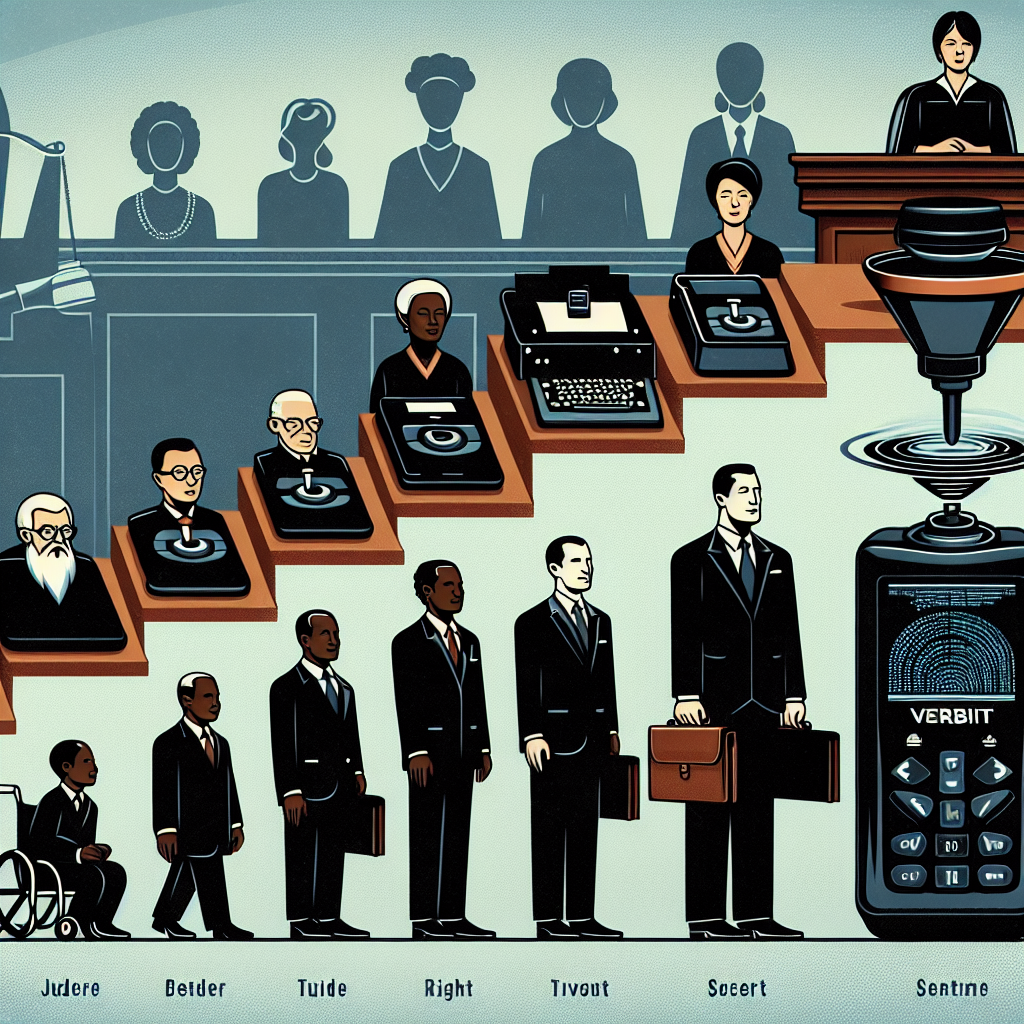
Contextual Overview of Court Reporting’s Evolution
For an extended period, “the record” within the legal system has been synonymous with text transcripts generated by adept stenographers. This traditional method has been foundational to due process, ensuring accuracy and reliability in legal proceedings. However, in light of contemporary challenges such as labor shortages among stenographers, burgeoning demand for legal services, and advancements in speech recognition technology, companies like Verbit are spearheading a transformation in court reporting. Their innovative approach aims to streamline the entire legal documentation process, enhancing the efficiency of depositions and courtroom workflows.
Main Goal and Its Achievements
The primary objective discussed in the original post is the modernization of court reporting through the integration of AI technology while maintaining the sanctity of the legal record. Verbit’s strategy does not seek to replace traditional stenographers but rather to augment their capabilities with advanced tools designed to improve accuracy and efficiency. This dual approach not only supports existing court reporting agencies but also addresses the pressing need for timely and reliable transcripts in a fast-paced legal environment.
Advantages of Integrating AI Into Court Reporting
- Enhanced Efficiency: Verbit’s tools facilitate real-time transcription, allowing legal professionals to access and utilize transcripts as the deposition unfolds. This capability significantly reduces the time spent on manual transcription processes and enables lawyers to focus on strategic aspects of their cases.
- Improved Accuracy: The integration of a “human in the loop” system mitigates the risks associated with automated transcription inaccuracies. This ensures that critical nuances in testimony are captured and corrected in real time, enhancing the accuracy of the final transcript.
- Real-Time Insights: The introduction of features like LegalVisor provides attorneys with a “virtual second chair.” This tool enables them to track inconsistencies and manage case materials efficiently, thus improving overall case strategy and preparation.
- Data Security and Confidentiality: Verbit’s commitment to maintaining client confidentiality is underscored by their policy of not using client data for AI model training. This establishes a layer of trust, ensuring that sensitive legal information is safeguarded.
Caveats and Limitations
While the advantages of AI in court reporting are substantial, several limitations warrant consideration. The reliance on technology introduces risks related to data integrity and potential biases inherent in AI systems. Furthermore, the transition from traditional methods to AI-supported processes may encounter resistance from legal professionals accustomed to established practices. It is critical for stakeholders to navigate these challenges thoughtfully to realize the full benefits of technological integration.
Future Implications of AI in Legal Proceedings
The future of court reporting is poised for significant transformation as AI technologies evolve. The integration of more sophisticated AI tools is likely to redefine the legal record, potentially shifting towards multi-modal documentation that includes searchable video files and AI-tagged content. While experts assert that such a transition is inevitable, the pace of adoption will depend on institutional acceptance and the integration of legacy systems. Legal professionals must remain adaptable and proactive in embracing these changes to enhance their practice and better serve their clients.
Disclaimer
The content on this site is generated using AI technology that analyzes publicly available blog posts to extract and present key takeaways. We do not own, endorse, or claim intellectual property rights to the original blog content. Full credit is given to original authors and sources where applicable. Our summaries are intended solely for informational and educational purposes, offering AI-generated insights in a condensed format. They are not meant to substitute or replicate the full context of the original material. If you are a content owner and wish to request changes or removal, please contact us directly.
Source link :