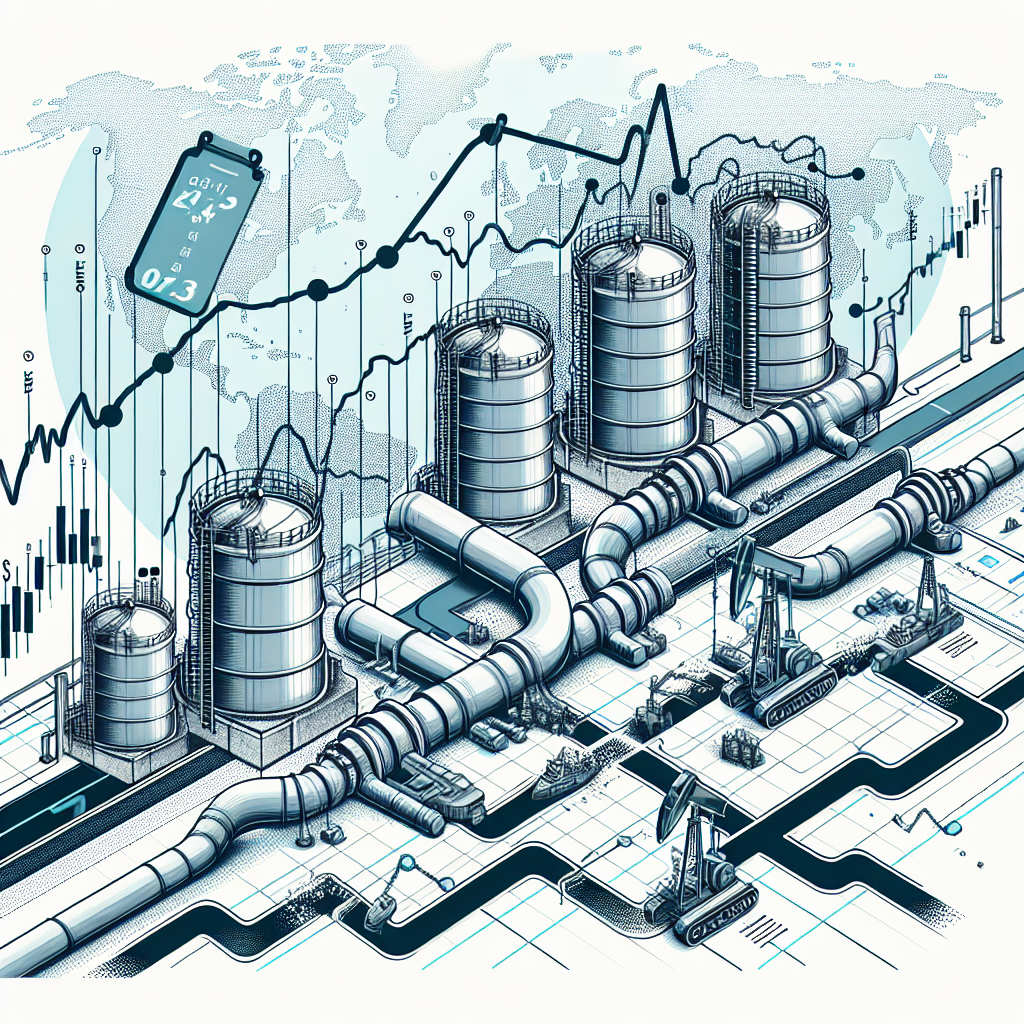
The geopolitical landscape surrounding the Middle East continues to exert a significant influence on global oil prices, particularly in the context of the West Texas Intermediate (WTI) and Brent crude benchmarks. Recent tensions in the Strait of Hormuz, a critical maritime corridor responsible for approximately 20% of global oil supply, have escalated with ongoing conflicts and military actions, notably involving Iran. Despite temporary ceasefire agreements, the stability of this vital shipping lane remains precarious, affecting oil market dynamics and pricing strategies.
As of the latest reports, WTI crude futures for May delivery have shown an uptick of 0.55%, reaching $98.33 per barrel, while Brent crude futures for June delivery have increased by over 1%, hitting $96.91 per barrel. This volatility is primarily attributable to the impact of Iranian military actions on the infrastructure of Saudi Arabia’s energy sector, which have resulted in a substantial reduction of oil output capacity by approximately 600,000 barrels per day.
The strategic significance of the East-West pipeline, which transports crude oil from processing facilities located near the Persian Gulf to export terminals at Yanbu on the Red Sea, has become increasingly pronounced as conflicts in the region have rendered alternative shipping routes less viable. Consequently, disruptions in supply chains and infrastructure attacks have compounded the challenges faced by financial professionals operating within the energy sector.
The primary goal of addressing the current energy market challenges is to stabilize oil prices and ensure the continuity of supply amid geopolitical uncertainties. Achieving this goal necessitates a multifaceted approach that includes diplomatic engagements to ensure the reopening of critical shipping lanes, as well as proactive management of domestic oil production capacities.
Financial professionals in the energy sector can leverage advancements in Artificial Intelligence (AI) to enhance predictive analytics, thereby optimizing supply chain management and pricing strategies. AI can facilitate the analysis of vast datasets related to geopolitical developments, allowing for more informed decision-making processes that mitigate potential risks associated with supply disruptions.
1. **Enhanced Predictive Analytics**: AI technologies provide robust predictive capabilities that can analyze historical data and current market trends to forecast price fluctuations in response to geopolitical events.
2. **Improved Risk Management**: By integrating AI tools, financial professionals can better identify and quantify risks associated with supply chain disruptions, enabling them to devise effective mitigation strategies.
3. **Increased Operational Efficiency**: Automation of routine tasks through AI can streamline operations in trading and logistics, allowing financial professionals to focus on strategic decision-making.
4. **Real-time Data Processing**: AI systems can process real-time data from various sources, providing timely insights that are critical for agile responses to market shifts, thereby enhancing competitiveness.
5. **Optimal Resource Allocation**: AI-driven analytics can support better allocation of resources, ensuring that investments align with market conditions and strategic objectives.
Despite these advantages, it is essential to consider limitations such as the reliance on data quality and the potential for algorithmic biases, which can affect decision-making accuracy.
As advancements in AI technology continue to evolve, their impact on the energy sector is expected to deepen. Future implications include:
– **Increased Automation**: The automation of trading strategies may lead to more dynamic pricing mechanisms, adjusting in real-time to geopolitical events that affect supply and demand.
– **Enhanced Collaboration**: The integration of AI within collaborative platforms can facilitate improved communication and data sharing among stakeholders in the energy sector, fostering a more cohesive response to market fluctuations.
– **Sustainability Initiatives**: AI can play a pivotal role in promoting sustainability within the energy sector by optimizing resource utilization and contributing to the development of renewable energy sources, thereby aligning financial objectives with environmental goals.
– **Regulatory Adaptations**: As AI becomes more central to financial decision-making in energy markets, regulatory frameworks will likely evolve to address the ethical implications and operational standards associated with its use.
In conclusion, the intersection of AI technology and financial management within the energy sector presents both opportunities and challenges. By embracing these advancements, financial professionals can enhance their strategic approaches to navigating the complexities of the current oil market landscape.
Disclaimer
The content on this site is generated using AI technology that analyzes publicly available blog posts to extract and present key takeaways. We do not own, endorse, or claim intellectual property rights to the original blog content. Full credit is given to original authors and sources where applicable. Our summaries are intended solely for informational and educational purposes, offering AI-generated insights in a condensed format. They are not meant to substitute or replicate the full context of the original material. If you are a content owner and wish to request changes or removal, please contact us directly.
Source link :