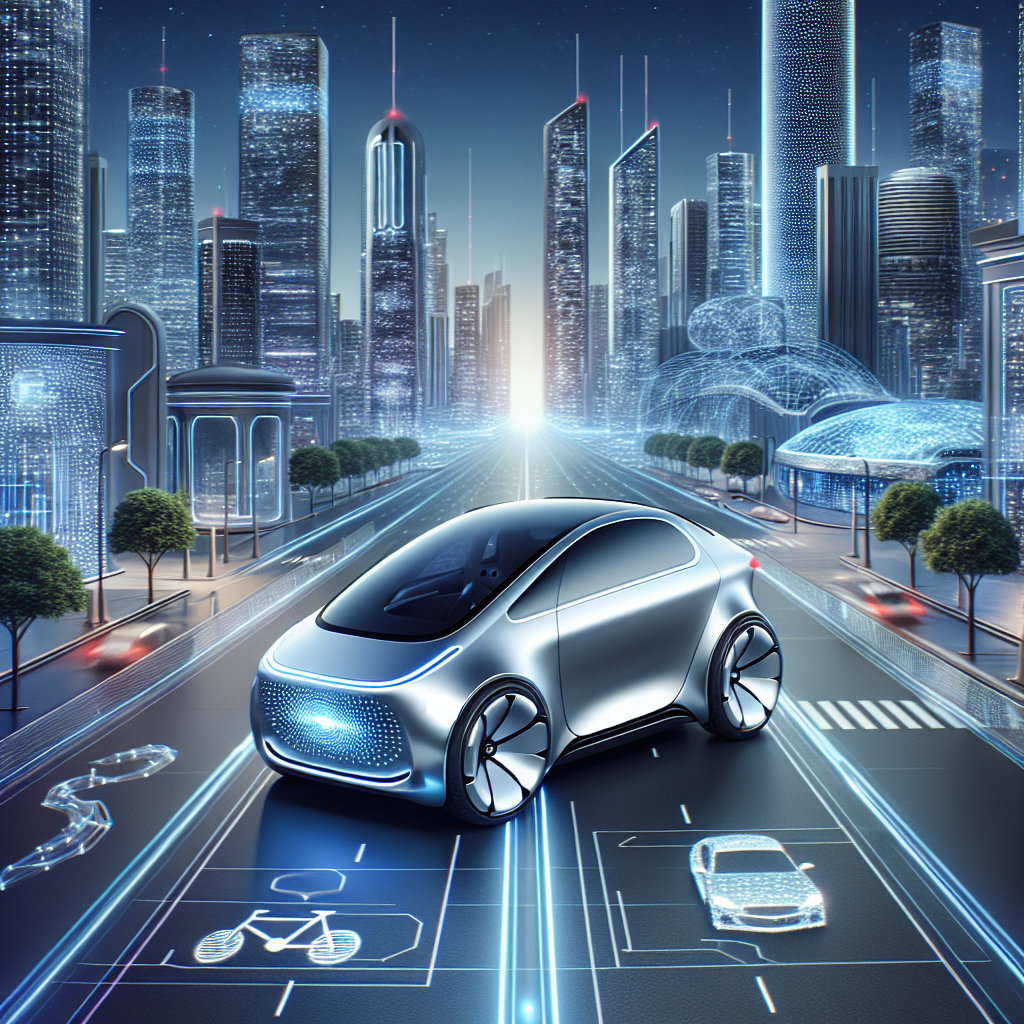
The automotive industry is undergoing a significant transformation with advancements in autonomous vehicle (AV) technologies, particularly highlighted by General Motors (GM) announcing its plans to introduce “eyes-off” driving capabilities by 2028. This technology, which will debut in the 2028 Cadillac ESCALADE IQ, signifies a pivotal shift towards fully autonomous driving, where human drivers can divert their attention from the road entirely. GM’s initiative is underpinned by extensive mapping of 600,000 miles of hands-free driving across North America and a proven safety track record, with 700 million miles driven by customers using the Super Cruise system without any crashes attributed to the technology.
The integration of Cruise, GM’s self-driving venture, adds an additional layer of expertise with over five million miles of fully driverless experience. The convergence of these technologies positions GM as a leader in personal AVs, contrasting with competitors who primarily focus on robotaxi operations. As the automotive landscape evolves, the implications of such advancements ripple through the Smart Manufacturing and Robotics sectors, impacting the responsibilities and skill sets of industrial technologists.
The principal objective of GM’s “eyes-off” driving initiative is to enhance personal mobility through the deployment of advanced autonomous driving systems. This goal can be achieved by leveraging a combination of technologies including vision systems, lidar, and radar, as well as incorporating artificial intelligence (AI) to facilitate seamless vehicle operation without driver intervention. GM has positioned itself to deliver this next phase of personal autonomy by harnessing a decade’s worth of real-world deployment experience, validated safety systems, and extensive technological resources.
1. **Enhanced Safety**: The extensive testing and proven reliability of GM’s Super Cruise technology, as evidenced by the lack of reported crashes, suggest that the eyes-off driving capability may significantly reduce accidents caused by driver inattention.
2. **Increased Convenience**: By allowing drivers to engage in other activities while the vehicle is in operation, such as enjoying in-cabin entertainment options or using conversational AI features, the driving experience is transformed into one of leisure rather than constant vigilance.
3. **Scalability of Technology**: The integration of advanced AI and robotics in GM’s manufacturing processes allows for rapid scalability and adaptation of the eyes-off technology across various vehicle models, thereby enhancing the overall product offering.
4. **Market Differentiation**: By focusing on personal AVs, GM differentiates itself from competitors like Waymo and Tesla, who are heavily invested in robotaxi services. This strategic choice positions GM to capture a broader market segment interested in personal vehicle autonomy.
5. **Resource Optimization**: The collaboration with Cruise and the pooling of resources with technical teams allows GM to streamline development efforts, ensuring that investments yield maximum technological advancements.
While these advantages are compelling, it is essential to consider potential limitations. The successful implementation of eyes-off driving technology will require continuous monitoring and updates to safety protocols, along with the resolution of regulatory and ethical concerns associated with fully autonomous vehicles.
Looking ahead, the evolution of AI will play a critical role in shaping the future of autonomous vehicle technology. As AI systems become increasingly sophisticated, their ability to analyze vast amounts of data in real-time will enhance the decision-making processes of autonomous vehicles. This advancement promises to improve not only safety and efficiency but also the overall user experience.
Moreover, the integration of AI in vehicles may lead to the development of more personalized driving experiences, where the vehicle could adapt to the preferences and habits of individual drivers. The potential for AI to facilitate predictive maintenance and improve vehicle performance will further solidify the role of technology in enhancing transportation.
In conclusion, the future of eyes-off driving technology is intrinsically linked to advancements in AI and robotics, positioning GM at the forefront of the automotive industry’s transformation. As the company navigates these advancements, the implications for industrial technologists will be profound, necessitating a re-evaluation of skill sets and knowledge bases to adapt to the changing landscape of smart manufacturing and autonomous systems.
Disclaimer
The content on this site is generated using AI technology that analyzes publicly available blog posts to extract and present key takeaways. We do not own, endorse, or claim intellectual property rights to the original blog content. Full credit is given to original authors and sources where applicable. Our summaries are intended solely for informational and educational purposes, offering AI-generated insights in a condensed format. They are not meant to substitute or replicate the full context of the original material. If you are a content owner and wish to request changes or removal, please contact us directly.
Source link :