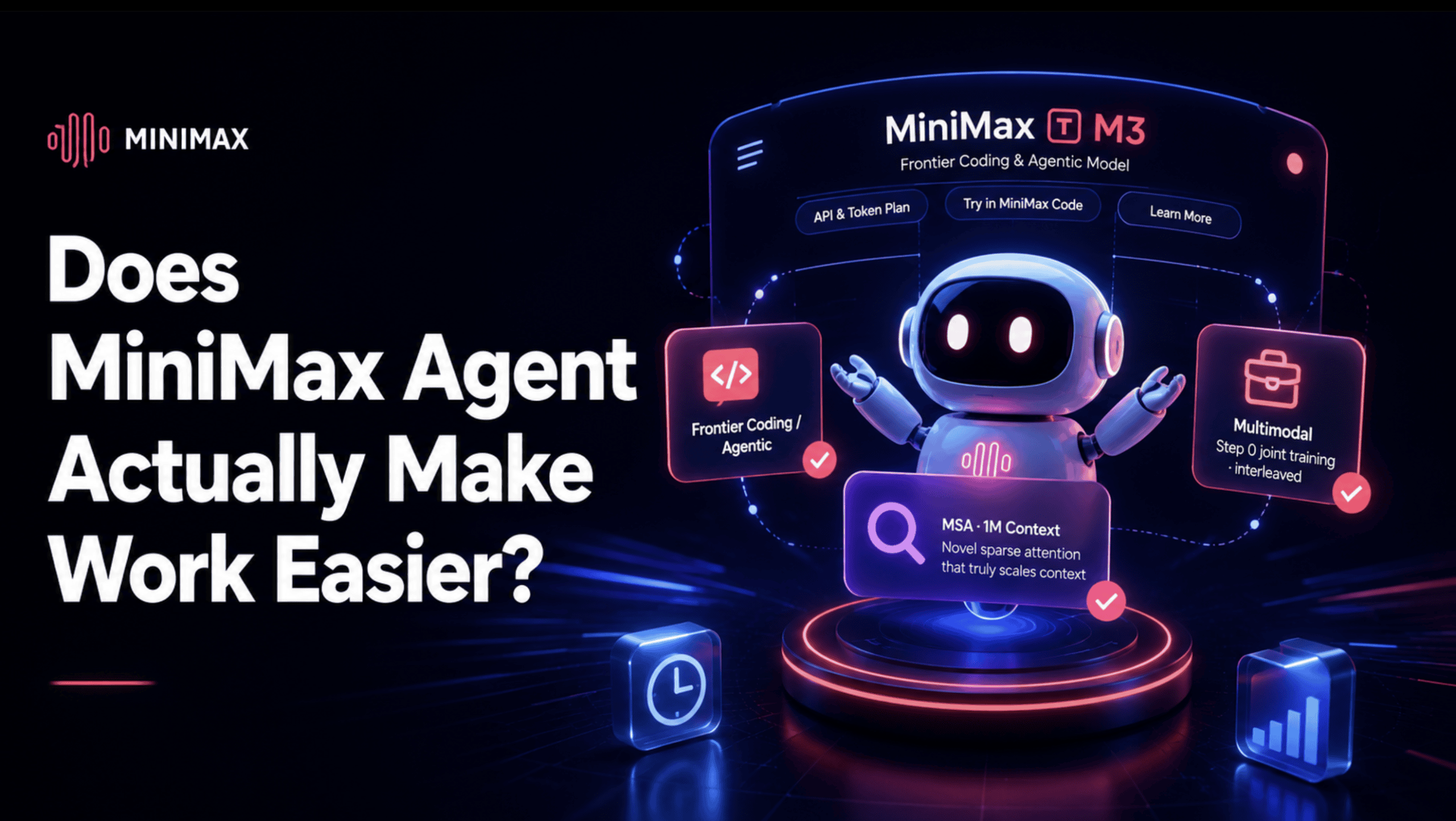
The exploration of Artificial Intelligence (AI) has led to the emergence of sophisticated architectures that aim to streamline workflows and enhance productivity. One such architecture is the MiniMax Agent, recently rebranded as Mavis. This system, developed by MiniMax, posits a multi-agent framework designed to facilitate complex tasks through the collaboration of specialized roles: the Leader, the Worker, and the Verifier. The primary inquiry this article addresses is whether the integration of such a model genuinely transforms the execution of tasks, or if it merely repositions existing efforts within a new framework.
The principal objective of the MiniMax framework is to improve efficiency in managing long, multi-step tasks by leveraging a structured team of agents. This goal is realized through the introduction of Agent Teams, which effectively distribute responsibilities to various agents based on their specialized roles. By having the Leader define task structures, the Worker execute specific sub-tasks, and the Verifier ensure output quality, the system aims to minimize friction and enhance overall productivity.
While the MiniMax architecture presents numerous advantages, there are notable limitations that must be acknowledged. The model is not universally beneficial for all task types. For shorter, less complex tasks, the overhead of managing multiple agents can outweigh the benefits, resulting in increased token usage without a corresponding improvement in output quality. Additionally, the “Cost of Consensus” phenomena reveals that unstructured debates among homogeneous agents can lead to inefficiencies, underscoring the necessity of a well-defined operational framework within the multi-agent system.
The advancements represented by the MiniMax framework highlight a significant trend in AI development toward collaborative multi-agent systems. As AI continues to evolve, we can anticipate further refinements in these architectures, leading to even greater efficiencies in task execution. Future iterations may integrate advanced machine learning techniques to enhance the adaptability and responsiveness of individual agents, potentially transforming industries that rely on complex workflows. As AI technologies become more sophisticated, the demand for structured, efficient task management frameworks will likely grow, positioning systems like MiniMax as critical tools in the arsenal of Natural Language Understanding scientists and practitioners.
The MiniMax architecture exemplifies the potential of multi-agent systems to streamline complex tasks through specialized collaboration. While it offers significant advantages in task management and verification, it is crucial for practitioners to consider the specific contexts in which these systems are deployed. The future of AI in task execution appears promising, with ongoing developments likely to enhance the efficacy and applicability of such architectures in various domains.
Disclaimer
The content on this site is generated using AI technology that analyzes publicly available blog posts to extract and present key takeaways. We do not own, endorse, or claim intellectual property rights to the original blog content. Full credit is given to original authors and sources where applicable. Our summaries are intended solely for informational and educational purposes, offering AI-generated insights in a condensed format. They are not meant to substitute or replicate the full context of the original material. If you are a content owner and wish to request changes or removal, please contact us directly.
Source link :