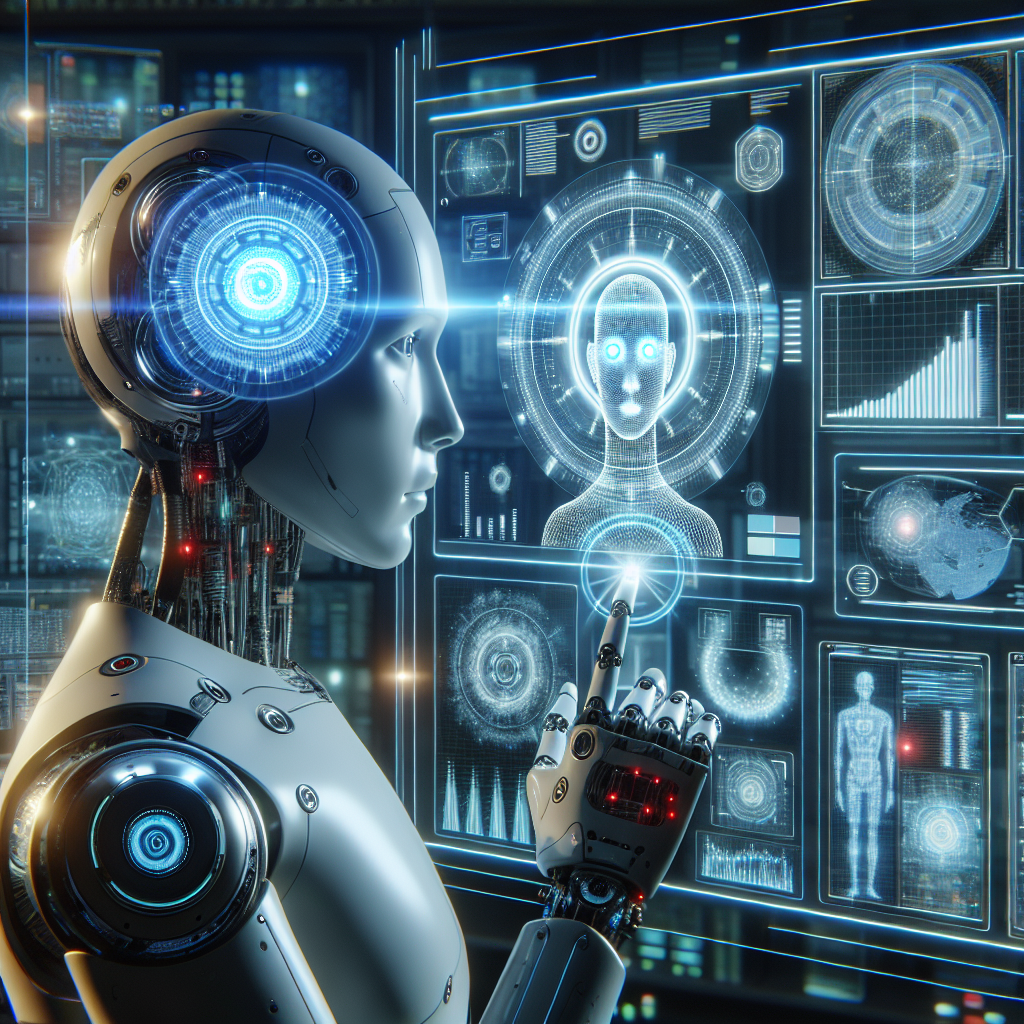
In contemporary industrial settings, the integration of robotics with advanced computer vision technologies has revolutionized human-robot interaction (HRI). Imagine a scenario where an industrial robot does not rely on pre-programmed commands or manual controls. Instead, it reacts dynamically to human presence, adjusting its tool position in real time as it tracks the user’s face. This seamless interaction not only enhances operational efficiency but also renders robotic systems more intuitive and human-centric, thereby facilitating a collaborative work environment.
The project involving the control of a Universal Robot (UR5) through real-time face tracking showcases the potential of leveraging OpenCV, a leading open-source computer vision library. Utilizing a standard webcam, the system detects human faces, computes their positions relative to the camera’s center, and translates these offsets into the robot’s Cartesian coordinates, enabling continuous updates to the robot’s tool center point (TCP). The result is a fluid, responsive motion that aligns with the user’s movements, moving beyond traditional command-based interfaces.
This innovative approach employs low-latency, real-time communication with the robot controller, validated on a UR5 CB-series robot and tested within a virtual environment using URSim. By merging classical computer vision techniques with real-time robotic control, the project exemplifies how industrial manipulators can evolve into interactive, human-aware systems.
As robots increasingly operate in environments shared with humans, the methods of interaction become paramount. Traditional control mechanisms—ranging from joysticks to haptic feedback devices—often restrict user engagement, making interaction feel cumbersome and less natural. Face tracking emerges as a revolutionary solution, enabling a hands-free, intuitive mode of interaction where robots “observe” users, responding accordingly to their gaze or position.
This project illustrates the transformative potential of vision-based robotics, demonstrating how a simple webcam and OpenCV can convert a rigid industrial arm into a responsive collaborator. By employing classical techniques for face detection, the system allows for rapid prototyping and testing in a simulated environment, emphasizing accessibility and ease of use without the need for sophisticated hardware configurations.
1. **Enhanced Human-Robot Interaction (HRI)**: The intuitive nature of face tracking fosters more natural interactions, reducing the learning curve for users. By allowing robots to respond to human presence rather than waiting for commands, this technology can make robotic systems feel more approachable and user-friendly.
2. **Improved Collaboration**: By effectively tracking human positions and gestures, robots can better coordinate their actions with human counterparts, leading to safer and more efficient collaborative workspaces. This capability is particularly beneficial in environments where multiple users interact with a robot simultaneously.
3. **Accessibility in Robotics**: The ability to utilize common hardware, like webcams, combined with OpenCV’s classical algorithms, makes robotic technology more accessible. This democratizes the development process, allowing rapid prototyping and testing without significant investment in specialized equipment or advanced machine learning frameworks.
4. **Real-Time Responsiveness**: The system’s low-latency communication allows for immediate adjustments to the robot’s movements, enhancing operational fluidity. This responsiveness is critical in dynamic environments where conditions can change rapidly.
5. **Versatility in Application**: The face-tracking technology can be adapted for various applications, including service robotics, rehabilitation, and assistive technologies, thus broadening the scope of robotic implementations in diverse fields.
6. **Simulation Capabilities**: The use of URSim facilitates safe testing and development in a simulated environment, significantly reducing risks associated with deploying physical robots. This capability allows for iterative refinement of the system without the necessity of physical hardware.
However, it is essential to acknowledge some limitations. For instance, the effectiveness of face tracking can be hampered by environmental conditions such as lighting variations and occlusions. Moreover, while the system leverages classical computer vision techniques, it may not fully utilize the capabilities offered by deep learning models, which could enhance detection accuracy in more complex scenarios.
As artificial intelligence continues to advance, the implications for face tracking and robotics are profound. Future developments in machine learning and AI could enable even greater sophistication in face detection and tracking algorithms, improving accuracy and responsiveness in a broader range of environments. Enhanced algorithms may allow for better handling of occlusions and variations in lighting, further refining the interaction between humans and robots.
Moreover, the integration of AI-driven analytics could facilitate more advanced predictive capabilities, enabling robots to anticipate human actions and intentions. This proactive approach could significantly enhance collaborative efforts, allowing robots to work alongside humans more effectively and intuitively.
In summary, the advancements in real-time face tracking with OpenCV not only enhance the functionality of industrial robots but also pave the way for more intuitive and interactive robotic systems. As technology evolves, the convergence of AI with robotics is likely to yield transformational changes, making robots more responsive, accessible, and capable of engaging in complex human interactions.
Disclaimer
The content on this site is generated using AI technology that analyzes publicly available blog posts to extract and present key takeaways. We do not own, endorse, or claim intellectual property rights to the original blog content. Full credit is given to original authors and sources where applicable. Our summaries are intended solely for informational and educational purposes, offering AI-generated insights in a condensed format. They are not meant to substitute or replicate the full context of the original material. If you are a content owner and wish to request changes or removal, please contact us directly.
Source link :