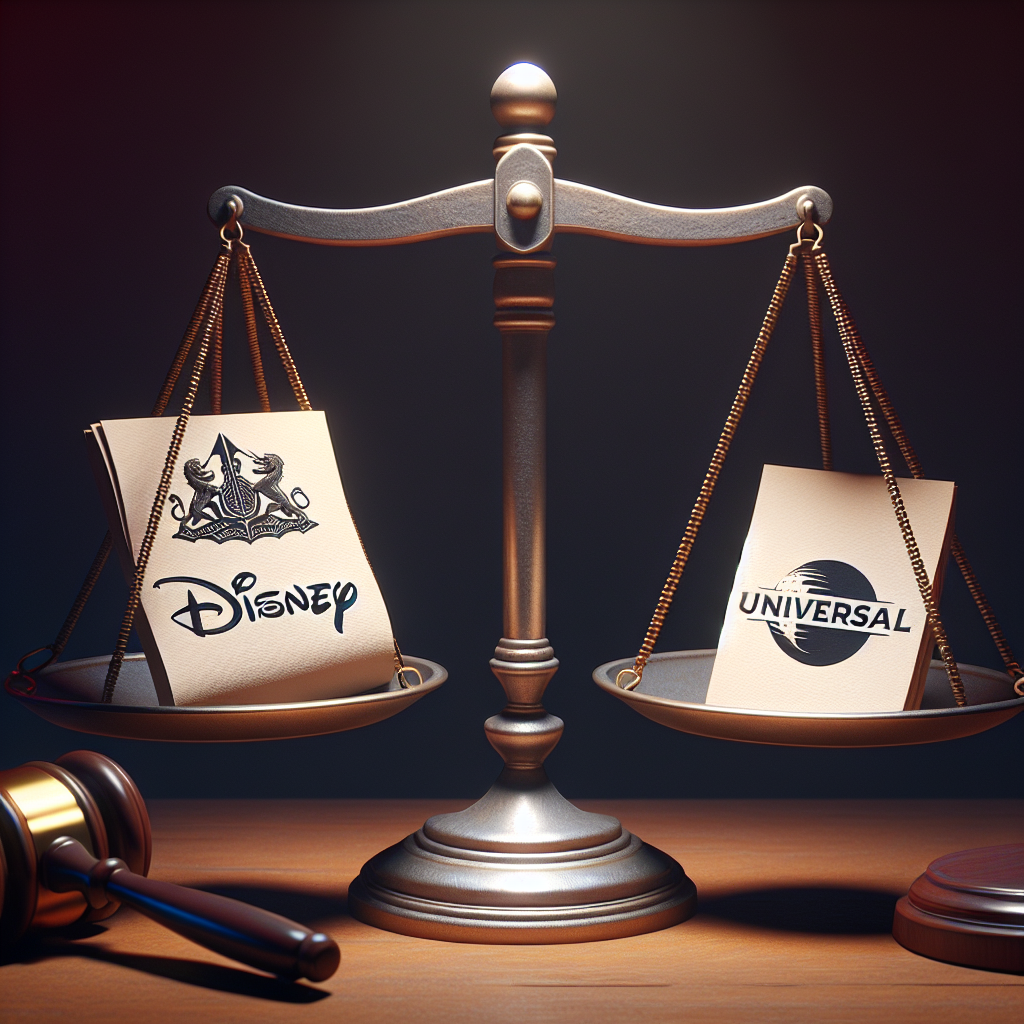
In a pivotal legal development within the realm of artificial intelligence (AI), Disney and several associated studios have initiated a lawsuit against Midjourney, an AI image-generating company, citing copyright infringement. This lawsuit has garnered significant attention, highlighting the intersection of creative rights and technological advancement in a rapidly evolving landscape. The relevance of this case extends beyond the immediate parties involved, sparking discussions among legal professionals, technologists, and content creators about the implications of AI-generated content on copyright law.
The nature of the lawsuit underscores the unique challenges posed by generative AI technologies. As the claimants assert, Midjourney allegedly used copyrighted images from major media franchises to train its AI model, enabling the reproduction of characters and settings owned by Disney and its subsidiaries. This case illustrates a broader trend in the legal arena, where traditional intellectual property frameworks are being tested against the capabilities of modern AI technologies.
The primary goal of this lawsuit is to assert the rights of copyright holders in light of AI technologies that can reproduce and derive works from existing copyrighted materials. Disney and its co-plaintiffs seek to establish a legal precedent that reinforces the necessity of obtaining permissions and licenses for the use of copyrighted content in AI training datasets. To achieve this goal, the plaintiffs aim to demonstrate that Midjourney’s operations facilitate copyright infringement, thereby undermining the economic interests of content creators and distributors.
1. **Reinforcement of Copyright Law**: The lawsuit serves as a critical reminder of the importance of copyright law in an era where AI can generate content that closely mimics existing works. By pursuing this case, Disney aims to uphold the integrity of intellectual property rights, ensuring that creators are compensated for their work.
2. **Clarification of AI’s Legal Landscape**: This lawsuit provides an opportunity for courts to clarify the legal status of AI-generated content. A ruling in favor of Disney could establish guidelines for how AI companies can operate within the bounds of copyright law, providing valuable insights for legal professionals navigating similar cases.
3. **Potential for Industry Standards**: The outcome of this case may influence industry standards regarding the use of copyrighted material in AI training. Establishing clear regulations could encourage responsible AI development that respects intellectual property rights, benefitting both creators and technology developers.
4. **Awareness and Dialogue**: The high-profile nature of this lawsuit has generated widespread media attention, fostering public discourse on the implications of AI in creative fields. This dialogue is crucial for legal professionals, as it encourages a more nuanced understanding of the intersection between technology and the law.
5. **Incentivizing Innovation**: By reinforcing the necessity of respecting copyright, the lawsuit could incentivize the development of innovative AI solutions that do not infringe on existing rights, promoting a healthier ecosystem for both creators and technologists.
Despite the advantages outlined, there are significant caveats to consider. The legal landscape surrounding AI is still evolving, and the outcome of this lawsuit may not yield clear-cut precedents. Additionally, the complexity of copyright law, particularly in relation to transformative works, may complicate the court’s ruling. There is also the risk that overly stringent regulations could stifle innovation in the AI sector.
The Midjourney case presents a critical juncture for the future of AI and copyright law. As AI technologies continue to advance, we can expect an increase in litigation surrounding intellectual property rights. Legal professionals must be prepared to navigate this changing landscape, which may require adjustments in legal strategies and an understanding of emerging technologies.
Furthermore, the outcome of this lawsuit may signal a shift in how AI companies approach the use of copyrighted material. A ruling favoring Disney could lead to more stringent licensing requirements for AI training datasets, fundamentally altering the operational frameworks of AI developers. Conversely, should the court favor Midjourney, it could embolden AI companies to expand their use of existing copyrighted materials, raising new challenges for copyright holders.
In conclusion, the ongoing developments in the Midjourney case not only reflect the complexities of copyright law in the age of AI but also highlight the imperative for legal professionals to engage with technological advancements. As we navigate through these uncharted waters, the legal community must remain vigilant and adaptable to safeguard the rights of creators while fostering innovation within the AI industry.
Disclaimer
The content on this site is generated using AI technology that analyzes publicly available blog posts to extract and present key takeaways. We do not own, endorse, or claim intellectual property rights to the original blog content. Full credit is given to original authors and sources where applicable. Our summaries are intended solely for informational and educational purposes, offering AI-generated insights in a condensed format. They are not meant to substitute or replicate the full context of the original material. If you are a content owner and wish to request changes or removal, please contact us directly.
Source link :