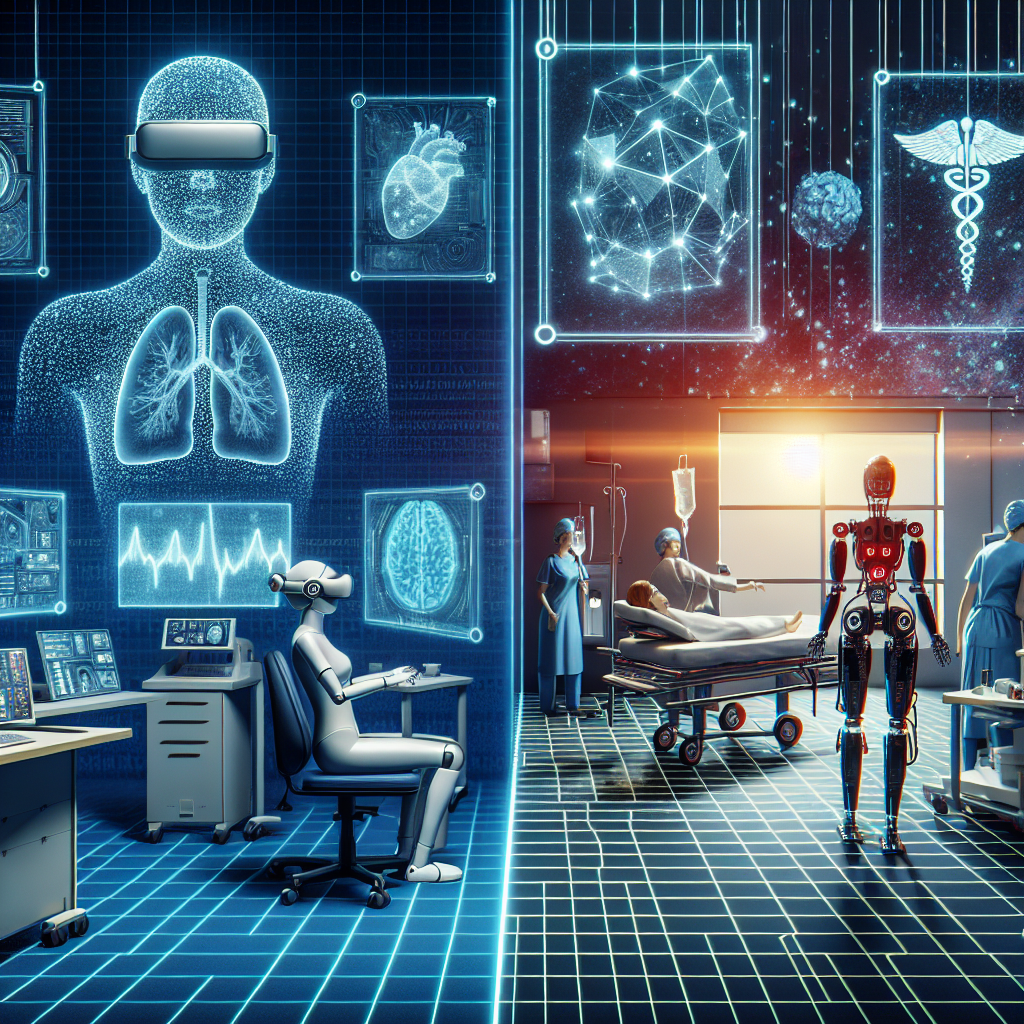
Robotic systems in healthcare have long been constrained by the challenges of data acquisition, training, and deployment. The integration of simulation technology has emerged as a pivotal solution to bridge the existing gaps, particularly through platforms like NVIDIA Isaac. This framework facilitates the development and deployment of autonomous medical robots, thereby enhancing operational efficiency and patient care. The recent advancements in NVIDIA Isaac for Healthcare highlight its capacity to streamline the workflow from simulation to real-world application, which is essential for GenAI Scientists focused on developing generative AI models and applications in medical robotics.
The primary objective of the NVIDIA Isaac framework is to provide an end-to-end pipeline that simplifies the process of creating autonomous surgical robots. This objective can be achieved through the SO-ARM starter workflow, which integrates data collection, training, and evaluation in both simulated and real environments. By enabling developers to utilize synthetic data for training purposes, the framework significantly reduces the time and resources required to develop effective robotic solutions for medical applications.
While the advantages are substantial, there are limitations to consider. The effectiveness of the model is heavily reliant on the quality and diversity of the synthetic data generated. Furthermore, the transition from simulation to real-world scenarios can introduce unforeseen challenges that require additional adjustments and validations. Developers must remain vigilant regarding these aspects to ensure the robustness of their AI models in clinical applications.
The advancement of AI technologies in healthcare robotics is poised to revolutionize the industry by enabling more sophisticated and autonomous systems. As computational capabilities improve and the algorithms become more refined, the potential for AI to perform complex surgical tasks will increase. Future iterations of platforms like NVIDIA Isaac are anticipated to incorporate more advanced machine learning techniques, providing GenAI Scientists with the tools necessary to push the boundaries of what is achievable in medical robotics.
In summary, the integration of simulation into the development cycle of healthcare robotics not only addresses existing challenges but also lays the groundwork for future innovations. As the field progresses, the collaboration between AI development frameworks and healthcare robotics will become increasingly critical in enhancing patient care and operational efficiency.
Disclaimer
The content on this site is generated using AI technology that analyzes publicly available blog posts to extract and present key takeaways. We do not own, endorse, or claim intellectual property rights to the original blog content. Full credit is given to original authors and sources where applicable. Our summaries are intended solely for informational and educational purposes, offering AI-generated insights in a condensed format. They are not meant to substitute or replicate the full context of the original material. If you are a content owner and wish to request changes or removal, please contact us directly.
Source link :