Introduction
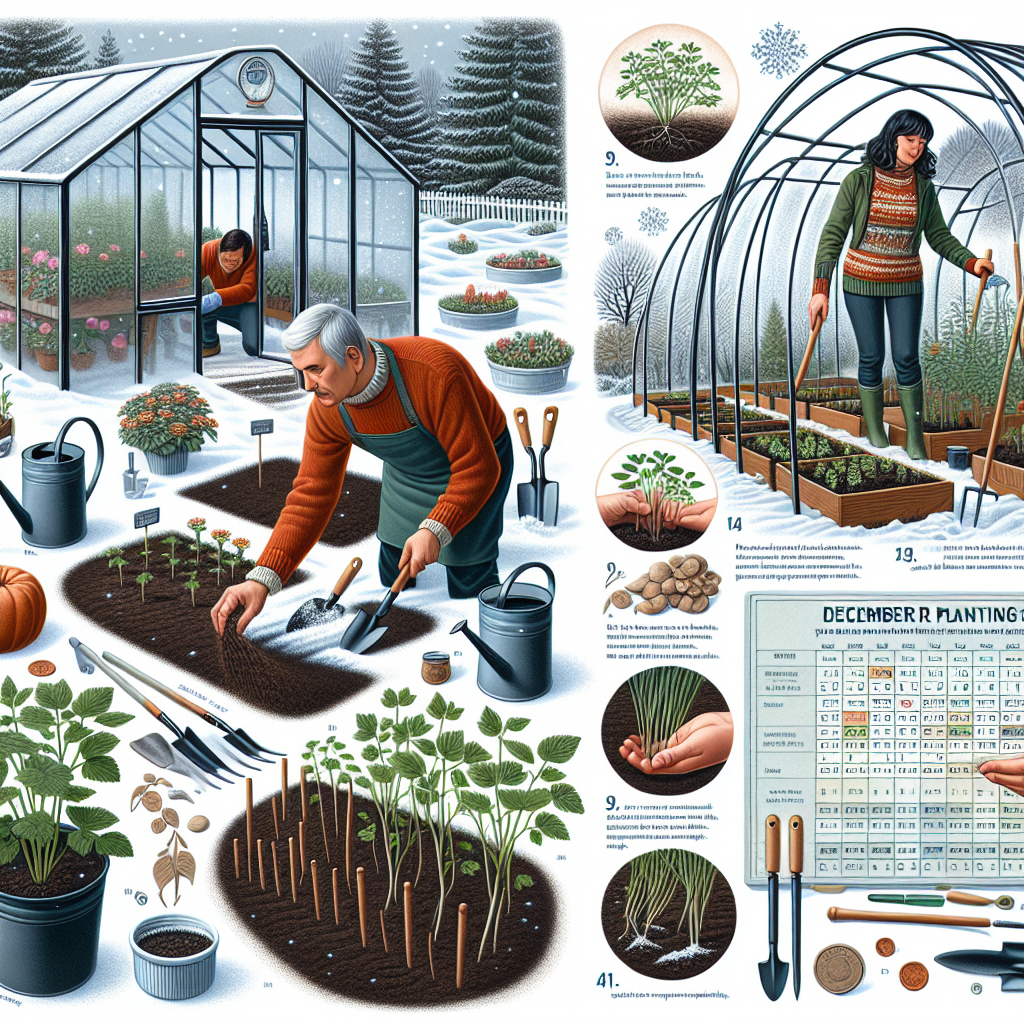
Winter presents significant challenges for herbaceous plants, particularly in regions experiencing extreme cold. Traditional cultivation methods often lead to diminished yields or complete crop failure during the winter months. However, innovative solutions such as cold frames, hoop houses, and covered rows can mitigate these challenges, enabling agricultural practitioners to cultivate crops even in December. This approach not only extends the growing season but also allows for the cultivation of cold-tolerant species, thus enhancing food security and sustainability within the AgriTech sector.
Key Objective and Implementation
The primary goal of utilizing cold frames and hoop houses in December is to create a conducive microclimate for growing cold-hardy crops. This can be achieved by ensuring that the structure is appropriately designed for the local climate and by selecting crops that can withstand low temperatures. Proper setup will allow for significant temperature increases inside the structures, often reaching 50°F (10°C) above the external environment. Farmers can thus plan their planting schedules to capitalize on these favorable conditions.
Advantages of Utilizing Cold Frames and Hoop Houses
- Extended Growing Season: Cold frames and hoop houses allow for the cultivation of crops beyond the traditional growing season, which can lead to increased yield and profitability. The ability to harvest crops such as carrots and beets as early as March or April demonstrates this potential.
- Efficient Resource Use: These structures can be constructed from readily available and repurposed materials, reducing costs associated with agricultural infrastructure. This is particularly advantageous for small-scale farmers and startups in the AgriTech domain.
- Improved Crop Quality: Crops grown in these protected environments often exhibit higher quality due to reduced exposure to harsh weather conditions. For instance, crops like spinach and kale can develop enhanced flavors and nutrients when grown under cover.
- Market Diversification: The ability to grow specialty crops during winter months opens new avenues for farmers to diversify their product offerings, catering to local markets and restaurants seeking fresh produce year-round.
Considerations and Limitations
While there are numerous advantages, certain caveats must be considered. The effectiveness of cold frames and hoop houses is contingent upon proper temperature management and ventilation. In regions with extreme cold, it is essential to ensure that the structures are well-sealed to retain heat. Additionally, the initial setup may require an investment of time and resources, which could be a barrier for some farmers. Regular monitoring and adjustment are necessary to prevent overheating during sunnier days, which can be detrimental to crops.
Future Implications: The Role of AI in AgriTech
The integration of artificial intelligence (AI) in agriculture is poised to revolutionize practices such as those involving cold frames and hoop houses. AI technologies can enhance environmental monitoring, allowing for real-time adjustments to temperature and humidity levels, optimizing growing conditions for various crops. Furthermore, predictive analytics can assist farmers in making data-driven decisions regarding planting schedules and crop varieties, thereby maximizing yield and minimizing waste.
As AI continues to evolve, we may witness advancements in automated systems for managing cold frames and hoop houses, reducing labor costs while enhancing precision in agricultural practices. The future of winter crop cultivation appears promising, as these innovations will enable farmers to adapt more readily to climate variability and consumer demand for fresh produce.
Conclusion
In summary, employing cold frames and hoop houses during December presents a viable strategy for overcoming the challenges posed by winter conditions in agriculture. By focusing on the cultivation of cold-tolerant crops and leveraging modern technology, agricultural innovators can not only improve their productivity but also contribute to a more sustainable food system. The growing integration of AI in agriculture further enhances this potential, promising a future where winter crop cultivation is both efficient and profitable.
Disclaimer
The content on this site is generated using AI technology that analyzes publicly available blog posts to extract and present key takeaways. We do not own, endorse, or claim intellectual property rights to the original blog content. Full credit is given to original authors and sources where applicable. Our summaries are intended solely for informational and educational purposes, offering AI-generated insights in a condensed format. They are not meant to substitute or replicate the full context of the original material. If you are a content owner and wish to request changes or removal, please contact us directly.
Source link :
Click Here