In the dynamic landscape of artificial intelligence (AI), the memory architectures employed by AI agents play a pivotal role in enhancing their functionality. This article delineates the distinctions between vector databases and graph relational agent generation (RAG), elucidating when each method proves advantageous. Our exploration will encompass:
With this overview established, we shall proceed to a deeper examination of these memory systems.
AI agents necessitate long-term memory to function effectively in complex, multi-step processes. An AI agent devoid of memory operates as a stateless entity that resets its context after each interaction. As the quest for autonomous systems that manage ongoing tasks intensifies—such as coding assistants that monitor project frameworks or research agents that conduct continuous literature reviews—the methodologies for storing, retrieving, and updating contextual information become paramount.
Currently, vector databases are recognized as the prevailing standard for these functions, employing dense embeddings for semantic searching. However, as demand for intricate reasoning escalates, graph RAG—an architecture that amalgamates knowledge graphs with large language models (LLMs)—is gaining recognition as an effective structured memory solution.
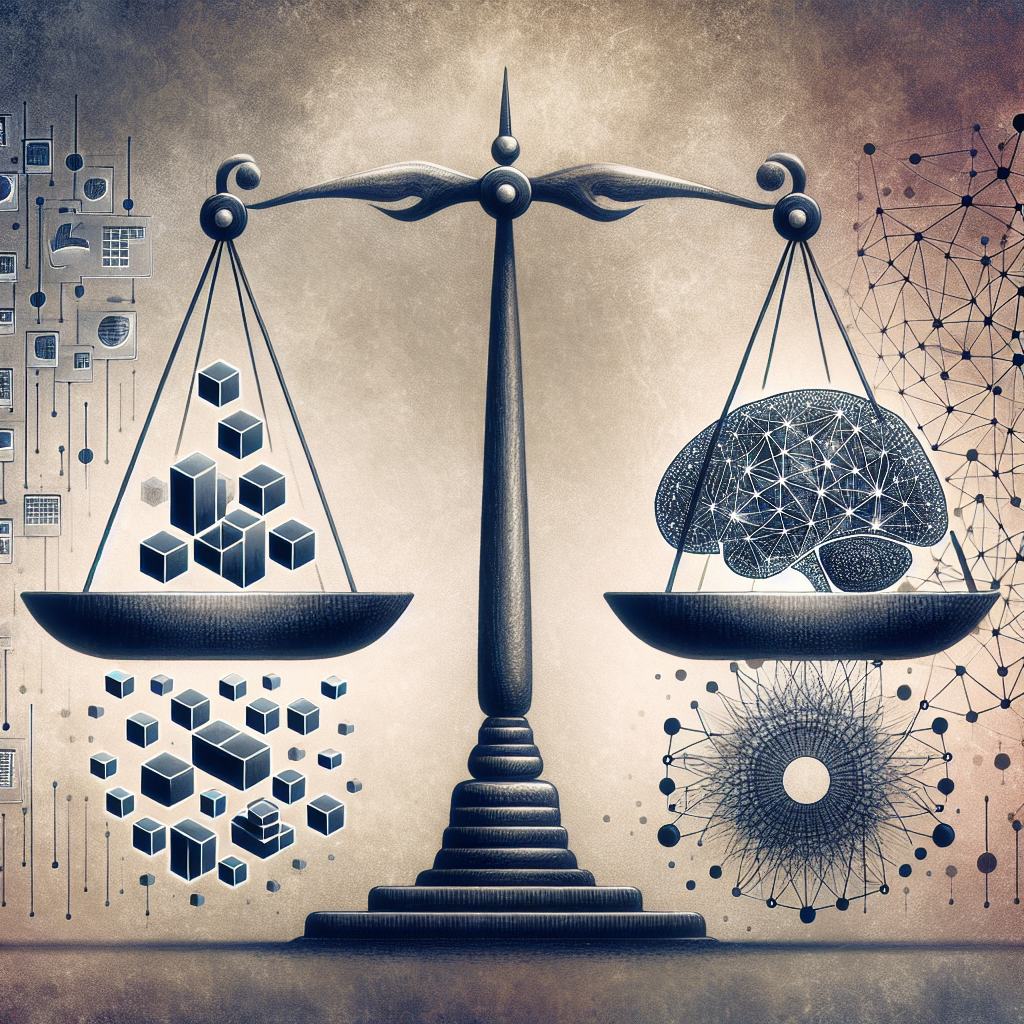
On one hand, vector databases are optimal for broad similarity matching and unstructured data retrieval; on the other, graph RAG shines when context windows are constrained and multi-hop relationships, factual precision, and intricate hierarchical structures are essential. This dichotomy underscores the flexible matching capabilities of vector databases versus the precise reasoning capabilities of graph RAG.
To clarify their respective roles, this article will investigate the theoretical foundations, practical strengths, and limitations of both memory architectures, offering a framework to guide practitioners in selecting or combining these systems.
Vector databases conceptualize memory as dense mathematical vectors, or embeddings, positioned in high-dimensional space. An embedding model maps various data forms—text, images—into arrays of numerical values, wherein the geometric distance between vectors reflects their semantic similarity.
This architecture empowers AI agents to effectively manage unstructured text. A typical application involves storing conversational histories, enabling agents to recall prior interactions by searching for semantically related past exchanges. Moreover, vector stores facilitate the retrieval of pertinent documents, API documentation, or code snippets based on the implied meaning of user queries, significantly enhancing the robustness of interactions beyond mere keyword matching.
While vector databases are advantageous for agent memory—offering expedient searches across extensive datasets and ease of integration—they encounter limitations in advanced memory tasks. They often fail to navigate multi-step logic; for instance, if an agent needs to discern the connection between entities A and C, but only possesses data showing A’s connection to B and B’s to C, a mere similarity search may overlook crucial information.
Additionally, challenges arise when retrieving large data sets or managing noisy results. With intricate, interconnected facts, these databases may yield related but irrelevant information, cluttering the agent’s context window with less useful data.
Graph RAG addresses the shortcomings of semantic search by merging knowledge graphs with LLMs. In this framework, memory is organized into discrete entities—represented as nodes (e.g., a person, a company)—with explicit relationships depicted as edges (e.g., “works at” or “uses”).
Agents utilizing graph RAG construct and update a structured world model, extracting and adding entities and relationships to the graph as they acquire new information. Search operations in this memory system involve navigating explicit paths to obtain precise context.
Graph RAG’s primary advantage lies in its precision. Because retrieval is based on explicit relationships rather than semantic proximity, the likelihood of error diminishes. If a relationship is absent from the graph, the agent cannot infer it solely based on graph data.
This architecture excels in complex reasoning tasks and is particularly suited for structured queries. For example, locating the direct reports of a manager who sanctioned a budget necessitates tracing a path through the organization—an operation simple for graph traversal but challenging for vector-based search. Furthermore, graph RAG enhances explainability, presenting a clear, auditable sequence of nodes and edges rather than an ambiguous similarity score, which is crucial for applications demanding high compliance and transparency.
However, graph RAG is not without challenges. The complexity of implementation is significant, requiring robust entity-extraction pipelines to convert raw text into nodes and edges, often necessitating finely-tuned prompts, rules, or specialized models. Developers must also establish and maintain an ontology or schema, which can be inflexible and difficult to adapt as new domains emerge. The cold-start problem presents another hurdle: unlike vector databases, which become functional upon embedding text, a knowledge graph necessitates considerable initial effort to populate before it can address complex queries.
When designing memory for an AI agent, it is essential to recognize that vector databases are adept at managing unstructured, high-dimensional data and are well-suited for similarity search, while graph RAG excels at representing entities and explicit relationships where such relationships are critical. The selection should depend on the inherent structure of the data and the anticipated query patterns.
Vector databases are particularly effective for unstructured data types—such as chat logs, general documentation, or extensive knowledge bases derived from raw text. They are ideal when the intent behind a query is to explore general themes, such as “Find concepts similar to X” or “What discussions have occurred regarding topic Y?” From a project management viewpoint, they present a low setup cost and maintain satisfactory accuracy, making them the default option for initial prototypes and general-purpose assistants.
In contrast, graph RAG is preferable for datasets characterized by inherent structure or semi-structured relationships, including financial records, codebase dependencies, or intricate legal documents. It is the preferred architecture when queries demand precise, categorical responses, such as “What is the exact relationship between X and Y?” or “What are all dependencies of this specific component?” The higher setup costs and ongoing maintenance requirements associated with a graph RAG system are warranted by its capacity to deliver high precision on specific connections where vector searches may overgeneralize or err.
Looking ahead, the evolution of advanced agent memory is likely to favor a hybrid architecture that integrates both systems. Leading AI frameworks increasingly adopt a dual approach by employing vector databases for initial retrieval, harnessing semantic search to identify relevant entry nodes within extensive knowledge graphs. Subsequent to this identification, the system transitions to graph traversal to extract the precise relational context associated with those nodes. This hybrid methodology synergizes the expansive, flexible recall capabilities of vector embeddings with the stringent, deterministic precision of graph traversal.
Vector databases are the most practical foundation for general-purpose agent memory, owing to their straightforward deployment and robust semantic matching capabilities. For a multitude of applications—ranging from customer support bots to basic coding assistants—they provide adequate context retrieval.
However, as developments in AI progress toward autonomous agents equipped to manage enterprise-level workflows—requiring the ability to reason over complex dependencies, ensure factual accuracy, and elucidate their logic—graph RAG emerges as an essential component. Developers should consider a phased strategy: initiating agent memory with a vector database for basic conversational grounding, then selectively incorporating knowledge graphs as the agent’s reasoning demands escalate, particularly as they approach the limitations of semantic search.
Disclaimer
The content on this site is generated using AI technology that analyzes publicly available blog posts to extract and present key takeaways. We do not own, endorse, or claim intellectual property rights to the original blog content. Full credit is given to original authors and sources where applicable. Our summaries are intended solely for informational and educational purposes, offering AI-generated insights in a condensed format. They are not meant to substitute or replicate the full context of the original material. If you are a content owner and wish to request changes or removal, please contact us directly.
Source link :