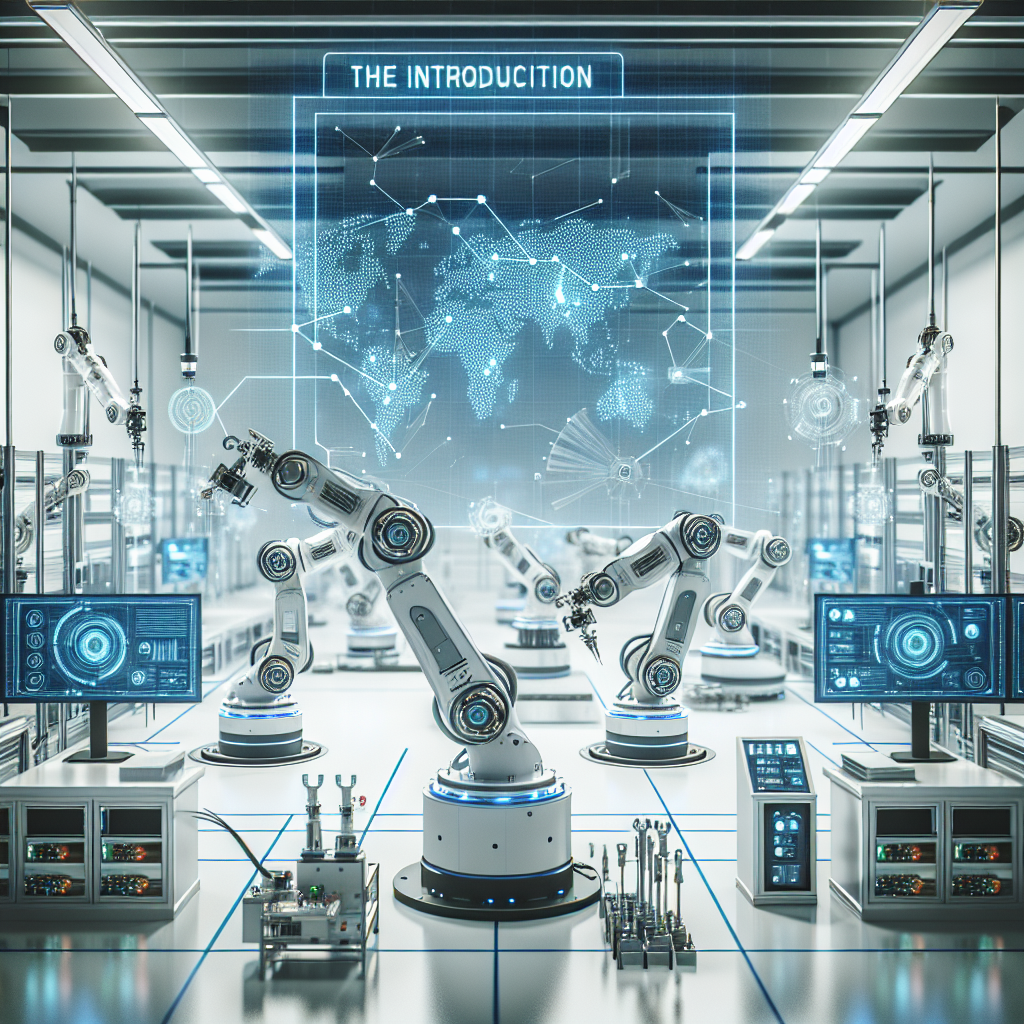
Comau S.p.A., a prominent player in the automation industry, has recently unveiled its MyCo family of collaborative robots (cobots). This development signifies the company’s strategic expansion in the realm of collaborative robotics, aimed at fostering safe, flexible, and efficient interactions between humans and robots across diverse sectors. The MyCo line comprises six lightweight robotic arms, each engineered for specific payload capacities ranging from 3 to 15 kg and reach distances between 590 to 1300 mm. This innovation aligns with the projected growth trajectory of the global collaborative robotics market, anticipated to experience a compound annual growth rate (CAGR) of 15% from 2024 to 2028. Such growth is propelled by increasing demands from non-traditional sectors, including food and beverage, pharmaceuticals, renewable energy, and logistics.
The primary objective of introducing the MyCo cobot family is to provide an adaptable, cost-effective solution for businesses looking to enhance operational efficiency and productivity. Comau aims to achieve this through several key strategies:
1. **Rapid Deployment**: MyCo robots are designed for quick installation and intuitive programming, allowing businesses to swiftly integrate them into existing workflows.
2. **User-Friendliness**: The robots support graphical programming and manual guidance, making them accessible even to users with limited technical expertise.
3. **Versatile Applications**: MyCo cobots can be employed in various tasks, including warehousing, packaging, and light assembly, reflecting their adaptability to dynamic production environments.
These strategies collectively contribute to the overarching goal of enhancing human-robot collaboration and improving operational safety in industrial settings.
The MyCo cobot family offers several benefits that can significantly impact manufacturing processes. These advantages are substantiated by the features outlined by Comau:
– **Rapid Deployment**: The lightweight design and straightforward programming facilitate quick setup and redeployment, enabling manufacturers to respond effectively to fluctuating production demands.
– **High Precision**: Featuring a repeatability rate as low as ±0.02mm, MyCo robots are suitable for precision tasks, such as arc welding, where accuracy is paramount.
– **Flexible Integration**: MyCo is fully compatible with the Robot Operating System (ROS 2), allowing for seamless integration into existing systems, with options for various mounting configurations.
– **Durability**: The cobots come with standard IP54 protection, with an optional upgrade to IP66 for operations in harsh environments, ensuring reliability and longevity.
– **User-Friendly Interfaces**: MyCo supports graphical programming and remote calling capabilities, simplifying operations and enhancing usability for non-technical personnel.
Despite these advantages, it is essential to consider potential limitations, such as the initial investment required for implementation and the need for ongoing maintenance and updates to software systems.
The integration of artificial intelligence (AI) into collaborative robotics is poised to revolutionize the industry further. As AI technologies advance, they will enhance the capabilities of cobots like the MyCo line, enabling more sophisticated decision-making processes and improved adaptability to complex environments. For instance, AI can facilitate real-time data analysis, allowing cobots to learn from their interactions and optimize their performance over time.
Moreover, the incorporation of AI will likely lead to the development of more autonomous systems, reducing the reliance on human operators for routine tasks. This evolution will not only enhance productivity but also allow human workers to focus on more strategic and creative endeavors within their organizations.
In conclusion, the introduction of Comau’s MyCo cobot family represents a significant advancement in collaborative robotics, providing manufacturers with versatile, user-friendly solutions that enhance operational efficiency. As AI technologies continue to evolve, their integration with collaborative robotics will further transform the landscape, offering unprecedented opportunities for innovation in smart manufacturing and robotics.
Disclaimer
The content on this site is generated using AI technology that analyzes publicly available blog posts to extract and present key takeaways. We do not own, endorse, or claim intellectual property rights to the original blog content. Full credit is given to original authors and sources where applicable. Our summaries are intended solely for informational and educational purposes, offering AI-generated insights in a condensed format. They are not meant to substitute or replicate the full context of the original material. If you are a content owner and wish to request changes or removal, please contact us directly.
Source link :