
Contextual Framework In the realm of modern technology, the evolution of threats necessitates a reevaluation of traditional radar and electronic warfare (EW) systems. Conventional systems, which depend heavily on static threat libraries, are increasingly susceptible to vulnerabilities presented by mode-agile emitters. These emitters operate in non-traditional modes that often evade recognition by predefined databases. To address this pressing challenge, cognitive radio frequency (RF) systems leverage advancements in artificial intelligence (AI) and machine learning (ML). By enabling autonomous perception, reasoning, and response capabilities, cognitive RF systems are poised to enhance the detection and mitigation of unknown threats within the RF spectrum. This transformation calls for a comprehensive understanding of cognitive AI/ML radar and EW systems, including their architectural components and the methodologies required for effective training and validation. Main Goal and Achievement Strategies The primary objective of enhancing cognitive radar and electronic warfare systems is to develop frameworks that can autonomously identify and respond to unrecognized threats in real-time. Achieving this goal involves the integration of AI-driven processes that facilitate advanced RF acquisition, analysis, and waveform synthesis. Furthermore, the implementation of iterative closed-loop testbeds is essential for the continuous improvement of AI/ML algorithms. These testbeds allow for the rigorous validation of system performance through hardware-in-the-loop (HIL) and system-in-the-loop (SIL) testing. By continuously refining the algorithms through real-world and simulated datasets, the systems can adapt to evolving threats, thereby significantly increasing their operational efficacy. Advantages of Cognitive Radar and EW Systems Enhanced Threat Detection: The integration of AI and ML allows these systems to detect mode-agile emitters that traditional systems would miss, thereby providing a crucial advantage in diverse operational environments. Autonomous Decision-Making: Cognitive systems can autonomously analyze incoming signals and make informed decisions without human intervention, leading to faster and more effective responses to threats. Iterative Learning and Adaptation: Through closed-loop testing, cognitive radar systems can learn from previous encounters with threats, allowing for continuous algorithm improvement and adaptation to new tactics employed by adversaries. Resource Efficiency: By automating threat assessment and response processes, cognitive systems free up valuable human resources, enabling personnel to focus on higher-level strategic tasks. However, it is essential to note that the reliance on AI/ML technologies also introduces challenges, such as the need for extensive training datasets and computational resources. Additionally, the systems’ effectiveness may be contingent upon the quality of the algorithms and their training processes. Future Implications of AI Developments The future of cognitive radar and electronic warfare systems is closely tied to the ongoing advancements in AI technologies. As AI algorithms continue to evolve, they will become increasingly adept at handling complex and dynamic threat environments. Future developments may lead to systems that not only identify threats but also predict potential attack vectors based on historical data and behavioral analysis. Furthermore, as the integration of cognitive systems becomes more widespread, there is the potential for collaboration across various sectors, including defense, telecommunications, and smart farming, thereby fostering innovations that enhance overall security and operational capabilities. Ultimately, the trajectory of AI in this field suggests a significant shift towards more autonomous, intelligent, and responsive defense mechanisms, ensuring preparedness against emerging threats in an increasingly complex technological landscape. Disclaimer The content on this site is generated using AI technology that analyzes publicly available blog posts to extract and present key takeaways. We do not own, endorse, or claim intellectual property rights to the original blog content. Full credit is given to original authors and sources where applicable. Our summaries are intended solely for informational and educational purposes, offering AI-generated insights in a condensed format. They are not meant to substitute or replicate the full context of the original material. If you are a content owner and wish to request changes or removal, please contact us directly. Source link : Click Here

Context and Overview of AgTech Investments In the second quarter of 2026, the AgTech landscape witnessed significant activity, with 158 startups collectively securing $2 billion in venture capital funding. This signifies a 6% increase in investment compared to the previous quarter, albeit with a slight decline in deal volume by 3%. Notably, a single deal involving ICEYE, a Finnish operator of a radar-satellite constellation, accounted for over 25% of the total capital raised. This phenomenon highlights a trend of stability in the AgTech investment sector, where funding has consistently averaged around $1.5 billion across 182 deals per quarter over the past 14 quarters. Such consistency marks a departure from the volatility experienced during the investment cycles of 2021–2022, suggesting a maturation of the market. AgTech in the Broader Venture Capital Landscape To contextualize the AgTech investment figures within the broader venture capital environment, CB Insights reported that $212.9 billion was deployed globally in Q2 2026 across approximately 7,086 deals. The first half of 2026 has set an unprecedented record for global venture investments, surpassing the previous high of $375 billion set during the peak of the last bull market in 2021 by over $135 billion. However, it is noteworthy that approximately 81% of this capital was channeled into mega-rounds—deals exceeding $100 million—leaving early-stage startups facing a challenging fundraising climate characterized by longer cycles and reduced capital availability. Main Goal and Achievements The primary goal of this continued investment activity in AgTech is to foster innovation and scalability within the agricultural technology sector. Achieving this objective necessitates a focus on attracting more diversified investments across various AgTech domains rather than relying heavily on few high-value deals. As the sector stabilizes, it can create a more conducive environment for early-stage ventures, encouraging the development of pioneering solutions that address pressing agricultural challenges. Advantages of Recent Investment Trends Increased Funding Stability: The steady average of $1.5 billion in funding per quarter over 14 quarters indicates a robust investment climate that can help AgTech startups maintain operational continuity. Diverse Sector Growth: The breakdown of investments across various sectors, such as climate monitoring and digital agronomy, points to a comprehensive approach to agricultural innovation. Encouragement of M&A Activity: The 15 AgTech exits recorded last quarter, all through mergers and acquisitions (M&A), emphasize healthy market dynamics that can lead to further investment and consolidation in the sector. Long-term Growth Potential: The historical performance of the AgTech sector, which had its highest exit rates in the last decade, suggests a trajectory for sustained growth and profitability for investors and startups alike. Limitations and Caveats Despite the positive trends, there are limitations to consider. The reliance on mega-rounds for a substantial portion of capital deployment may create disparities, leaving early-stage startups at a disadvantage. Furthermore, the declining deal volume could indicate potential market saturation or investor fatigue in certain segments of AgTech. Future Implications and the Role of AI As we look to the future, the integration of artificial intelligence (AI) in AgTech is poised to revolutionize the sector. AI technologies can enhance precision agriculture, improving crop yield and resource efficiency by analyzing vast datasets for actionable insights. Innovations in AI-driven analytics and machine learning could lead to the development of smarter farming techniques, optimizing supply chains, and enabling predictive modeling for better decision-making. This evolution will not only streamline operations but also address critical global challenges such as food security and sustainability, further attracting investment and fostering growth in the AgTech ecosystem. Disclaimer The content on this site is generated using AI technology that analyzes publicly available blog posts to extract and present key takeaways. We do not own, endorse, or claim intellectual property rights to the original blog content. Full credit is given to original authors and sources where applicable. Our summaries are intended solely for informational and educational purposes, offering AI-generated insights in a condensed format. They are not meant to substitute or replicate the full context of the original material. If you are a content owner and wish to request changes or removal, please contact us directly. Source link : Click Here

Contextualizing Vulnerabilities in Modern Automotive Systems As modern automobiles transition into sophisticated digital platforms, they increasingly resemble multi-ton computers on wheels. This evolution necessitates a paradigm shift in how drivers approach vehicle security, akin to the updates required for smartphones and laptops. However, an unsettling revelation has emerged regarding aftermarket devices, specifically the KARR Security System, which poses significant cybersecurity risks. These vulnerabilities can leave vehicles susceptible to unauthorized access, tracking, and even immobilization. The research conducted by a team at the University of California, San Diego, highlights the urgent need for vehicle owners to be proactive in safeguarding their automotive technologies against potential cyber threats. Main Goal: Addressing Vulnerabilities Through Firmware Updates The primary objective stemming from the findings of the UCSD research is to prompt vehicle owners to identify and remediate vulnerabilities associated with the KARR Security System. Achieving this goal involves a two-pronged approach: first, raising awareness among car owners about the existence of this device in their vehicles, and second, encouraging them to install critical firmware updates provided by the manufacturer, Acrisure Protection Group. This proactive stance is essential for mitigating risks associated with unauthorized access and control of vehicles. Advantages of Addressing Vehicle Cybersecurity Risks Enhanced Vehicle Security: By installing firmware updates, car owners can significantly reduce the risk of unauthorized access to their vehicles. The vulnerabilities identified allow hackers to unlock and disable vehicles, making updates vital for protection. Increased Awareness of Automotive Cybersecurity: The dissemination of information regarding these vulnerabilities fosters a greater understanding among consumers about the importance of cybersecurity in vehicles, similar to the awareness surrounding personal digital devices. Proactive Manufacturer Engagement: The response from Acrisure Protection Group in rolling out firmware updates demonstrates the importance of manufacturer responsibility in addressing cybersecurity flaws in aftermarket products. Community and Expert Collaboration: The involvement of academic institutions such as UCSD in cybersecurity research promotes collaboration between industry experts and consumers, creating an informed community capable of addressing emerging threats. Future Implications: The Role of AI in Automotive Cybersecurity As the automotive industry continues to embrace artificial intelligence (AI) for enhancing vehicle functionality, the implications for cybersecurity are profound. Future developments in AI are poised to revolutionize how we approach vehicle security. For instance, AI can facilitate real-time monitoring and rapid response to potential threats, automating the detection of vulnerabilities and the deployment of necessary patches. However, this reliance on AI also raises concerns regarding the potential for adversarial attacks that could exploit AI systems themselves. Therefore, the integration of AI into automotive cybersecurity strategies will require ongoing vigilance and adaptation to safeguard against evolving threats. Disclaimer The content on this site is generated using AI technology that analyzes publicly available blog posts to extract and present key takeaways. We do not own, endorse, or claim intellectual property rights to the original blog content. Full credit is given to original authors and sources where applicable. Our summaries are intended solely for informational and educational purposes, offering AI-generated insights in a condensed format. They are not meant to substitute or replicate the full context of the original material. If you are a content owner and wish to request changes or removal, please contact us directly. Source link : Click Here

Context: AI Transparency in Marketing The recent legislation enacted in New York mandates transparency in advertising by requiring companies like Amazon to label images and videos containing “AI-generated people.” This requirement is a response to the growing prevalence of synthetic performers in advertising, which raises ethical and legal concerns regarding consumer deception. Amazon’s policy change reflects a broader trend in the digital marketplace, particularly in the finance and fintech sectors, where AI technologies are being increasingly integrated into marketing strategies. As financial professionals begin to leverage AI-generated content, understanding these regulations becomes imperative to maintain compliance and uphold consumer trust. Main Goal and Achieving Transparency The primary goal of the New York law is to ensure that consumers are aware when they are viewing content that features AI-generated representations rather than real individuals. Achieving this goal necessitates that companies implement clear labeling practices for their advertisements, thus enhancing transparency. Financial professionals engaged in marketing must proactively adapt their strategies to comply with these regulations, ensuring that all AI-generated content is appropriately tagged. This proactive approach not only aligns with legal requirements but also fosters greater trust among consumers, which is essential in the finance and fintech sectors. Advantages of AI Transparency in Marketing Increased Consumer Trust: Clear labeling of AI-generated content helps build consumer confidence. As noted by Governor Kathy Hochul, such transparency allows the public to discern fact from fiction, thereby promoting a more trustworthy digital marketplace. Compliance with Regulations: Adhering to the New York law and similar regulations enhances corporate reputation and minimizes legal risks. Financial professionals must ensure all marketing materials comply with emerging laws to avoid potential penalties. Enhanced Marketing Strategies: By embracing AI and transparency, financial professionals can refine their marketing strategies. The use of AI-generated content can provide more personalized and targeted marketing, leading to improved engagement and conversion rates. Competitive Advantage: Firms that implement transparent AI practices can differentiate themselves in a crowded marketplace. By demonstrating a commitment to ethical marketing, companies can attract a customer base that values integrity and transparency. Caveats and Limitations While the advantages of implementing transparency in AI-generated marketing are significant, there are limitations to consider. The ambiguity surrounding what constitutes “synthetic performers” may lead to inconsistent application of labeling practices. Furthermore, the lack of federal regulations means that companies must navigate a patchwork of state laws, which can complicate compliance efforts. Financial professionals must stay informed about legislative changes and industry standards to effectively manage these challenges. Future Implications of AI in Finance and FinTech The evolving landscape of AI in finance and fintech will undoubtedly introduce new challenges and opportunities. As AI technologies become more sophisticated, the potential for their misuse in marketing will increase, necessitating stricter regulations. Financial professionals will need to be vigilant in adapting to these changes, ensuring that their marketing practices not only comply with existing laws but also anticipate future regulations. Moreover, the continual development of AI-generated content will require ongoing education and training to navigate ethical considerations and maintain consumer trust effectively. Disclaimer The content on this site is generated using AI technology that analyzes publicly available blog posts to extract and present key takeaways. We do not own, endorse, or claim intellectual property rights to the original blog content. Full credit is given to original authors and sources where applicable. Our summaries are intended solely for informational and educational purposes, offering AI-generated insights in a condensed format. They are not meant to substitute or replicate the full context of the original material. If you are a content owner and wish to request changes or removal, please contact us directly. Source link : Click Here

Context: The Impact of AI in Sports Analytics The recent performance of the Detroit Tigers, particularly the notable comeback against the Kansas City Royals, serves as a compelling case study in the application of AI within sports analytics. In sports, AI technologies are increasingly utilized to enhance performance analysis, predictive modeling, and strategic decision-making. The Tigers’ thrilling 4-3 victory, driven by critical plays from players like infielder Hao-Yu Lee and catcher Dillon Dingler, exemplifies how data-driven insights can influence game outcomes and player performance metrics. Main Goal: Enhancing Performance through Data Analytics The primary goal illustrated in the original post is the utilization of performance data to inform strategic decisions in real-time. By integrating advanced analytics, teams can assess player performance, identify key opportunities during games, and adjust strategies accordingly. This approach can be achieved through the systematic collection and analysis of player statistics, game footage, and situational data, which collectively inform coaching decisions and player development initiatives. Advantages of AI in Sports Analytics Improved Decision-Making: AI facilitates real-time analytics, allowing coaches to make informed decisions during games. For instance, the Tigers’ ability to capitalize on critical moments, such as Lee’s pivotal home run, reflects strategic insights that AI can provide based on historical performance data. Enhanced Player Performance Tracking: AI tools can analyze player movements and actions, offering insights into their strengths and weaknesses. The data surrounding Troy Melton’s pitching performance, including his first-inning struggles and overall ERA, showcases how AI can track and evaluate player effectiveness over time. Injury Prevention: By analyzing player health metrics and historical injury data, AI can predict potential injury risks, allowing teams to manage player workloads more effectively and minimize downtime, ultimately leading to a more resilient roster. Fan Engagement: AI-driven analytics can enhance the spectator experience by providing fans with in-depth statistics and insights during games, making them more informed and engaged with the sport. Future Implications: The Evolution of AI in Sports The trajectory of AI development in sports analytics suggests a future where predictive modeling will become increasingly sophisticated, allowing for more accurate forecasts regarding player performances and game outcomes. As teams continue to adopt AI technologies, we can expect a paradigm shift in how strategies are formulated. For instance, AI algorithms will likely leverage machine learning to analyze vast datasets, identifying trends and patterns that human analysts might overlook. Moreover, the integration of AI will enhance collaborative efforts among coaching staff, medical teams, and analytics departments, fostering an environment of data-driven decision-making that can revolutionize team performance. As AI continues to evolve, its impact on sports will not only redefine how games are played but also how they are experienced by fans and analysts alike. Disclaimer The content on this site is generated using AI technology that analyzes publicly available blog posts to extract and present key takeaways. We do not own, endorse, or claim intellectual property rights to the original blog content. Full credit is given to original authors and sources where applicable. Our summaries are intended solely for informational and educational purposes, offering AI-generated insights in a condensed format. They are not meant to substitute or replicate the full context of the original material. If you are a content owner and wish to request changes or removal, please contact us directly. Source link : Click Here
Introduction The rapid escalation of AI-driven traffic to brand websites—recording a staggering 632% increase in just 10 months—highlights a critical shift in digital marketing dynamics. This transformation, as documented by Contentsquare, underscores that traditional metrics of success, particularly those tied to organic search traffic, are becoming obsolete. Digital marketers are now faced with a pressing question: is their website invisible to AI search engines? Understanding this phenomenon is crucial for brands aiming to adapt to the evolving landscape of AI-powered marketing. Main Goal and Its Achievement The central aim of the original post is to illuminate the necessity for brands to optimize their websites for AI search engines, moving beyond conventional SEO practices focused solely on visibility. Achieving this goal requires a multifaceted approach, including the adoption of server-side rendering, enhancing content structure, and ensuring that the portrayal of brand identity is accurately captured in AI-generated summaries. By employing server-side rendering, brands can ensure that AI agents access comprehensive content rather than empty HTML shells, thereby improving the likelihood of engagement and conversion. Advantages of Optimizing for AI Search Enhanced Visibility: Brands that implement server-side rendering can significantly improve their visibility to AI agents. This method allows content to be fully assembled on the server and delivered as a complete package, making it accessible for AI crawlers. Increased Conversion Rates: As evidenced by a Contentsquare case study, a decrease in organic traffic does not necessarily correlate with reduced sales. AI-referred visitors tend to be more informed and intentional in their purchasing decisions, leading to higher conversion rates. Better Content Interpretation: The dual-mode media challenge emphasizes the importance of creating content that is both human-friendly and machine-readable. By providing comprehensive transcripts and structured metadata, brands can ensure that AI agents accurately interpret their offerings. Data-Driven Marketing Strategies: By establishing distinct metrics for bot versus human traffic and conversion rates, marketers can develop more nuanced strategies tailored to the specific behaviors of AI-referred visitors. However, it is important to note that optimizing for AI does not eliminate the need for traditional SEO practices. The human experience remains paramount; thus, a balanced approach that values both technical optimization and user experience is essential. Future Implications of AI Developments As AI technologies continue to evolve, the implications for digital marketing will be profound. The increasing reliance on AI for customer interactions will likely lead to a shift in how brands allocate their marketing budgets. With projections indicating that $15 trillion of B2B spending will flow through AI agent exchanges, understanding the context of AI-mediated conversations will become crucial for effective marketing strategies. Brands that prioritize both the technical foundation required for AI engagement and the human elements of brand trust and experience will be best positioned to succeed in this new landscape. Conclusion In conclusion, the meteoric rise of AI-referred traffic necessitates a paradigm shift in digital marketing strategies. Brands must take proactive steps to ensure their online presence is not only visible to AI search engines but also effectively communicates their value propositions. By embracing server-side rendering, enhancing content for machine readability, and maintaining a focus on user experience, companies can navigate this evolving landscape and secure their competitive edge in an AI-driven future. Disclaimer The content on this site is generated using AI technology that analyzes publicly available blog posts to extract and present key takeaways. We do not own, endorse, or claim intellectual property rights to the original blog content. Full credit is given to original authors and sources where applicable. Our summaries are intended solely for informational and educational purposes, offering AI-generated insights in a condensed format. They are not meant to substitute or replicate the full context of the original material. If you are a content owner and wish to request changes or removal, please contact us directly. Source link : Click Here
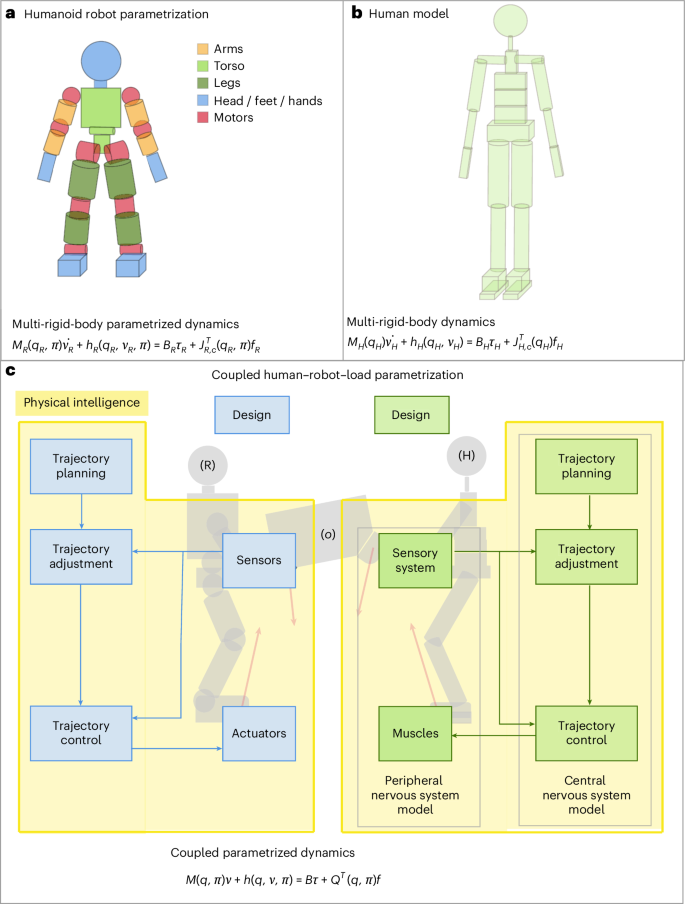
Context and Introduction In the evolving landscape of Smart Manufacturing and Robotics, the integration of humanoid robots such as the ergoCub is pivotal for enhancing human-robot collaboration. This collaboration hinges on the development of a shared embodied intelligence architecture, which facilitates effective physical interaction between robots and humans. The primary aim is to optimize robot hardware and control parameters to enhance the performance of human collaborators. This modular architecture consists of various components designed to perform specific tasks, whether in isolation or alongside human partners. The backbone of this framework is the establishment of a symmetrical model of physical intelligence, mirroring the capabilities of both human and humanoid agents. Main Goals and Achievements The overarching goal of this endeavor is to create a humanoid robot capable of seamless collaboration with humans, thereby optimizing joint tasks such as lifting and manipulation. Achieving this necessitates identifying and refining several key elements, including the robot’s physical characteristics and the dynamics governing human-robot interaction. The hierarchical control architecture employed plays a crucial role in modeling the physical intelligence of both agents, ensuring they can synchronize their movements effectively. This is accomplished through a systematic approach of modeling, optimization, and testing, leading to the realization of the ergoCub robot. Advantages of Shared Embodied Intelligence 1. **Enhanced Collaboration**: The shared embodied intelligence framework allows for improved collaboration between humans and robots, particularly in physically demanding tasks such as lifting, where the joint efforts of both agents can be optimized. 2. **Modular Architecture**: The modular design of the robot’s control system enables flexibility, allowing the robot to adapt to various tasks and environments. This customization is vital for applications in dynamic manufacturing settings. 3. **Symmetrical Physical Intelligence**: By establishing a symmetry between human and robot capabilities, the system can better predict and respond to human actions, improving overall interaction quality and efficiency. 4. **Real-time Optimization**: The architecture incorporates feedback mechanisms that allow for real-time adjustments during operation, thus enhancing the robot’s responsiveness and effectiveness in collaborative tasks. 5. **Energy Efficiency**: By minimizing the energy expenditure of both human and robot participants, the system promotes sustainability in industrial operations, which is crucial for long-term viability. Caveats and Limitations While the advantages are significant, there are inherent challenges in implementing this technology: – **Complexity of Human Dynamics**: Accurately modeling human dynamics remains complex and may not fully capture all the nuances of human physical intelligence, potentially affecting collaboration efficiency. – **Dependence on Technology**: The reliance on advanced sensors and control algorithms means that any technological failure could disrupt the collaborative process, necessitating robust fail-safes and recovery protocols. – **Cost of Implementation**: The initial investment in developing and integrating such sophisticated systems may be substantial, which could be a barrier for smaller manufacturers. Future Implications and AI Developments Looking ahead, the integration of artificial intelligence (AI) within the framework of shared embodied intelligence in humanoid robots is poised to drive significant advancements. AI can enhance decision-making capabilities, enabling robots to learn from their interactions with humans and adapt to varying tasks and environments dynamically. Furthermore, as AI algorithms become more sophisticated, they will facilitate a deeper understanding of human behavior, allowing for even more seamless integration into manufacturing processes. The potential for AI to facilitate predictive maintenance, optimize operational processes, and enhance safety protocols underscores its transformative impact on Smart Manufacturing and Robotics. As these technologies continue to evolve, the synergy between human workers and robots will likely become more pronounced, leading to more efficient, ergonomic, and safe industrial environments. In conclusion, the development of shared embodied intelligence in humanoid robots such as the ergoCub reflects a significant stride towards achieving effective human-robot collaboration in Smart Manufacturing. The combined advantages of modularity, symmetry in physical intelligence, and real-time optimization present promising opportunities for enhancing industrial productivity and sustainability. Disclaimer The content on this site is generated using AI technology that analyzes publicly available blog posts to extract and present key takeaways. We do not own, endorse, or claim intellectual property rights to the original blog content. Full credit is given to original authors and sources where applicable. Our summaries are intended solely for informational and educational purposes, offering AI-generated insights in a condensed format. They are not meant to substitute or replicate the full context of the original material. If you are a content owner and wish to request changes or removal, please contact us directly. Source link : Click Here

Contextual Overview: The Role of AI in Rural Healthcare The integration of artificial intelligence (AI) into healthcare has reached a pivotal moment, particularly in rural settings where healthcare providers face unique challenges. A recent study revealed that 86% of clinicians globally utilize AI on a daily basis, yet a concerning trend emerges in the United States: only 64% of American clinicians report that AI contributes to their career longevity, in stark contrast to the 73% global average. This discrepancy highlights not only the underutilization of AI’s potential in the U.S. but also underscores an urgent need for targeted strategies to leverage AI effectively, particularly among rural and community health providers grappling with workforce shortages and documentation burdens. Main Goal: Enhancing AI Utilization Among Rural Health Professionals The primary objective articulated in the original content is to improve the effective adoption and utilization of AI technologies among rural health providers. Achieving this goal necessitates the identification of specific barriers that rural clinicians face in accessing AI resources and training. By addressing these challenges, health organizations can facilitate better integration of AI tools, ultimately leading to improved patient outcomes and enhanced operational efficiency. Advantages of AI Adoption in Rural Healthcare 1. **Increased Efficiency**: AI technologies can automate routine tasks, allowing clinicians to focus on patient care rather than administrative duties. This is particularly crucial in rural settings where healthcare professionals often juggle multiple roles due to workforce shortages. 2. **Enhanced Decision-Making**: AI algorithms can analyze large datasets to provide insights that inform clinical decisions. This capability can lead to improved diagnostic accuracy and personalized treatment plans, benefiting patients in underserved areas. 3. **Career Longevity**: While the data indicates that only 64% of U.S. clinicians feel supported by AI, there is a significant opportunity to enhance career satisfaction and reduce burnout through effective AI integration. Globally, clinicians report better job satisfaction when AI tools are utilized effectively. 4. **Access to Resources**: AI can enable rural healthcare providers to access a wealth of information and support networks that may not be readily available locally. This can enhance their knowledge base and improve the quality of care provided. 5. **Patient Engagement**: AI-driven tools can facilitate better communication with patients, allowing for more tailored health interventions and fostering stronger patient-provider relationships. However, it is essential to acknowledge some caveats. The efficacy of AI tools is contingent upon adequate training and support from healthcare organizations. Without proper guidance, clinicians may struggle to realize the full benefits of these technologies. Future Implications of AI in Rural Healthcare Looking ahead, the evolution of AI in healthcare promises significant advancements, especially in rural areas. As AI technologies continue to mature, they are likely to become more adaptive and intuitive, catering specifically to the unique needs of rural health providers. The ongoing development of ambient AI—systems that seamlessly integrate into clinical workflows—could potentially reduce the cognitive load on clinicians, allowing them to prioritize patient care over administrative tasks. Moreover, as AI adoption becomes more widespread, there is potential for improved collaboration among healthcare providers, leading to shared insights and best practices that can enhance care delivery across rural communities. The emphasis on a collaborative approach in AI tool development will be paramount in ensuring that these technologies are truly beneficial and user-friendly for all clinicians. In conclusion, while there are challenges to overcome, the future of AI in rural healthcare is promising. By addressing the barriers to effective AI use, healthcare organizations can harness the full potential of these technologies to improve both clinician satisfaction and patient outcomes. Disclaimer The content on this site is generated using AI technology that analyzes publicly available blog posts to extract and present key takeaways. We do not own, endorse, or claim intellectual property rights to the original blog content. Full credit is given to original authors and sources where applicable. Our summaries are intended solely for informational and educational purposes, offering AI-generated insights in a condensed format. They are not meant to substitute or replicate the full context of the original material. If you are a content owner and wish to request changes or removal, please contact us directly. Source link : Click Here

Contextualizing AI in LegalTech The exploration of artificial intelligence (AI) within science fiction often reveals a disconnect between the imaginative portrayals of AI and the realities of its application. This discrepancy becomes particularly pertinent in the context of LegalTech, where AI’s capabilities are frequently underestimated. Current discussions, such as those initiated by Andrew Curran, highlight the limitations of AI depictions in media, suggesting that these narratives reflect societal understandings and fears rather than the actual potential of AI technologies. As LegalTech evolves, it is imperative for legal professionals to discern the practical applications of AI from the fictional representations that often populate popular culture. Understanding the Main Goal The principal aim of recognizing the shortcomings of AI portrayals in science fiction is to foster a more accurate understanding of AI’s current capabilities, particularly within the LegalTech sector. Legal professionals can achieve this by critically engaging with AI technologies, thereby enhancing their operational efficiency and service delivery. Such an understanding necessitates a shift from viewing AI as a mere plot device to recognizing it as a transformative tool that can augment legal practices. Advantages of Embracing AI in LegalTech Enhanced Efficiency: AI can automate administrative tasks, thereby allowing legal professionals to focus on more complex legal issues. For instance, contract analysis and document review can be significantly expedited through AI algorithms, leading to faster turnaround times. Improved Accuracy: AI systems trained on vast datasets can identify patterns and anomalies that a human might overlook, reducing the likelihood of human error in legal processes. This is particularly relevant in areas such as case law research and compliance monitoring. Cost Reduction: By automating routine tasks, firms can reduce operational costs, which can be passed on to clients in the form of lower fees, thereby making legal services more accessible. Data-Driven Insights: AI can analyze large volumes of legal data to provide insights that inform strategic decision-making, enabling law firms to better understand market trends and client needs. Accessibility of Legal Services: AI technologies can enhance access to legal services for underserved populations by providing automated legal advice and information dissemination through chatbots and online platforms. Future Implications of AI in LegalTech As AI technologies continue to advance, their integration into LegalTech is likely to deepen, leading to significant transformations in legal practice. Legal professionals will need to adapt to an increasingly AI-driven landscape, which may include enhanced collaboration between human practitioners and AI systems. This evolution presents opportunities for the development of new legal competencies, such as data literacy and AI ethics comprehension, which will be crucial in navigating the complexities of AI applications in law. Furthermore, as the legal industry embraces AI, it may also prompt regulatory discussions around accountability, bias, and the ethical deployment of AI technologies, ensuring that the benefits are realized equitably across all sectors of society. Disclaimer The content on this site is generated using AI technology that analyzes publicly available blog posts to extract and present key takeaways. We do not own, endorse, or claim intellectual property rights to the original blog content. Full credit is given to original authors and sources where applicable. Our summaries are intended solely for informational and educational purposes, offering AI-generated insights in a condensed format. They are not meant to substitute or replicate the full context of the original material. If you are a content owner and wish to request changes or removal, please contact us directly. Source link : Click Here

Context Recent research highlights a significant trend in enterprise AI infrastructure spending, indicating an acceleration in investment that outpaces the ability to measure and control associated costs. A study involving 107 enterprises revealed that while many organizations rely on established hyperscalers and model-provider APIs for their AI operations, there is a growing inclination toward investing in specialized compute resources that are currently underutilized. Notably, enterprises are preparing to switch or add infrastructure providers, with a focus on integration and total cost of ownership rather than superficial pricing metrics. However, the lack of visibility into their economic landscape raises concerns about the sustainability of such investments. This phenomenon has been termed the “compute gap,” which reflects a disconnect between rapid spending and inadequate tracking of AI infrastructure efficiency. The findings underscore the critical need for enterprises to enhance their measurement capabilities as they navigate this evolving landscape. Main Goal and Achievement The primary goal of the findings presented is to illuminate the compute gap experienced by enterprises as they invest in AI infrastructure. This gap is characterized by a misalignment between aggressive spending on AI capabilities and the insufficient measurement of those investments’ economic impacts. To bridge this gap, organizations must prioritize the development of robust metrics and tracking systems to assess compute costs and utilization effectively. By doing so, they will not only enhance their decision-making processes but also optimize their infrastructure investments for better performance and cost efficiency. Advantages of Addressing the Compute Gap Enhanced Decision-Making: With improved measurement and tracking, organizations can make informed decisions based on accurate data regarding the cost and performance of their AI infrastructure. Increased Efficiency: By addressing the high levels of underutilization—83% of enterprises reported GPU utilization of 50% or less—companies can maximize the return on their existing investments, reducing waste and improving overall productivity. Cost Optimization: Understanding total cost of ownership (TCO) allows enterprises to compare different providers meaningfully, leading to more strategic purchasing decisions that prioritize integration and long-term value over immediate costs. Future-Proofing Investments: As enterprises prepare to transition to more specialized AI clouds, having a clear understanding of current costs and utilization can guide more effective transitions, ensuring that new investments are aligned with organizational goals. Limitations and Caveats It is important to note that the study’s sample size, while indicative, is limited to 107 respondents and skews toward mid-market enterprises. This may not fully represent larger organizations or those with more advanced AI capabilities. Additionally, the finding that many enterprises cannot rigorously track compute costs suggests that the data available may not be comprehensive or fully accurate. Future Implications The ongoing advancements in AI are likely to further complicate the landscape of compute infrastructure. As AI applications evolve, the transition from GPU-centric computing to a focus on memory bandwidth and related memory constraints will emerge as a critical issue for enterprises. Organizations that fail to adapt to these changing dynamics may find themselves at a disadvantage, unable to leverage the full potential of their investments. Consequently, the next wave of AI development will necessitate a more nuanced understanding of infrastructure economics, compelling enterprises to refine their measurement capabilities and strategic approaches in order to remain competitive in an increasingly complex marketplace. Disclaimer The content on this site is generated using AI technology that analyzes publicly available blog posts to extract and present key takeaways. We do not own, endorse, or claim intellectual property rights to the original blog content. Full credit is given to original authors and sources where applicable. Our summaries are intended solely for informational and educational purposes, offering AI-generated insights in a condensed format. They are not meant to substitute or replicate the full context of the original material. If you are a content owner and wish to request changes or removal, please contact us directly. Source link : Click Here


